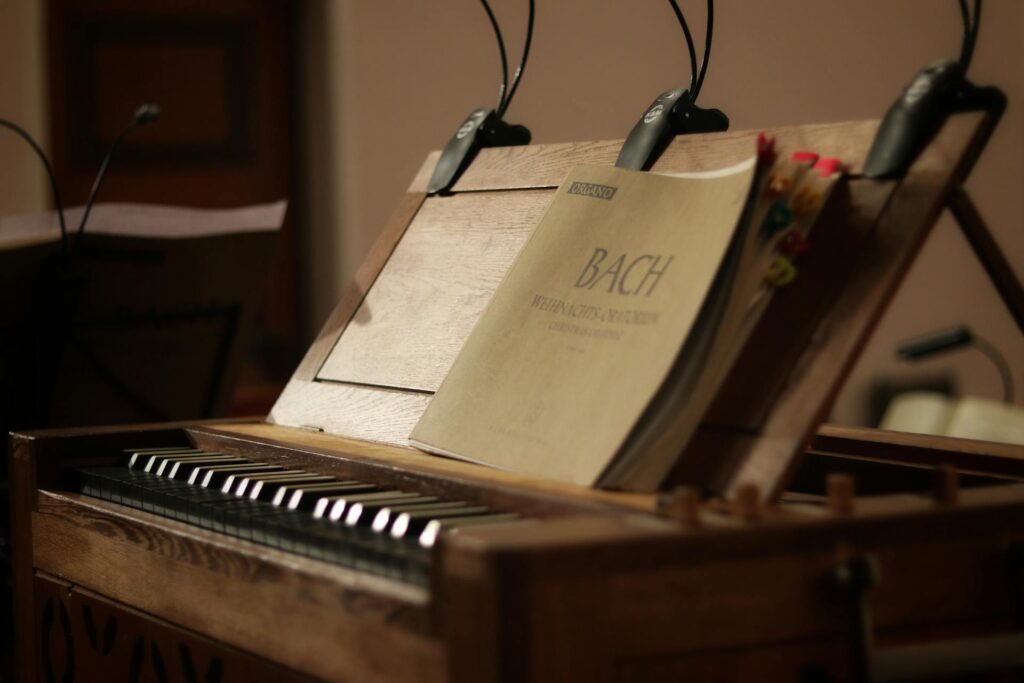
There has never been more music available to us, and yet finding something genuinely interesting to listen to has arguably never been more difficult. Streaming platforms offer an almost endless catalogue, social media constantly introduces us to new sounds, and artificial intelligence has made music production more accessible than ever. We are surrounded by music, but that does not necessarily mean we are discovering more musicians, or that the people creating meaningful work are receiving the attention they deserve.
For contemporary classical and experimental music, this presents a particular challenge. Outside the relatively small circles of specialist festivals, independent labels and dedicated listeners, living composers can remain remarkably difficult to discover. Their work may be performed, recorded and released with considerable artistic ambition, yet never reach an audience beyond their immediate surroundings. Meanwhile, the algorithms that increasingly determine what we hear tend to favour familiarity, established names and easily categorised sounds.
I find this especially unfortunate because contemporary composition is far from a stagnant art form. It is an extraordinarily diverse landscape in which composers are exploring new musical languages, reinterpreting established traditions, experimenting with instrumentation and finding individual ways of expressing ideas through sound. Some write for orchestras, others for solo instruments or unconventional ensembles. Some work within recognisable classical traditions, while others move freely between contemporary composition, minimalism, experimental music and electronic sound.
Over the past few years, through my work in music curation, independent publishing and reviewing, I have had the opportunity to encounter and listen to many composers whose work deserves a considerably wider audience. Some I have come to know through Tunitemusic, others through releases and independent music projects. What connects them is not a shared style or a particular musical philosophy, but the impression their work has left on me.
The seven composers featured here are not presented in any particular order. This is neither a ranking nor an attempt to compile a definitive list of the best contemporary composers. There are countless others who could just as easily have been included. Rather, these are seven artists whose music has resonated with me over the past few years, each for different reasons and in entirely different ways.
They are all living, working composers, creating music in the world we inhabit today. And that, in itself, is worth celebrating.
Matteo Ramon Arevalos: Beyond the Piano
Born in Ravenna, Italy, Matteo Ramon Arevalos is a pianist, composer and multidisciplinary artist whose work moves between contemporary classical composition, experimental music, theatre, cinema and performance art. His classical training at the Bruno Maderna Conservatory in Cesena, followed by studies with distinguished pianists in Vienna and New York, provided a strong technical foundation. But it is what he has done beyond the conventional boundaries of piano performance that makes his artistic identity particularly interesting.
Arevalos has developed an extensive relationship with the prepared piano, exploring the instrument’s physical possibilities through unconventional techniques and objects that transform its familiar sound. His work also extends into collaborations with theatre companies, filmmakers and visual artists. In some projects, the piano becomes something closer to a sound laboratory, where gestures, textures and unexpected resonances take precedence over conventional musical expectations.
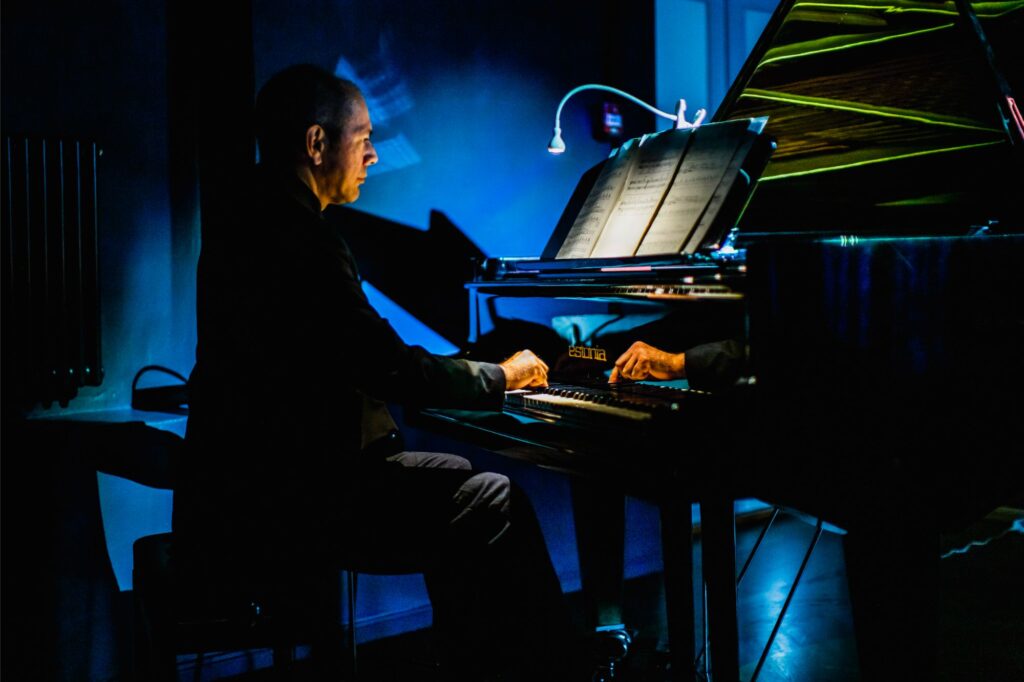
One particularly fascinating example is Concerto al Buio, a performance recorded at Area Sismica in Italy and released in 2026. Conceived for an audience listening in complete darkness, the work explores the piano beyond its traditional function, with Arevalos interacting with the instrument inside and out. Removing the visual dimension changes the relationship between performer, instrument and audience, placing the listener entirely inside the sound itself.
His interest in the relationship between history and contemporary expression is equally remarkable. Through TELEION – Fragments of Ancient Greek Music, Arevalos reconstructs surviving fragments of ancient Greek music, bringing musical material from antiquity into a contemporary performance context. Rather than treating historical music as a museum artefact, the project approaches it as something that can still speak to us.
I find this particularly compelling. There is a certain paradox in Arevalos’s work: while constantly searching for new sounds and techniques, he also looks backwards, sometimes thousands of years, for artistic inspiration. His compositions for piano, including La Folia and Mystic View, demonstrate another side of his musical personality, one that is more introspective and rooted in the expressive possibilities of the instrument.
Arevalos is an artist who refuses to remain within a single definition. His work reminds us that contemporary classical music does not have to choose between intellectual experimentation and emotional expression. It can embrace both.
Justus Rümenapp: The Art of Musical Storytelling
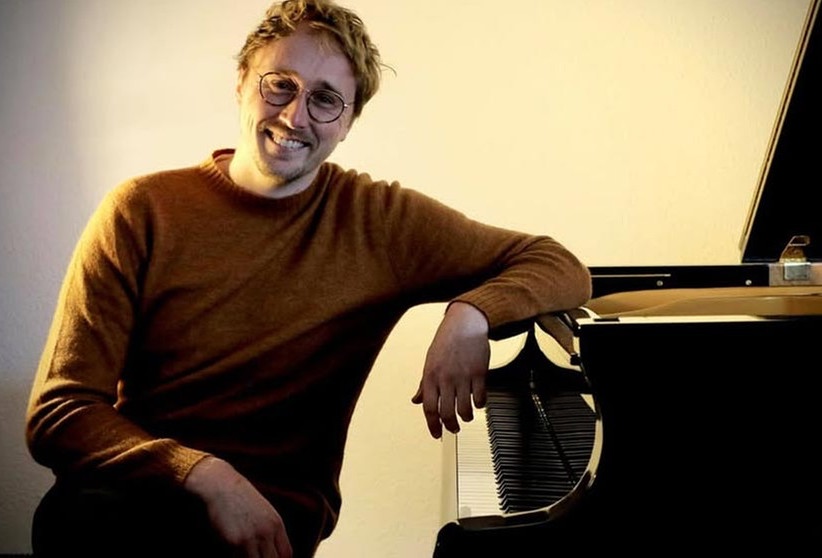
German pianist and composer Justus Rümenapp occupies an interesting space between neoclassical composition, cinematic music and traditional orchestral writing. His music is accessible without being simplistic, emotionally direct without becoming superficial, and often built around the kind of melodic development that makes a composition feel like a story unfolding.
Rümenapp began playing piano at the age of six and started composing as a teenager. His musical education eventually took him to the Popakademie Baden-Württemberg in Mannheim, where he studied pop music design alongside his classical piano background. This combination is evident in his approach to composition: he understands the emotional immediacy of a melody, but also how production, orchestration and atmosphere can expand it into something considerably larger.
His catalogue includes numerous solo piano releases, among them Piano Dreams, Piano Meditations, Phanta Rei, Time Travel and Kaleidoscope. Over time, his musical language has developed towards increasingly elaborate cinematic and orchestral arrangements. He has also composed music for film, television and advertising, demonstrating a versatility that extends beyond the conventional classical music environment.
His 2026 release, Symphony for the Future, is particularly worth exploring. Featuring the Deutsches Filmorchester Babelsberg, the album consists of eight interconnected orchestral pieces, incorporating piano and cello solos into a broader musical narrative. It is not a symphony in the traditional sense of a large-scale, multi-movement concert work, but rather an orchestral journey whose individual sections form a coherent whole.
There is also a deeply personal idea behind the project. Rümenapp became a father while developing its initial musical ideas, and the album gradually evolved into a reflection on the future and the world that the next generation will inherit. Pieces such as Für Oskar, dedicated to his son, Still Human and Unwritten Tomorrow give the work a personal dimension that extends beyond its musical construction.
One detail I particularly appreciate is the album artwork: a painting by his son. It is a small but meaningful gesture that connects the music’s central theme with the composer’s personal life.
Alisson Kruusmaa: Orchestral Storytelling and the Poetry of Sound
For me, there is something particularly compelling about composers who think in terms of stories rather than simply musical structures. Their compositions seem to have a life of their own, unfolding through characters, emotions, landscapes and dramatic transformations. Estonian composer Alisson Kruusmaa is one of the artists whose approach to composition resonates strongly with me.
Born in 1992, Kruusmaa belongs to a younger generation of Estonian composers who are developing distinctive voices within contemporary classical music. She studied composition at the Estonian Academy of Music and Theatre, including under Helena Tulve and Tõnu Kõrvits, and continued her studies at the Giuseppe Verdi Conservatory in Milan. Her music has been performed by orchestras and ensembles across Europe, Asia and the United States, including the Dresden Philharmonic, Dallas Symphony Orchestra, Estonian National Symphony Orchestra and Tallinn Chamber Orchestra.

Her musical language is often described through its spaciousness, delicacy and ethereal character. But what interests me most is her ability to combine these qualities with a strong sense of musical narrative. Her orchestral writing does not rely on constant dramatic gestures or overwhelming sonic density. Instead, she allows musical ideas to develop organically, building atmosphere and emotional tension through subtle changes in texture, orchestration and melodic expression.
This becomes particularly evident in her full-length ballet Light from the End of the World, created in collaboration with choreographer Jevgeni Grib and premiered at the Estonian National Opera in November 2024. The work takes the audience through the creation of the world, the rise of humanity, the loss of harmony, destruction and the possibility of renewal. At its centre is a woman’s journey through these transformations, connecting an intimate human story with something considerably larger: the relationship between humanity and nature.
It is precisely this combination of personal storytelling and universal themes that I find fascinating. The music has to serve the movement, the characters and the dramatic progression, while simultaneously creating an independent emotional world. Alisson Kruusmaa manages to give the orchestral score both fragility and breadth, allowing the music to breathe while maintaining a sense of direction. The result is not merely accompaniment for dance, but an essential part of the storytelling itself.
Her other orchestral works are equally worth exploring. Moorland Elegies is not among her works; rather, I would point listeners towards As if a River Were Singing…, her piano concerto, and Ali, her cello concerto, as excellent examples of her ability to write for large ensembles while maintaining an intimate relationship with individual instruments. Her orchestral work And If I Had a Dream also offers a fascinating glimpse into her musical imagination.
Kruusmaa received Estonia’s National Culture Prize in 2025 for Light from the End of the World, further recognition of a composer whose artistic ambitions extend well beyond conventional concert music.
As someone who is particularly drawn to narrative composition, mythology and music that tells stories, I find her approach especially inspiring. She demonstrates that orchestral music can be delicate without being passive, expressive without being excessive, and contemporary without abandoning its connection to the great tradition of musical storytelling.
Andrew Keese: The Beauty of Unspoken Words

Based in Naarm (Melbourne), composer and pianist Andrew Keese has developed a distinctive musical language around the relationship between piano, acoustic instruments and electronic sound. His compositions often inhabit an atmospheric space in which melody, texture and silence are equally important. There is a certain intimacy to his work, as though the listener has been invited into a private conversation that does not require words.
His musical journey has not been limited to instrumental composition. Earlier releases such as Desire and The Inheritance reveal a background in songwriting, while his instrumental albums demonstrate a gradual movement towards more abstract and contemplative musical territories. Infinite Possible Shapes (2010), Minutiae (2023), Illuminator (2025), and Intersections (2026) offer different perspectives on this evolution.
I had the opportunity to explore his music, and what struck me most was his ability to create emotional depth without relying on excessive musical gestures. His compositions are often understated, but they are never emotionally empty. The piano provides a central point of reference, while electronics and other acoustic elements gradually expand the musical space around it.
His album Illuminator is especially interesting in this regard. Partly composed and recorded during a two-week residency at the Arvo Pärt Centre in Estonia in 2024, it carries an atmosphere of contemplation that feels particularly appropriate to the environment in which it was created. Rather than simply presenting piano compositions with electronic additions, Keese builds layered soundscapes in which the different elements seem to breathe together.
I have previously described his music as emotions that cannot be expressed with language. I still think that is an appropriate way to approach his compositions. There is a quiet sincerity in his work that does not demand the listener’s attention through spectacle. Instead, it rewards those willing to slow down and listen.
Lauré Lussier: Orchestral Music Without Boundaries
If there is one composer on this list whose music challenges the boundaries of what we traditionally understand as orchestral composition, it is Quebec-based composer Lauré Lussier.
His work exists at the intersection of orchestral writing and electroacoustic music, combining acoustic instruments, electronic textures, sound design and elements of experimental composition. Yet describing his music simply as a fusion of classical and electronic styles would be insufficient. Lussier has developed a musical language in which sound itself becomes the principal instrument of storytelling.
With two bachelor’s degrees in music from McGill University and the Université de Montréal, he has built an impressive catalogue of independent releases. His approach is rooted in the transformation of musical material: ideas are introduced, developed and reshaped through changes in timbre, texture and sonic density. The result is often closer to a cinematic experience than a conventional orchestral performance.
When I first encountered his work, I was particularly struck by the way he uses orchestral instruments alongside natural and synthetic soundscapes. There is something almost organic about the way his compositions develop. They do not always follow the familiar logic of themes, melodies and harmonic progression. Instead, musical structures seem to emerge gradually, as if the listener were witnessing the formation of an entirely new environment.
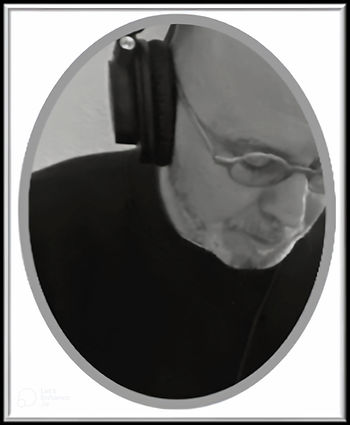
His 2025 album Sunder is a particularly strong example. Built around the conflict between humanity and nature, it explores an almost elemental musical landscape. Strings, electronics and sound effects are not simply layered on top of one another; they become part of a unified sonic language. The result is immersive, occasionally unsettling, and often remarkably beautiful.
Another work worth mentioning is Strange Symphony (2024), a four-movement composition that deliberately challenges the conventional understanding of the symphony. It embraces dissonance, unexpected transitions and moments of sonic chaos without losing its underlying narrative identity.
His earlier Le Valseur de Bois (2023), inspired by his own murder-mystery novel, also demonstrates the connection between his literary and musical imagination. The work unfolds as an extended orchestral electroacoustic narrative, with distinct sections representing different characters and situations.
Lussier’s catalogue also includes Darkness, a musical setting of Lord Byron’s poem, and Strange Recital, which explores the poetry of Émile Nelligan through an unusual dialogue between historical and modern musical languages.
What I find particularly admirable about his approach is that he does not seem interested in making music that fits comfortably into an existing category. He is willing to let a composition become beautiful, chaotic, uncomfortable or even overwhelming, depending on what its underlying idea requires.
This is precisely what I find exciting about contemporary composition. The orchestra does not have to remain a fixed institution with a predetermined vocabulary. It can become a living organism, capable of incorporating almost any sound into its expressive language.
Lussier is one of those composers who makes me reconsider what an orchestra can actually be.
Luke Garrigus: The Uncomfortable Beauty of Experimentation
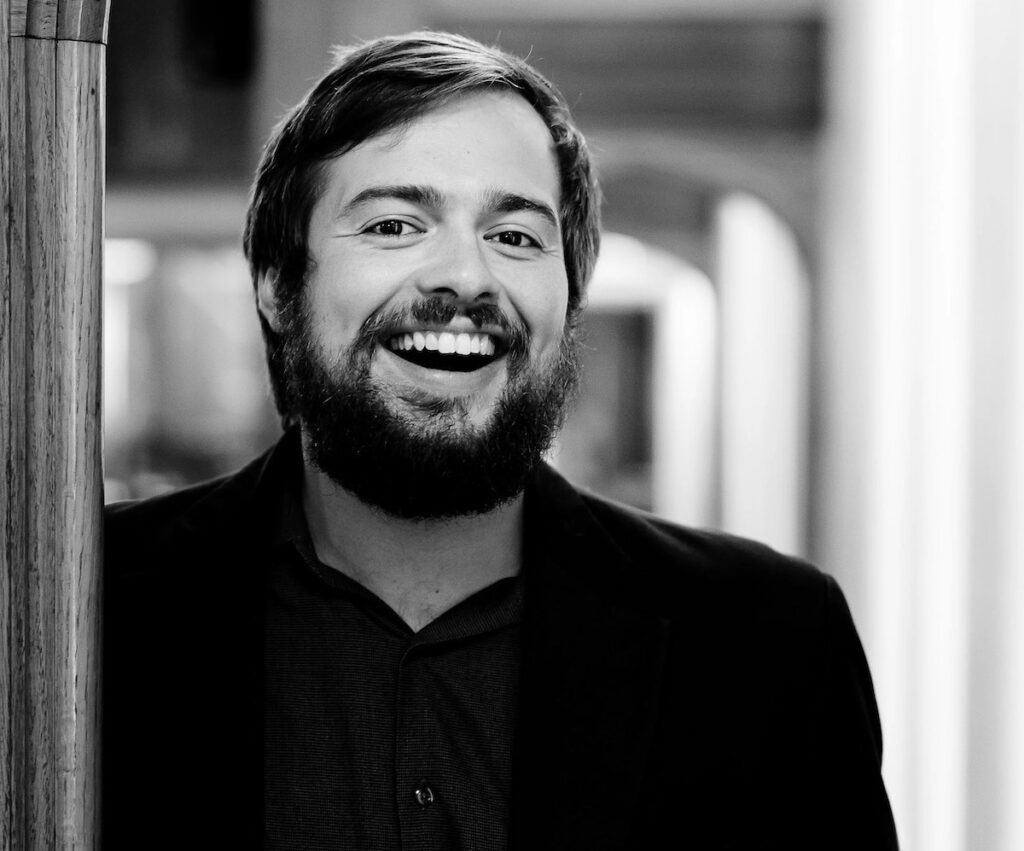
Not all music is written to comfort us. Some compositions challenge our expectations, confront our listening habits and force us to reconsider what we consider beautiful. American composer Luke Garrigus is particularly interesting in this regard.
Based in Indianapolis, Garrigus is a contemporary concert music composer, pianist, conductor and arts administrator. He holds a master’s degree in music composition from Butler University, where he studied with Michael Schelle and Frank Felice, and a bachelor’s degree from the University of Indianapolis. His works have been commissioned and performed by several ensembles, including the Ronen Chamber Ensemble, Circle City Orchestra, Sunset Syndicate Saxophone Quartet and JCA Composers Orchestra.
He is also the president of Sound Ecologies, a new-music organisation dedicated to supporting contemporary music and building a community around experimental and innovative musical practices.
Garrigus’s compositions demonstrate a fascination with unusual musical structures, unexpected harmonic developments and the physical impact of sound. His music can be intense, unpredictable and occasionally abrasive, but there is a clear compositional intelligence behind its apparent chaos.
His 2026 EP Inkjaw is an excellent introduction to this side of his artistic personality. Released through Sound Ecologies, the five-track work explores a restless musical environment characterised by sudden changes in texture, percussive eruptions and volatile harmonic language. Rather than providing a comfortable listening experience, Garrigus creates an atmosphere of tension in which every musical gesture seems to serve a specific purpose.
What I particularly appreciate is that the music never feels experimental merely for the sake of being experimental. There is a distinction between creating unusual sounds and composing with them. Garrigus understands that distinction.
His broader catalogue is equally intriguing. Bryospora hymnalos, subtitled Symphony No. 2: Arboreal, is a chamber orchestral work, while Great Lakes Leviathan is a piano concerto. His chamber works include Quartet for the Great North American Eclipse, Bug Collection and the aforementioned Inkjaw, originally conceived for flute, bass clarinet, piano, percussion, violin and cello.
Even the titles suggest an imagination that draws from nature, unusual phenomena and sometimes unconventional subjects. This is not simply an aesthetic choice; it is reflected in the compositional language itself.
I think Garrigus represents an important side of contemporary classical music that is often overlooked by listeners who primarily encounter the genre through neoclassical playlists. His work is not necessarily an easy introduction to experimental composition, but it is an excellent reminder that contemporary music still has the capacity to surprise, disturb and challenge us.
And sometimes that is exactly what music should do.
Allen Constantine: Between Darkness and Light
Composer and music producer Allen Constantine occupies a different corner of the contemporary musical landscape. His work moves between neoclassical composition, cinematic orchestration, ambient textures and electronic production, creating a sound that is both familiar and deeply personal.
Unlike composers whose primary focus is the traditional concert repertoire, Constantine has also developed an extensive professional career in music production and sound design for film, advertising and media. His collaborations include companies such as Massive Music, Sizzer, Goldstein Music and Extreme Music, as well as work with filmmakers on projects ranging from short films to documentaries.
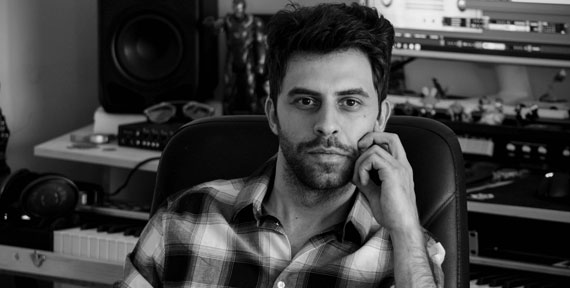
This background is relevant because it gives his compositions a particular sensitivity to atmosphere, pacing and musical narrative. His work often feels cinematic, but it is not simply soundtrack music without a film. The compositions have their own identities, with carefully developed harmonic structures and emotional trajectories.
His musical influences include composers such as Jóhann Jóhannsson, Ennio Morricone, Thomas Newman, Max Richter and Ólafur Arnalds. These references offer some indication of his artistic territory, although Constantine has developed his own approach to combining piano, strings and electronic elements.
I find his 2026 album Temporal Harmonies particularly compelling. Across ten compositions, Constantine explores the relationship between time, memory, uncertainty and the fragile nature of existence. The album moves through contrasting emotional landscapes, from introspective passages to moments of greater harmonic intensity.
What makes Constantine interesting to me is his ability to maintain a strong sense of musical atmosphere while still giving individual compositions their own character. There is a difference between producing beautiful sounds and creating a coherent musical world. The latter requires a sense of direction, and this is something I hear throughout his work.
I would particularly recommend him to listeners who enjoy the intersection of contemporary classical composition and cinematic music, but who are looking for something beyond the familiar names dominating streaming platforms.
Alex Solely: The Expressiveness of Simplicity
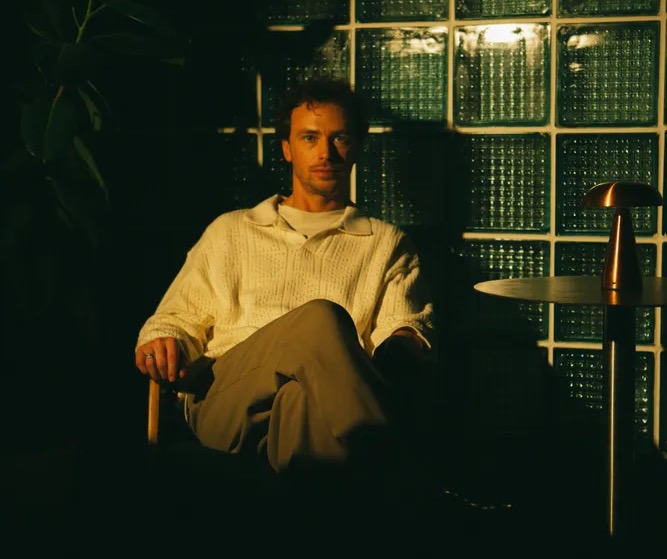
There is a particular discipline involved in writing simple music. When a composition relies on a limited number of notes, recurring motifs and restrained harmonic development, every decision becomes exposed. There is nowhere to hide behind orchestral complexity or technical virtuosity. The composer must make every element count.
This is one of the reasons I find the work of contemporary composer Alex Solely so interesting.
Solely’s musical language is rooted in neoclassicism, minimalism and impressionistic thinking. Piano remains at the centre of his compositions, but his more recent projects have expanded into collaborations with strings and electronic textures. His music is often intimate, reflective and melodic, built around the expressive potential of repetition, silence and gradual development.
His debut album, Piano Solely (2024), established the foundations of this musical identity. Since then, his catalogue has continued to develop, with projects such as The Home Concert and Cascade exploring increasingly varied instrumental combinations.
What distinguishes Solely is his understanding of restraint. His compositions do not attempt to impress through constant changes or elaborate arrangements. Instead, they create an atmosphere in which a simple musical idea can gradually acquire emotional significance.
His 2026 album Cascade is perhaps the best illustration of this approach. Built primarily around the dialogue between piano and strings, the album takes the listener through a series of intimate musical landscapes. The compositions are inspired by memories, encounters and places experienced across different countries, giving the record an understated sense of geographical and emotional movement.
One of the album’s strengths is the contrast between its individual pieces. Morning Thoughts introduces the listener to a contemplative piano soundworld, while Cascade of Nothing develops a lyrical dialogue between piano and violin. Little Bird, the album’s central and longest composition, gradually evolves from an innocent-sounding piano motif into a more expansive orchestral passage.
Then there is Fuss, which offers a striking departure from the album’s generally reflective atmosphere. Its fast-moving piano figures and sharply articulated strings introduce a sense of urgency and rhythmic tension. It is also my personal favourite on the album.
Solely has also received international recognition. His debut album earned a Silver Medal at the Global Music Awards, while his composition Fuss received the Diamond Prize and the Excellent Technique Special Award at the World Master Open Music Competition.
I think his work is a good example of why we should avoid confusing simplicity with a lack of ambition. Writing a memorable melody is not necessarily easier than constructing a complex orchestral passage. In fact, making simplicity emotionally convincing can be one of the most demanding tasks in composition.
Solely understands this. His music does not attempt to overwhelm the listener. It invites them in, gives them space, and trusts that a small musical idea can sometimes say more than an elaborate statement.
Final Thoughts: Finding the Human Voice in Contemporary Music
There is something paradoxical about being a music lover in 2026. We have access to more music than any generation before us, yet discovering artists outside the established mainstream remains surprisingly difficult. The abundance of music has not necessarily resulted in an abundance of discovery.
Artificial intelligence adds another dimension to this problem. It is now possible to generate convincing musical material in seconds, imitate established styles and produce endless variations of familiar sounds. Meaning everyone can feel like a composer, without being one. While the AI music is convienient and creates acceptable musical pieces in matter of seconds, there’s no creatibity in them, there’s nothing new, it always has to create a piece based on a mix of what have beenThis is where I believe independent composers deserve more attention.
As someone involved in independent music publishing, curation and criticism, I believe that discovering music should involve more than following recommendations generated by algorithms. It requires curiosity, time and, occasionally, someone willing to point you towards an artist you might otherwise never encounter.
This is also one of the reasons independent labels, specialist publications, music reviewers and contemporary music organisations remain important. Their role is not simply to distribute music, but to create connections between artists and listeners, particularly when those artists operate outside the commercial mainstream.
I would encourage readers not to approach these composers through playlists or genre labels alone. Listen to an entire album. Explore their catalogues. Give unfamiliar compositions the time they deserve. You might discover that the most interesting music being written today is not necessarily coming from the names you already know.
And perhaps that is the most important thing: classical music is not something that belongs exclusively to the past. It is being written right now, by living composers with individual voices, ideas and stories to tell.
We simply need to make a little more effort to hear them.