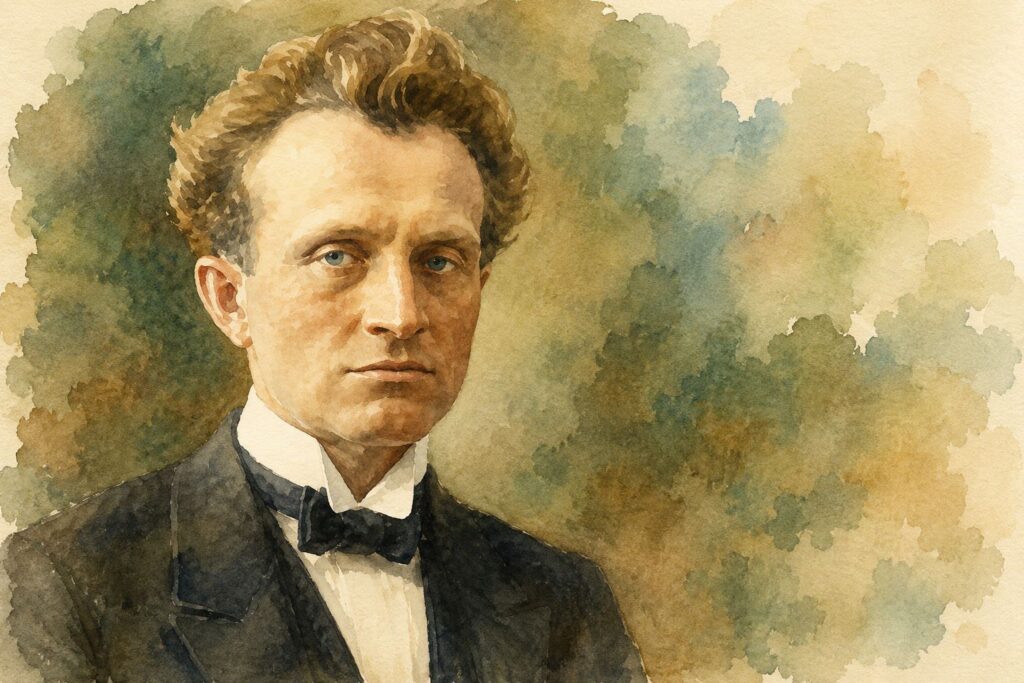
Vincenzo Bellini (3 November 1801 – 23 September 1835), with the full name of: Vincenzo Salvatore Carmelo Francesco Bellini, was a luminary of Italian music history, whose compositions epitomized the bel canto tradition and left an indelible mark on the world of opera. Born in Catania, Sicily, Bellini displayed prodigious talent from a young age, nurtured by his father, a church organist and composer. His early education at the Conservatorio di San Sebastiano in Naples laid the foundation for his mastery of melody and harmonic innovation. By the time he composed his first opera, Adelson e Salvini, in 1825, Bellini had already begun to distinguish himself as a composer of extraordinary sensitivity and emotional depth.
Bellini’s career flourished in the operatic hubs of Italy and beyond, where his works were celebrated for their lyrical beauty, expressive arias, and dramatic intensity. Unlike his contemporaries, Bellini prioritized the human voice, crafting melodies that showcased the nuances of the bel canto style, where clarity, agility, and emotional resonance were paramount. His collaborations with librettist Felice Romani produced some of his most enduring masterpieces, including Il pirata (1827), La straniera (1829), I Capuleti e i Montecchi (1830), and Norma (1831). The latter, with its iconic aria “Casta Diva,” remains one of the most revered pieces in the operatic repertoire, a testament to Bellini’s genius in blending poetic lyricism with profound emotional expression.
Despite his untimely death at the age of 33, Bellini’s legacy endured through his influence on subsequent generations of composers, from Giuseppe Verdi to Richard Wagner, who admired his ability to fuse drama and music seamlessly. His works continue to be performed worldwide, a testament to their timeless appeal and the enduring power of his compositions.
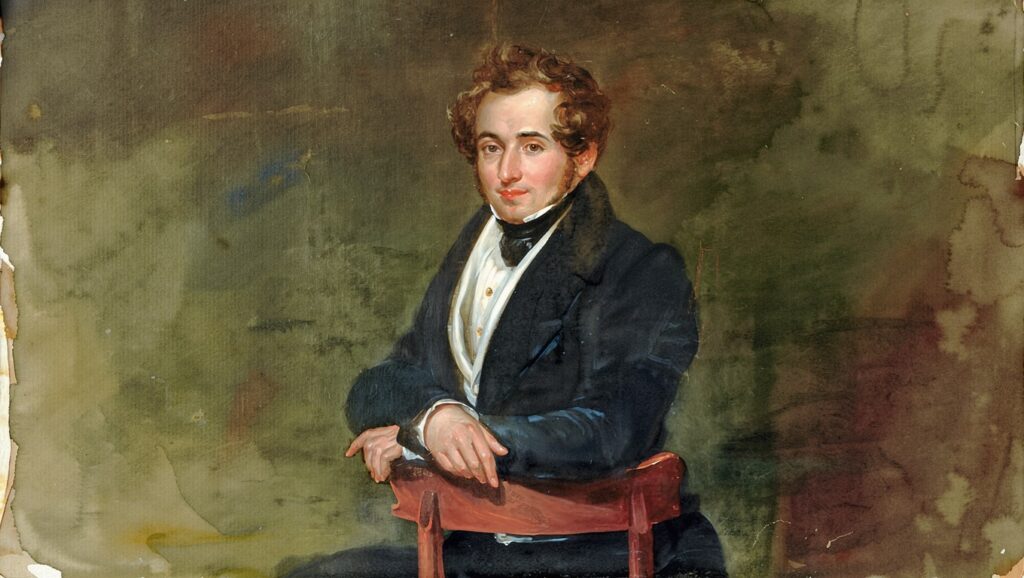
The Life and Times of Vincenzo Bellini
Early Life and Education
Vincenzo Salvatore Carmelo Francesco Bellini was born in Catania, Sicily, into a family deeply rooted in music. His father, Rosario Bellini, was a church organist and composer, and his grandfather, Agostino Bellini, was a musician as well. This musical environment provided the young Bellini with an early immersion in the art form.
At the age of 18, Bellini enrolled at the Conservatorio di San Sebastiano in Naples, one of the most prestigious music schools in Italy. There, he studied under Nicola Zingarelli, a respected composer of the time. Bellini’s education was rigorous, focusing on counterpoint, harmony, and the composition of sacred and secular music. His first major work, the opera Adelson e Salvini, premiered in 1825 at the conservatory and showcased his burgeoning talent. The opera’s success earned him recognition and set the stage for his future career.
Rise to Prominence
Bellini’s breakthrough came in 1826 with the premiere of Bianca e Fernando at the Teatro San Carlo in Naples. The opera’s reception was lukewarm, but it caught the attention of Impresario Domenico Barbaja, who commissioned Bellini to write Il pirata for the Teatro alla Scala in Milan. The 1827 premiere of Il pirata was a triumph, establishing Bellini as a leading figure in the Italian operatic scene.
Bellini’s collaboration with librettist Felice Romani proved to be one of the most fruitful partnerships in music history. Romani’s poetic and dramatic librettos provided Bellini with the perfect canvas for his lyrical genius. Together, they created La straniera (1829), Zaira (1829), and I Capuleti e i Montecchi (1830), the latter a retelling of Shakespeare’s Romeo and Juliet. However, it was Norma (1831) that cemented Bellini’s reputation as a master of the bel canto style. The opera’s aria “Casta Diva” became an instant classic, celebrated for its ethereal beauty and emotional depth.
Bellini’s Style and Contributions
Bellini’s music is characterized by its lyrical purity, expressive melodies, and seamless integration of voice and orchestra. Unlike his contemporaries, who often prioritized spectacle and grandeur, Bellini focused on the human voice, crafting arias that demanded technical brilliance and emotional nuance from singers. His works are marked by:
- Bel Canto Tradition: Bellini’s operas exemplify the bel canto style, where the voice is the primary instrument, and the music serves to highlight its beauty and agility.
- Harmonic Innovation: While rooted in the traditions of his time, Bellini’s harmonic language was sophisticated, often employing unexpected modulations and chromaticism to heighten dramatic tension.
- Dramatic Intensity: Bellini’s operas are not merely collections of beautiful arias; they are tightly constructed dramas where music and text work in harmony to convey emotion and advance the plot.
Major Works
Bellini’s oeuvre includes 10 operas, several sacred works, and a handful of chamber pieces. His most significant works include:
- Il pirata (1827) – A tale of love, betrayal, and revenge, this opera introduced Bellini’s signature style to a wider audience.
- La straniera (1829) – A romantic tragedy with a hauntingly beautiful score, featuring the aria “Sorgi, o padre, e ne’ tuoi baci” (“Arise, o father, and in thy kisses”).
- I Capuleti e i Montecchi (1830) – A retelling of Romeo and Juliet, showcasing Bellini’s ability to capture youthful passion and tragedy.
- Norma (1831) – Often considered Bellini’s magnum opus, Norma is a grand opera set in ancient Gaul, featuring the iconic aria “Casta Diva” and the powerful finale “Deh! Non volerli vittime.”
- La sonnambula (1831) – A pastoral opera about a sleepwalking bride, celebrated for its delicate melodies and charming simplicity.
- Beatrice di Tenda (1833) – A historical tragedy based on the life of Beatrice of Milan, showcasing Bellini’s mature style.
- I puritani (1835) – Bellini’s final opera, composed in Paris, is a blend of Italian bel canto and French grand opera, featuring the famous tenor aria “A te, o cara, amor talora.”
Later Years and Legacy
In 1833, Bellini traveled to Paris, where he was warmly received by the French aristocracy and artistic elite. His time in Paris exposed him to the grandeur of French opera, influencing his final work, I puritani. However, his health began to decline, and he contracted amebic dysentery in 1835. He died on 23 September 1835 in Puteaux, near Paris, at the age of 33.
Bellini’s death was mourned across Europe, and his funeral in Paris was attended by thousands. Despite his short life, Bellini’s influence on music history and Italian composers was profound. His works inspired Giuseppe Verdi, who admired Bellini’s ability to convey deep emotion through melody. Richard Wagner, though critical of Italian opera’s conventions, acknowledged Bellini’s genius, particularly his use of harmony and orchestration.
Bellini’s legacy extends beyond his compositions. He is remembered as a pioneer of the bel canto tradition, a style that would later influence composers like Gaetano Donizetti and Verdi. His emphasis on the human voice and emotional expression set a new standard for operatic composition, ensuring his place among the greatest music composers of all time.
Bellini’s Importance in Music History
Bellini’s contributions to music history are multifaceted:
- Revolutionizing Opera: Bellini’s operas redefined the role of the voice in opera, elevating it to the status of a primary dramatic force.
- Influencing Later Composers: Verdi, Wagner, and even Pyotr Ilyich Tchaikovsky cited Bellini as a major influence. Verdi’s La traviata and Wagner’s Tristan und Isolde both reflect Bellini’s harmonic and melodic innovations.
- Preserving the Bel Canto Tradition: Bellini’s works are the cornerstone of the bel canto repertoire, a tradition that continues to thrive in the performances of singers like Maria Callas, Joan Sutherland, and Luciano Pavarotti.
- Cultural Impact: Bellini’s operas have been performed continuously since their premieres, and his arias remain staples in recitals and concerts worldwide.
Bellini’s Enduring Appeal
Bellini’s music endures because of its universality and emotional resonance. His ability to capture the depths of human emotion—love, despair, joy, and tragedy—transcends time and culture. Whether through the ethereal beauty of “Casta Diva” or the dramatic intensity of “Ah! non credea mirarti” from La sonnambula, Bellini’s works continue to move audiences.
Modern performances of Bellini’s operas, whether in grand opera houses or intimate recitals, attest to his timeless appeal. His music is a bridge between the classical and romantic eras, a testament to his genius and innovation.
Sources and reading suggestions
- Budden, Julian. The Operas of Vincenzo Bellini. Oxford University Press, 1974.
- Parker, Roger. The New Grove Dictionary of Opera. Grove’s Dictionaries of Music, 1992.
- Weinstock, Herbert. Bellini: His Life and His Operas. Knopf, 1971.
- Kerman, Joseph. Opera as Drama. New York Review Books, 1988.
- Ashbrook, William. Donizetti and His Operas. Cambridge University Press, 1982.
- Melitz, Leo. The Opera Goer’s Complete Guide. Dodd, Mead & Company, 1921.
- Chase, Gilbert. The Music of Spain. Dover Publications, 1959.
- Palisca, Claude V. Norton Anthology of Western Music. W.W. Norton & Company, 2006.
- Rosselli, John. The Life of Bellini. Cambridge University Press, 1996.
- Walker, Frank. The Man Verdi. University of Chicago Press, 1982.
#VincenzoBellini #Opera #BelCanto #ClassicalMusic #MusicHistory #ItalianComposers #Norma #CastaDiva #RomanticOpera #MusicLegacy #GiuseppeVerdi #RichardWagner #OperaArias #MusicGenius #19thCenturyMusic