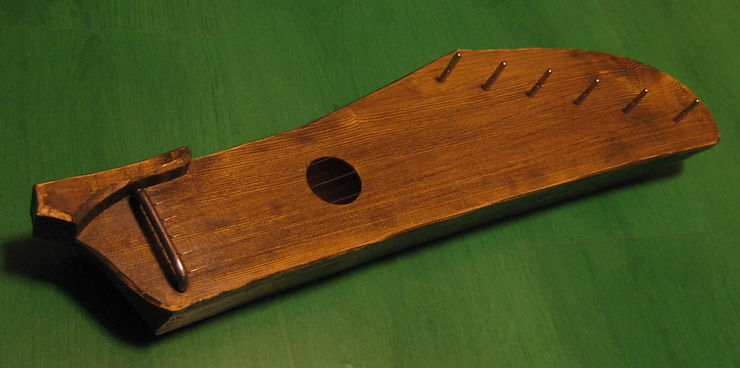
The fundamental question of what defines human communication, and whether music or language came first, has captivated thinkers from the dawn of philosophy to modern cognitive neuroscience. It is incredibly tempting to view music as a beautiful but non-essential luxury, an artistic afterthought that emerged only after we mastered the complex art of words, sentences, and syntax. But what if the reality is completely flipped? What if music isn’t a byproduct of speech, but the very foundation upon which human language was built?
For decades, mainstream cognitive science treated music as a biological accident. In his 1997 book How the Mind Works, evolutionary psychologist Steven Pinker famously dismissed music as “auditory cheesecake.” In his view, it was a pleasant, calorie-rich treat for the ears that served no real evolutionary survival purpose, merely hitchhiking on neural machinery designed for speech and environmental sound processing.
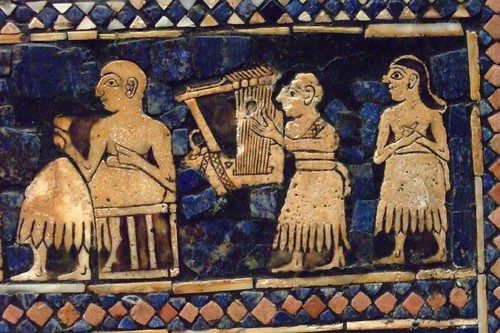
However, an escalating body of modern academic literature vigorously disputes this claim. Instead of a trivial byproduct, researchers increasingly argue that music, or more accurately, a musical, rhythmic protolanguage, served as the crucial evolutionary scaffold for human communication. Long before we were talking, humans were singing.
The Darwinian Foundation: Vocal Grooming and Emotional Bonding
The argument for the evolutionary primacy of music traces its scientific lineage directly back to Charles Darwin. In The Descent of Man (1871), Darwin hypothesized that before our hominid ancestors could articulate their thoughts into words, they sought to influence and charm one another through rhythm and melody:
“Musical notes and rhythm were first acquired by the male or female progenitors of mankind for the sake of charming the opposite sex. Thus musical tones became firmly associated with some of the strongest passions an animal is capable of feeling.” (Darwin, 1871).
In Darwin’s framework, early human vocalizations were non-symbolic but deeply emotional, mirroring the mating calls and territorial songs observed across the animal kingdom today, from songbirds to gibbons.
Modern evolutionary biologists have expanded Darwin’s mate-selection model into a broader theory of social cohesion. Anthropologist Robin Dunbar (1996, 2012) argues that as early human groups grew larger, physical grooming, the primary mechanism primates use to maintain social bonds, became structurally unsustainable due to time constraints. You can only pick bugs off one peer at a time.
Music and group vocalization emerged as a form of “vocal grooming.” Unlike physical touch, a single individual can vocally groom an entire tribe simultaneously. The synchrony of group singing, chanting, and rhythmic movement releases a powerful surge of endorphins and dopamine, generating a shared sense of trust and safety. Before human voice boxes had to convey specific, dry pieces of data, they had to sustain social harmony.
The Archaeomusicological Record: Instruments of the Deep Past
One of the greatest challenges in evaluating whether music or language came first is that sound leaves no fossils. Spoken words vanish into thin air. However, material culture offers undeniable physical evidence of an ancient, sophisticated musical tradition that rivals or even predates undisputed archaeological indicators of complex language.
Consider the famous Divje Babe I flute, discovered in a Slovenian cave in 1995 and dated to approximately 50,000 to 60,000 years ago. Carved from the femur of a juvenile cave bear, this artifact features cleanly pierced holes aligned in a manner consistent with musical spacing. While a few skeptics argued these perforations were just the result of a scavenger carnivore gnawing on the bone, exhaustive taphonomic reconstructions have repeatedly demonstrated that the holes perfectly match the structural requirements for intentional acoustic pitch production (Turk, 1997).
Even if you set aside the controversial Neanderthal flute, the Upper Paleolithic flutes uncovered from the Hohle Fels and Geßenklösterle caves in southwestern Germany offer undeniable proof of early human musical sophistication. Crafted from vulture bones and mammoth ivory, these fully functional instruments date back roughly 35,000 to 40,000 years (Conard et al., 2009).
The structural complexity of these flutes, which required precise calculation of acoustic air columns to create specific pitch intervals, reveals that music was not a casual, accidental hobby. It was an advanced cultural practice. Because language cannot be fossilized, the physical presence of these highly specialized musical tools proves that a complex auditory-rhythmic cognitive system was fully functional in human culture long before the earliest traces of written or complex symbolic language.
The “Musilanguage” Hypothesis: A Common Ancestor
Rather than viewing music and language as completely separate entities that fought for historical dominance, contemporary cognitive theorists suggest they split from a single, ancestral root. In his influential book The Singing Neanderthals, archaeologist Steven Mithen (2005) proposed the “Musilanguage” hypothesis. Mithen argues that early hominids communicated through a system that was “Hmmmmm”:
- Holistic (utterances were complete messages rather than individual words)
- Manipulative (designed to alter behavior or emotional states rather than convey abstract facts)
- Multimodal (co-occurring with gestures and dance)
- Musical (reliant on pitch, rhythm, and timbre)
- Mimetic (imitating environmental sounds)
Under this paradigm, the division of labor between music and language occurred later in human evolution. Language broke away to specialize in the transmission of explicit semantic information, abstract reference, and compositional syntax (the grammar rules combining words into complex meanings). Music broke away to preserve and enhance the emotional, social, and narrative dimensions of communication.
This ancient separation explains why modern human languages still retain massive structural footprints of music. Tone languages, such as Mandarin Chinese, Yoruba, and Thai, use fundamental pitch variations to completely change a word’s meaning. Even in non-tonal languages like English, prosody (the melodic contour and rhythm of speech) is absolutely vital for communicating intent, sarcasm, urgency, and emotion. Without the musicality of voice, speech loses its soul.
Neurological Parallelisms: Shared Architecture of the Mind
The argument that language is a specialized subset of music finds powerful support in modern brain imaging. Historically, the brain was viewed through a hyper-localized lens: Broca’s and Wernicke’s areas in the left hemisphere processed language, while the right hemisphere handled music. Modern fMRI and EEG studies have thoroughly dismantled this rigid binary model.
Aniruddh Patel (2003, 2008) introduced the Shared Syntactic Integration Resource Hypothesis (SSIRH), demonstrating that language and music rely on the exact same neural networks to process structural grammar. Using neuroimaging, Patel discovered that when a person encounters a grammatical error in a sentence (e.g., “The cat dog the food eat”) and when a musician encounters an unexpected, harmonically incorrect chord progression in a musical phrase, the brain fires an identical electrical signature known as the P600 wave.
This processing occurs within the inferior frontal gyrus (Broca’s area), proving that the human brain treats the structural laws of musical composition and linguistic grammar using the exact same neural machinery.
                  [Auditory Input]
                         │
         ┌───────────────┴───────────────┐
         ▼                               ▼
[Linguistic Syntax]              [Musical Syntax]
(Grammatical Structure)        (Harmonic Progressions)
         │                               │
         └───────────────┬───────────────┘
                         ▼
             [Inferior Frontal Gyrus]
                 (Broca's Area)
                         │
                         ▼
                 [P600 Wave Signal]
            (Structural Error Processing)
Furthermore, pioneering work by neuroscientist Gottfried Schlaug (2001) showed that professional musicians exhibit an enlarged corpus callosum (the neural bridge connecting the left and right hemispheres) and a significantly larger planum temporale (part of the auditory cortex associated with language processing). The fact that musical training directly improves linguistic memory and phonological awareness provides clear evidence that our linguistic capacity is fundamentally anchored to an underlying musical operating system.
The Musical World of the Infant
In developmental psychology, observing how human infants acquire communication skills provides a real-time window into our pre-linguistic evolutionary past. Long before a baby can comprehend, let alone articulate, a single noun or verb, they are highly attuned to the musical components of sound.
Adults across all cultures intuitively modify their speech when interacting with infants, transitioning into a specialized vocal register known as Infant-Directed Speech (IDS), or more colloquially, “Motherese.” IDS is characterized by an elevated pitch, an elongated melodic contour, and a highly rhythmic, slow cadence.
Research by psycholinguist Sandra Trehub (2003) demonstrates that infants overwhelmingly prefer IDS over adult-directed speech, and that this preference is universal, cutting across geographic and linguistic boundaries. Furthermore, human infants are born with a sophisticated musical toolkit: they can differentiate between consonant (pleasant) and dissonant (clashing) intervals, detect subtle shifts in rhythmic meter, and track pitch changes long before they understand vocabulary.
From a developmental perspective, a child’s first vocalizations are entirely musical. Cooing and babbling are experiments in pitch, timbre, and rhythm. The child learns the “music” of their native language long before they master its words.
Conclusion: Language is a Specialized Type of Music
When we look back across evolutionary time, the traditional view of music as a secondary byproduct of language becomes incredibly difficult to justify. The archaeological record shows highly specialized musical instruments appearing deep in our evolutionary past; neural imaging reveals a deeply shared architecture between linguistic and musical grammar; and developmental psychology shows that infants navigate their world musically long before they do so linguistically.
The evidence strongly suggests a beautiful conclusion: music came first. Early humans communicated through a rich, emotional, pitch-driven, and rhythmic protolanguage. Over millennia, as human societies became more complex and the demand for precise, abstract information transfer grew, this musical baseline fractured.
Language emerged as a highly specialized, stripped-down branch of this ancient musical trunk, trading emotional nuance and holistic resonance for semantic precision. In essence, language is not the parent of music; language is simply a specialized type of music that we learned to speak.
References
- Conard, N. J., Malina, M., & Münzel, S. C. (2009). New flutes document the earliest musical tradition in southwestern Germany. Nature, 460(7256), 737-740.
- Darwin, C. (1871). The Descent of Man, and Selection in Relation to Sex. London: John Murray.
- Dunbar, R. I. (1996). Grooming, gossip, and the evolution of language. Harvard University Press.
- Dunbar, R. I. (2012). Bridging the bonding gap: The transition from social grooming to language. Philosophical Transactions of the Royal Society B: Biological Sciences, 367(1597), 1837-1848.
- Mithen, S. (2005). The Singing Neanderthals: The Origins of Music, Language, Mind, and Body. London: Weidenfeld & Nicolson.
- Patel, A. D. (2003). Language, music, syntax and the brain. Nature Neuroscience, 6(7), 674-681.
- Patel, A. D. (2008). Music, Language, and the Brain. Oxford University Press.
- Pinker, S. (1997). How the Mind Works. New York: W. W. Norton & Co.
- Schlaug, G. (2001). The brain of musicians: A model for functional and structural adaptation. Annals of the New York Academy of Sciences, 930(1), 281-299.
- Trehub, S. E. (2003). The developmental origins of musicality. Nature Neuroscience, 6(7), 669-673.
- Turk, I. (Ed.). (1997). Mousterian Bone Flute and other finds from Divje babe I in Slovenia. Založba ZRC.
#music_history #stone_age #first_instrument #language #music #prehistory