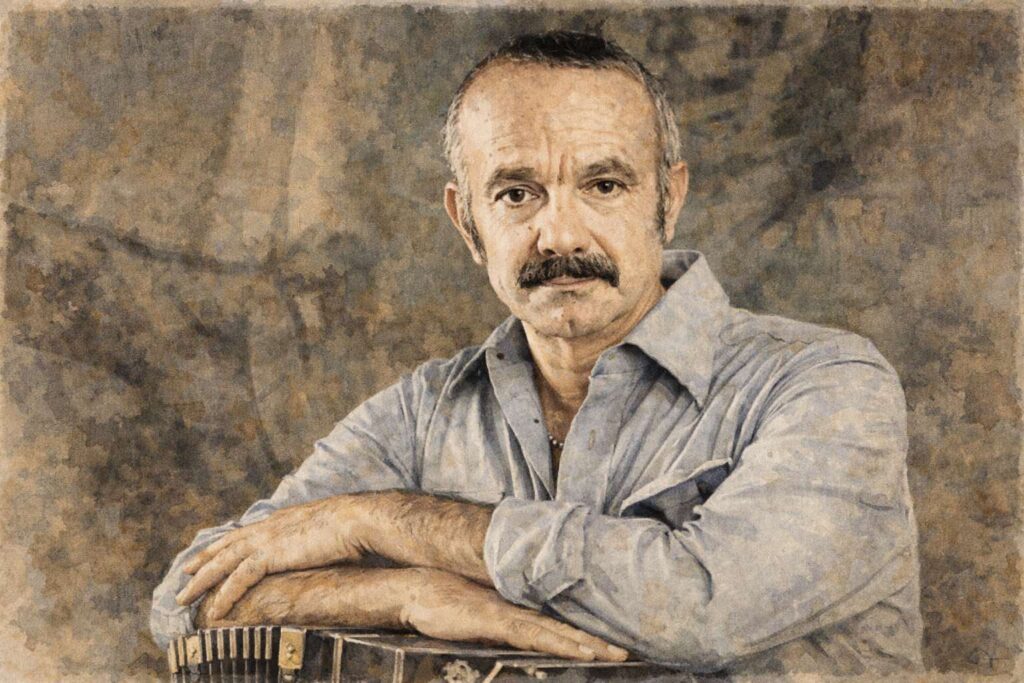
Ahmad Pejman (9 July 1935 – 29 August 2025) stands as one of the most towering and transformative figures in modern music history, bridging the profound structural complexities of Western polyphony with the rich, modal textures of Persian classical and regional folk traditions. Throughout an illustrious career spanning over six decades, Pejman redefined the boundaries of how Middle Eastern motifs could be expressed within the Western orchestral apparatus. Known across global academic and artistic circles for his expansive body of work, which ranges from pioneering operas and modern ballets to sweeping, emotionally raw film scores, his name is frequently spelled across international catalogs as Ahmad Pezhman. This dual orthography reflects his far-reaching footprints across both Eastern and Western cultural landscapes, rendering him an invaluable study for musicologists tracing the evolution of twentieth and twenty-first-century composition.
As a Persian composer who worked extensively across multiple continents, Pejman refused to let his art be confined by simple exoticism or academic rigidity. Instead, his compositions served as living, breathing cross-cultural dialogues. He belonged to a seminal generation of visionary Iranian composers who sought to dismantle the perceived walls between traditional Persian modal systems (the Radif) and Western classical frameworks. By infusing the standard orchestral palette with the unique asymmetrical rhythms of Southern Iran, the intricate microtonal inflections of Iranian instruments, and the dramatic narratives of epic Persian literature, Pejman carved out a distinct aesthetic language that remains unparalleled in Iran’s music history.
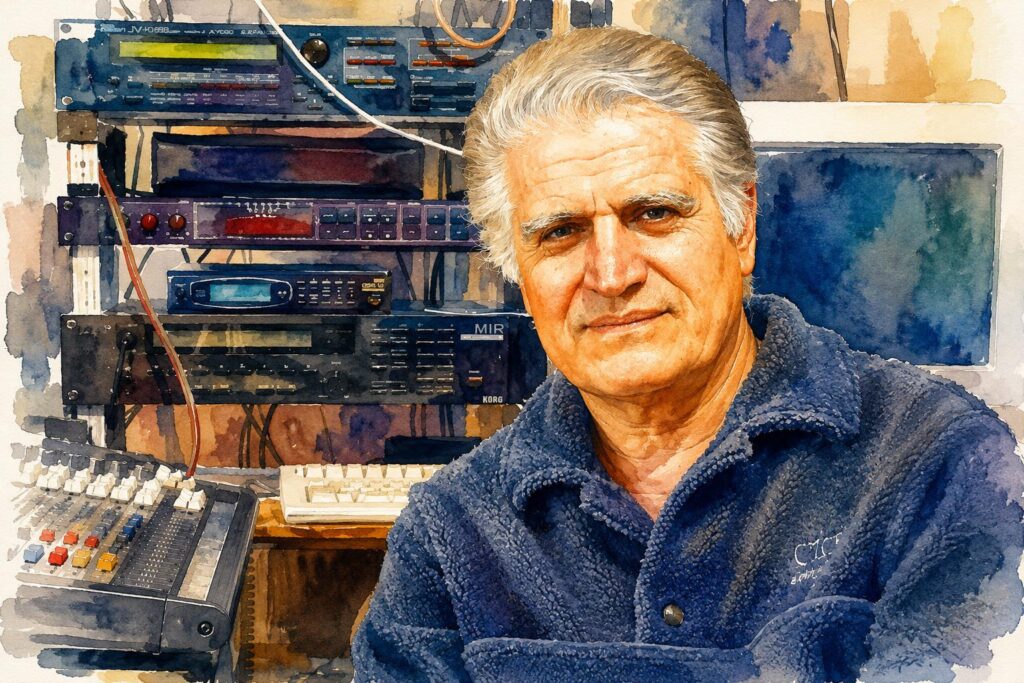
Early Life of Ahmad Pejman and Roots in the Sounds of the South
Born on July 9, 1935, in the historic city of Lar, situated within the Fars Province of Iran, Ahmad Pejman was exposed to an evocative sonic landscape from his earliest childhood. The geographical realities of Southern Iran, with its stark desert landscapes, coastal proximity, and complex history of migration ,yielded a vibrant, highly rhythmic folk culture distinct from the urban classical traditions of Tehran. The syncopated drum beats, ritualistic calls, and emotionally piercing vocal melodies of the south left an indelible mark on the young Pejman, instilling in him a lifelong fascination with complex time signatures and raw, propulsive percussion.
When his family relocated to Tehran, Pejman began formalizing his musical passions. During his high school years, he took up the violin under the direct supervision of Maestro Heshmat Sanjari, who was then a leading conductor of the Tehran Symphony Orchestra. Concurrently, Pejman immersed himself in the study of music theory and fundamental harmony with Hossein Nassehi, a pioneering figure who encouraged young Iranian musicians to think structurally about composition.
Before committing fully to music as a life’s calling, Pejman pursued higher education in English Literature at the Daneshsara-ye-Ali (Higher House of Knowledge) in Tehran, graduating in 1963. This literary foundation deepened his understanding of narrative structure, poetic meter, and epic storytelling—qualities that would later directly inform his dramatic vocal works, ballets, and programmatic symphonies. His exceptional skill as a violinist quickly earned him a coveted seat within the Tehran Symphony Orchestra, where he performed under the batons of Sanjari and the Austrian guest conductor Haymo Taeuber. Recognizing his immense potential, the Iranian Ministry of Culture and Arts awarded Pejman a prestigious scholarship to study academic composition in Europe, setting the stage for his global journey.
The Vienna Academy: Formal Western Foundations
In the mid-1960s, Pejman arrived in Austria to enroll at the prestigious University of Music and Performing Arts Vienna (then the Music Academy in Vienna). This move placed him at the heart of European classical music development, a environment defined by both rigorous traditionalism and radical avant-garde experimentation.
Pejman studied under a roster of 20th-century compositional masters:
- Thomas Christian David: The renowned Austrian composer and conductor who instilled a deep respect for contrapuntal clarity and orchestral color.
- Alfred Uhl: Celebrated for his chamber and orchestral works, who refined Pejman’s structural precision.
- Hans Jelinek and Friedrich Cerha: Pioneers of serialism and contemporary avant-garde techniques, who pushed Pejman to explore complex harmonic languages, twelve-tone rows, and dense texture-mapping.
Pejman’s brilliance was evident almost immediately. As a first-year student at the Academy, his Concerto for Nine Instruments (1964) was selected for performance by the Vienna Chamber Orchestra. Shortly thereafter, in 1965, his orchestral work Rhapsody was performed and recorded by the Vienna Radio Symphony Orchestra. Rather than merely mimicking the European avant-garde or late-Romantic styles of his instructors, Pejman used his newfound technical mastery to synthesize his Iranian heritage. He utilized the strict mathematical frameworks of Western polyphony to organize the microtonal modes and asymmetrical rhythms he carried from his homeland, resulting in a fresh, striking sound that caught the ears of international critics.
The Golden Age of Iranian Opera and Ballet (1968–1978)
Upon graduating with high honors from the Vienna Academy, Pejman returned to Iran in 1968. The country was experiencing an unprecedented cultural renaissance, marked by the construction of state-of-the-art performance spaces and a massive state push to cultivate high art that was both globally relevant and distinctly Iranian. The crown jewel of this movement was the newly opened Rudaki Hall (Tehran Opera House).
Pejman was thrust into the center of this cultural explosion. He was commissioned to write the first-ever authentic Persian opera, Rustic Festival (Feast of the Farmer), for the official inaugural season of Rudaki Hall in 1967–1968. This one-act opera combined Western operatic vocalization with traditional Iranian pastoral themes, setting a historic precedent.
“With Rustic Festival, Pejman proved that the Persian language, with its distinct poetic cadences, could be seamlessly married to the grand traditions of European opera without losing its internal soul or dramatic weight.”
Following this success, Pejman composed The Hero of Sahand (Delāvar-e-Sahand) in 1968, a massive two-act opera based on the life of Babak Khorramdin, the legendary Persian revolutionary hero who fought against the Abbasid Caliphate. The premiere at Rudaki Hall was a monumental state event, attended by cultural elites and international dignitaries. Pejman’s ability to summon nationalistic fervor through a brilliant combination of brass-heavy orchestration and modal vocal writing established him as a premier creative force.
During this exceedingly fertile decade, Pejman consistently produced works that shattered stylistic barriers:
| Work Name | Year | Genre / Scoring | Cultural Significance |
| The Illumination | 1969 | Ballet / Orchestra | Explored mystical Sufi concepts through modern choreographic music. |
| Samandar | 1970 | Opera in Three Acts | A deeply psychological opera utilizing advanced harmonic language. |
| Ayyaran | 1974 | Ballet for Persian Instruments | A groundbreaking work written entirely for an ensemble of traditional Iranian instruments (Santoor, Tombak, Tar), using avant-garde structural forms. |
| Symphonic Sketches | 1975 | Orchestral Suite | A showcase of how regional folk melodies could be fully realized by a massive Western symphony orchestra. |
American Exile and the Electronic Frontier
In 1976, recognizing the growing political instabilities in Iran and seeking further intellectual growth, Pejman moved to New York City. He entered the highly competitive Doctor of Musical Arts (DMA) program at Columbia University, an institution world-renowned for its cutting-edge research into computer music and electronic synthesis.
At Columbia, Pejman studied under the godfathers of electronic music: Vladimir Ussachevsky, Jack Beeson, and Bülent Arel. This period expanded his compositional toolkit exponentially. He began incorporating tape music, early analog synthesizers, and manipulated acoustic wave-forms into his scoring. This radical departure from purely acoustic writing allowed him to treat sound itself as a malleable, sculptural medium.
The Iranian Revolution of 1979 permanently disrupted Pejman’s ability to return to his homeland, forcing him into a long, bittersweet exile in the United States. In 1984, he relocated to Los Angeles, California, which housed a massive Iranian diaspora community. In the United States, Pejman faced the challenge common to many exiled music composers: the collapse of the institutional state patronage system that had funded his massive operas and ballets in Tehran.
Displaying remarkable adaptability, Pejman diversified his output. He began arranging and composing for high-end jazz and pop ensembles, bringing an unprecedented level of harmonic sophistication to Iranian diaspora popular music. More importantly, he re-channeled his dramatic instincts into the world of cinematic scoring, finding that film music offered the same grand canvas for narrative storytelling that opera and ballet once had.
Cinematic Mastery and Late Orchestral Works
Beginning in the late 1980s and accelerating through the 1990s and 2000s, Pejman established himself as one of the definitive voices of modern Iranian cinema. He collaborated with a brilliant roster of post-revolutionary filmmakers, providing scores that elevated films into deeply poetic, sonic experiences.
His film scores are celebrated for their minimalism, atmospheric depth, and profound psychological insight. For Bahman Farmanara’s masterpiece Smell of Camphor, Fragrance of Jasmine (2000), Pejman composed a haunting, melancholic score that captured the existential grief and cultural stasis of contemporary intellectual life in Iran, earning him the prestigious Crystal Simorgh for Best Film Score at the Fajr International Film Festival. He won the award again the following year for his brilliant work on Majid Majidi’s globally acclaimed film Baran (2001), where he combined Afghan folk textures with delicate orchestral lines to mirror the silent, heartbreaking love story unfolding on screen.
Despite his heavy involvement in cinema, Pejman never abandoned the concert hall. In 1992, he was commissioned to write Khorramshahr, a massive cantata for soloist, chorus, and orchestra commemorating the liberation of the war-torn city of Khorramshahr during the Iran-Iraq War. This was followed by the epic ballet Seven Hurdles of Rostam (Haft Khan-e Rostam) in 1996, which brought the legendary heroic trials of Ferdowsi’s Shahnameh to vivid musical life.
In 2007, Pejman released one of his most ambitious late-career masterworks: the oratorio Resurrection (Rastakhiz). Recorded in Moscow with the Mosfilm Orchestra and the Moscow Academy Choir, Resurrection is an epic spiritual journey that addresses universal human themes of mortality, transcendence, and cosmic rebirth. Structurally dense and emotionally overwhelming, the work represented a lifetime of technical synthesis, blending Western structural patterns, choral writing reminiscent of Bach and Stravinsky, and the profound mystical philosophy of Persia.
A Living Resonance: Personal Encounters with the Ahmad Pejman Soundscape
To fully grasp the magnitude of Pejman’s genius, one must step away from academic scores and enter the visceral, emotional space where his music breathes. For many who follow his trajectory, his masterwork Resurrection, particularly the sweeping, symphonic instrumental version, stands as a crowning achievement in modern composition. It is a piece that demands a live stage, yet even through recordings, its profound structural layers offer a sanctuary for the listener. However, experiencing Pejman’s vision realized live within the historic acoustic spaces of Iran is an entirely transformative encounter that permanently alters one’s perception of orchestral music.
Years ago, while living in Tehran, I had the profound privilege of witnessing his monumental composition Khorramshahr performed live by the Tehran Symphony Orchestra at Vahdat Hall. The atmosphere generated within that hall was completely unparalleled. It was a space where the rigid boundaries of the Western orchestral tradition were deliberately, beautifully shattered.
The integration of traditional Iranian percussion, specifically the resonant, framing thunder of the daf and the intricate, rhythmic agility of the tonbak, created a sonic climate that standard Western sections simply cannot replicate. Ahmad Pejman’s deliberate expansion of the standard orchestra using these national instruments does not merely alter the texture; it fundamentally expands the emotional vocabulary of the music itself, infusing the grand European tradition with a raw, ancient pulse.
[Western Orchestral Strings/Brass]
               │
               ▼  (Bridged by Pejman's Modal Counterpoint)
[Persian Percussions: Daf & Tonbak]
               │
               ▼
[Expanded Emotional & Sonic Expression]
This fluid cross-pollination highlights a stark cultural divergence between Eastern structural innovation and Western traditionalism. Now living in Estonia, the contrast is impossible to ignore. In the concert halls of Northern Europe and across the broader West, the classical symphony orchestra has largely become treated as a sacred, immutable set. It is an ensemble tightly bound by historical parameters, where the introduction of unconventional or national folk instruments is treated as an extreme anomaly, an omission that remains deeply felt when listening to orchestras in the West.
Conversely, in Iran, largely due to the foundational legacy of Ahmad Pejman and his contemporaries, this hybridity is neither shocking nor viewed as a passing gimmick. When audiences attend a performance by the Tehran Symphony Orchestra or Iran’s National Orchestra, the co-existence of Western ensembles and Persian instruments is recognized as a natural, expected evolution in music history. By refusing to treat the Western orchestra as an untouchable museum relic, Pejman gifted it a modern, global vernacular, proving that the truest expressions of art occur when we allow diverse musical worlds to live, collide, and breathe on the exact same stage.
Thematic Analysis of the “Pezhman Style”
The enduring genius of Ahmad Pejman lies in his highly specific, inimitable methodology of cross-cultural fusion. Many composers who attempt to merge Eastern and Western musical traditions fall into the trap of superficial tokenism—simply overlaying a folk melody on top of basic Western major/minor chords. Pejman completely rejected this approach.
Instead, his style was characterized by several core principles:
- Modal Contrapuntalism: Pejman took the microtonal structures of the Persian Dastgah system and analyzed them through the lens of strict counterpoint. He discovered ways to let multiple modal lines move independently, creating a unique brand of polyphony that did not violate the emotional integrity of the original Iranian modes.
- Asymmetrical Rhythmic Vitality: Drawing heavily from his Southern Iranian roots, Pejman bypassed the standard $2/4$, $3/4$, or $4/4$ time signatures of traditional Western music. He filled his symphonies and ballets with driving, unstable meters like $5/8$, $7/8$, and $11/8$, executing them with a crisp, athletic precision that gave his music an unmistakable sense of urgency and forward momentum.
- Timbral Hybridity: Pejman was a master of orchestration. He knew exactly how to blend the breathy, human quality of the Persian Ney or the percussive, metallic shimmer of the Santoor with the lush string sections of a Western orchestra. He used the orchestra not as a dominant force to tame Persian music, but as a vast resonance chamber to amplify its inherent acoustic beauty.
Importance, Legacy, and Global Recognition of Ahmad Pejman
Ahmad Pejman’s contribution to international art music lies in his role as a bridge builder. He proved to the Western classical establishment that non-Western musical systems possess an inherent structural intellectualism capable of sustaining grand-scale abstract forms like symphonies, operas, and oratorios. To the Eastern musical world, he offered a template of how to modernize and globalize ancient traditions without sacrificing their historical identity or emotional depth.
His legacy is preserved not only in his extensive discography but also through the generation of younger composers he mentored and inspired. During his stints teaching at Tehran University and his subsequent masterclasses in exile, Pejman championed a philosophy of rigorous academic discipline mixed with bold, individual experimentation.
In his final years, living in Los Angeles, Pejman received numerous lifetime achievement honors. In 2024, the UCLA Iranian Music Program and the Iranshahr Orchestra presented him with a historic Lifetime Achievement Award, a fitting tribute to a creator who spent his entire life expanding the vocabulary of human expression. Following his passing on August 29, 2025, at the age of 90, tributes poured in from cultural institutions worldwide, cementing his status as an immortal titan who reshaped the landscape of global composition.
Sources
- Akbarzadeh, Pejman. Persian Musicians (Volume 1 & 2). Navid Publications, Tehran, 2000-2002.
- Farhang Foundation. In Memoriam: Maestro Ahmad Pejman (1935 – 2025). Los Angeles, CA, August 2025.
- Nour News International. Renowned Iranian Composer Ahmad Pejman Dies in Los Angeles. August 2025.
- University of California, Los Angeles (UCLA). The UCLA Iranian Music Program Archive: Special Retrospective on Ahmad Pejman. 2024.
- Wikipedia Contributors. Ahmad Pejman: Life, Operas, and Cinematic Scores. Wikipedia, The Free Encyclopedia.
#AhmadPejman #AhmadPezhman #IranianComposers #ClassicalMusic #MusicHistory #PersianComposer #IransMusicHistory #ContemporaryClassical #TehranSymphonyOrchestra #RudakiHall #PersianOpera #FilmScoreComposer #CrystalSimorgh #OrchestralMusic #Ethnomusicology