Christoph Willibald Gluck (2 July 1714 – 15 November 1787) was a towering figure of the eighteenth century whose radical vision permanently shifted the trajectory of Western opera. At a time when musical theater had devolved into a predictable showcase for vocal acrobatics and singer vanity, Gluck championed a philosophy that placed dramatic truth and emotional sincerity above all else. By dismantling the rigid conventions of Baroque opera, he paved the way for the Classical era, leaving an indelible imprint on the narrative power of music. His sweeping dramatic restructuring marks one of the most consequential turning points in music history, transforming the relationship between text, action, and musical composition.
While many of his contemporaries were content to work within established frameworks, Gluck possessed the rare combination of artistic audacity and institutional savvy needed to upend a highly conservative industry. His journey took him from rural Bavaria through the cultural capitals of Europe, Milan, London, Vienna, and Paris, allowing him to absorb diverse traditions before fusing them into a unified, revolutionary style. Today, he is remembered not merely as an important transitional figure, but as one of the most fiercely original music composers to ever approach the theatrical stage, fundamentally redefining what opera could achieve.
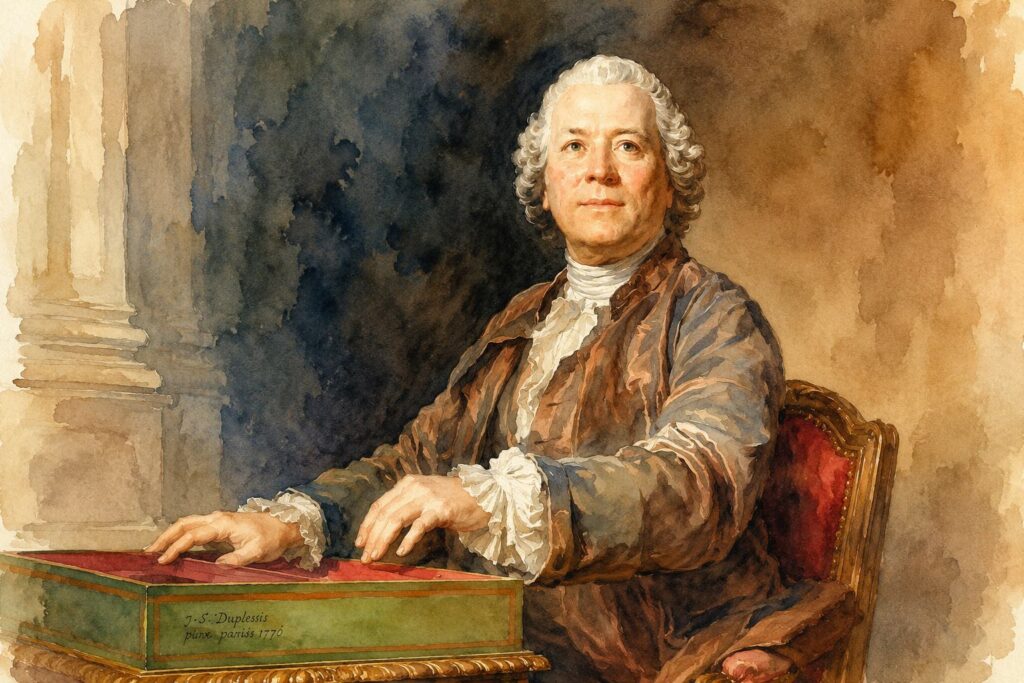
Early Life and Wanderings (1714–1736)
Gluck was born in Erasbach, a small village in the Upper Palatinate (modern-day Bavaria), to Alexander and Maria Walburga Gluck. His father was a professional forester, a demanding trade that required the family to move frequently. Around 1717, the Glucks relocated to Bohemia, a region steeped in rich musical traditions. Alexander Gluck found employment with several prominent noble families, eventually settling under the service of Prince Lobkowitz.
The young Christoph’s early relationship with music was forged in this rural, woodland environment. His father, a pragmatic man of modest means, strongly disapproved of a musical career, intending for his son to follow in his footsteps as a forester. This ideological clash sparked an independent streak in Christoph. According to historical lore, around the age of thirteen or fourteen, Gluck fled his family home to escape his father’s expectations. Embracing the life of a wandering musician, he traveled across Bohemia, singing in church choirs and playing the violin and cello in taverns to earn a meager living.
By 1731, Gluck had arrived in Prague, where he enrolled at the university to study logic and mathematics while simultaneously immersing himself in the city’s vibrant musical ecosystem. He sang at the church of St. James and came under the mentorship of Father Bohuslav Matěj Černohorský, a highly respected organist and composer. Under Černohorský’s guidance, Gluck polished his foundational skills in counterpoint and composition, absorbing the Italianate style that saturated the Bohemian capital. This period of poverty, resourcefulness, and self-directed education instilled in Gluck a lifelong resilience and an innate understanding of how music connected with everyday, diverse audiences.
The Italian Apprenticeship (1737–1745)
Gluck’s fortunes changed dramatically in 1736 when he traveled to Vienna under the patronage of Prince Lobkowitz. While performing at the Prince’s palace, his raw talent caught the attention of an Italian nobleman, Count Antonio Maria Melzi. Impressed by the young musician’s potential, Melzi engaged Gluck for his private orchestra in Milan.
Arriving in Milan in 1737, Gluck found himself at the epicenter of opera seria—the dominant, highly conventionalized form of Italian serious opera. He immediately sought out Giovanni Battista Sammartini, a foundational pioneer of the early symphony and a master of instrumental writing. Gluck spent four years studying with Sammartini, learning to weave textures together with an unprecedented level of expressive clarity.
Gluck's Italian Apprenticeship Timeline:
1737: Arrives in Milan; begins intensive studies with Sammartini.
1741: Debuts first opera 'Artaserse' at the Teatro Regio Ducal.
1742–1744: Composes a string of traditional operas for northern Italian stages.
1745: Departs Italy with an established reputation as a reliable maestro.
In 1741, Gluck felt ready to test his skills on the public stage. His debut opera, Artaserse, set to a libretto by the famous poet Pietro Metastasio, premiered at the Teatro Regio Ducal in Milan. The work was an immediate commercial success, characterized by the traditional alternation of dry, harpsichord-accompanied recitatives and elaborate da capo arias meant to showcase the vocal prowess of castrati and prime donne. Over the next four years, Gluck poured out a succession of operas for various northern Italian cities, establishing a solid, reliable reputation within the international operatic industry. Yet, even as he achieved financial stability and public acclaim, a profound artistic dissatisfaction was quietly brewing beneath the surface.
The Gathering Storm: London and International Travels
In 1745, Gluck accepted an invitation to travel to London to serve as the house composer for the King’s Theatre at the Haymarket. The journey proved to be an eye-opening artistic experience. London’s musical landscape was dominated by the towering legacy of George Frideric Handel, who, though nearing the end of his career, still cast a massive shadow over the British capital.
Gluck produced two operas for London, La caduta de’ giganti and Artamene, neither of which achieved lasting success. Handel himself famously remarked that Gluck “knows no more of counterpoint than my cook.” However, this superficial dismissal belied the deep impression Handel’s dramatic style left on Gluck. He watched in fascination as Handel utilized massive choral blocks and direct, unadorned musical gestures to evoke raw human emotion in his English oratorios.
Furthermore, Gluck met the English composer Thomas Arne, whose simpler, more text-driven English operas contrasted sharply with the convoluted, singer-centric structures of Italian opera seria. Gluck began to realize that the rigid conventions he had mastered in Italy were choking the life out of musical drama.
Following his London stay, Gluck spent several years traveling across Europe with the Mingotti opera troupe. He visited Hamburg, Leipzig, Copenhagen, and Prague, performing, composing, and observing how different cultures interacted with music. In 1750, he married Maria Anna Bergin, the daughter of a wealthy Viennese merchant. The marriage was remarkably happy, childless but deeply stable, providing Gluck with the financial independence he needed to pursue his artistic ideals without being entirely beholden to the conservative whims of commercial theater managers.
The Viennese Court and the Genesis of Reform (1752–1761)
Gluck settled permanently in Vienna in 1752, entering the service of the imperial court under Empress Maria Theresa. He was appointed Kapellmeister of the opera house, a prestigious position that placed him at the heart of one of Europe’s most progressive cultural environments. Vienna in the 1750s was undergoing a profound transformation managed by Count Giacomo Durazzo, the director of the imperial theaters. Durazzo was determined to modernize the Viennese stage by introducing French theatrical styles, specifically opéra-comique and French classical tragedy, which emphasized natural acting, spoken dialogue, and integrated choruses.
Gluck was tasked with arranging and adapting these French works for the Viennese court. This immersion in French theatrical style was the catalyst his reform philosophy needed. In works like Le diable à quatre (1759) and La rencontre imprévue (1764), Gluck discovered a style of music that was light, direct, and entirely subservient to the text.
At the same time, Gluck formed a revolutionary artistic partnership with two like-minded intellectuals: the Italian poet and librettist Ranieri de’ Calzabigi and the innovative choreographer Gasparo Angiolini. Calzabigi was a vocal critic of the artificiality of Metastasian opera, arguing that plots had become too convoluted and that characters spoke in a detached, hyper-intellectualized poetic language. Together, Gluck, Calzabigi, and Angiolini sought to strip away the accumulation of decades of theatrical excess and return opera to its ancient Greek roots: a pure, unified expression of drama, poetry, music, and dance.
| The Three Pillars of Gluck’s Artistic Circle | Core Contribution to the Reform Movement |
| Christoph Willibald Gluck (Composer) | Stripped away vocal display; tied the orchestra directly to the dramatic action. |
| Ranieri de’ Calzabigi (Librettist) | Replaced complex, multi-layered subplots with direct, emotionally intense storylines. |
| Gasparo Angiolini (Choreographer) | Abolished decorative ballet interludes; integrated dance into the main narrative arc. |
The Radical Reform Operas
The artistic partnership between Gluck and Calzabigi bore its first revolutionary fruit on October 5, 1762, with the premiere of Orfeo ed Euridice at the Burgtheater in Vienna. The work sent shockwaves through the musical world. Instead of the typical labyrinth of political intrigue and subplots involving half a dozen characters, Orfeo featured only three singing roles: Orfeo, Euridice, and Amore (Cupid). The plot was streamlined to its bare narrative bones, focusing entirely on the raw psychological reality of grief, love, and loss.
Musically, Orfeo shattered every major convention of Italian opera. Gluck abandoned the traditional dry recitative entirely, replacing it with recitativo accompagnato—recitative accompanied by the full, expressive colors of the orchestra. This allowed for a seamless, continuous flow of music, bridging the gap between narrative dialogue and formal lyrical numbers.
The individual numbers themselves were radically simplified. The showy, repetitive da capo aria was replaced by direct, syllabic melodies that prioritized the emotional state of the character over the technical virtuosity of the singer. This structural clarity is perfectly exemplified in the opera’s most famous aria, “Che farò senza Euridice?” (What shall I do without Euridice?), where Orfeo laments his wife’s second death with a heartbreakingly simple, elegant melody that stands as a landmark achievement in the canon of classical music.
    [Baroque Opera Seria]                 [Gluck's Reform Opera]
+---------------------------+         +---------------------------+
|  Singer-Centric Display   |         |   Drama-Centric Urgency   |
|  Rigid Da Capo Arias      |   ==>   |  Streamlined, Direct Song |
|  Dry Recitative (Cembalo) |   ==>   |  Orchestrated Recitative  |
|  Decorative, Stray Ballet |         |  Narrative-Driven Dance   |
+---------------------------+         +---------------------------+
Gluck expanded upon these principles in his next major collaboration with Calzabigi, Alceste (1767). In the printed dedication of the score, Gluck published a historic manifesto that explicitly outlined his aesthetic goals, providing an invaluable document for our understanding of Enlightenment-era arts.
“I map out my plan to restrict music to its true office of serving poetry by means of expression and by following the situations of the story, without interrupting the action or stifling it with a useless accumulation of ornaments.”
— Christoph Willibald Gluck, Preface to the Score of Alceste (1767)
Through these works, Gluck transformed the orchestra from a passive accompaniment machine into an active character in the drama. In the famous underworld scene of Orfeo, the orchestra’s aggressive, rhythmic interruptions represent the terrifying, unyielding refusals of the Furies, creating a visceral sense of dread that text alone could never achieve.
The Paris Confrontations: Gluckists vs. Piccinnists
Despite his success in Vienna, Gluck sought a larger, more internationally influential platform to solidify his operatic revolution. In the early 1770s, he turned his sights toward Paris, the intellectual capital of the Enlightenment. Assisted by his former singing pupil, Marie Antoinette—who had recently become the Dauphine and subsequent Queen of France—Gluck signed a lucrative contract with the Paris Opéra.
His arrival in Paris sparked one of the most famous aesthetic wars in cultural history. In 1774, Gluck premiered Iphigénie en Aulide, followed closely by a French adaptation of Orfeo (Orphée et Eurydice). The French public, long accustomed to the stately but conservative tragedies of Lully and Rameau, was deeply divided by Gluck’s raw, emotionally charged style.
The conservative factions of the French artistic establishment, uncomfortable with Gluck’s Teutonic intensity and his total subjugation of traditional vocal beauty to dramatic truth, sought a counterweight to his influence. They invited the talented Italian composer Niccolò Piccinni to Paris, intentionally setting up a bitter rivalry between the two men.
The cultural elite of Paris quickly split into two warring camps: the “Gluckists,” who championed dramatic truth, emotional urgency, and structural innovation, and the “Piccinnists,” who defended the traditional Italian values of vocal lyricism, graceful melodic design, and vocal agility. Pamphlets were traded, insults were thrown across salons, and arguments routinely broke out in the theater lobbies.
The director of the Paris Opéra cleverly exploited this rivalry by commissioning both composers to write an opera on the exact same subject: Iphigénie en Tauride. Gluck’s setting, premiered on May 18, 1779, was an undeniable masterpiece, representing the absolute pinnacle of his reform style. The opera’s dramatic tension was relentless; Gluck famously underscored a scene where Orestes claims his heart is at peace with frantic, anxious rhythms in the violas, proving that the music could reveal a character’s subconscious psychological state. Piccinni’s version, plagued by administrative delays and cast issues, premiered two years later and failed to match the searing dramatic power of Gluck’s work. The aesthetic war was decisively won by the Gluckists, and his reform principles became the new foundational standard for French grand opera.
Final Years and Personal Reflection (1780–1787)
Following the triumphant success of Iphigénie en Tauride, Gluck produced one final opera for Paris, Echo et Narcisse (1779). The work was received with lukewarm enthusiasm, an artistic disappointment that deeply affected the aging composer. Suffering the opening warning signs of a series of debilitating strokes, Gluck decided to leave Paris and retire to the peaceful surroundings of Vienna.
His final years were spent in affluent, comfortable retirement in a grand villa on the outskirts of the Austrian capital. Though his physical health was steadily declining, his mind remained sharp, and he remained an influential elder statesman of the Viennese musical community. He took a keen interest in the rising stars of the next generation, most notably Antonio Salieri and Wolfgang Amadeus Mozart. Gluck attended a performance of Mozart’s Die Entführung aus dem Serail in 1782, praising the young composer’s innate dramatic genius despite Mozart working within a vastly different musical style.
Gluck suffered a final, fatal stroke on November 15, 1787, at the age of seventy-three. His death was mourned across Europe, recognized as the passing of a true musical revolutionary who had fundamentally reshaped the landscape of the theater. He was buried in the Matzleinsdorf Cemetery, though his remains were later moved to a prominent grave of honor in Vienna’s Central Cemetery (Zentralfriedhof), where he rests alongside the very giants of the art form who built upon his architectural foundations.
Importance and Enduring Legacy
Gluck’s historical importance cannot be overstated. By rescuing opera from the sterile formulas of the late Baroque period, he re-established it as a viable, deeply serious art form capable of exploring the darkest, most profound depths of the human condition. His insistence that music must always remain secondary to the drama liberated future generations of composers from the stifling tyranny of performers, restoring the creator’s intent to its rightful place at the center of the theatrical experience.
       [Gluck's Operatic Lineage]
               Gluck
                 │
        ┌────────┴────────┐
        ▼                 ▼
     Mozart            Berlioz
  (Idomeneo /      (Les Troyens /
  Don Giovanni)    Champion of Gluck)
                          │
                          ▼
                       Wagner
               (Gesamtkunstwerk Concept)
The ripples of Gluck’s reform can be felt across the entire nineteenth century:
- Wolfgang Amadeus Mozart: Carefully studied Gluck’s scores, and their influence is explicitly evident in the rich orchestrations and dramatic choruses of his serious operas like Idomeneo and the supernatural undercurrents of Don Giovanni.
- Hector Berlioz: Became perhaps the most passionate champion of Gluck’s legacy in the nineteenth century, supervising major revivals of his works in Paris and modeling his own monumental epic Les Troyens directly on Gluck’s classical structures.
- Richard Wagner: Gluck’s focus on a unified artwork directly anticipated Wagner’s concept of the Gesamtkunstwerk (Total Artwork). Wagner recognized Gluck as his truest intellectual ancestor, acknowledging that the path to his epic music dramas began with the brave reforms initiated in the eighteenth century.
Gluck remains a foundational architect of the operatic stage. Every time a modern audience sits in a darkened theater, swept up in a production where the lighting, acting, orchestration, and text work in perfect, organic harmony to tell a compelling story, they are experiencing the direct fulfillment of Christoph Willibald Gluck’s radical vision.
Sources
- Heartz, Daniel. Haydn, Mozart, and the Viennese School: 1740-1780. W. W. Norton & Company, 1995.
- Howard, Patricia. Gluck and the Birth of Modern Opera. Baroque Press, 2003.
- Rushton, Julian. The New Grove Enlightenment Composers: Gluck, Haydn, Mozart. Oxford University Press, 1985.
- Einstein, Alfred. Gluck: A Biography. Translated by Eric Blom. McGraw-Hill, 1972.
#Gluck #OperaReform #ClassicalMusic #MusicHistory #Opera #GermanComposers #OrfeoEdEuridice #EighteenthCentury #VienneseClassical #MusicComposers #ParisOpera #Musicology #Enlightenment #MusicalTheater #DramaticArts