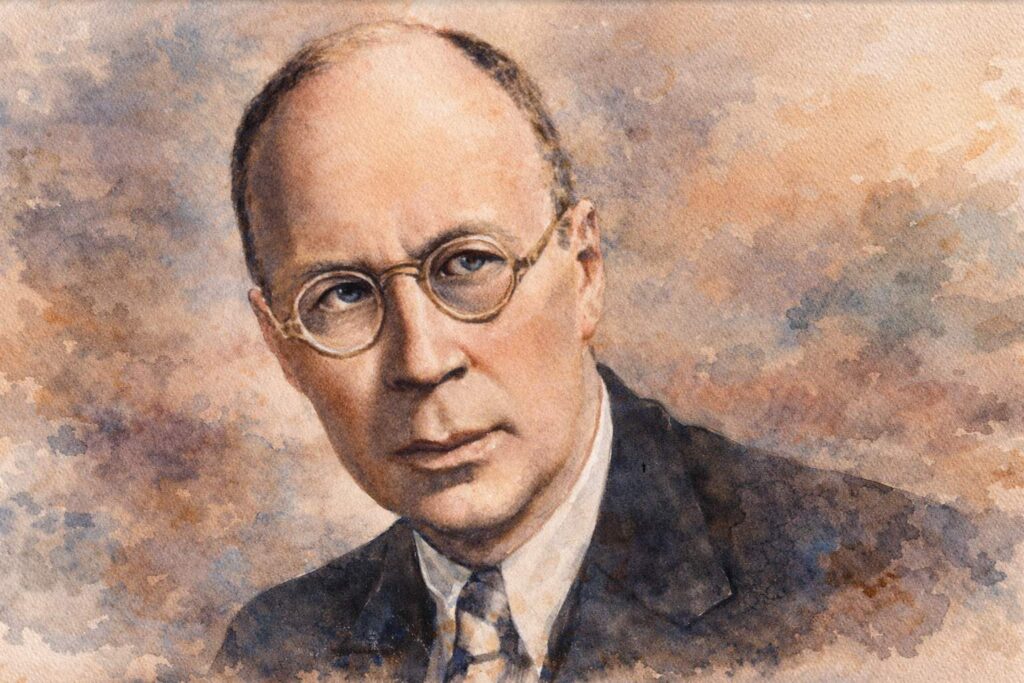
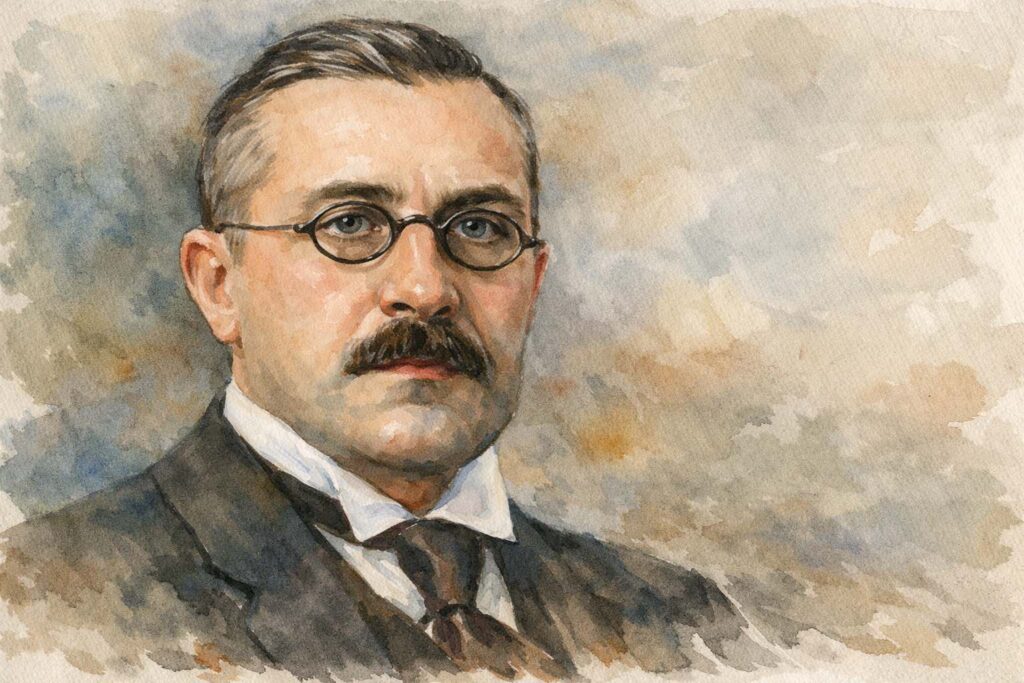
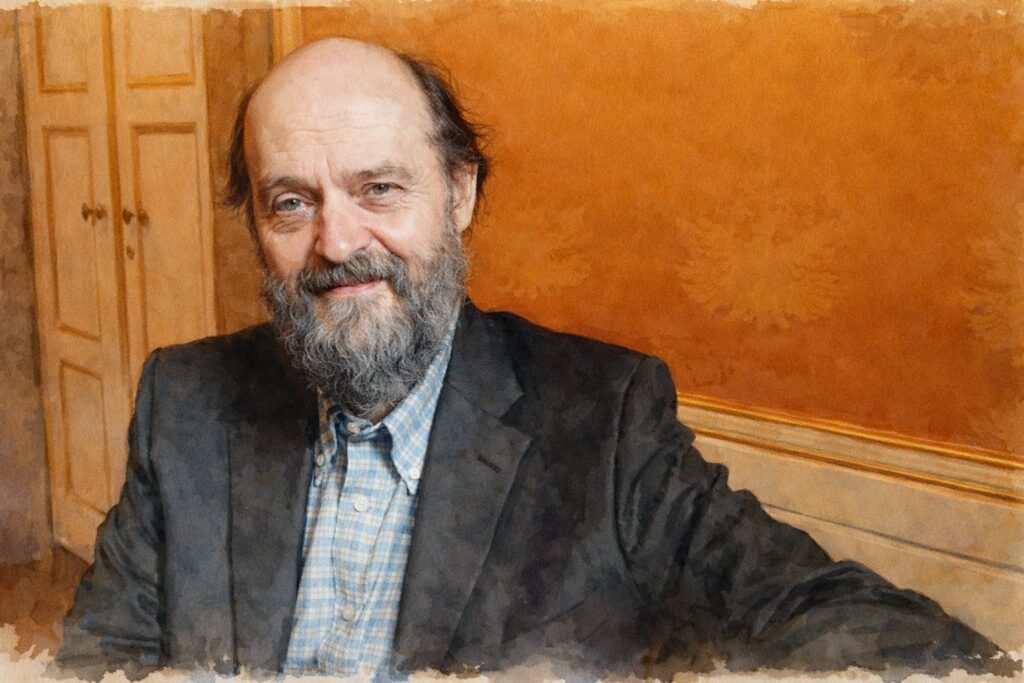
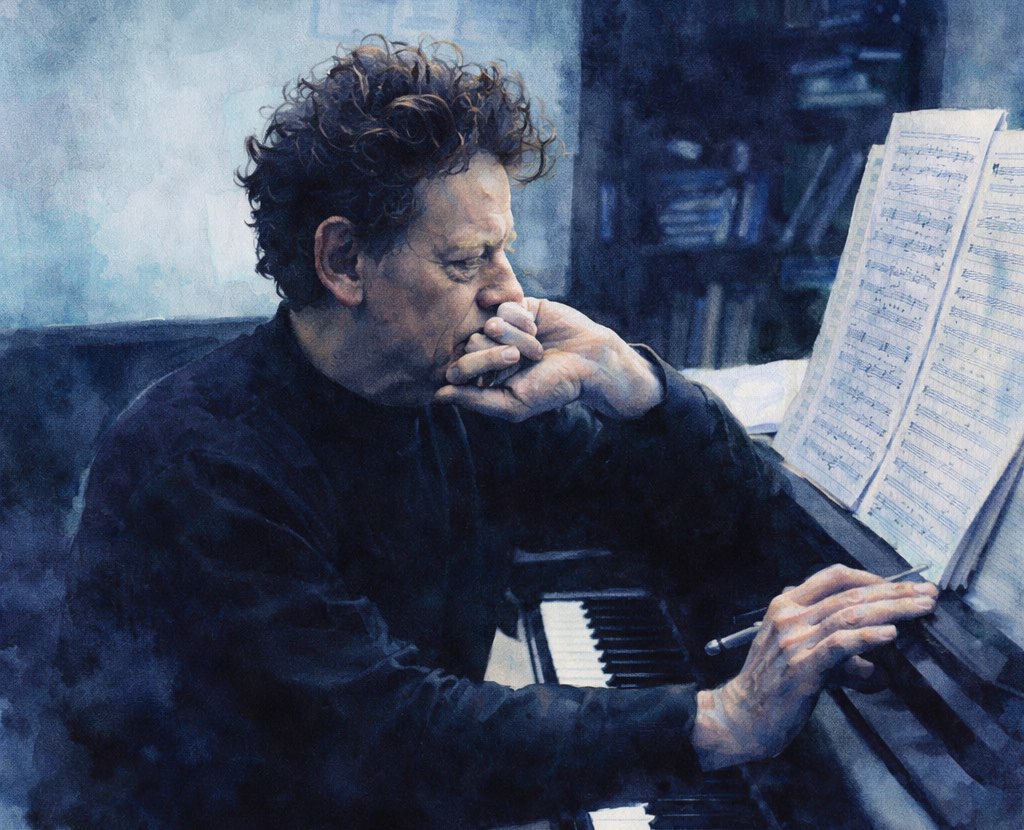
Erik Satie (17 May 1866 – 1 July 1925) is often remembered as the enigmatic, eccentric French composer who “taught the world to play piano music differently.” Though his name is now synonymous with quirky salon pieces and the term “satie” (to compose silently), Satie’s influence stretches far beyond the piano‑room. He helped lay the groundwork for impressionism, minimalism, and ambient music, and his off‑beat sense of humor and detached melancholy continue to fascinate musicians and listeners alike.
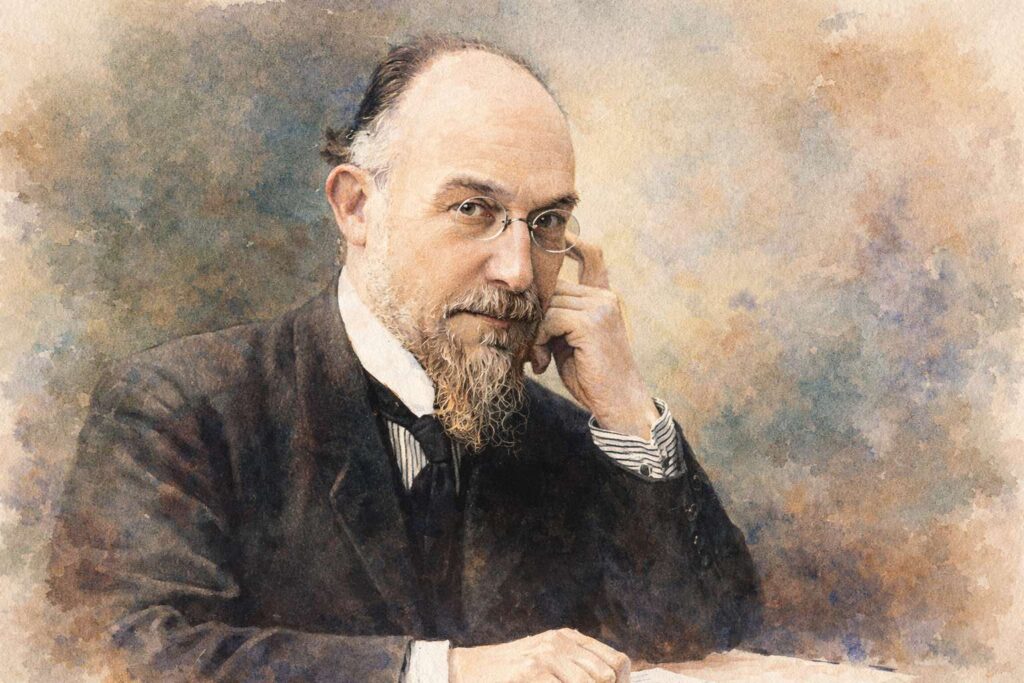
Early Life, Education, and First Musical Influences
Erik Satie was born in the small Norman town of Honfleur. His father, Jean‑Baptiste Satie, was a violinist and music teacher, while his mother, Josephine Béranger, provided a supportive home environment that nurtured his early musical curiosity. Satie’s first encounters with music began in childhood: he took violin lessons at the age of four and started piano at nine, quickly developing a natural aptitude for reading music and composing simple pieces. By twelve he was already performing publicly in his hometown, a testament to his precocious talent.
In 1882, Satie entered the prestigious Conservatoire de Paris, hoping to refine his craft under the guidance of the great César Franck for composition and Marie‑Jeanne Deffontaine for piano. However, his time there proved unsatisfying; the rigid curriculum and the insistence on strict adherence to established forms left him restless. He left the Conservatoire before completing his diploma, a decision that, paradoxically, opened the door for a more unrestrained artistic path.
Erik Satie’s formative years were also marked by critical encounters with other creative minds. He studied improvisation with Robert de Cotte, who encouraged a more spontaneous approach to music-making. Though his formal education was brief, it exposed him to the rich musical currents of Paris, where he would meet artists such as Nadar and Edgar Degas, and later, in 1891, Debussy’s cousin, the painter André Salmon. These interactions seeded a network of avant‑garde collaborators and broadened his aesthetic horizons beyond conventional classical training.
Thus, early on, Satie blended formal lessons with a rebellious curiosity, laying the groundwork for a career that would challenge and redefine the very idea of what piano music could be.
Artistic Maturity of Erik Satie
The period of artistic maturity for Erik Satie is unusually complex compared with most composers, because his public recognition lagged far behind his originality. In fact, Satie had already formulated his essential musical language in the late 1880s and early 1890s, decades before audiences and critics understood what he was doing. Works such as the Gymnopédies and Gnossiennes introduced a radically stripped-down aesthetic: transparent textures, static harmonies, modal inflections, and a deliberate rejection of Romantic development. These pieces quietly circulated among artists and progressive musicians in Paris, but they did not immediately secure him wide recognition. Instead, they functioned almost like seeds planted ahead of their time , anticipating musical minimalism, ambient aesthetics, and aspects of later French modernism.
Satie’s reputation began to grow more visibly in the years leading up to the First World War, largely thanks to the advocacy of younger composers and influential artistic figures. Among the earliest champions was Claude Debussy, who orchestrated two Gymnopédies in 1896, helping introduce them to a broader audience. Later, composers such as Maurice Ravel promoted Satie’s early piano works in concerts around 1911, presenting him not as an eccentric curiosity but as a precursor of a new French clarity in music. By this time, Satie, already in his mid-forties, was being rediscovered as a quiet revolutionary rather than a marginal figure. This delayed recognition is essential to understanding his maturity: he did not evolve toward modernism; he had already been there for decades.
A decisive turning point in his public stature came with the ballet Parade (1917), created in collaboration with Jean Cocteau and Pablo Picasso. The work provoked scandal for its integration of everyday noises (typewriters, sirens, and mechanical sounds) into the orchestral fabric, an audacious gesture that challenged the boundary between music and modern life itself. Rather than softening his style for acceptance, Erik Satie doubled down on experimentation. In doing so, he positioned himself not merely as a precursor to modernism but as an active participant in shaping its direction. His influence extended directly to the circle later known as Les Six, who admired his independence, brevity, irony, and resistance to Wagnerian excess.
From roughly 1917 onward, Erik Satie entered the final phase of his artistic maturity, marked by works such as Socrate (1918), where his language reached an extraordinary level of austerity and luminosity. Here, the musical surface becomes almost weightless, calm, transparent, and emotionally restrained, yet deeply expressive. Instead of pursuing the dramatic intensity typical of early twentieth-century modernism, Satie cultivated a kind of musical neutrality that feels startlingly contemporary even today. He seemed uninterested in virtuosity or orchestral spectacle; his goal was clarity, distance, and a new relationship between sound and meaning.
Importantly, Erik Satie did not abandon his established aesthetic in his later years. Rather, he refined it. The late piano suites, such as Nocturnes (1919), show a composer who had stripped away nearly all irony and theatrical eccentricity, leaving behind a distilled poetic voice. This late simplicity is not naïve; it is deliberate and philosophical. While many composers of his generation expanded toward larger forms and denser harmonic systems, Satie moved in the opposite direction, toward economy, silence, and precision. In retrospect, this trajectory makes him appear strikingly forward-looking: his late style anticipates later developments in minimalism, conceptual art, and even aspects of film scoring.
By the time of his death in 1925, Satie had become a respected, if still somewhat enigmatic figure in Parisian musical life. Yet his true legacy lies in the consistency of his vision. He did not reinvent himself to follow fashion; instead, the musical world gradually moved closer to him. That quiet stubbornness is precisely what makes his maturity so remarkable: Erik Satie’s final works are not a departure from his early voice, but its purest realization
Greatest Works by Erik Satie
| Piece | Year | Significance |
|---|---|---|
| Gymnopédies (No. 1‑3) | 1888 | The first piano pieces Satie performed live; famous for their lyrical calmness. |
| Gnossiennes (No. 1‑7) | 1890‑1897 | Preceded the concept of “non‑harmonic” composition, exploring modal scales. |
| Parade | 1917 | Argubaly a landmark in the “Dada” movement; integrated stage design, spoken word, and non‑traditional instruments. |
Composition Style & Influence on Others
Core Characteristics
- Sparse Harmonies & Tonal Ambiguity – Use of modes (Dorian, Mixolydian), whole‑tone scales, and “no final chord” structures.
- Rhythmic Minimalism – Repetition with subtle variation, reminiscent of later minimalists (e.g., Philip Glass and Arvo Pärt).
- Silence as a Structural Element – Intervals of rests that create a “space” as vital as the notes themselves.
- Irony & Humor – Titles like “Furniture Music (musique d’ameublement)” or “Vexations” show a subversive wit.
- Use of “Cadenza” – Breaking the flow with a dissonant chord that resolves later.
Influence on Other Composers
- Debussy: The use of whole‑tone scales in Satie’s early works prefigured Debussy’s harmonic language.
- Ravel: Satie’s “Le Tombeau de Couperin” inspired Ravel’s “Pictures at an Exhibition” (in its tonal economy).
- Ives: Satie’s “Cadenza” and irregular rhythms anticipate Ives’ “Prelude, Fugue and Variation.”
- Minimalist Movement: The repetitive, hypnotic structures in the Gymnopédies and Gnossiennes influenced Philip Glass and Steve Reich.
- Ambient & Post‑rock: The ethereal, melancholic atmosphere of the Gymnopédies has been cited by Brian Eno, The Beatles (John Lennon), and contemporary bands like Sigur Rós.
- Dance and Theatre: His collaborations with Cocteau and the ballet world set a precedent for music integrated with modern dance.
Ambient and Melancholy Piano Works
The ambient and melancholic character of many works by Erik Satie represents one of his most lasting contributions to the evolution of modern piano music. Long before the emergence of ambient aesthetics as a recognized musical category in the late twentieth century, Satie explored a language built on stillness, repetition, and emotional restraint. Rather than constructing dramatic narratives typical of Romantic piano repertoire, he created musical spaces that seem suspended outside conventional time. This quiet inwardness became especially evident in the Gymnopédies (1888) and Gnossiennes (1890–1897), where simple harmonic progressions, modal inflections, and transparent textures produce an atmosphere of contemplative solitude. These works do not seek resolution in the traditional sense; instead, they invite the listener into a state of reflection.
A defining feature of Satie’s melancholic piano writing is its refusal of overt sentimentality. Unlike the expressive intensity found in composers such as Frédéric Chopin, Satie’s melancholy is restrained and distant, almost architectural rather than confessional. His music often unfolds with minimal dynamic contrast and avoids virtuosic display, allowing silence and resonance to become structural elements. This approach creates a fragile emotional landscape in which subtle harmonic shifts carry disproportionate expressive weight. The result is a form of musical introspection that feels remarkably modern and continues to resonate with contemporary listeners.
Satie’s later piano works further deepen this atmospheric language. In the Nocturnes (1919), for example, he abandoned much of the irony and eccentric humor that characterized some of his earlier miniatures and instead cultivated a purified lyrical voice. These pieces reveal a composer concerned less with experimentation for its own sake than with clarity and emotional concentration. Their calm surfaces conceal a carefully balanced harmonic world that anticipates later developments in both minimalism and ambient music, particularly in the way they privilege tone color and pacing over thematic transformation.
Equally important is Satie’s concept of musique d’ameublement (“Furniture Music”), in which he proposed music intended not as the center of attention but as part of the surrounding environment. Although these works differ in function from the intimate piano miniatures, they reflect the same philosophical impulse: music as atmosphere rather than narrative. This idea would later become foundational for composers such as Brian Eno, whose formulation of ambient music echoes Satie’s vision of sound as a shaping presence within lived space.
Taken together, Satie’s melancholic piano works established a new expressive territory in Western music, one defined not by dramatic conflict but by stillness, clarity, and emotional distance. In retrospect, these compositions appear strikingly prophetic: they anticipate the aesthetics of ambient listening, film music, and late-twentieth-century minimalism while preserving a uniquely personal poetic voice that remains immediately recognizable today
Satie’s rejection of Romanticism and the “Vexations”
Satie’s quietness was not a sign of timidness; it was an act of open defiance. Living during the height of the late-Romantic era, where composers like Wagner and Liszt favored massive orchestras and dense, emotionally exhausting climaxes, Satie chose to strip everything away. He proved that a single, naked piano motif could hold just as much gravity. His experimental spirit culminated in Vexations, a brief, haunting musical phrase meant to be repeated exactly 840 times in succession. It remains one of the longest and most psychologically demanding pieces in piano history, a vivid reminder that Satie was constantly testing the boundaries of time, patience, and sound.
Why Is Erik Satie Important?
- Pioneer of musical minimalism (decades before the term existed)
His early piano works (Gymnopédies, Gnossiennes) introduced extreme simplicity, repetition, modal harmony, and static textures long before 20th-century minimalism emerged. - One of the first composers to reject Romantic musical rhetoric
At a time dominated by expressive expansion and dramatic development, Satie chose clarity, restraint, and stillness—reshaping expectations of what music could communicate. - A foundational influence on French modernism
Younger composers rediscovered his early works around 1910 and recognized him as a precursor to a new aesthetic of transparency and precision. - An important influence on Claude Debussy and later French composers
Although Debussy became more famous earlier, Satie’s modal thinking and harmonic stillness helped shape the atmosphere that made musical Impressionism possible. - Mentor-figure for Les Six
Composers like Darius Milhaud and Francis Poulenc admired his irony, brevity, anti-Wagnerian stance, and artistic independence. - Creator of “Furniture Music” (background music as a concept)
He anticipated ambient listening culture by proposing music designed not for focused attention but as part of everyday space—an idea far ahead of its time. - Early experimenter with conceptual music
Works like Vexations shifted attention from sound alone to the idea behind the music, anticipating later experimental traditions. - Innovator in multimedia collaboration
The ballet Parade (1917), created with Jean Cocteau and Pablo Picasso, introduced typewriters, sirens, and everyday noises into orchestral performance—reshaping boundaries between art forms. - Precursor to experimental composers such as John Cage
Cage openly admired Satie’s use of repetition, duration-based thinking, and conceptual framing of musical experience. - A model of artistic independence from dominant traditions
He resisted both Wagnerian monumentality and academic conservatory expectations, helping define the modern composer as an autonomous creative thinker. - Contributor to the aesthetics of musical irony and anti-seriousness
His humorous performance directions and surreal titles challenged the solemn image of classical composition. - Influential in shaping the modern piano miniature
He demonstrated that short pieces could carry philosophical depth without relying on virtuosity or large-scale structure. - Anticipator of ambient, film, and post-tonal listening cultures
His static harmony and atmosphere-based writing later became central to cinema music and late-20th-century sound aesthetics. - One of the earliest composers to treat silence and space as structural elements
His sparse textures changed how composers think about musical time itself.
Final Thoughts
Erik Satie’s legacy lies in his quiet, revolutionary refusal to be bound by convention. While his early salon pieces may sound simple at first glance, the underlying structures are sophisticated, foreshadowing modern music’s preoccupation with minimalism, silence, and emotional ambiguity. His works remain an essential study for anyone looking to understand how “less” can be more powerful than “more.” Satie’s legacy endures, resonating through everything from ambient electronic soundtracks to the minimalistic piano works of the early 21st century.
Sources:
#ErikSatie #Gymnopédies #Gnossiennes #AmbientMusic #Minimalism #20thCenturyMusic #MusicHistory #PianoLegacy #QuietRebellion