Years ago, my world revolved around the raw power of rock music. My weapon of choice was the electric guitar, and while I always kept a curious eye on the classical world, I hadn’t yet found the gateway drug that would eventually turn me into a classical composer and pianist. That all changed when I encountered Bach’s double concerto for violin and oboe.
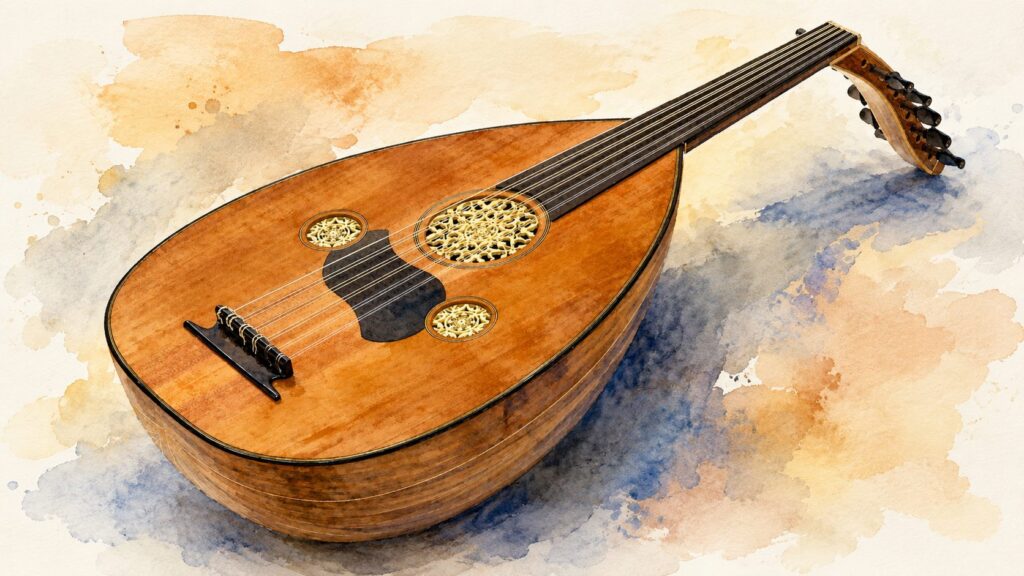
A double concerto (doppio concerto in Italian) is a fascinating beast. Unlike a standard concerto that spotlights a single virtuoso, it features two performers sharing the solo role. Sometimes these instruments are twins, like Bach’s famous Double Violin Concerto, and other times they are complementary opposites, like the violin and oboe.
My introduction to this masterpiece wasn’t passive. A friend of mine, a professional oboist, suggested we perform it together. The catch? I was tasked with playing the intricate violin part on my electric guitar.
That wild, genre-bending attempt forced me to get inside the nerve center of the piece. I was instantly stunned by its complexity, emotional beauty, and sheer harmonic depth. It forged a lifelong bond between me and this music. To this day, it remains one of my absolute favorite compositions in history.
Recently, while digging through the crates at a vinyl shop in Tallinn, I spotted the album jacket. A sudden surge of happiness went through my body. I bought it on the spot, and it hasn’t left my turntable since. By pure luck, it happened to be one of the finest interpretations out there: a stellar recording by the Süddeutsche Kammerphilharmonie, featuring Hans Kalafusz on violin and Willy Schnell on oboe. It is a version I cannot recommend enough.
The Fascinating Story Behind the Concerto for Violin and Oboe J.S. Bach
To truly appreciate this piece, you have to travel back to 18th-century Leipzig. For seven years, Johann Sebastian Bach balanced his duties as cantor of St. Thomas Church with his role as director of the Leipzig Collegium Musicum (a musical society originally founded in 1704 by Georg Philipp Telemann during his law school days). Comprising professional musicians and university students, the group gave weekly public concerts and performed for visiting dignitaries.
Historical Timeline of the Work:
[1717–1723: Cöthen]  --> Original Concerto for Violin & Oboe composed (Score later lost)
[1729–1736: Leipzig] --> Bach directs Collegium Musicum / Re-writes piece for Two Harpsichords (BWV 1060)
[Modern Era]         --> Musicologists reconstruct the original Violin & Oboe masterpiece
Interestingly, no original manuscript exists for the C minor violin and oboe version. The score we hear today is a meticulous modern reconstruction of Bach’s Concerto for Two Harpsichords, BWV 1060. History shows that Bach routinely borrowed from himself, transcribing his older works to provide fresh material for the Collegium Musicum. Musicologists discovered that the double harpsichord concerto was actually an arrangement of a lost piece Bach wrote years earlier during his time at the court of Anhalt-Cöthen (1717–1723). Stripping away the harpsichord layers revealed the unmistakable, tailor-made voices of a solo violin and oboe.
Anatomy of a Masterpiece: Movement by Movement
When heard in its reconstructed form, the concerto unleashes a vibrant, egalitarian musical conversation where both instruments interact as absolute equals.
I. Allegro
The opening movement kicks off with a memorable, graceful theme stated right at the outset. This motif quickly splinters into solo passages, with snippets of the theme bouncing back and forth between the soloists and the string orchestra. As the movement progresses, Bach weaves in brilliant string counterpoint against the main theme. The violin eventually grabs the spotlight with virtuosic, broken-chord ideas, balanced beautifully by the oboe’s humorous, echoing statements.
II. Adagio
The central movement drops the tempo and elevates the soul. It plays out like an exquisite vocal duet, mimicking two singers in an opera. The oboe takes the initial lead, weaving a tender, longing melody, while the violin responds with a noble, soaring voice. Like the best of Bach’s vocal writing, contention and cooperation move beautifully side by side.
III. Allegro
The finale erupts as a jubilant bourrée, driven by a powerful dance impulse. While the rhythms are firmly squared off and crisp, they give the soloists plenty of room to take musical flight. The bouncing, multifaceted central theme offers immense opportunities for dynamic shading, driving the concerto to a brilliant, high-energy finish.
Listening Tip: Beyond my beloved vinyl copy, another phenomenal version to check out features oboist Emma Black and violinist Shunske Sato performing with the Netherlands Bach Society. Their chemistry perfectly captures the lively spirit of the piece.
Ultimately, there are countless incredible interpretations available across streaming platforms and record shops. Go explore them, compare the nuances, and find the one that speaks to you. The main thing is to dive in and experience it, because this is, without a doubt, one of the most amazing compositions by one of the greatest minds in the history of music.
#JSBach #ClassicalMusic #DoubleConcerto #ViolinAndOboe #BaroqueMusic #BWV1060 #MusicHistory #VinylCollector #CollegiumMusicum #ClassicalPianist #OboeSolo #ViolinSolo #BachConcerto #MusicMagazine #LeipzigOriginals