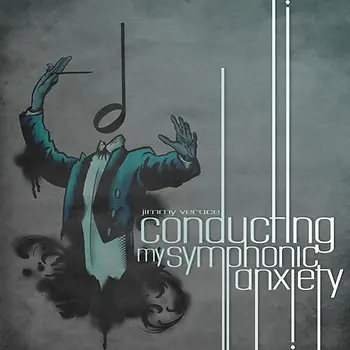
As a composer and pianist, I find myself usually stunned by the piano concerto form. Although to be honest my favorite form is the symphony, the piano concerto without a doubt comes at a close second. In fact, my first published symphony, “In the Eternal Day,” features a piano as the narrator of the storyline. Although due to its shorter playing time and less technical piano parts it does not qualify as a traditional piano concerto, it surely shows my compliance and deep affection for the piano concerto form.
Among many great concertos by legendary composers, Sergei Rachmaninoff‘s contributions, specifically his second concerto, remains one of all-time favorites of mine. The sweeping melody played by the cellos in the first movement is easily one of the most emotionally devastating moments in all of classical music. Then comes the second movement, suspended in a sentimental, dreamlike state, followed by the stunning third movement, driven by those thrilling, jumping staccatos. Throughout it all, the piano is doing wonders, absolutely stunning, virtuosic writing that never feels empty, but always deeply purposeful.
There are many great performances of this amazing piece available from legendary pianists, from Rubinstein to Kissin, Argerich, and Yuja Wang. It is practically impossible for me to suggest only one definitive interpretation.
However, for me personally, two versions stand out above the rest. One is a performance by the Tehran Symphony Orchestra, under the baton of Shahrdad Rohani with Mitra Kotte at the piano. I don’t think a commercial recording of this version actually exists, but it was the first time I heard the concerto live at Vahdat Hall back in Tehran many years ago. The stunning awe of that performance is still fresh in my memory, a testament to how live music can imprint itself onto a young composer’s soul.
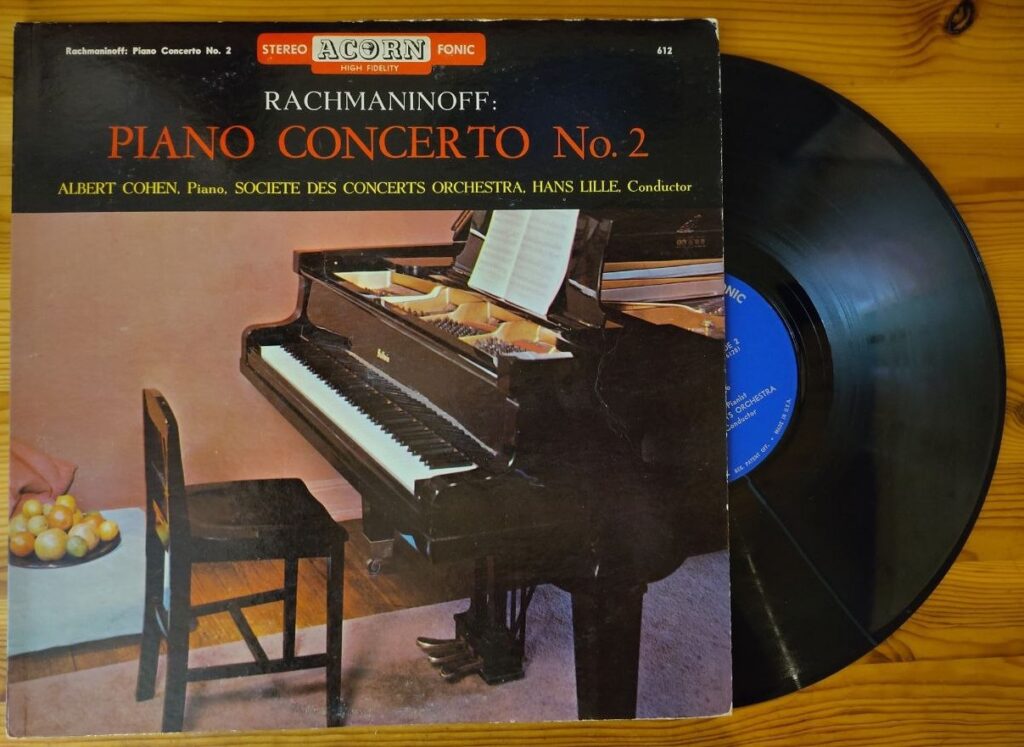
The other is a performance by pianist Albert Cohen and conductor Hans Lille. This is a version I am fortunate to own on vinyl, and I have listened to it over and over. It has become a staple of my creative routine to put this record on, sit back, and simply absorb it. Through sheer repetition, it has evolved into my personal standard for the piece.
Although I could not find either of the two versions mentioned above on any streaming platforms, I highly suggest the magnificent rendition by Ukrainian pianist Anna Fedorova. It is, without a doubt, one of the finest interpretations of this piece. I especially love the opening crescendo chords on the piano, which she performs with stunning power and control.
When you listen to this concerto, you are not just listening to notes; you are listening to Rachmaninoff’s own resurrection, emerging from the depths of a severe depression and creative block to pen something immortal. The dialogue between the soloist and the orchestra feels less like a competition and more like a profound psychological journey. As a composer, I am constantly studying how he balances the dense orchestral textures without drowning out the intricate, rolling waves of the piano.
As I said before, there are many amazing versions of it available, and I deeply encourage you to listen to this piece, not one movement at a time, but the entire concerto in one sitting. Turn off your notifications, dim the lights, and allow yourself to be fully consumed by this marvel of the human species.
#Rachmaninoff #PianoConcerto #ClassicalMusic #ComposerLife #Pianist #InTheEternalDay #VinylCommunity #TehranSymphonyOrchestra #VahdatHall #MusicReview #OrchestralMusic #ClassicalVinyl #Rach2 #MusicNarrative #SymphonicWorks