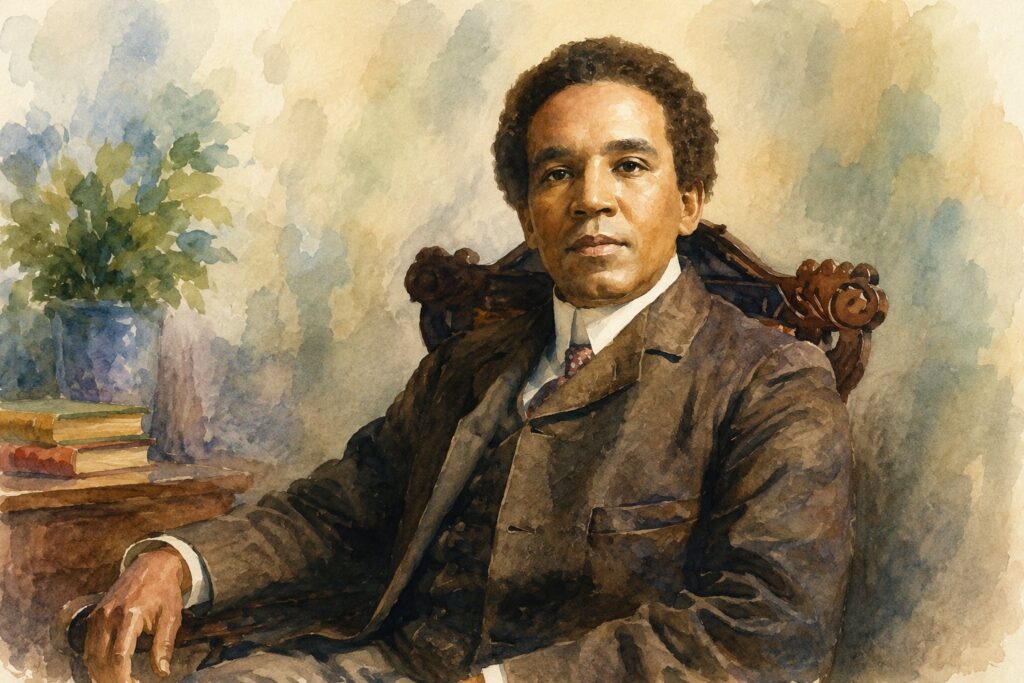
Krzysztof Penderecki (23 November 1933 – 29 March 2020) was a towering figure in the world of classical music, a composer whose radical approach to sound redefined the boundaries of orchestral expression and left an indelible mark on the cultural landscape of the twentieth and twenty-first centuries. Born in Dębica, Poland, he rose from humble beginnings to become one of the most celebrated and controversial figures in contemporary classical composition. His early works shattered the conventions of post-war serialism, introducing dense clusters of sound and unconventional playing techniques that shocked audiences and critics alike. Yet, Penderecki was not merely a provocateur; he was a profound humanist whose later works reflected a deep spiritual search, blending modernist innovation with traditional tonality and religious faith. His journey from the avant-garde experimentalist to the revered master of large-scale sacred music mirrors the broader evolution of music history in the modern era, demonstrating how artistic vision can evolve while maintaining a core commitment to emotional and aesthetic truth.

Early Life and Musical Foundations
Krzysztof Penderecki was born into a family of intellectuals; his father was a lawyer and his mother a pianist, which naturally fostered an early appreciation for the arts. He grew up in the aftermath of World War II, a period that deeply influenced his worldview and his artistic sensibilities. The horrors of the war, particularly the Holocaust, would later become central themes in his most famous works. Penderecki began his formal musical education at the State Higher School of Music in Kraków, where he studied composition under Artur Malawski. During his student years, he was already showing signs of the innovative spirit that would soon make him famous. He was part of a vibrant post-war Polish cultural scene that was eager to break free from the constraints of Socialist Realism, the state-mandated artistic doctrine that required art to be accessible, optimistic, and ideologically sound.
In 1958, Penderecki graduated with distinction and soon after began to gain international attention. His early exposure to the works of Béla Bartók, Igor Stravinsky, and Anton Webern laid the groundwork for his unique stylistic development. However, it was his desire to find a new musical language that could express the trauma and complexity of the modern world that drove him toward radical experimentation. This period marked the beginning of a creative journey that would see him challenge the very definition of what music could be.
The Avant-Garde Breakthrough
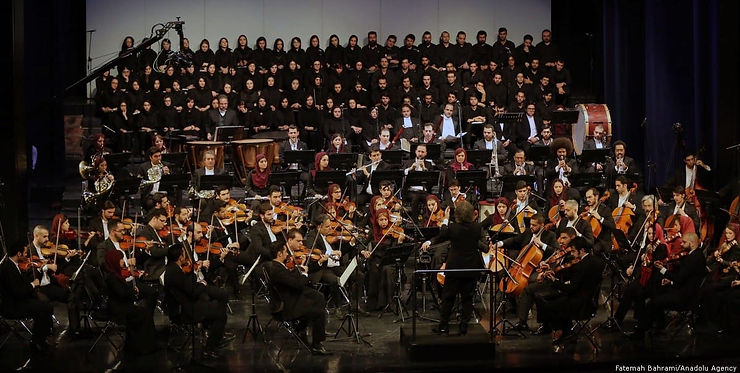
The turning point in Penderecki’s career came in 1960 with the premiere of his Strophes for cello, followed shortly by the Threnody to the Victims of Hiroshima. This latter work, originally titled 8’37”, was a seismic event in music history. Composed for fifty-one string instruments, it utilized innovative techniques such as playing behind the bridge, striking the wood of the instrument, and dense clusters of notes played with extreme force. The result was a wall of sound that was both terrifying and beautiful, evoking the screams of victims and the chaos of destruction. The piece was not just a musical composition; it was a statement, a protest, and a memorial all at once.
The success of Threnody was followed by other groundbreaking works such as Polymorphia, De Natura Sonoris No. 1, and his String Quartet No. 1. These works established Penderecki as a leading figure of the avant-garde, often associated with the Darmstadt School, which sought to push the boundaries of musical form and technique. His use of “sound masses” instead of traditional melodic lines created a texture that was immersive and overwhelming. Critics and audiences were divided; some hailed him as a genius who had unlocked new dimensions of musical expression, while others dismissed his work as mere noise. However, there was no denying his influence. Young composers around the world began to experiment with timbre, texture, and extended techniques, inspired by Penderecki’s fearless innovation.
During this period, Penderecki also served as the director of the Warsaw National Philharmonic and taught composition at various institutions, including the State Higher School of Music in Kraków and the Academy of Music in Mainz, Germany, where he settled in 1972. His role as an educator and conductor allowed him to shape the next generation of musicians and to further disseminate his ideas about sound and structure. He was a charismatic figure, known for his intense rehearsals and his ability to communicate his artistic vision with clarity and passion.
Spiritual Turn and Later Style
By the late 1960s and early 1970s, Penderecki began to undergo a significant stylistic transformation. The harsh, dissonant sounds of his early avant-garde period gave way to a more lyrical, tonal, and spiritually oriented language. This shift was not a rejection of his earlier experiments but rather an evolution, a deepening of his artistic inquiry. He began to incorporate traditional forms such as the symphony, concerto, and opera into his repertoire, while still maintaining his unique sonic signature.
One of the key factors in this transformation was his deepening engagement with religion and spirituality. Penderecki, who was raised in a Catholic family, found in faith a source of comfort and meaning in the face of the existential questions that had driven his early work. This spiritual turn is most evident in his St. Luke Passion, completed in 1966 but revised and expanded in the following decades. Unlike traditional passions, which set the biblical text to music, Penderecki’s St. Luke Passion includes contemporary texts, such as the Declaration of Human Rights and poems by Paul Celan and W.H. Auden. The work is a powerful meditation on suffering, redemption, and the human condition, blending modernist techniques with a profound sense of reverence and hope.
His later operas, such as The Devils of Loudun and Paradise Lost, further demonstrated his ability to synthesize different stylistic elements into a cohesive dramatic whole. The Devils of Loudun, based on Aldous Huxley’s book about the possession of nuns in seventeenth-century France, is a complex work that explores themes of power, faith, and madness. Paradise Lost, based on John Milton’s epic poem, is a monumental work that reflects Penderecki’s interest in the struggle between good and evil. These operas were not only musical achievements but also dramatic successes, performed in major opera houses around the world.
Major Works and Contributions
Penderecki’s output is vast and diverse, encompassing symphonies, concertos, chamber music, operas, and sacred works. Some of his most significant compositions include:
- Threnody to the Victims of Hiroshima (1960): A seminal work of the avant-garde that revolutionized the use of string instruments.
- St. Luke Passion (1966): A large-scale sacred work that blends biblical text with contemporary poetry and modernist techniques.
- Cello Concerto No. 1 (1982): A virtuosic work that showcases the expressive range of the cello.
- Violin Concerto No. 2 (1992): A deeply lyrical concerto that reflects Penderecki’s mature style.
- Symphony No. 3 (1988): A monumental work that incorporates elements of Polish folk music and religious chant.
- The Devils of Loudun (1980): An opera that explores themes of power, faith, and madness.
- Paradise Lost (2003): An opera based on John Milton’s epic poem, reflecting on the nature of evil and redemption.
- Agnus Dei (2006): A choral work commissioned for the funeral Mass of Pope John Paul II, which was performed in St. Peter’s Square.
These works demonstrate Penderecki’s versatility and his ability to adapt his style to different genres and contexts. He was equally comfortable writing for small ensembles and large orchestras, for solo instruments and choirs. His music is characterized by its emotional intensity, its rich orchestration, and its profound spiritual depth.
Legacy and Recognition
Krzysztof Penderecki’s influence on music composers of his generation and subsequent ones is immeasurable. He opened up new possibilities for orchestral sound and expanded the palette of musical expression. His early works inspired a generation of composers to experiment with timbre and texture, while his later works showed that innovation and tradition could coexist in a meaningful way. Many contemporary composers cite Penderecki as a major influence, and his music continues to be performed and recorded around the world.
In addition to his artistic achievements, Penderecki was a respected conductor and educator. He served as the music director of several major orchestras, including the Deutsche Kammerphilharmonie Bremen and the Israel Philharmonic Orchestra. He was also a passionate advocate for the preservation and promotion of Polish culture, and he played a significant role in the cultural life of Poland after the fall of communism.
Penderecki received numerous awards and honors throughout his career, including the Praemium Imperiale, the Wolf Prize in Arts, and the Polar Music Prize. He was awarded the Order of the White Eagle, Poland’s highest decoration, by the President of Poland in 2007. In 2018, he was awarded the Grawemeyer Award for Composition, one of the most prestigious awards in the field of contemporary classical music.
His legacy is not just in his compositions but in his example as an artist who remained true to his own vision while constantly evolving. He showed that music could be both intellectually rigorous and emotionally powerful, that it could challenge conventions while still speaking to the human heart. In an era of increasing fragmentation and uncertainty, Penderecki’s music offers a vision of hope and redemption, a reminder of the enduring power of art to transcend boundaries and connect us to something greater than ourselves.
Conclusion
Krzysztof Penderecki was a cultural icon, a spiritual seeker, and a master of sound. His life’s work reflects the complexities and contradictions of the modern world, and his music continues to resonate with audiences today. As one of the most important of the Polish Composers of the twentieth century, he helped to put Poland on the map of contemporary classical music. His ability to blend the avant-garde with the traditional, the secular with the sacred, and the personal with the universal makes him a unique and enduring figure in the history of music. His passing in 2020 marked the end of an era, but his music will continue to inspire and challenge listeners for generations to come.
#KrzysztofPenderecki #ClassicalMusic #Composer #ModernMusic #Symphony #Opera #MusicHistory #PolishMusic #ContemporaryClassical #MusicLegacy #Orchestral #SacredMusic #AvantGarde #MusicEducation #CulturalIcon