When did classical music become a decorative act rather than a dangerous one?
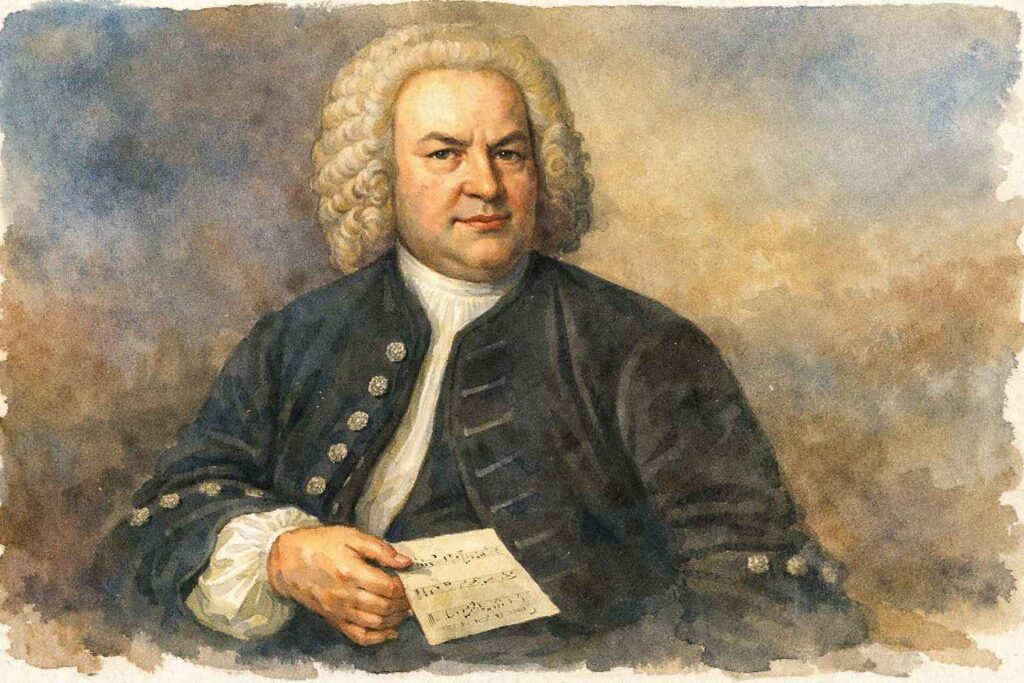
From the era of Ludwig van Beethoven onward, classical music underwent a seismic transformation. It evolved from courtly entertainment into one of the most powerful vehicles for personal, philosophical, and political expression in Western art. Music became more than organized sound; it became a battlefield of ideas.
Beethoven’s Symphony No. 3, the Eroica, remains one of the defining examples. Originally dedicated to Napoleon Bonaparte, Beethoven famously withdrew the dedication after Napoleon crowned himself Emperor, seeing the act as a betrayal of republican ideals. Whether the dramatic “scratching out” of the title page has been somewhat mythologized over time, the historical core is true: Beethoven’s disillusionment fundamentally reshaped the symbolic meaning of the symphony.
Similarly, Franz Liszt did not compose Totentanz merely as a display of virtuosity. While the work was inspired primarily by the medieval Dies Irae chant and imagery of death, it also emerged during a period of immense political upheaval in Europe following the Revolutions of 1848. Liszt’s music absorbed the turbulence of his age, even when not functioning as explicit political propaganda.
“A symphony must be like the world. It must embrace everything.”
— Gustav Mahler
Each of Mahler’s symphonies attempts precisely that: to wrestle with life, death, spirituality, anxiety, irony, nature, and the collapse of certainty in modern Europe. His music did not merely entertain audiences; it confronted them with existential questions.
Decades later, Dmitri Shostakovich composed works so politically and psychologically charged that they repeatedly collided with Soviet censorship. Following official condemnations in both 1936 and 1948, his music became inseparable from the tension between artistic truth and authoritarian control. His symphonies and string quartets carried coded layers of fear, grief, resistance, and survival.
Meanwhile, Jean Sibelius’s Finlandia evolved into a cultural symbol of Finnish national identity during periods of Russian imperial censorship. Although not formally banned in every context, the work became politically sensitive enough that it was often performed under alternative titles to avoid provoking Tsarist authorities.
The list continues across centuries. Classical music was once saturated with ideology, not merely political ideology, but philosophical, spiritual, national, and narrative purpose. Composers believed instrumental music could confront history itself.
Music was not simply an arrangement of aesthetically pleasing sounds. It possessed urgency.
Has Classical Music Lost Its Purpose?
Looking at the modern cultural landscape, it is easy to conclude that contemporary classical music has lost its sense of urgency. Streaming platforms reduce instrumental music to “focus playlists” and “ambient relaxation.” Concert halls increasingly market refinement and prestige rather than confrontation. In public consciousness, classical music often appears less like a living intellectual force and more like a museum object.
But this conclusion is only partially true.
If we look carefully, contemporary composers are still creating works of political resistance, philosophical depth, and cultural defiance. The problem is not necessarily the disappearance of meaningful music. The problem is that modern society no longer grants classical music the cultural attention it once gave to Beethoven, Mahler, or Shostakovich.
We see this in Philip Glass’s withdrawal of the premiere of his Symphony No. 15 “Lincoln” from the Kennedy Center in protest against Trump’s political leadership, arguing that the institution’s values stood “in direct conflict” with the message of the work itself.
We see it in Max Richter’s Voices, constructed around the Universal Declaration of Human Rights as a response to rising authoritarianism and humanitarian collapse. Richter even inverted the orchestral hierarchy itself, emphasizing lower strings to create what he described as a world turned upside down.
We see it in John Adams’s Girls of the Golden West, which dismantles the mythology of the American frontier by exposing the racism, xenophobia, and violence beneath the California Gold Rush.
We see it in Tania León’s Stride, where orchestral momentum becomes a physical embodiment of the struggle, exhaustion, and defiance behind women’s suffrage movements.
And in Iran, composers such as Atefeh Einali transform music itself into cultural resistance. By combining Persian musical heritage with Western classical traditions and foregrounding feminine artistic identity, such works become acts of defiance against decades of censorship and restrictions imposed on music and female performers under the Islamic Republic.
And meaning in music does not always emerge through direct political confrontation. Sometimes it appears through spirituality, silence, and moral reflection itself.
Arvo Pärt’s music, while rarely overtly political, carries a deeply philosophical and civilizational vision. Emerging from both Soviet oppression and profound spiritual searching, Pärt developed a musical language rooted in simplicity, sacredness, and inner stillness at a time when much contemporary music pursued complexity and abstraction. Works such as Fratres, Tabula Rasa, and Spiegel im Spiegel are not merely “calming music”; they embody an ethical and spiritual perspective centered on humility, peace, contemplation, and the fragile humanity of the individual. In an age dominated by noise, acceleration, and spectacle, Pärt’s silence itself becomes a form of resistance.
Even newer independent projects continue this tendency. Iranian-Estonian composer Arashk Azizi’s Divine Sonata reinterprets Dante’s Inferno as a reflection of a collapsing modern world order shaped by war, systemic violence, and moral disintegration, while his ongoing Esfandiyar symphonic project revisits Persian mythology not as escapism, but as a meditation on integrity, manipulation, sacrifice, and resistance within authoritarian structures.
These works exist. They are not decorative. They are not passive.
Yet culturally, they struggle to occupy the position that politically charged classical music once held.
The Real Crisis: A Society That No Longer Hears
The central crisis may not lie with composers at all.
Composers are still doing what composers have always done: responding to their world through sound, philosophy, and artistic structure. The deeper problem is that contemporary society no longer treats instrumental music as a serious intellectual or moral language.
In the nineteenth and twentieth centuries, a symphony could shape public imagination because audiences approached music as something existential. Today, digital culture conditions people toward fragmentation, speed, immediacy, and visual overstimulation. Meaning is flattened into content.
What emerges is a culture increasingly dominated by what I call “fakism”: a condition in which the appearance of engagement replaces genuine engagement itself. We simulate depth through algorithms, aesthetics, branding, and performative discourse while losing the patience required for sustained contemplation.
Within such a system, classical music becomes structurally disadvantaged. A symphony demands concentration, ambiguity, memory, emotional endurance, and interpretive participation, precisely the capacities that digital culture continuously erodes.
This is why even politically charged contemporary works rarely penetrate public consciousness in the way earlier music once did. The issue is not that meaningful music no longer exists. The issue is that modern society has lost the cultural framework required to hear it.
The Need to Listen Again
If classical music is to survive as something more than cultural decoration, audiences must recover the ability to listen actively rather than consume passively.
The future of the art form will not be saved merely by returning to tonality, avant-garde experimentation, or nostalgic revivalism. It will survive only if music regains its position as a serious form of philosophical and emotional thought.
The composers are still speaking.
The question is whether society still knows how to hear them.
#ClassicalMusic #ContemporaryClassical #ArvoPart #MaxRichter #JohnAdams #TaniaLeon #Shostakovich #Beethoven #MusicPhilosophy #PoliticalArt #InstrumentalMusic #ModernCulture #DigitalCulture #Fakism #MusicCriticism