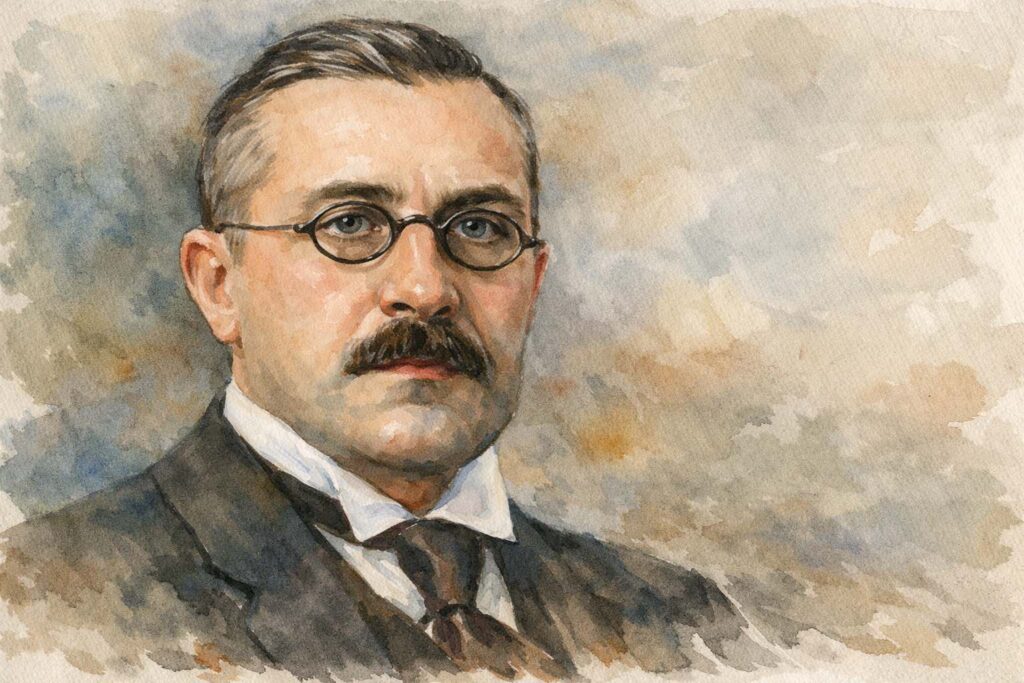
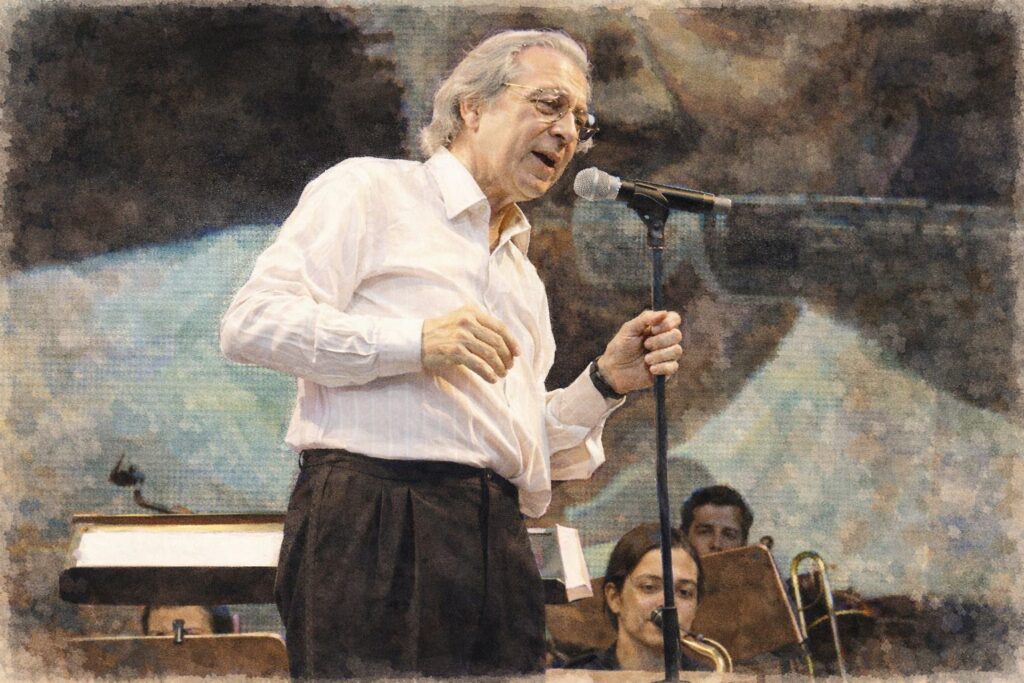
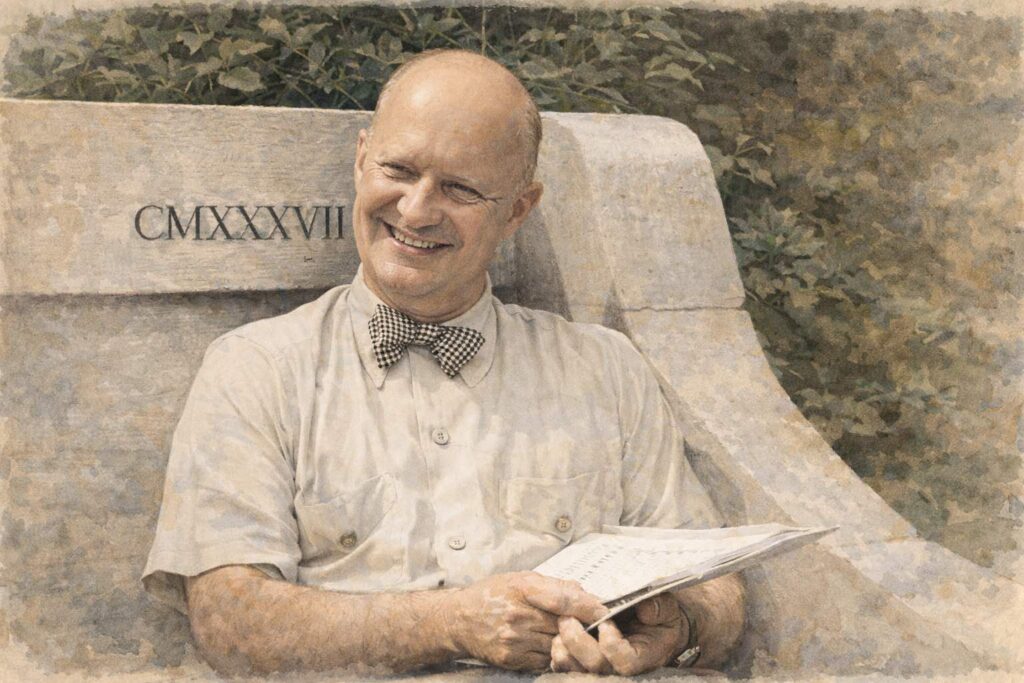
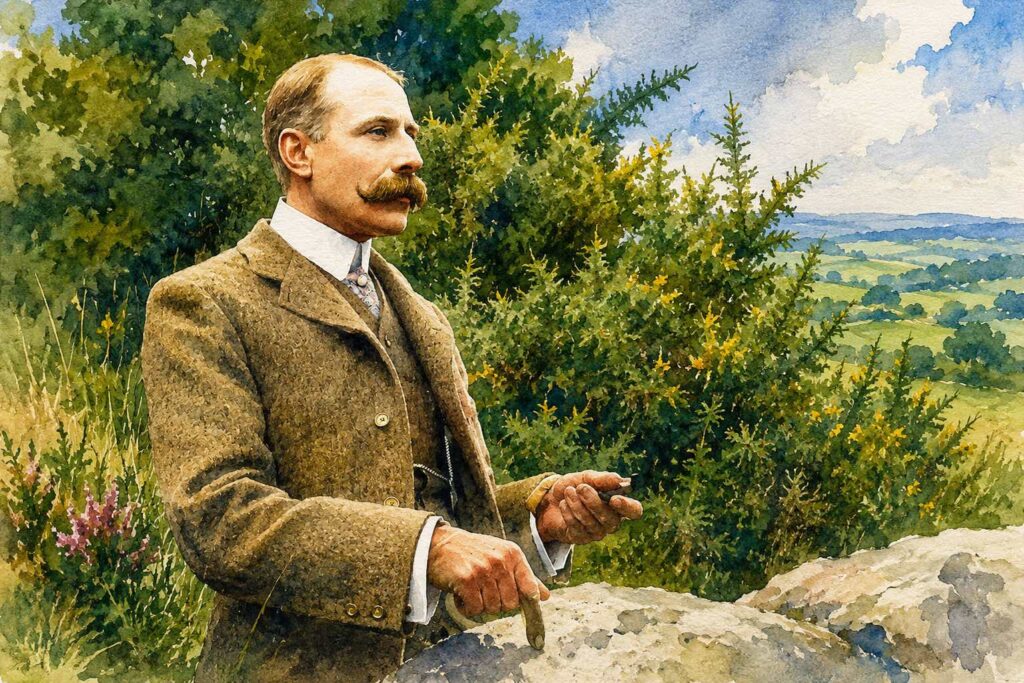
Jaan Rääts (15 October 1932 – 25 December 2020) stands as one of the most vital figures in Northern European music history, serving as a key pioneer of Soviet-era musical modernism and a principal architect of 20th-century neoclassicism. During an era defined by aesthetic constraints, Rääts forged a distinctive artistic language characterized by hypnotic rhythmic vitality, sharp structural economy, and vibrant instrumental color. His vast output, spanning symphonies, instrumental concertos, chamber works, keyboard music, and screen scores, helped usher Estonian classical music onto the world stage. As both a prolific creator and an influential pedagogue, he mentored a generation of prominent Estonian composers, reshaping the cultural landscape of his nation and cementing his legacy among celebrated European music composers.
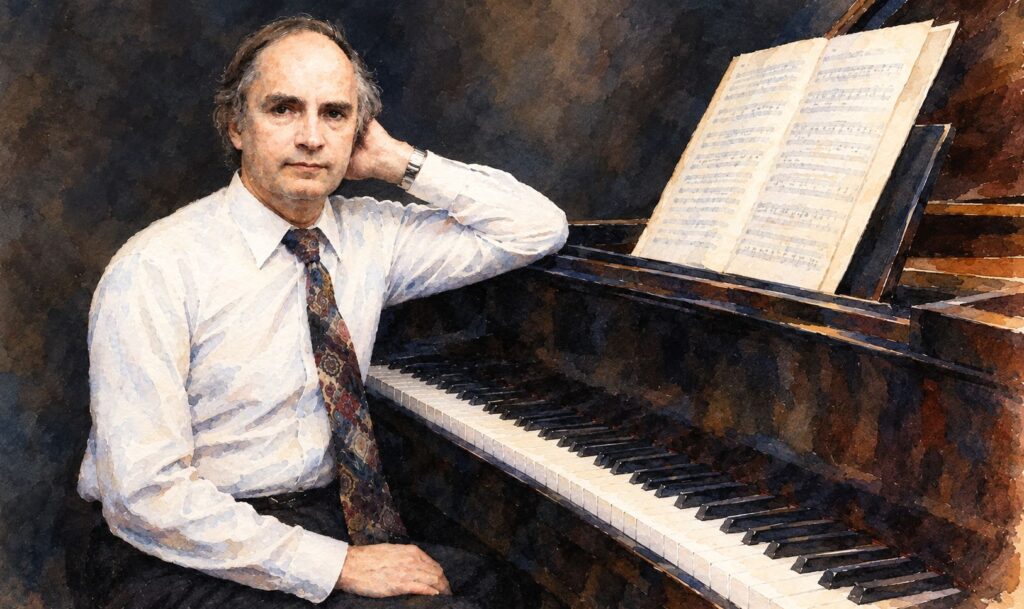
Early Life and Academic Foundations
Born in Tartu, Estonia, Jaan Rääts displayed an early fascination with sound and composition. He began his formal studies in piano and theory at the Tartu Music School before enrolling at the Tallinn State Conservatory (now the Estonian Academy of Music and Theatre). Studying under Mart Saar and Heino Eller, the master teacher who also guided Arvo Pärt and Oliver Messiaen-adjacent figures, Rääts developed a formidable technical mastery over counterpoint and form.
During the late 1950s, Soviet musical culture was beginning to thaw after decades of rigid Socialist Realism. Rääts was among the first young artists in Estonia to challenge traditional Romanticism by integrating modern sensibilities into his writing. His early student works demonstrated a sharp, motoric energy influenced by Igor Stravinsky, Sergei Prokofiev, and Béla Bartók, yet infused with an original rhythmic ingenuity that immediately set him apart.
The Neoclassical Revolution and Breakthrough Works
By the early 1960s, Rääts established himself as a prominent leader of the Estonian avant-garde. While some of his contemporaries leaned toward serialism or aleatoric techniques, Rääts developed a highly personal variant of modern neoclassicism. His music became famous for its driving pulse, ostinato patterns, crisp textures, and unpredictable metric shifts.
The defining moment of his international recognition came with his Concerto for Chamber Orchestra No. 1, Op. 16 (1961). Bursting with relentless energy and rhythmic momentum, the piece became a global sensation. Legendary conductor Rudolf Barshai and the Moscow Chamber Orchestra championed the work, performing it across Europe, the Americas, Asia, and Australia. During a famous performance at Carnegie Hall in New York, audience acclaim forced an immediate encore performance of the concerto. It remains one of the most widely performed works in the history of Estonian composers.
       [ Early Studies ]
    Tartu & Tallinn Conservatory
              │
              ▼
   [ Neoclassical Breakthrough ]
 Concerto for Chamber Orchestra (1961)
              │
              ▼
    [ Symphonic & Film Era ]
 10 Symphonies, Scores & Concertos
              │
              ▼
    [ Institutional & Legacy ]
 Professor, Union Leader & Mentor
Catalog of Works: Symphonies, Concertos, and Keyboard Music
Rääts’ catalog encompasses more than 130 opus numbers across nearly every major classical genre. His music balances rigorous formal logic with spontaneous playfulness, appealing equally to musicologists and concert audiences.
Symphonic Output
Rääts composed ten symphonies that track his evolution across six decades:
- Symphony No. 1 (1957) and Symphony No. 2 (1958): Showcased his early mastery of orchestral force and dynamic contrast.
- Symphony No. 3 (1959): Conducted by Neeme Järvi during the Estonian National Symphony Orchestra’s landmark 1972 international tours.
- Symphony No. 7, Op. 74 (1972): Premiered internationally under the baton of Maxim Shostakovich.
- Symphony No. 8 (1985) and Symphony No. 10 (1993): Refined his late orchestral style with chamber-like transparency and complex rhythmic layering.
Concertos and Instrumental Virtuosity
Rääts was a master of the concerto form, writing over twenty concertos for diverse solo instruments:
- Violin Concertos: Including No. 1 (1963), No. 2 (1979), and No. 3 (1995).
- Piano Concertos: Ranging from his Concerto for Piano and Chamber Orchestra, Op. 41 (1971) to his Concerto for Two Pianos (1986) and “Digitalia” (1998).
- Cello Concertos: Dedicated to and championed by legendary virtuoso Mstislav Rostropovich.
- Guitar and Chamber Concertos: Demonstrating his willingness to explore unconventional timbre combinations.
Piano and Chamber Music
Rääts’ piano works are central to Soviet and post-Soviet keyboard literature:
- 24 Marginalia, Op. 65 (1979–1980): A celebrated cycle of miniatures exploring texture and rhythm.
- Piano Sonatas: A sequence of ten sonatas spanning his career.
- Toccata (1968): Chosen by pianist Emil Gilels as a compulsory set piece for the 1970 International Tchaikovsky Competition, bringing Rääts’ piano music to world-class performers like Cyprien Katsaris.
Contributions to Film Music and Multimedia
Beyond the concert hall, Rääts made major contributions to Film Music and theatrical soundscapes. Between 1960 and 1980, he composed scores for numerous feature films, documentaries, and animated productions produced by Tallinnfilm and Estonian Television.
His score for the film Viimne reliikvia (The Last Relic, 1969), composed in collaboration with Uno Naissoo, became a cultural landmark in Estonia. Rääts brought his signature rhythmic urgency and dramatic timing to cinema, proving that modernist idioms could heighten visual narrative and emotional resonance.
In 1966, Rääts collaborated with composer Kuldar Sink to organize Estonia’s first electronic music laboratory concert at the Tõravere Observatory, transforming radio sounds captured from space into live acoustic compositions.
| Genre / Domain | Key Works / Achievements | Notable Collaborators / Performers |
| Chamber Orchestra | Concerto for Chamber Orchestra No. 1, Op. 16 | Rudolf Barshai, Moscow Chamber Orchestra |
| Symphonic Music | Symphonies No. 1–10 (1957–1993) | Neeme Järvi, Maxim Shostakovich, ERSO |
| Instrumental Concertos | Cello Concerto, Violin Concertos, Piano Concertos | Mstislav Rostropovich, Kalle Randalu, Mari Tampere |
| Film Music | Viimne reliikvia, feature film and documentary scores | Tallinnfilm, Uno Naissoo |
| Solo Piano | 24 Marginalia, Toccata, 10 Piano Sonatas | Emil Gilels, Cyprien Katsaris |
Cultural Influence and Institutional Leadership
Jaan Rääts was a key institutional figure who protected artistic freedom during challenging political climate conditions:
- Estonian Composers’ Union: As Chairman from 1974 to 1993, Rääts used his administrative standing to defend young composers experimenting with avant-garde styles. Figures like Rodion Shchedrin praised Rääts in memoirs for advocating for contemporary music within the Soviet musical system.
- Estonian Television: As Sound Director (1955–1966) and Chief Music Editor (1966–1974), he expanded classical music broadcasting and promoted contemporary repertoire.
- Pedagogy: As a longtime professor at the Estonian Academy of Music and Theatre, he taught generations of prominent composers, including Erkki-Sven Tüür, Raimo Kangro, Avi Nedzvetski (Avแนว), and Tõnu Kõrvits.
Modern Reassessment and Legacy
When Jaan Rääts passed away on Christmas Day 2020 at the age of 88, he left behind a monumental legacy that bridging mid-century modernism with 21st-century classical music.
His aesthetic—often called “rhythmic minimalism” or “pulsing neoclassicism”, paved the way for later developments in European post-minimalism. Today, his works are frequently performed in concert halls worldwide and documented across more than 40 commercial vinyl and CD releases. His life’s work stands as a landmark of artistic integrity, structural clarity, and rhythmic drive in 20th-century music history.
Sources
- Estonian Music Information Centre (EMIC) – Jaan Rääts: Biography, Work List, and Analysis
- Jaan Rääts Centre Official Archive – Composers, Concertos, and Historical Documents
- Coda Music Archive – Jaan Rääts Biography & Discography
- USSR State Music Fund Historical Catalogs (1969, 1989)
#JaanRääts #EstonianComposers #EstonianClassicalMusic #ClassicalMusic #MusicHistory #MusicComposers #FilmMusic #Neoclassicism #ModernClassical #SymphonicMusic #ChamberMusic #EstonianMusic #20thCenturyMusic #ClassicalPiano #OrchestralMusic