Dive into the captivating world of the theremin, an instrument that revolutionizes sound through touchless interaction, invoking wonder and creativity.
The History of the Theremin
The theremin, an instrument with a mystifying allure, was invented in 1920 by the Russian physicist Lev Sergeyevich Termen, known in the West as Léon Theremin. His invention came during a period of intense experimentation with electronic sound, and it was initially conceived as a product of research in proximity sensors. The theremin was one of the earliest electronic musical instruments, and its creation marked a significant milestone in the exploration of electronic sound.
The origins of the theremin are closely tied to the socio-political context of early 20th-century Russia. Theremin was conducting research on the development of motion sensors for the Russian government when he stumbled upon the principle that would lead to the theremin. The instrument’s ethereal sound and unique method of play quickly captured the imagination of both musicians and the public. Theremin himself became an ambassador for the instrument, demonstrating it across Europe and the United States, where it garnered considerable attention.
By the late 1920s, the theremin had made its way to America, where it was patented and mass-produced by RCA. The instrument’s otherworldly sound and the novelty of its touchless operation made it a sensation. It became a symbol of modernity and technological progress, even as it maintained an air of mystery and enchantment. Despite its initial popularity, the theremin remained a niche instrument, its haunting timbre finding a home in the realms of avant-garde music and science fiction soundtracks.
How a Theremin Works
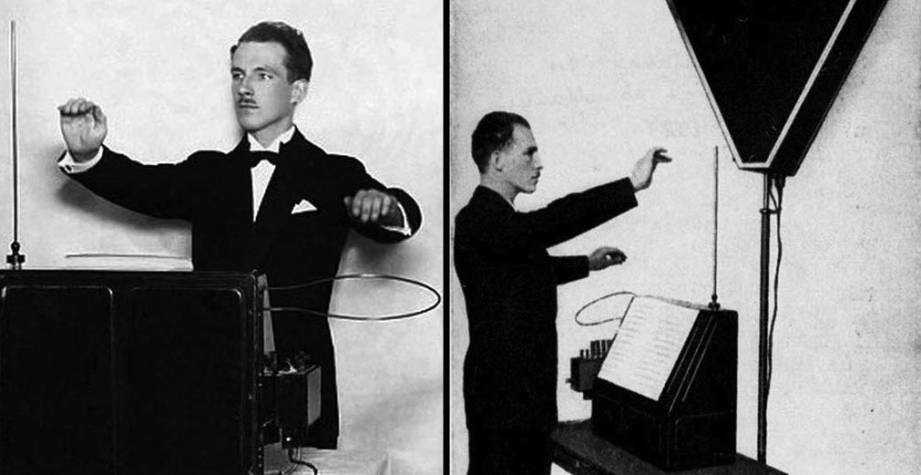
At its core, the theremin operates on the principles of electromagnetic fields and capacitance. It consists of two metal antennas that detect the position of the player’s hands. The vertical antenna controls pitch, while the horizontal loop antenna regulates volume. By moving their hands closer to or further from these antennas, players manipulate the frequency and amplitude of the sound waves produced.
The theremin generates sound through heterodyning, a process where two high-frequency radio waves—one fixed and one variable—interact to produce an audible tone within the range of human hearing. The variable frequency is determined by the distance of the player’s hand from the pitch antenna. The closer the hand, the higher the frequency, and thus the higher the pitch. Similarly, the volume is controlled by the vertical distance from the loop antenna; the closer the hand, the softer the sound.
What sets the theremin apart from other instruments is its lack of tactile feedback. Unlike a piano or a violin, where the player physically interacts with the instrument, a thereminist must rely entirely on auditory feedback and spatial awareness. This requires a highly refined sense of pitch and precise control of hand movements. The result is a unique performance art that combines musicality with a kind of invisible dance, as the player seems to conjure sound from thin air.
The Unique Sound of the Theremin
The theremin’s sound is often described as eerie, ethereal, or ghostly. Its ability to produce continuous gliding tones, or portamento, contributes to its distinctive voice. This quality allows for seamless transitions between notes, creating an almost vocal-like expressiveness. The theremin’s timbre can range from a clear, flute-like purity to a more complex, reedy tone, depending on the settings and the skill of the player.
The instrument’s unique sound has been utilized to evoke a variety of atmospheres and emotions. In early science fiction films, the theremin became synonymous with the unknown and the otherworldly. Its ability to create suspenseful, unsettling soundscapes made it a perfect match for the genre. Composers like Bernard Herrmann used the theremin to great effect in films like “The Day the Earth Stood Still,” where its unearthly tones underscored the film’s themes of alien visitation and existential dread.
Beyond its association with science fiction, the theremin has found a place in a wide range of musical contexts. Its expressive capabilities make it well-suited for conveying emotion and mood. The theremin can produce sounds that are both hauntingly beautiful and disconcertingly strange, making it a versatile tool for composers and performers. Whether used for creating atmospheric background textures or taking the spotlight as a solo instrument, the theremin’s voice remains unmistakable and compelling.
Famous Theremin Players and Their Contributions
Clara Rockmore, a classically trained violinist turned theremin virtuoso, is perhaps the most renowned thereminist in history. Her impeccable technique and musicality helped to elevate the theremin from a mere curiosity to a legitimate musical instrument. Rockmore collaborated closely with Léon Theremin, influencing the development of the instrument and its repertoire. Her performances and recordings remain a benchmark for thereminists worldwide.
Another notable figure in the history of the theremin is Lydia Kavina, a grand-niece of Léon Theremin and one of the foremost contemporary exponents of the instrument. Kavina began studying the theremin at a young age under the tutelage of Rockmore and has since become a leading performer and advocate for the instrument. She has premiered numerous works for theremin and has collaborated with orchestras and composers around the world, helping to expand the theremin’s reach and repertoire.
In the realm of popular music, Pamelia Kurstin stands out as a pioneering thereminist. Known for her innovative use of the instrument in genres ranging from jazz to rock, Kurstin has pushed the boundaries of what the theremin can do. Her mastery of the instrument and her creative approach to its use have garnered her a dedicated following. Kurstin’s work demonstrates the theremin’s versatility and its potential for continued evolution and relevance in contemporary music.
The Theremin in Popular Music and Film
The theremin has left an indelible mark on popular music and film, often being used to create distinctive and memorable soundscapes. In the realm of cinema, the theremin became a staple of the science fiction genre during the 1950s and 1960s. Its eerie sound was used to great effect in films such as “The Day the Earth Stood Still” and “It Came from Outer Space,” where it underscored themes of alien encounters and the unknown. The theremin’s association with the uncanny and the extraterrestrial has made it an iconic sound in the world of film.
In popular music, the theremin has been used by a diverse array of artists to add a unique sonic element to their work. The Beach Boys famously used the theremin in their hit song “Good Vibrations,” where its distinctive sound added an otherworldly feel to the track. Led Zeppelin also incorporated the theremin into their live performances, with Jimmy Page using it to create wild, otherworldly sounds during the song “Whole Lotta Love.” The theremin’s unique voice has made it a valuable tool for musicians looking to push the boundaries of their sound.
The theremin has also found a place in television soundtracks, particularly in shows that deal with the mysterious or supernatural. The original “Star Trek” series made use of the theremin to create unsettling and futuristic soundscapes, further cementing its association with the genre. The instrument’s ability to evoke a sense of the unknown and the otherworldly has made it a go-to choice for composers working in speculative fiction. Its distinctive sound continues to be a powerful tool for creating atmosphere and mood in both music and film.
Learning to Play the Theremin: Tips for Beginners
Learning to play the theremin presents a unique set of challenges and requires a different approach compared to traditional instruments. The first step for any aspiring thereminist is to develop a keen sense of pitch. Since there are no physical keys or frets to guide the player, precise pitch control is essential. Beginners should start by practicing simple scales and arpeggios, focusing on hitting the right notes with accuracy. Using a tuner can help in developing this skill by providing visual feedback.
Hand positioning is another crucial aspect of playing the theremin. The right hand controls pitch, and it should move fluidly and steadily in and out of the pitch antenna’s field. The left hand, responsible for volume, should make smooth, controlled gestures over the loop antenna. It’s important to maintain a relaxed posture and avoid any sudden or jerky movements, as these can disrupt the sound. Developing a smooth, controlled technique is key to producing a clean, musical tone.
Listening is perhaps the most critical skill for a thereminist. Since the instrument relies entirely on auditory feedback, players must develop a finely tuned ear. Recording practice sessions and listening back can help in identifying areas for improvement. Additionally, listening to recordings of accomplished thereminists can provide valuable insights into technique and musicality. Patience and persistence are essential, as mastering the theremin requires time and dedication. With practice, beginners can develop the skills needed to unlock the instrument’s expressive potential.
The Theremin in Contemporary Music
In contemporary music, the theremin continues to be a source of inspiration and innovation. Modern artists and composers are exploring new ways to incorporate the instrument into their work, pushing the boundaries of its traditional use. In experimental and electronic music, the theremin’s unique sound and expressive capabilities make it a valuable tool for creating new sonic textures. Artists like Carolina Eyck and Dorit Chrysler are leading the way in this exploration, using the theremin to create music that is both cutting-edge and deeply expressive.
The theremin has also found a place in contemporary classical music. Composers are writing new works specifically for the instrument, expanding its repertoire and showcasing its versatility. The theremin can be used to create a wide range of sounds, from haunting melodies to complex, layered textures. This makes it an ideal instrument for contemporary composers looking to innovate and explore new sonic possibilities. The theremin’s ability to seamlessly blend with other electronic and acoustic instruments further enhances its appeal in contemporary classical music.
In popular music, the theremin is being used in new and innovative ways. Bands and artists across a variety of genres are incorporating the instrument into their work, using its unique sound to add a distinctive element to their music. The theremin’s ability to produce both melodic lines and atmospheric textures makes it a versatile tool for modern musicians. As artists continue to experiment with the theremin, its role in contemporary music is likely to grow, cementing its place as a dynamic and evolving instrument.
The Future of the Theremin in Modern Sound Design
The future of the theremin in modern sound design looks bright, as advances in technology open up new possibilities for the instrument. Digital and hybrid theremins are being developed, offering enhanced control and expanded sound capabilities. These modern theremins can be integrated with digital audio workstations (DAWs) and other electronic instruments, allowing for a greater degree of experimentation and creativity. This integration opens up new avenues for sound design, where the theremin can be used to create innovative and immersive auditory experiences.
In the field of virtual reality (VR) and augmented reality (AR), the theremin’s touchless interface makes it an ideal candidate for new forms of interaction. Imagine a virtual environment where users can manipulate sound in real-time using theremin-like gestures. This could lead to new forms of artistic expression and immersive experiences, where the boundaries between the performer and the audience are blurred. The theremin’s ability to create a sense of magic and wonder makes it a perfect fit for these emerging technologies.
As sound design continues to evolve, the theremin’s unique characteristics will ensure its continued relevance. Its expressive capabilities and distinctive voice make it a valuable tool for composers, sound designers, and performers. The theremin’s legacy of innovation and creativity will continue to inspire new generations of musicians and sound artists. The future of the theremin is bright, with endless possibilities for its use in modern sound design and beyond.
Conclusion: The Lasting Legacy of the Theremin
The theremin stands as a testament to human ingenuity and creativity. From its invention by Lev Sergeyevich Termen to its use in contemporary music and sound design, the theremin has captivated audiences with its otherworldly sound and unique method of play. Its ability to evoke emotion and create immersive auditory experiences has made it a beloved instrument in both popular and avant-garde music.
The theremin’s legacy is carried forward by the many talented musicians and composers who continue to explore its possibilities. From Clara Rockmore and Lydia Kavina to modern artists like Pamelia Kurstin and Carolina Eyck, these individuals have helped to elevate the theremin and expand its repertoire. Their contributions ensure that the theremin remains a vibrant and evolving instrument, capable of inspiring wonder and creativity in new generations of musicians.
As we look to the future, the theremin’s potential for innovation and experimentation remains limitless. Advances in technology and new forms of artistic expression will continue to push the boundaries of what the theremin can do. Its enigmatic and magical qualities will ensure that it remains a source of fascination and inspiration. The theremin’s lasting legacy is one of exploration and creativity, a true icon of the world of sound.
#Theremin #SoundOfTheremin #MusicalInstruments #MusicalInstrument #RussianInstrument #AmazingSound