Alexander Borodin (12 November 1833 – 27 February 1887) was a Russian composer, chemist, and medical scientist whose life and work bridged the gap between the scientific rigor of the 19th century and the emotional depth of Romantic music. Born into a noble family in St. Petersburg, Borodin was the illegitimate son of a Georgian prince and a Russian mother, a circumstance that shaped his early life and later influenced his multifaceted personality. Though he is best known today for his contributions to music history as a member of the Russian Composers collective known as “The Five,” Borodin’s legacy extends far beyond the realm of music. His scientific achievements, particularly in organic chemistry, were groundbreaking, and his commitment to social causes, such as women’s education, reflected his progressive values. Despite his busy career as a scientist, Borodin dedicated significant energy to composing, leaving behind a body of work that, while not extensive, is celebrated for its originality, lush harmonies, and deep connection to Russian folk traditions. His music, often overshadowed during his lifetime by the towering figures of Tchaikovsky and Rimsky-Korsakov, has since been recognized as a vital link in the evolution of music composers from the Romantic era to the modern age.
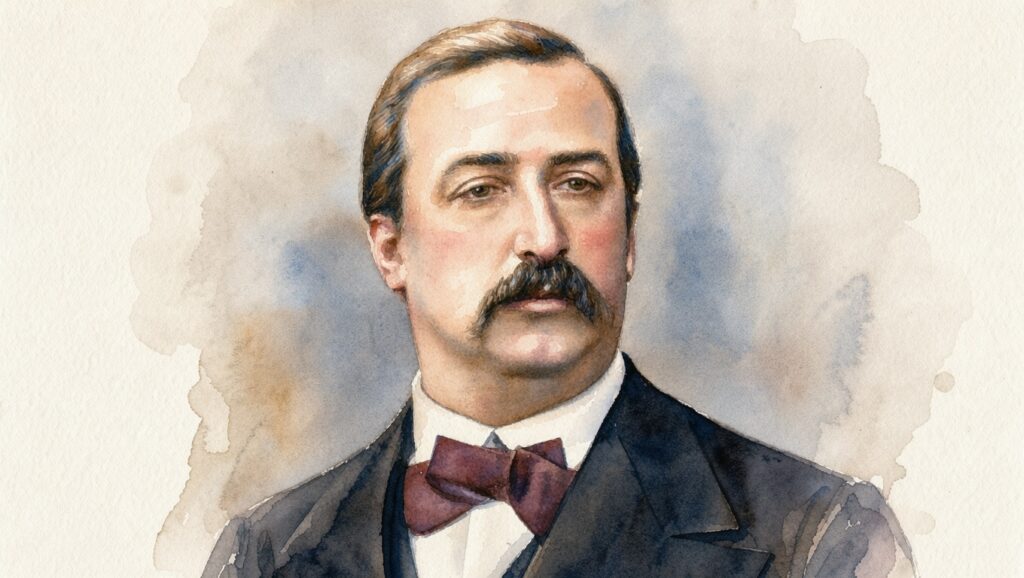
Introduction: The Polymath of Romantic Music
Alexander Borodin’s life was a testament to the idea that genius knows no boundaries. As a chemist, he co-discovered the aldol reaction, a fundamental process in organic synthesis still taught in laboratories today. As a composer, he crafted symphonies, string quartets, and operas that are now staples of the classical repertoire. His works, though few in number, are distinguished by their lyrical melodies, rich orchestration, and a unique blend of Western European influences with distinctly Russian folk elements. Borodin’s music is often described as “exotic” and “sensual,” qualities that set him apart from his contemporaries in music history. Despite his relatively short life, he died at the age of 53, Borodin’s impact on music composers and his enduring popularity among audiences and musicians alike underscore his significance as a cultural icon.
Borodin’s dual career as a scientist and artist was not merely a quirk of fate but a reflection of his belief in the unity of knowledge and creativity. In an era when specialization was becoming the norm, Borodin thrived in both domains, demonstrating that intellectual curiosity and artistic passion could coexist harmoniously. His scientific work provided him with financial stability and intellectual fulfillment, while music offered an emotional and spiritual outlet. This balance is evident in his compositions, which often exhibit a clarity of structure and precision reminiscent of his scientific approach, coupled with a warmth and expressiveness that reveal his deep humanity.
Early Life and Education: A Foundation for Genius
Alexander Borodin was born on 12 November 1833 in St. Petersburg, Russia, into a family of mixed Georgian and Russian heritage. His father, Luka Gedevanishvili, was a Georgian nobleman and a high-ranking military officer in the Russian army, while his mother, Evdokia Antonova, was a Russian woman of modest means. Borodin was born out of wedlock, a circumstance that led to his being registered as the son of one of his father’s serfs, Porfiry Borodin, whose surname he adopted. This unusual arrangement was not uncommon among the Russian nobility of the time, but it did shape Borodin’s sense of identity and his later commitment to social justice.
Despite his illegitimate status, Borodin received a privileged education. He was fluent in several languages, including French, German, and English, and displayed an early aptitude for mathematics and the sciences. At the age of 15, he entered the St. Petersburg Medical-Surgical Academy, where he studied chemistry and medicine under the tutelage of renowned scientists such as Nikolay Zinin. Borodin’s scientific curiosity was ignited during this period, and he soon began conducting his own experiments in chemistry. His academic prowess earned him a scholarship, and in 1856, he graduated with a degree in medicine.
Borodin’s early exposure to music came from his mother, who was an amateur pianist. He began studying the piano at a young age and showed considerable talent, though he never received formal training in composition. His first attempts at composing were made in his teens, but it wasn’t until his twenties that he began to take music seriously. In 1862, he met Mily Balakirev, a leading figure in the Russian nationalist movement in music, who encouraged Borodin to focus on composition. Balakirev became his mentor, introducing him to the circle of composers now known as “The Five”—Mily Balakirev, César Cui, Modest Mussorgsky, Nikolai Rimsky-Korsakov, and Borodin himself. This group sought to create a distinctly Russian national style of music, drawing on folk melodies and rejecting the dominance of Western European influences.
Musical Style and Influences: The Russian Spirit in Music
Borodin’s musical style is often characterized by its lyricism, exoticism, and a sense of grandeur. His works are deeply rooted in the Romantic tradition, with influences from composers such as Frédéric Chopin, Franz Liszt, and Robert Schumann. However, Borodin’s music is distinguished by its unique blend of Western European forms and techniques with Russian folk elements. This fusion is evident in his use of modal scales, irregular rhythms, and colorful orchestration, which evoke the sounds of the Russian countryside and the melodies of traditional folk songs.
One of the most striking aspects of Borodin’s music is its harmonic richness. He was particularly fond of chromaticism and dissonance, which he used to create a sense of mystery and emotional depth. His orchestration is lush and imaginative, often featuring prominent woodwind and brass sections that add to the overall grandeur of his works. Borodin’s melodies are memorable and singable, reflecting his background as a chemist who understood the importance of precision and balance in his compositions.
Borodin’s interest in folk music was not merely academic. He traveled extensively throughout Russia, collecting folk songs and incorporating them into his works. His opera Prince Igor, for example, is based on an epic poem from the Kievan Rus’ period and features a chorus of Polovtsian slaves whose music is derived from authentic folk melodies. Similarly, his Second Symphony and String Quartet No. 2 incorporate folk-like themes that give his music a distinctly Russian character.
Despite his association with The Five, Borodin’s music is less overtly nationalistic than that of his contemporaries. While Mussorgsky and Rimsky-Korsakov sought to create music that was unmistakably Russian in its themes and subject matter, Borodin’s approach was more subtle. His music is universal in its appeal, transcending national boundaries while still retaining a distinctly Russian soul.
Major Works: A Legacy of Masterpieces
Borodin’s output as a composer was relatively small, with only 16 published works, but each one is a masterpiece in its own right. His compositions include two symphonies, a symphonic poem, two string quartets, a piano quintet, and the opera Prince Igor, which is considered one of the greatest achievements in Russian opera. Below is an overview of his most significant works:
Symphonies
Symphony No. 1 in E-flat Major (1862–1867)
Borodin’s First Symphony is a youthful work, composed during his early years as a composer. It is a vibrant and energetic piece, full of youthful exuberance and Romantic passion. The symphony is in four movements, with the first movement featuring a bold and heroic main theme. The second movement, a scherzo, is lighthearted and playful, while the third movement is a melancholic and introspective slow movement. The finale is a lively and exuberant rondo that brings the symphony to a triumphant close.
Despite its youthful energy, the First Symphony already displays Borodin’s signature harmonic richness and orchestral color. It was premiered in 1869 under the baton of Mily Balakirev and received a lukewarm reception. However, Borodin was undeterred and continued to refine the work, which was eventually published in 1882. Today, it is recognized as one of the finest examples of Russian Romantic symphonic music.
Symphony No. 2 in B Minor (1869–1876)
Borodin’s Second Symphony is his most famous and frequently performed work. It is a monumental composition, full of grandeur, passion, and technical brilliance. The symphony is in four movements, with the first movement featuring a bold and heroic main theme that is instantly recognizable. The second movement, a scherzo, is a playful and rhythmic tour de force, while the third movement is a lyrical and introspective slow movement. The finale is a powerful and triumphant movement that brings the symphony to a thrilling conclusion.
The Second Symphony was premiered in 1877 under the baton of Eduard Nápravník and was an immediate success. It is often compared to the symphonies of Brahms and Dvořák for its structural clarity and emotional depth. The symphony’s most famous theme, the “Borodin theme,” has been used in numerous films, ballets, and popular songs, cementing its place in music history.
Operas
Prince Igor (1869–1887)
Prince Igor is Borodin’s magnum opus and one of the most important operas in the Russian repertoire. Based on the Kievan Rus’ epic The Lay of Igor’s Host, the opera tells the story of Prince Igor’s campaign against the Polovtsian tribes and his eventual capture and redemption. The opera is a grand and sweeping work, full of dramatic intensity, exoticism, and lyrical beauty.
Borodin worked on Prince Igor for nearly 18 years, but he was unable to complete it before his death. The opera was later finished by Nikolai Rimsky-Korsakov and Alexander Glazunov, who orchestrated the remaining numbers and assembled the final score. The premiere took place in 1890 and was an immediate success, with audiences and critics praising its rich orchestration, memorable melodies, and dramatic power.
Prince Igor is notable for its use of folk-inspired melodies, particularly in the famous Polovtsian Dances, which are among the most recognizable pieces of music in the classical repertoire. The opera’s blend of Western European operatic forms with Russian folk elements makes it a unique and enduring masterpiece.
Chamber Music
String Quartet No. 1 in A Major (1879)
Borodin’s String Quartet No. 1 is a lyrical and introspective work that showcases his talent for chamber music. The quartet is in four movements, with the first movement featuring a warm and expansive main theme. The second movement is a lively and rhythmic scherzo, while the third movement is a melancholic and introspective slow movement. The finale is a lively and exuberant rondo that brings the quartet to a joyful close.
The String Quartet No. 1 is one of Borodin’s most popular chamber works and is frequently performed in concert halls around the world. Its harmonic richness and melodic beauty make it a favorite among musicians and audiences alike.
String Quartet No. 2 in D Major (1881)
Borodin’s String Quartet No. 2 is a more ambitious and technically demanding work than his first quartet. It is in four movements, with the first movement featuring a bold and heroic main theme. The second movement is a lively and rhythmic scherzo, while the third movement is a lyrical and introspective slow movement. The finale is a powerful and triumphant movement that brings the quartet to a thrilling conclusion.
The String Quartet No. 2 is notable for its use of folk-inspired melodies and its rich harmonic language. It is a testament to Borodin’s skill as a composer and his ability to create music that is both intellectually stimulating and emotionally moving.
Other Notable Works
- In the Steppes of Central Asia (1880): A symphonic poem that evokes the vast landscapes of Central Asia and the journey of a Russian caravan. The work is notable for its use of exotic scales and its evocative orchestration.
- Piano Quintet in C Minor (1862): A youthful work that displays Borodin’s talent for chamber music. The quintet is in four movements and features a bold and heroic main theme.
- Songs and Romances: Borodin composed numerous songs and romances throughout his life, many of which are based on folk poetry. His Romance for Voice and Piano is a particularly fine example of his lyrical style.
Scientific Career: The Chemist Behind the Composer
While Borodin’s musical achievements are well-known, his scientific career is equally impressive. As a chemist, he made significant contributions to the field of organic synthesis, particularly in the study of aldehydes and ketones. His most important discovery was the aldol reaction, which he co-discovered with his mentor Nikolay Zinin in 1872. The aldol reaction is a fundamental process in organic chemistry that involves the condensation of two carbonyl compounds to form a β-hydroxy aldehyde or ketone. This reaction is widely used in the synthesis of complex organic molecules, including pharmaceuticals and fragrances.
Borodin’s scientific work was not limited to the aldol reaction. He also conducted research on the oxidation of organic compounds, the synthesis of aromatic compounds, and the chemistry of organometallic compounds. His work was published in leading scientific journals of the time, and he was elected to the Russian Academy of Sciences in 1874.
Despite his busy scientific career, Borodin remained committed to his musical pursuits. He often composed during his free time, and his dual career is a testament to his dedication and passion for both science and art. Borodin’s ability to excel in two seemingly unrelated fields is a rare and remarkable achievement, one that continues to inspire scientists and artists alike.
Personal Life and Social Causes
Borodin’s personal life was marked by his commitment to social causes, particularly the advancement of women’s education. In 1862, he married Ekaterina Protopopova, a talented pianist who had studied with Balakirev. The couple had three daughters, and Borodin was a devoted family man. His wife’s influence on his musical development cannot be overstated; she often performed his works in private and provided him with valuable feedback.
Borodin was also a strong advocate for women’s rights and education. In 1872, he co-founded the Higher Courses for Women in St. Petersburg, an institution that provided women with access to higher education at a time when such opportunities were rare. Borodin taught chemistry at the institution and was deeply involved in its administration. His commitment to women’s education reflected his belief in the importance of equality and social justice.
Borodin was also known for his generosity and kindness. He often helped his fellow composers, including Mussorgsky, who struggled with alcoholism and financial difficulties. Borodin’s financial stability, thanks to his scientific career, allowed him to support his colleagues and contribute to the Russian musical community.
Legacy and Importance in Music History
Alexander Borodin’s importance in music history cannot be overstated. As a member of The Five, he played a crucial role in the development of a distinctly Russian national style of music. His works, though few in number, are celebrated for their originality, harmonic richness, and emotional depth. Borodin’s music has had a lasting impact on music composers from Tchaikovsky to Shostakovich, and his influence can be heard in the works of composers as diverse as Rachmaninoff, Stravinsky, and Prokofiev.
Borodin’s legacy extends beyond his musical achievements. His dual career as a scientist and artist is a testament to the idea that creativity and intellect are not mutually exclusive. His commitment to social causes, particularly women’s education, reflects his progressive values and his belief in the power of art and science to effect positive change in society.
Today, Borodin’s music is performed and recorded by leading orchestras, chamber ensembles, and soloists around the world. His operas, symphonies, and chamber works are staples of the classical repertoire, and his influence continues to inspire new generations of musicians and composers. Borodin’s life and work serve as a reminder of the power of art and science to transcend boundaries and enrich our understanding of the world.
Alexander Borodin’s Importance in the Context of Russian Composers
Borodin occupies a unique place among Russian Composers of the 19th century. While composers like Tchaikovsky and Rimsky-Korsakov achieved international fame during their lifetimes, Borodin’s reputation was more localized, and his works were often overshadowed by those of his contemporaries. However, his contributions to Russian music are no less significant. Borodin’s music is distinguished by its lyricism, exoticism, and harmonic richness, qualities that set him apart from his peers.
Alexander Borodin’s association with The Five was both a blessing and a curse. While the group’s collective efforts helped to shape a distinctly Russian national style of music, Borodin’s relatively small output meant that he was often overshadowed by the more prolific composers in the group, such as Mussorgsky and Rimsky-Korsakov. However, his works have stood the test of time, and today, he is recognized as one of the most important composers of the Russian Romantic era.
Borodin’s influence on later generations of music composers is evident in the works of composers such as Alexander Glazunov, who completed Prince Igor after Alexander Borodin’s death, and Sergei Rachmaninoff, who admired Borodin’s harmonic language and orchestral color. Borodin’s music also had a profound impact on the development of Russian opera, paving the way for composers like Mussorgsky and Rimsky-Korsakov to create works that were unmistakably Russian in their themes and subject matter.
Alexander Borodin’s Enduring Popularity
Borodin’s music has enjoyed a resurgence in popularity in recent decades, thanks in part to its use in popular culture. His Polovtsian Dances from Prince Igor have been featured in numerous films, ballets, and commercials, introducing his music to new audiences around the world. His symphonies and chamber works are also frequently performed in concert halls, and his operas remain a staple of the Russian repertoire.
Borodin’s enduring popularity is a testament to the universal appeal of his music. His works are accessible yet sophisticated, emotional yet structurally sound, and exotic yet deeply human. Borodin’s ability to blend Western European influences with Russian folk elements creates a sound that is both familiar and unique, a quality that has ensured his place in music history.
Conclusion: The Genius of Alexander Borodin
Alexander Borodin’s life and work are a testament to the power of creativity, intellect, and passion. As a scientist, he made groundbreaking contributions to the field of organic chemistry. As a composer, he created works that are celebrated for their originality, harmonic richness, and emotional depth. As a social reformer, he advocated for women’s education and contributed to the advancement of Russian society.
Borodin’s music is a bridge between the scientific and artistic worlds, a fusion of precision and emotion, of intellect and passion. His works continue to inspire and captivate audiences around the world, ensuring his place as one of the most important figures in music history. In an era of increasing specialization, Borodin’s life serves as a reminder of the power of interdisciplinary thinking and the enduring value of art and science.
#AlexanderBorodin #ClassicalMusic #RussianComposers #MusicHistory #RomanticMusic #PrinceIgor #SymphonyNo2 #BorodinLegacy #MusicComposers #BorodinTheChemist #RussianOpera #BorodinWorks #BorodinInfluence #GeniusOfBorodin