Clara Schumann (13 September 1819 – 20 May 1896) stands as one of the most extraordinary figures in music history, a woman whose genius transcended the gender barriers of the 19th century to leave an indelible mark on music composers and the Romantic era. As a virtuoso pianist, a groundbreaking composer, and a pivotal cultural figure, she redefined the role of women in classical music. Her life was a tapestry of artistic brilliance, personal resilience, and profound influence, intertwined with some of the most iconic names of her time, including her husband, Robert Schumann, and the young Johannes Brahms. While her contributions as a pianist are often celebrated, her legacy as a female composer is equally significant, though historically underappreciated. This article explores her life, her works, her importance in music history, and her enduring legacy, with a dedicated focus on her relationship with Brahms.
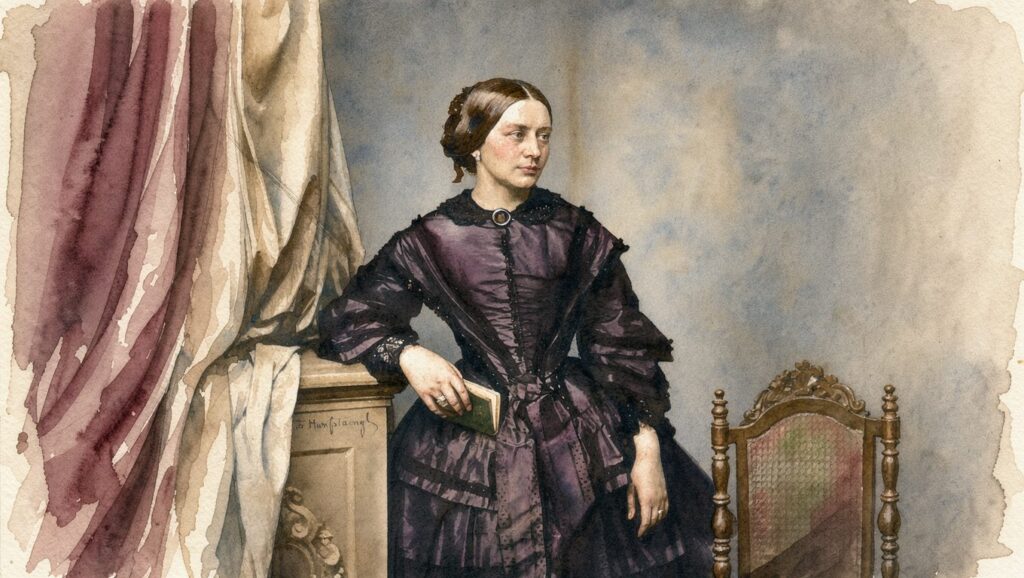
Early Life and Musical Prodigy
Clara Josephine Wieck was born in Leipzig, Germany, into a family deeply rooted in music. Her father, Friedrich Wieck, was a renowned piano teacher and a strict disciplinarian who recognized his daughter’s extraordinary talent almost from birth. From the age of four, Clara began studying piano under her father’s rigorous guidance, and by six, she was composing her own pieces. Her prodigious abilities quickly became apparent, and by the age of nine, she was performing in public concerts.
Wieck’s ambition for Clara was not merely to cultivate a talented pianist but to create a musical sensation. He ensured she received the finest education, exposing her to the works of Bach, Mozart, and Beethoven, while also fostering her own compositional skills. By her early teens, Clara was already composing Lieder (art songs), piano pieces, and even chamber works, demonstrating a maturity and originality that belied her age.
A Career in the Spotlight: Pianist and Composer
Clara’s career as a pianist took her across Europe, where she dazzled audiences with her technical mastery and interpretive depth. She was particularly celebrated for her performances of Beethoven’s works, which she played with a fiery intensity and poetic sensitivity. Her reputation grew rapidly, and by the 1830s, she was one of the most sought-after pianists in Europe, often compared to the great virtuosos of the day, including Franz Liszt.
Yet, Clara was not content to be merely a performer. She was determined to be recognized as a female composer in her own right, a goal that was fraught with challenges in the male-dominated world of 19th-century classical music. Despite the societal norms that discouraged women from composing, Clara persisted, producing a body of work that included over 60 published compositions. Her output spanned piano concertos, chamber music, Lieder, and choral works, showcasing her versatility and innovation.
Notable Works
Some of Clara Schumann’s most significant compositions include:
- Piano Concerto in A Minor, Op. 7 (1835): Written when she was just 14, this work is a testament to her prodigious talent and ambition. It combines virtuosic piano writing with orchestral grandeur, revealing her deep understanding of both instruments.
- Three Romances for Violin and Piano, Op. 22 (1853): These lyrical and expressive pieces highlight her gift for melody and harmonic richness, often drawing comparisons to the works of Robert Schumann.
- Lieder: Clara composed over 20 Lieder, many of which set texts by poets such as Friedrich Rückert and Heinrich Heine. Her songs are characterized by their emotional depth and intricate piano accompaniments, reflecting her own experiences and those of her contemporaries.
- Scherzo No. 2 in C Minor, Op. 14 (1845): A lively and technically demanding piece for piano, this Scherzo showcases her playful yet disciplined approach to composition.
Despite her achievements, Clara’s works were frequently overshadowed by those of her husband, Robert Schumann, and later, by the towering legacy of Brahms. It was only in the late 20th and early 21st centuries that scholars and performers began to reassess her contributions, reclaiming her rightful place in music history as a pioneering female composer.
Personal Life: Love, Loss, and Resilience
Clara’s personal life was as dramatic and complex as her professional one. In 1840, at the age of 21, she married Robert Schumann, a composer and critic who had been her father’s pupil. The marriage was initially met with fierce opposition from Friedrich Wieck, who believed that Clara’s career would suffer if she married. However, the couple’s love for each other—and their shared passion for music—ultimately triumphed.
Together, Clara and Robert had eight children, though their family life was frequently disrupted by financial struggles and Robert’s declining mental health. Despite these challenges, Clara continued to compose, perform, and support her husband’s career. She premiered many of his works, including his Piano Concerto in A Minor and Kinderszenen, and provided invaluable feedback on his compositions.
Tragedy struck in 1854 when Robert, suffering from severe mental illness, attempted to take his own life by throwing himself into the Rhine River. He was rescued and subsequently institutionalized, leaving Clara to care for their children alone. For the remaining two years of Robert’s life, Clara visited him regularly, though she was also expected to continue her performing career to support the family. Robert’s death in 1856 was a devastating blow, but Clara channeled her grief into her music and her role as a mentor to younger composers.
Clara and Brahms: A Relationship of Mutual Respect and Influence
One of the most fascinating chapters in Clara Schumann’s life is her relationship with Johannes Brahms, a relationship that was as much artistic as it was personal. Brahms, who was 14 years younger than Clara, first met her and Robert in 1853, when he was introduced to them by the violinist Joseph Joachim. The Schumanns were immediately impressed by Brahms’ talent, and Robert, in particular, became a strong advocate for the young composer.
After Robert’s death in 1856, Brahms became a central figure in Clara’s life. Their relationship was intense, complex, and often misunderstood. While there has been much speculation about the nature of their bond, some historians suggest it may have been romantic, though never consummated, what is clear is that they shared a deep mutual respect and intellectual affinity. Brahms dedicated his Piano Concerto No. 1 in D Minor, Op. 15 to Clara, and she, in turn, championed his music throughout her life.
Clara’s influence on Brahms was profound. She provided him with encouragement, critical feedback, and a connection to the musical traditions of the past. Brahms, in turn, dedicated many of his works to her, including his Variations on a Theme by Haydn and his Two Rhapsodies, Op. 79. Their correspondence, which spans over 40 years, offers a rare glimpse into the creative and emotional lives of two of the 19th century’s most important musicians.
A Partnership of Equals
Despite the age difference and the societal expectations of the time, Clara and Brahms maintained a relationship built on equality and mutual admiration. Clara’s insights as a performer and composer were invaluable to Brahms, who often sought her opinion on his works. In a letter to Brahms, Clara wrote:
“You are a true artist, Brahms. Your music speaks to the soul, and I am honored to be among the first to bring it to life.”
Brahms, in his letters, frequently expressed his gratitude for Clara’s support, referring to her as his “guardian angel” and “the only woman who has understood me completely.”
Their relationship also highlights the challenges faced by female composers in a male-dominated field. Clara’s own compositions, though brilliant, were often overshadowed by her associations with Robert and Brahms. It was only in recent decades that scholars began to reevaluate her works, recognizing her as a pioneer in her own right.
Legacy and Impact on Music History
Clara Schumann’s legacy is multifaceted. As a pianist, she set new standards for technical and interpretive excellence, influencing generations of musicians. As a female composer, she broke barriers and paved the way for women in classical music, proving that gender was no obstacle to artistic genius. Her works, though relatively few in number compared to her male contemporaries, are characterized by their emotional depth, technical innovation, and lyrical beauty.
Clara’s influence extended beyond her lifetime. She was a mentor to younger composers, including Brahms, and her advocacy for the music of Robert Schumann helped ensure his place in the canon. She also played a crucial role in preserving and promoting the works of Johann Sebastian Bach, whose music she performed and taught throughout her career.
In the 20th and 21st centuries, Clara Schumann’s works have experienced a renaissance. Performers and scholars have rediscovered her compositions, recognizing their significance in the context of Romantic music. Her Piano Concerto in A Minor and Three Romances for Violin and Piano are now staples of the repertoire, and her Lieder are celebrated for their poetic sensitivity.
A Lasting Inspiration for Female Composers
Clara Schumann’s life and career serve as an inspiration for female composers and musicians around the world. In an era when women were often relegated to the role of muse or performer, Clara demanded to be recognized as a creator in her own right. Her resilience in the face of personal tragedy and societal prejudice is a testament to her strength and determination.
Today, organizations and initiatives dedicated to promoting women in music continue to draw inspiration from Clara’s legacy. Her story reminds us of the importance of recognizing and celebrating the contributions of women in music history, ensuring that their voices are not silenced by the passage of time.
Conclusion: Clara Schumann’s Enduring Genius
Clara Schumann was more than a virtuoso pianist or the wife of a famous composer. She was a trailblazer, a female composer who defied the conventions of her time, and a cultural icon whose influence extended far beyond the concert hall. Her relationship with Brahms, marked by mutual respect and artistic collaboration, is a testament to the power of music to transcend boundaries,both personal and societal.
As we reflect on Clara’s life and legacy, we are reminded of the importance of acknowledging the contributions of women in music history. Her works, her struggles, and her triumphs continue to resonate, inspiring new generations of musicians to break barriers and create fearlessly. Clara Schumann’s story is not just a chapter in the history of classical music; it is a legacy that continues to shape the future of the art form.
Sources
- Beahrs, John. Clara Schumann: A Dual Biography. Oxford University Press, 2021.
- Booth, Sally. Clara Schumann: The Artist and the Woman. McGill-Queen’s University Press, 2001.
- Fuller, Sophie. The Pandora Guide to Women Composers: Britain and the United States, 1629–Present. HarperCollins, 1994.
- Grove, George, et al. Grove’s Dictionary of Music and Musicians. Oxford University Press, 2001.
- Litzmann, Berthold. Clara Schumann: An Artist’s Life. Translated by Grace E. Hadow, 1913.
- Mason, Daniel Gregory. Great Women Singers. MacMillan, 1921.
- Niecks, Frederick. Clara Schumann: Pianist and Composer. Novello, Ewer & Co., 1887.
- Rieger, Eva. Clara Schumann: The Consecration of a Woman Musician. Feminist Press, 1997.
- Sadie, Julie Anne. The Norton/Grove Dictionary of Women Composers. W. W. Norton & Company, 1995.
- Tusa, Heidi. Clara Schumann: The Artist and the Woman. Yale University Press, 2019.
#ClaraSchumann #FemaleComposers #MusicHistory #RomanticMusic #ClassicalMusic #WomenInMusic #PianoVirtuoso #MusicLegacy #BrahmsAndClara #ComposerSpotlight #MusicComposers #19thCenturyMusic #PioneeringWomen #MusicHeritage #ArtisticGenius