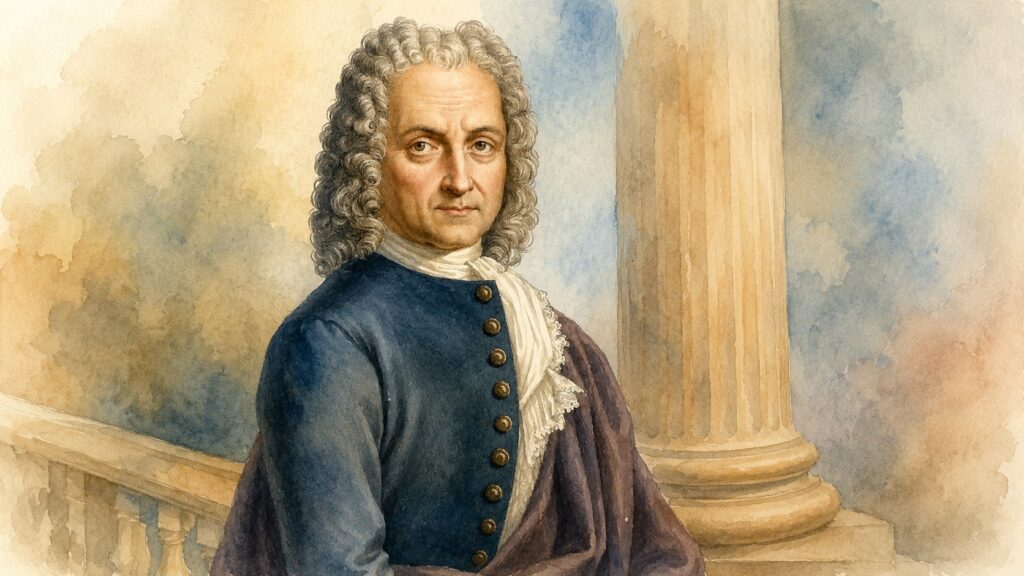
Franz Liszt (22 October 1811 – 31 July 1886) was a Hungarian composer, virtuoso pianist, conductor, music teacher, and Franciscan tertiary whose extraordinary talent and visionary artistic vision altered the landscape of 19th-century European culture. Regarded as perhaps the greatest pianist in history, Liszt moved far beyond the boundaries of technical keyboard mastery to become a pivotal figure in European music history. His revolutionary ideas regarding musical form, harmony, and performance transformed how music was written, perceived, and experienced. By bridging the world of pure, classical technique with dramatic narrative and emotional intensity, he served as a central pillar among the legendary music composers of the Romantic era.
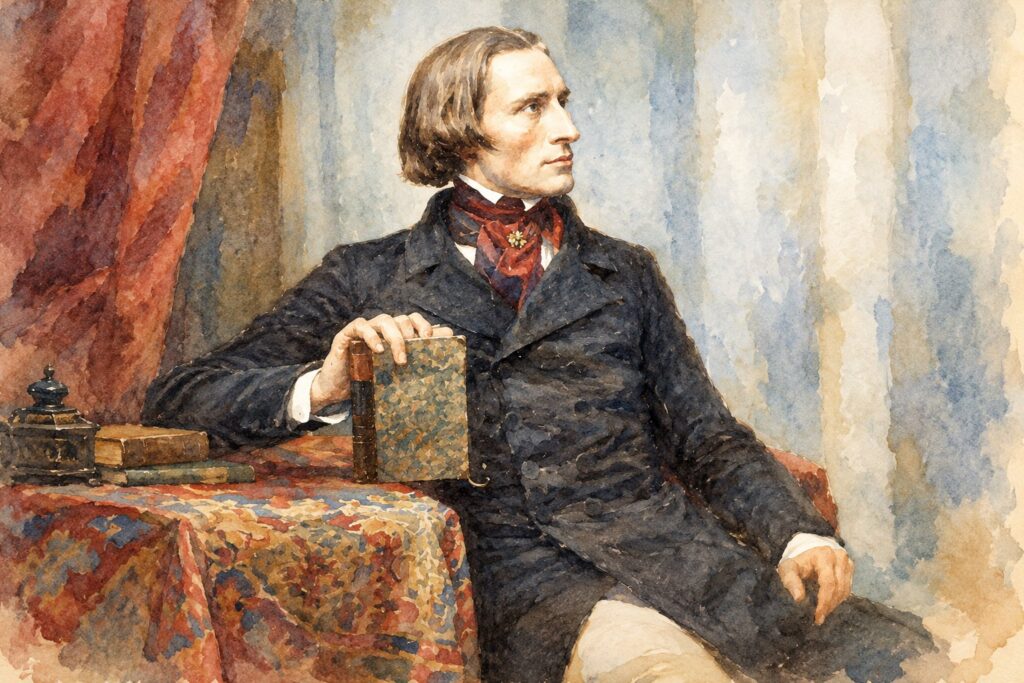
The Phenomenon of Franz Liszt
Franz Liszt stands as an iconic archetype of the Romantic artist: passionately intense, intellectually curious, spiritually driven, and perpetually innovating. In an age dominated by dramatic social transformation, rapid technological development, and the expansion of the public concert sphere, Liszt captured the imagination of Europe like no musician before him.
His contribution to Western music extends across several dimensions. As a performer, he established the modern solo piano recital, performing complex, extended programs entirely from memory without orchestral support or chamber partners. As a composer, he broke away from rigid classical constraints, pioneering programmatic symphonic poems and expanding harmonic structures to the threshold of modern chromaticism and early atonality. As a conductor, patron, and mentor, he tirelessly advocated for contemporary artistic colleagues, championing works by Hector Berlioz, Richard Wagner, Robert Schumann, and Camille Saint-Saëns. To understand the evolution of 19th-century musical expression is to understand Franz Liszt.
Comprehensive Biography
Early Life and Child Prodigy (1811–1827)
Franz Liszt was born in the village of Raiding (then in the Kingdom of Hungary, within the Austrian Empire). His father, Adam Liszt, was an amateur musician in the service of Prince Nikolaus II Esterházy and an acquaintance of Joseph Haydn and Ludwig van Beethoven. Recognizing his young son’s unusual talents, Adam gave Franz his initial piano lessons when the boy was six years old.
By the age of nine, Liszt was performing in concerts across Pressburg (now Bratislava) and Vienna. Impressed by his innate musicality, wealthy Hungarian aristocrats offered to sponsor the child’s formal education. In Vienna, Liszt studied piano under Carl Czerny—himself a student of Beethoven—and music theory under Antonio Salieri. Legend holds that a young Liszt received a Begrüßungskuss (kiss of approval) from Beethoven after a performance in 1823, an event that Liszt cherished throughout his life as a symbolic passing of the artistic torch.
In late 1823, Liszt relocated to Paris with his family. Although denied admission to the Paris Conservatoire by its director Luigi Cherubini on account of his foreign nationality, Liszt pursued private instruction in composition under Anton Reicha and Ferdinando Paer. His rapid rise to prominence in Parisian society earned him the affectionate moniker le petit Liszt. However, the sudden death of his devoted father in 1827 plunged the fifteen-year-old artist into deep emotional distress, leading to a temporary retreat from concertizing and a phase of intense religious introspection.
The Parisian Years and the Birth of Virtuosity (1828–1838)
Living in Paris during his late teens and early twenties, Liszt immersed himself in the vibrant literary and intellectual circles of the July Monarchy. He frequented salons alongside figures such as Victor Hugo, Honoré de Balzac, George Sand, and Heinrich Heine, while absorbing the utopian social philosophies of Henri de Saint-Simon and Lamennais.
Three decisive musical encounters shaped Liszt’s artistic evolution during the early 1830s:
- Niccolò Paganini: Attending Paganini’s Parisian concerts in 1831 electrified Liszt. Inspired by Paganini’s unrivaled mastery on the violin, Liszt resolved to achieve an equivalent level of technical transcendent virtuosic power on the piano.
- Hector Berlioz: Hearing the premier of Berlioz’s Symphonie Fantastique in 1830 introduced Liszt to radical programmatic orchestration and dramatic narrative composition, leading him to transcribe the monumental work for piano.
- Frédéric Chopin: Chopin’s arrival in Paris in 1831 exposed Liszt to unprecedented poetic nuance, lyric elegance, and harmonic sensitivity on the keyboard.
During this period, Liszt entered a romantic relationship with the writer Countess Marie d’Agoult (who published under the pen name Daniel Stern). Their partnership produced three children: Blandine, Cosima (who would later marry the conductor Hans von Bülow and later the composer Richard Wagner), and Daniel. Between 1835 and 1839, Liszt and d’Agoult traveled extensively across Switzerland and Italy, experiences that inspired Liszt’s famous piano cycle Années de pèlerinage (Years of Pilgrimage).
“Lisztomania” and the Virtuoso Years (1839–1847)
The decade between 1839 and 1847 represents the peak of Liszt’s career as a traveling concert virtuoso. Traversing the European continent from Ireland to Turkey, and from Portugal to Russia, Liszt gave over a thousand public performances.
His dramatic presence, striking physical appearance, and superhuman dexterity ignited a social phenomenon that Heinrich Heine famously dubbed “Lisztomania.” Audience members swooned, threw jewels onto the stage, and fought over his discarded gloves or broken piano strings. Yet Liszt was far more than a sensational showman. He donated substantial proceeds from his concerts to charitable causes, including the relief fund for the Great Danube Flood of 1838, the construction of the Beethoven Monument in Bonn, and various educational foundations.
During this era, Liszt revolutionized the concert experience by inventing the modern piano recital. Prior to Liszt, multi-performer variety concerts were standard. Liszt was the first musician to perform entire evening programs alone at the piano, placing the instrument at an angle to the audience so they could observe his hands and dramatic profile.
Weimar Period: The Master Composer and Conductor (1848–1861)
In 1847, while performing in Kyiv, Liszt met Princess Carolyne zu Sayn-Wittgenstein, a Polish-Russian noblewoman and author who became his lifelong companion and intellectual confidante. Encouraged by Carolyne to step back from the exhausting routine of touring and devote himself fully to composition, Liszt retired from the public virtuoso stage at the age of thirty-five.
Liszt accepted the position of full-time Kapellmeister (Music Director) to the Grand Ducal Court at Weimar in 1848. His fourteen years in Weimar were among his most creatively fruitful. Free from concertizing pressures, he composed many of his legendary masterpieces, including the Faust Symphony, the Dante Symphony, twelve Symphonic Poems, the Piano Concerto No. 1 and No. 2, and the landmark Sonata in B minor.
As Weimar’s musical director, Liszt established the town as a primary center for modern music in Europe. He conducted pioneering performances of operas by contemporary composers, notably conducting the world premiere of Richard Wagner’s Lohengrin in 1850. He also welcomed students from across Europe and North America, offering free masterclasses to young pianists and establishing a legacy of generosity that transformed piano pedagogy.
Rome, Weimar, and Budapest: The Late Years (1861–1886)
Seeking ecclesiastical resolution to marry Princess Carolyne—a request ultimately blocked by papal and political authorities—Liszt moved to Rome in 1861. Deepened by personal tragedy, including the deaths of his children Daniel (1859) and Blandine (1862), Liszt turned toward religious devotion. In 1865, he received the four minor orders of the Catholic Church, becoming Abbé Liszt. During his Roman period, he focused heavily on sacred choral music, composing the oratorios Die Legende von der heiligen Elisabeth and Christus.
From 1869 until his death, Liszt divided his time each year between Rome, Weimar, and Budapest—a three-part lifestyle he referred to as his vie trifurquée. In Budapest, he helped found the Royal Hungarian Academy of Music (now the Franz Liszt Academy of Music) in 1875, serving as its first president.
In his final years, Liszt’s compositions became increasingly austere, radical, and forward-looking. Works like Nuages gris (Grey Clouds) and La lugubre gondola abandoned traditional tonal centers, presaging early 20th-century impressionism and expressionism. Liszt died of pneumonia on 31 July 1886 in Bayreuth, Germany, while attending the Wagner festival, and was buried in Bayreuth.
Major Works and Genres
Franz Liszt was a remarkably prolific creator whose catalog comprises over 700 works spanning piano solos, orchestral works, sacred and secular choral music, chamber music, songs, and transcriptions.
Solo Piano Works
The piano was Liszt’s primary medium of expression. His compositions for the instrument redefined what was thought technically and expressive possible on the modern grand piano.
- Sonata in B minor (1853): Widely considered Liszt’s masterpiece and one of the supreme achievements of Romantic keyboard literature. Built as a continuous single-movement structure lasting over thirty minutes, it employs thematic transformation to integrate traditional sonata-allegro elements into a cohesive whole.
- Années de pèlerinage (Years of Pilgrimage): A set of three suites (Première année: Suisse, Deuxième année: Italie, and Troisième année) reflecting his travels, literary reflections, and spiritual evolution. It includes iconic pieces such as Vallée d’Obermann, Sposalizio, and Les jeux d’eaux à la Villa d’Este (a precursor to Impressionism).
- Transcendental Études (1852): A collection of twelve formidable studies that explore every aspect of virtuoso technique, balancing athletic demands with evocative poetic titles like Mazeppa, Harmonies du soir, and Chasse-neige.
- Hungarian Rhapsodies (1846–1885): A set of 19 piano pieces based on Hungarian gypsy themes and folk-like rhythms. The Hungarian Rhapsody No. 2 in C-sharp minor remains one of the most famous classical compositions in popular culture.
- Liebesträume (Dreams of Love): A set of three piano pieces, of which No. 3 in A-flat major is among the most famous melodic romantic works ever composed.
+-------------------------------------------------------------------+
|                     KEY WORKS OF FRANZ LISZT                      |
+--------------------------+----------------------------------------+
| Genre                    | Notable Masterpieces                   |
+--------------------------+----------------------------------------+
| Solo Piano Masterworks   | Sonata in B minor, Transcendental      |
|                          | Études, Années de pèlerinage           |
+--------------------------+----------------------------------------+
| Orchestral Works         | Faust Symphony, Dante Symphony,        |
|                          | Les Préludes, Piano Concertos 1 & 2    |
+--------------------------+----------------------------------------+
| Virtuosic / Popular      | Hungarian Rhapsodies, Liebesträume,   |
|                          | Mephisto Waltzes, La Campanella        |
+--------------------------+----------------------------------------+
| Sacred Choral Works      | Christus, St. Elisabeth, Via Crucis    |
+--------------------------+----------------------------------------+
| Experimental Late Pieces | Nuages gris, Bagatelle sans tonalité   |
+--------------------------+----------------------------------------+
Orchestral Works and Programmatic Innovation
Liszt revolutionized orchestral literature by creating the Symphonic Poem (or tone poem)—a single-movement orchestral work based on a literary, poetic, painted, or philosophical subject.
- Les Préludes (1854): The most famous of his thirteen symphonic poems, inspired by Alphonse de Lamartine’s poetry, exploring themes of life, love, struggle, and victory.
- A Faust Symphony (1857): A monumental three-movement work based on Goethe’s drama, portraying the characters Faust, Gretchen, and Mephistopheles through thematic development.
- Dante Symphony (1857): A evocative two-movement work reflecting Dante’s Inferno and Purgatorio, ending with a choral Magnificat.
Transcriptions and Arrangements
Liszt performed a crucial historical service by transcribing symphonic, operatic, and vocal works for solo piano. At a time before audio recording technology, Liszt’s keyboard transcriptions of Beethoven’s nine symphonies, Schubert’s lieder, Berlioz’s orchestral scores, and Mozart and Verdi operas brought complex music into private salons and smaller concert halls across Europe.
Innovations, Technical Mastery, and Musical Style
Franz Liszt changed the trajectory of composition and performance through several groundbreaking technical and structural innovations:
1. Thematic Transformation
Instead of working with traditional thematic exposition and development, Liszt pioneered thematic transformation, a technique where a single musical motive or core theme is continually altered in rhythm, harmony, tempo, and character throughout a piece to represent changing moods or narrative elements. This technique directly influenced Richard Wagner’s use of the leitmotif and heavily impacted later composers like César Franck and Richard Strauss.
2. Harmonic Expansion and Pre-Modernism
Liszt extended traditional 19th-century tonal boundaries. He made frequent use of diminished seventh chords, augmented triads, whole-tone scales, and radical chromatic progressions. In late works like Bagatelle sans tonalité (Bagatelle Without Tonality, 1885), Liszt deliberately avoided traditional key centers, anticipating the early 20th-century developments of Arnold Schoenberg, Claude Debussy, and Béla Bartók.
3. Pianistic Technique and Ergonomics
Liszt re-engineered piano technique. He expanded orchestral textures on two hands, utilizing leaps across registers, rapid octaves, interlocking hand patterns, and extended pedal effects. His approach treated the piano not simply as a stringed keyboard instrument, but as a full orchestral palette capable of infinite tone colors.
Importance and Historical Legacy
Liszt’s impact on classical music culture is vast and multifaceted:
- The Recital Format: Liszt invented the modern solo instrumental recital format, turning musical performance into a theatrical art form.
- Generosity and Mentorship: Unlike many competitive performers, Liszt advocated for his contemporaries. He gave financial aid, staged works by young composers, and refused payment for his piano lessons, teaching hundreds of students who passed his artistic vision down to future generations.
- Cultural Nationalism: Liszt brought Hungarian musical motifs into international spotlight, helping establish a tradition of musical nationalism that inspired later Hungarian composers like Béla Bartók and Zoltán Kodály.
- Bridging Eras: Liszt’s life bridged two distinct musical eras: born when Haydn had recently passed and Beethoven was in his prime, he lived long enough to witness the dawn of early modernism, leaving an indelible imprint on the history of sound.
Franz Liszt remains one of the most dynamic, revolutionary, and transformative artists in Western history; a musician whose technical genius was equaled only by his intellectual courage and artistic generosity.
Sources
- Walker, Alan. Franz Liszt: The Virtuoso Years, 1811–1847. Cornell University Press, 1987.
- Walker, Alan. Franz Liszt: The Weimar Years, 1848–1861. Cornell University Press, 1989.
- Walker, Alan. Franz Liszt: The Final Years, 1861–1886. Cornell University Press, 1996.
- Hamilton, Kenneth. The Cambridge Companion to Liszt. Cambridge University Press, 2005.
- Watson, Derek. Liszt. J.M. Dent & Sons Ltd, 1989.
#FranzLiszt #ClassicalMusic #PianoVirtuoso #RomanticEra #MusicHistory #ClassicalComposers #SymphonicPoem #PianoMusic #Lisztomania #SonataInBMinor #Musician #Romanticism #Musicology #HungarianMusic #Virtuoso