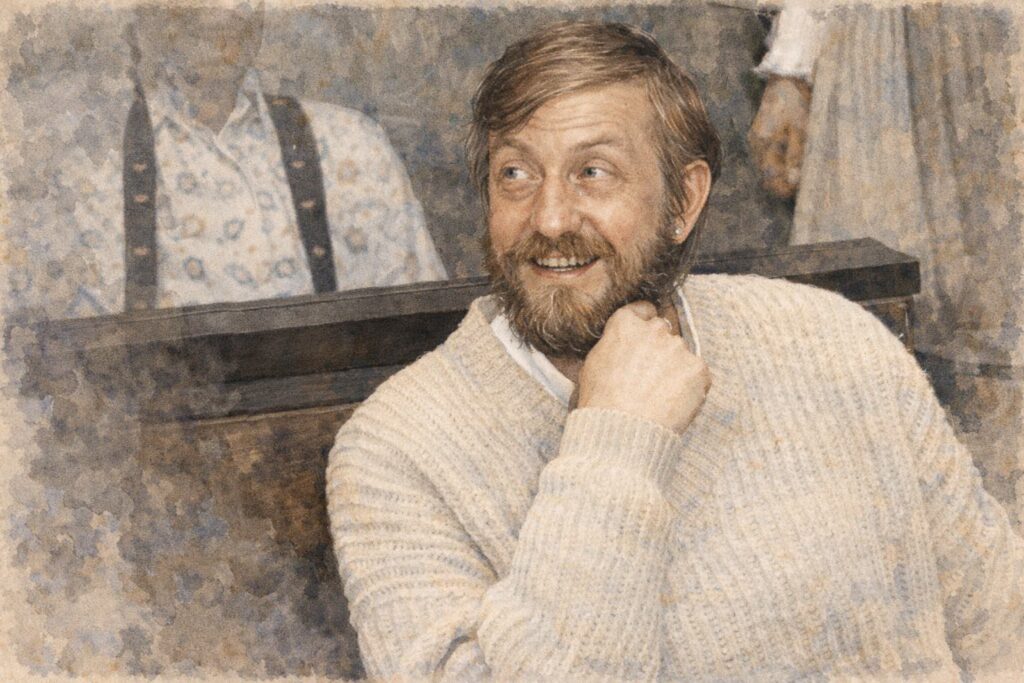
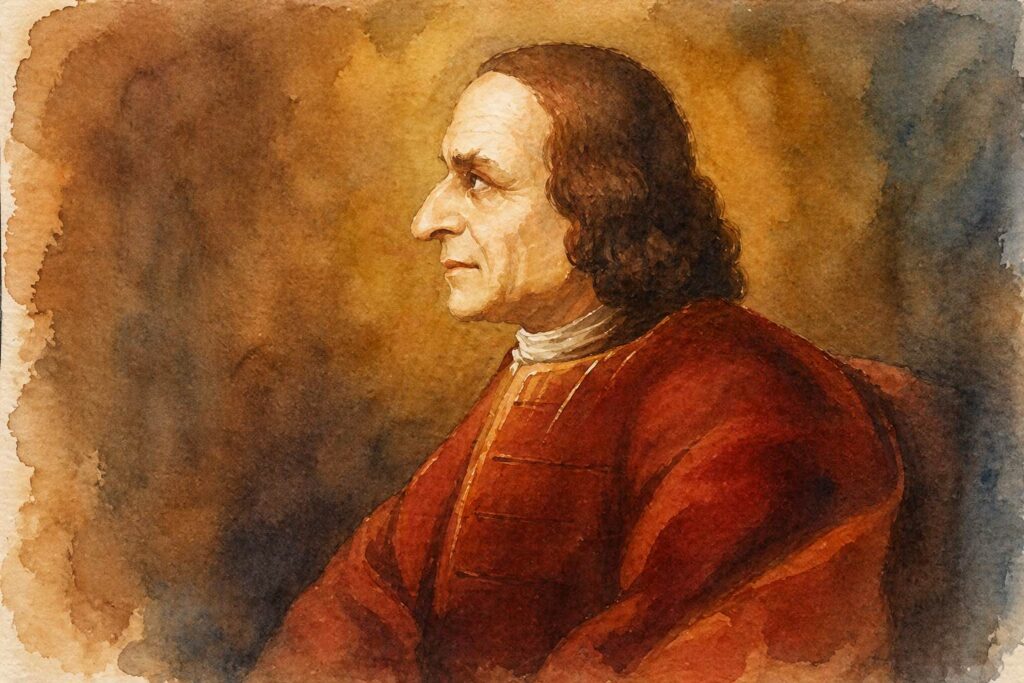
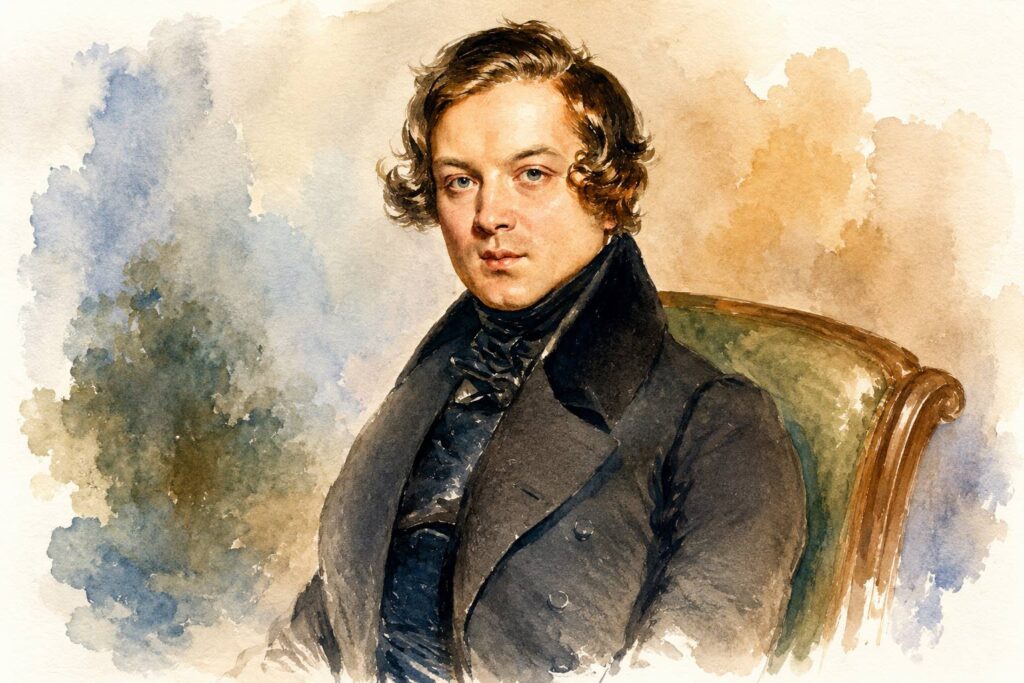
When the global classical music community discusses the sonic identity of the Baltic Sea’s eastern shores, contemporary names typically dominate the conversation. The radiant, meditative tintinnabuli of Arvo Pärt and the monumentally rugged, ritualistic choral tapestries of Veljo Tormis are universally celebrated as the pillars of modern Estonian music. Yet, these structural peaks of the 20th and 21st centuries could not have existed without a deep, foundational bedrock laid down decades earlier. That bedrock was carved, almost single-handedly, by a trailblazing and uncompromising figure: Rudolf Tobias.
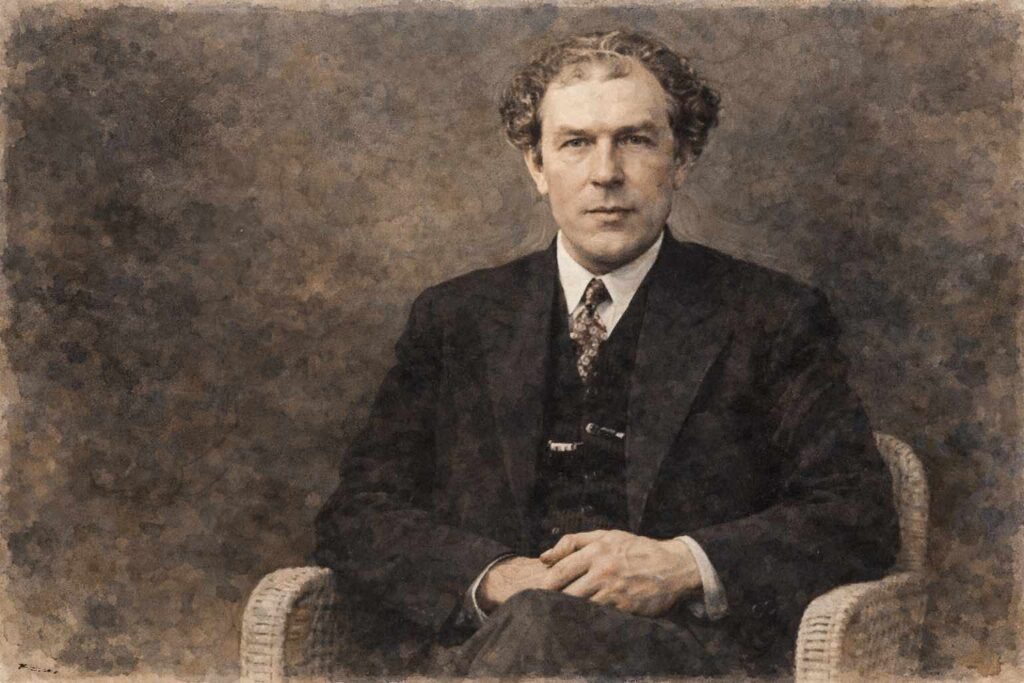
Operating at the turn of the 20th century, Rudolf Tobias (29 May 1873 – 29 October 1918) was not merely a composer of exceptional talent; he was Estonia’s primary musical architect. As the nation’s first academically trained professional composer, his brief but blazing career was defined by an extraordinary series of cultural “firsts.” He authored the first Estonian symphonic work, the first Estonian piano concerto, the first native string quartets, and the earliest local vocal-symphonic masterpieces.
Tobias’s artistic trajectory represents a dramatic narrative of individual genius clashing with provincial limitation. Caught between the academic traditionalism of St. Petersburg, the emerging national consciousness of his native land, and the radical modernist currents of pre-World War I Berlin, Tobias spent his life striving for a monumental, universal grandiosity. He dragged a budding national culture into dialogue with the European mainstream, leaving behind a legacy that remains as breathtakingly ambitious as it was tragic.
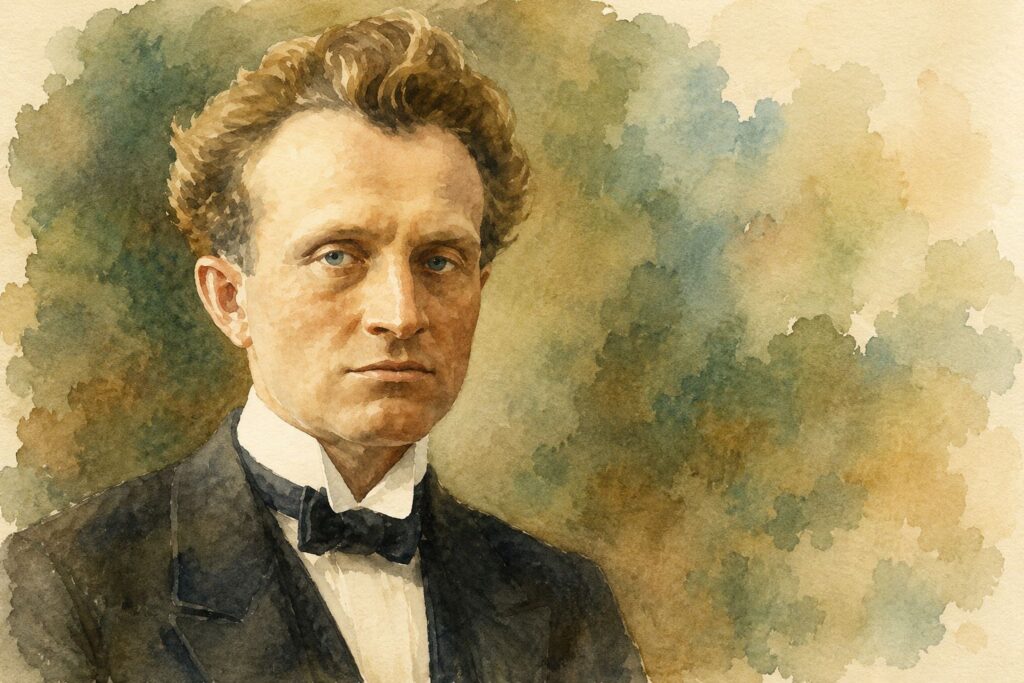
From the Shores of Hiiumaa to the St. Petersburg Vanguard
The story of professional Estonian music begins on the wind-swept island of Hiiumaa. Rudolf Tobias was born on May 29, 1873, in the small village of Selja, Käina Parish. He was born into an environment where music was intimately tied to communal spiritual life. His father, Johannes Tobias, was a local parish clerk and an amateur musician who provided the young boy with his earliest keyboard lessons. The child’s natural aptitude was immediately apparent; Tobias began sketching his first compositional exercises in 1882 at just nine years old.
As his family relocated across the mainland to Kullamaa, Tobias’s formal education expanded. In 1885, he began formal piano studies in Haapsalu under Catharina von Gernet, a highly regarded local pianist who recognized that the young boy’s capabilities far outstripped the confines of provincial Estonia. By 1889, Tobias had moved to Tallinn to attend the Nicolai High School. There, he passed his tutor’s examination while studying organ and music theory with Ernst Reinicke, the esteemed organist of the Tallinn Cathedral.
The true turning point arrived in 1893. Recognizing that Estonia lacked any institutional framework for higher musical education, Tobias left the Baltic provinces for the Imperial capital, enrolling at the St. Petersburg Conservatory. This institution was an intense melting pot of Late Romantic Russian nationalism and strict Academic European pedagogy.
At the conservatory, Tobias dual-specialized. He studied the intricacies of the organ under Louis Homilius while entering the elite composition class of the legendary orchestrator Nikolai Rimsky-Korsakov. Under Rimsky-Korsakov’s rigorous tutelage, Tobias developed a flawless contrapuntal technique and a sophisticated grasp of orchestral color.
It was during his conservatory years that Tobias began shattering cultural glass ceilings for his homeland. In 1896, while still a student, he composed the Julius Caesar Overture. This muscular, dramatically charged orchestral work stands historically as the first-ever symphonic composition written by an Estonian. Heavily influenced by the classical-romantic weight of Beethoven, Schumann, and his Russian mentors, the overture crackles with an architectural discipline and kinetic energy that signaled the arrival of a major voice.
Tobias graduated from the St. Petersburg Conservatory in 1897 with flying colors. His graduation submission was Johannes Damascenus (John of Damascus), a sweeping cantata scored for soloists, mixed choir, male choir, organ, and full orchestra based on texts by Alexei Tolstoy. The piece was another historic milestone; the first vocal-symphonic work in Estonian history.
Following his graduation, Tobias spent six years (1898–1904) working as the organist and choir conductor at the Estonian St. John’s Church in St. Petersburg. This role allowed him to use the church’s massive organ as a sonic laboratory, testing out intricate polyphonic textures and premiering his own early sacred works for an eager expatriate Estonian congregation.
The Tartu Interlude and the “Noor-Eesti” Awakening
In 1904, Tobias made the pivotal decision to return to his homeland, settling in the vibrant university town of Tartu. The four years he spent there proved to be some of the most intellectually stimulating, and financially frustrating years of his life.
Tartu was the beating heart of the Estonian National Awakening. Tobias immediately gravitated toward the progressive cultural elite, joining the influential Noor-Eesti (Young Estonia) literary-philosophical movement. Spearheaded by figures like the poet Gustav Suits and writer Friedebert Tuglas, Noor-Eesti operated under a famous, rallying cultural manifesto:
“Let us remain Estonians, but let us also become Europeans!”
This philosophy perfectly mirrored Tobias’s personal artistic vision. While many of his contemporary compatriots were content writing simple, folk-like choral songs to build community cohesion, Tobias rejected provincialism. He demanded that Estonian music abandon its insular, amateur status and rise to meet the complex harmonic, structural, and philosophical standards of Western European high art.
To achieve this, Tobias threw himself into every facet of Tartu’s musical life. He worked as a music teacher across multiple public schools, organized ambitious public concerts, and performed widely as a virtuoso pianist and organist. Collaborating with his contemporary Aleksander Läte, Tobias prepared local ensembles for demanding performances of classical oratorios, introducing provincial audiences to the monumental choral heritages of Bach and Handel.
Concurrently, Tobias pioneered the field of professional Estonian music journalism. Writing sharp, analytical essays and reviews, he criticized aesthetic complacency and urged the public to cultivate a deeper, more sophisticated understanding of musical form. He was also fiercely supportive of the systematic collection and preservation of authentic Estonian folksongs. However, unlike some nationalists who used folk melodies as simple, decorative motifs, Tobias viewed these ancient runes as raw structural material. He sought to integrate their unique modal properties into complex, polyphonic instrumental frameworks, fundamentally altering how folk music could interact with the classical tradition.
Despite his tireless community contributions, Tartu could not sustain Tobias’s vast creative appetites. He found himself starved of a professional-grade symphony orchestra, blocked by conservative institutional mindsets, and buried under a grueling schedule of low-paying teaching gigs that left him little time to write his own music. The provincial pond was simply too small for a composer who thought exclusively in terms of monumental, multi-movement structures. Realizing that his creative survival depended on self-imposed exile, Tobias packed his bags in January 1908 and departed for Western Europe.
The Great Migration and the German Academic Ascent
Tobias’s subsequent years resembled a restless, nomadic journey across the intellectual capitals of Central Europe. He briefly sought inspiration in Paris, immersed himself in the rich artistic climates of Munich and Dresden, and spent time working in Prague and Dubí. By the tail-end of 1908, he had gravitated toward Leipzig, before ultimately settling in Berlin in 1910—the undisputed capital of the musical avant-garde.
In Berlin, Tobias’s profound erudition and technical mastery quickly gained traction within the notoriously insular German musical establishment. He sustained himself through a combination of church organ appointments and sharp music journalism, analyzing the explosive, shifting European scene as late-romanticism began fracturing into expressionism. By 1911, his administrative and critical talents earned him an appointment to the active evaluation committee of the prestigious Consortium of German Composers (Genossenschaft Deutscher Tonsetzer).
The definitive validation of Tobias’s international stature arrived in 1912, courtesy of the legendary German musicologist Hermann Kretzschmar. After examining the manuscript of Tobias’s colossal sacred oratorio, Des Jona Sendung (Jonah’s Mission), Kretzschmar was stunned by the work’s breathtaking scope and contrapuntal brilliance. In a widely cited historical assessment, Kretzschmar remarked that since the golden age of Johann Sebastian Bach, nothing quite as significant had been achieved within the realm of sacred choral music.
On the heels of this high praise, Kretzschmar invited Tobias to join the faculty of the prestigious Royal Academy of Music (Königliche Hochschule für Musik) in Berlin, initially filling a vacancy left by the celebrated composer Engelbert Humperdinck. Tobias was eventually granted a full, permanent professorship in music theory and composition, an astonishing achievement for an immigrant musician from a small Baltic nation that had not yet achieved formal statehood. In 1914, to solidify his standing within the imperial academic framework, Tobias officially acquired German citizenship.
Even as his academic star rose in Germany, Tobias maintained an emotional connection to his homeland. In August 1913, he made a triumphant return to Estonia to attend the grand opening ceremonies of the new Estonia Theatre in Tallinn. Standing before his countrymen, Tobias took up the baton to conduct a selection of his own orchestral works, offering a vivid demonstration of the standard of sophistication Estonian music could achieve on the international stage.
Des Jona Sendung: The Reconstructed Masterpiece
Tobias’s undisputed magnum opus, and arguably the most significant vocal-symphonic creation to emerge from the Baltic region, is the monumental oratorio Des Jona Sendung (Jonah’s Mission). Composed primarily in 1907 and revised for an initial, severely compromised premiere in Leipzig in 1909, the work is a staggering, two-hour metaphysical epic scored for five vocal soloists, two mixed choirs, a children’s choir, organ, and a massive late-romantic orchestra.
                  ┌──────────────────────────────────────────────┐
                  │              DES JONA SENDUNG                │
                  │             (Jonah's Mission)                │
                  └──────────────────────┬───────────────────────┘
                                         │
                 ┌───────────────────────┴───────────────────────┐
                 ▼                                               ▼
     [Architectural Scale]                             [Theological Scope]
  - 5 Vocal Soloists                                - Libretto: Book of Jonah +
  - 2 Mixed Choirs + Children's Choir                 Psalms & Prophetic Texts
  - Organ + Triple-Woodwind Orchestra               - Focus: Grace, Judgment,
  - Structural Weight of Brahms                       & Universal Forgiveness
  - Polyphony of J.S. Bach                          - Jonah as Pre-Figuration
                                                      of New Testament Mission
The work’s scale and aesthetic philosophy led contemporary commentators to label Tobias “the Baltic Brahms.” The music blends the rigorous, dense polyphony of Bach with the passionate harmonic contrasts, dramatic irony, and monumental architecture of Johannes Brahms and Franz Liszt.
Ostensibly based on the Old Testament account of the prophet Jonah and his reluctant denunciation of the moral rot within Nineveh, Tobias treated the text with profound philosophical freedom. He wove together a massive collage of Biblical texts, incorporating various Psalms and prophetic verses to transform Jonah’s personal doubts, dark spiritual self-purgation, and eventual acceptance of divine mercy into a grand universal allegory. The narrative broadens into a powerful prefiguring of New Testament grace, contrasting the rigid human thirst for vengeful judgment with an overarching, divine mandate of universal forgiveness.
Tragically, Des Jona Sendung was a piece born far ahead of its time and location. The 1909 Leipzig premiere was a logistical disaster; the local performers found Tobias’s dense, avant-garde chromaticism and staggering polyphonic demands nearly unplayable, and the audience was left baffled by its sheer scale. Heartbroken by the failure, Tobias spent his final years frantically revising the manuscript, but he died before ever hearing the work realized in its proper, glorious form.
For decades, the complete score was feared lost or preserved only in fragmented, unperformable sketches. The miraculous resurrection of the work is due entirely to the tireless, heroic efforts of the late Estonian musicologist and pianist Vardo Rumessen. Spending years meticulously sorting through scattered archives across Europe, Rumessen painstakingly reconstructed the massive score from Tobias’s chaotic manuscripts.
The fully restored version of Des Jona Sendung finally received its definitive premiere in 1989, conducted by Neeme Järvi. It was quickly recognized as an overlooked masterpiece of European late-romanticism. The work’s mythos deepened even further in 2023, during the global celebrations of Tobias’s 150th anniversary, when an original Estonian-language libretto for the oratorio was unexpectedly discovered inside an old, forgotten suitcase belonging to Tobias’s daughter, Silvia. This discovery opened up a whole new avenue for understanding how Tobias balanced his European ambitions with his native identity.
War, Premature Silence, and Immortal Legacy
The outbreak of World War I shattered Tobias’s hard-won stability in Berlin. Despite his academic status and failing health, the newly naturalized German citizen was drafted into the German Imperial Army in 1914, where he spent nearly two grueling years serving as a military interpreter. The emotional strain of the global conflict, combined with the physical exhaustion of military service, broke his constitution.
Tobias was finally discharged from military service for medical reasons in 1916. He returned immediately to his teaching post at the Royal Academy of Music, but his creative energy was spent. On October 29, 1918, as the war neared its end, Tobias succumbed to a severe case of pneumonia in Berlin. He was only 45 years old. He was buried in Berlin, but in a deeply symbolic homecoming, his remains were repatriated to Estonia in 1992 and reinterred in the peaceful churchyard of Kullamaa—the landscape of his youth.
Though his life was cut short, Tobias’s impact on Estonian culture is monumental. He proved that an Estonian composer could master the most complex traditions of European high art without losing their distinctive voice. His pioneering compositions shattered provincial ceilings, carving out a path that allowed future generations to thrive.
In the decades following his death, Estonia has honored Tobias as a foundational patriarch. Monuments stand in Haapsalu and Kullamaa, his childhood home in Hiiumaa operates as a dedicated memorial museum, and the prestigious Tobias String Quartet continues to champion his chamber works across the globe. Perhaps the most striking testament to his status as a national icon occurred between 1994 and 2010, when Tobias’s face was engraved on the front of the Estonian 50-krooni banknote, cementing his place alongside the nation’s greatest poets, politicians, and social reformers.
Ultimately, Rudolf Tobias’s true monument is the music itself. From the youthful defiance of the Julius Caesar Overture to the grand cosmic vision of Des Jona Sendung, his small but mighty body of work remains a vital chapter in European music history. He was a visionary who refused to think small, an artist who looked out from a tiny Baltic island and saw the entire cosmos.
References
- Interlude.HK. (2024). Rudolf Tobias (1873-1918): The Estonian Trailblazer.
- Naxos Records / BIS Records. (n.d.). TOBIAS: Des Jona Sendung (Jonah’s Mission) – Historical Program Notes.
- Weebly / Estonia in Song. (n.d.). Rudolf Tobias (1873-1918): The Patriarch of Professional Estonian Music.
#RudolfTobias #EstonianMusic #ClassicalMusic #BalticBrahms #Oratorio #DesJonaSendung #OrchestralMusic #ChoralMasterpiece #MusicHistory #RimskyKorsakov #EuropeanModernism #VardoRumessen #NeemeJarvi #Hiiumaa #BalticComposers