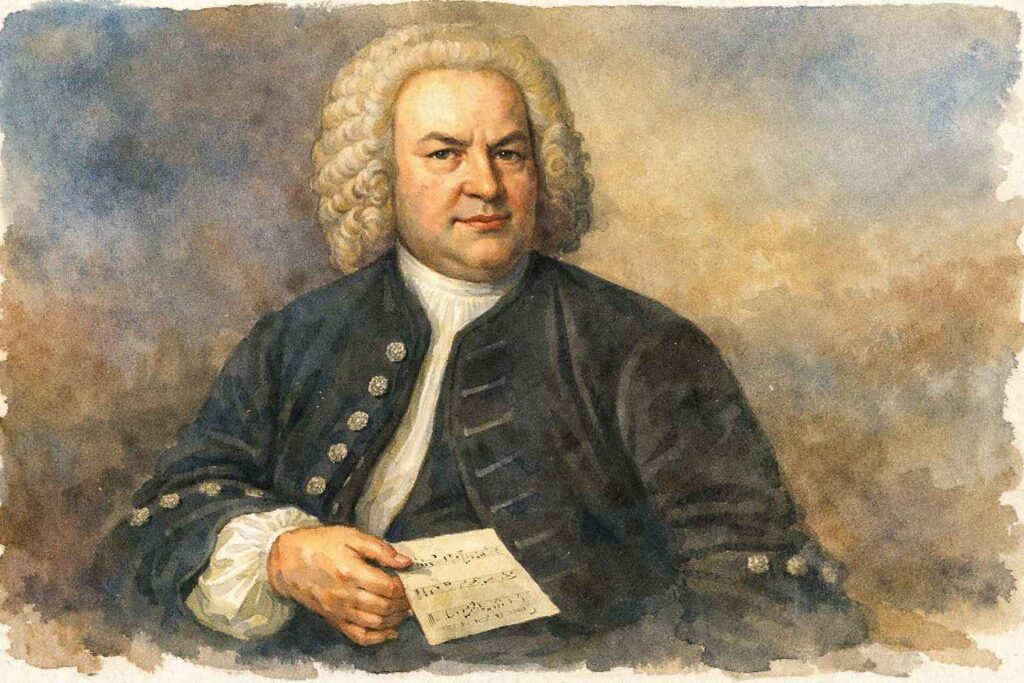
Johann Sebastian Bach is the most‑referenced composer in Western classical music, yet his works are almost always cited by the abbreviation BWV—Bach‑Werke‑Verzeichnis—rather than an opus number like Haydn, Chopin or Beethoven. Why? The answer is a mixture of historical circumstance, the nature of Bach’s output, and the way musicologists chose to order his work in the 20th century.
BWV stands for Bach‑Werke‑Verzeichnis (Bach Works Catalogue), a thematic catalogue that assigns each of Johann Sebastian Bach’s compositions a unique number grouped by genre rather than by publication date. It is used for Bach’s works because the sheer volume and varied nature of his output, hundreds of cantatas, concertos, chorales, organ pieces, and more, make a conventional Opus system impractical; the BWV provides a stable, genre‑based reference that helps scholars, performers, and listeners locate and identify any of Bach’s pieces accurately.
The Opus system and its limits
Opus (Latin for “work”) was invented in the late‑18th century by composers who wanted a simple, chronological numbering scheme that could be easily understood by publishers and audiences. Opus numbers usually reflect the order of publication, not the order of composition, and they work best when a composer has a relatively small, clearly defined corpus.
Bach, however, wrote over 1,100 works that span every Baroque genre: cantatas, concertos, fugues, chorales, organ preludes, to name just a few. Many of his pieces were never formally published in his lifetime; some were discovered centuries later. Trying to fit all of Bach’s output into a single chronological Opus list would produce a chaotic, unhelpful catalogue.
The birth of the BWV
In 1950 Wolfgang Schmieder, a German musicologist, published the first Bach‑Werke‑Verzeichnis. His goal was to create a thematic, genre‑based catalogue that would give each piece a unique, stable identifier. The key features of the BWV system are:
| Feature | What it means | Why it matters |
|---|---|---|
| Unique number per composition | Every piece has its own BWV, even if it consists of multiple movements. | Prevents confusion between works that share a title. |
| Genre‑based grouping | Works are sorted by type (cantatas, concertos, organ works, etc.). | Reflects how Bach himself organized his output. |
| Non‑chronological order | Some works appear before others even if they were written later (e.g., BWV 992 predates BWV 1). | Allows pieces to be collated by function rather than date. |
| Anhang (Appendix) | Contains lost, doubtful, or spurious works (e.g., BWV Anh. 1). | Keeps questionable material separate while still accessible. |
Schmieder’s design was heavily influenced by the earlier Bach Gesellschaft (BG) edition, which already had a genre‑based numbering system. The BWV simply extended that idea into a modern, user‑friendly format.
What “BWV” actually means
Unlike an Opus number, which says “this is the Nth work I published,” BWV xxx tells the reader:
- Where it fits in Bach’s oeuvre (genre),
- What it is (thematic identity), and
- How it relates to other works in the same category.
Because each movement of a multi‑movement piece receives its own BWV, scholars and performers can quickly locate a specific section without cross‑referencing a separate catalogue.
Alternatives that never gained traction
While the BWV is now the standard, other catalogues were proposed. In the 1980s, Christoph Wolff devised the Bach Compendium, which offered a more modern, digital‑ready approach. Wolff also helped edit the third edition of the BWV in 2022, underscoring the catalogue’s continued relevance. Despite these alternatives, the BWV remains the reference point for everyone from casual listeners to professional musicians.
The catalogue’s evolution
- First edition (1950) – 1,126 compositions, grouped by genre.
- Second edition (1990) – Added authenticity checks, repositioned some works.
- Third edition (2022) – Updated with 21st‑century discoveries, re‑ordered sections, and refined Anhang.
The BWV is thus a living document, continuously refined as new manuscripts are found and scholarship advances.
Practical implications for performers and listeners
When you see BWV 998, you know immediately that it is a chorale prelude for organ, while BWV 1044 signals a part of the Mass in B minor. In contrast, an Opus number would give you little information about the piece’s genre or how it fits into Bach’s larger body of work. For musicians preparing a recital program or a recording, the BWV makes it simple to ensure a balanced selection from each genre.
Final Thought
Bach’s Bach‑Werke‑Verzeichnis arose because an Opus system simply doesn’t capture the breadth and complexity of his output. By grouping works by genre, assigning each a unique identifier, and including questionable pieces in an appendix, the BWV provides a coherent, navigable map of Bach’s musical world, one that has stood the test of time and remains indispensable for the 21st‑century audience.
#JohannSebastianBach #BWV #BachWorks #OpusNumber #ClassicalMusic #MusicCatalogues #Baroque #Musicology #BachArchive #MusicHistory #MusicianResources #MusicTheory #BachCantata #OrganMusic #ClassicMusicReview