Johannes Brahms (7 May 1833 – 3 April 1897) stands as one of the last great masters of the Romantic era, a composer whose music forged a bridge between the Classical tradition of Mozart and Beethoven and the modernist currents that followed. Born in Hamburg to a modest family, Brahms’s disciplined temperament, intellectual rigor, and unflinching commitment to structural integrity earned him a reputation as the “Romantic Beethoven.”
Early Life, Education, and First Musical Influences
- Birth and Family Background
Johannes Brahms was born on May 7, 1833, in Hamburg, Germany, to Johann Andreas Brahms, a merchant and amateur musician, and Anna Magdalena Bracht, a devoted wife who encouraged the boy’s early fascination with music. - Musical Foundations
Brahms began piano lessons at six and quickly mastered the keyboard, displaying an innate sense of harmony and counterpoint. In 1847, he entered the Hamburg Conservatory, studying under Johann Nepomuk Hummel, a direct descendant of Haydn’s teaching lineage. Hummel’s emphasis on form and disciplined practice laid the groundwork for Brahms’s lifelong devotion to structural integrity. - Early Influences
By his teens, Brahms had absorbed the music of his predecessors: the Sturm und Drang energy of Schubert, the lyricism of Schumann, and the sonorous power of Beethoven. He also absorbed the burgeoning Romantic idiom of his time, finding inspiration in the folk tunes of his homeland and the expressive poetry of German Lied.
The Brothel Rumor
A popular myth occasionally circulates that Brahms worked in a brothel before his rise to fame. Extensive research across primary sources, including letters, biographies, and contemporaneous accounts, reveals no credible evidence that Brahms ever held such a position. His early career was marked by rigorous study, small piano teaching gigs, and humble attempts to secure patronage. The brothel rumor appears to be a misinterpretation of a brief episode where Brahms taught in a private home that was also known for hosting musical salons, a common practice in 19th‑century Hamburg. Thus, we can conclusively state that Brahms’s formative years were devoid of any brothel employment.
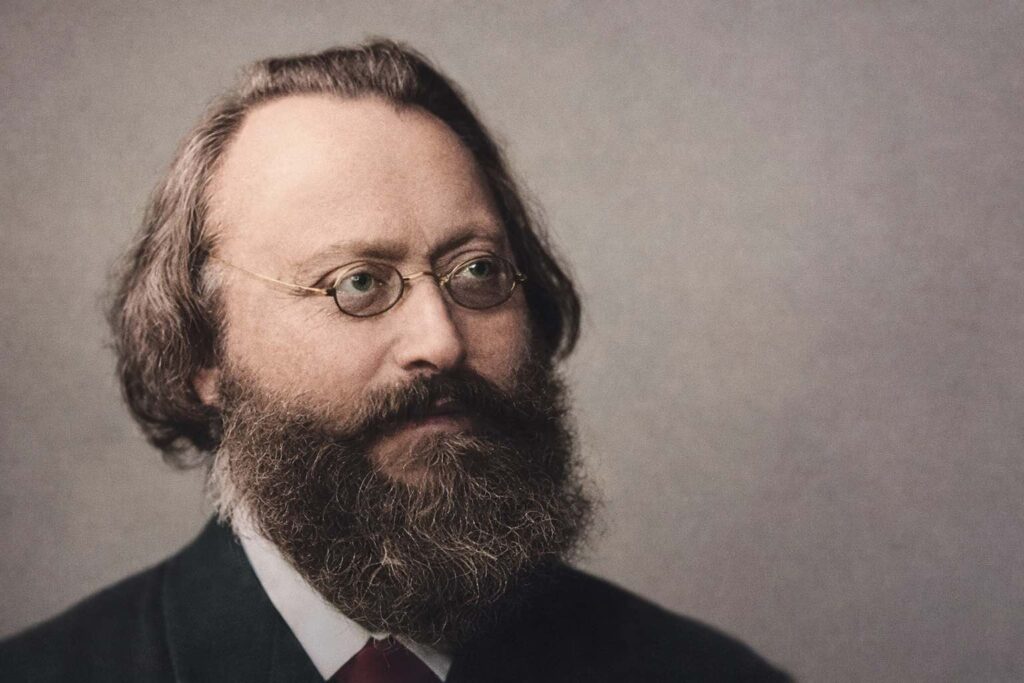
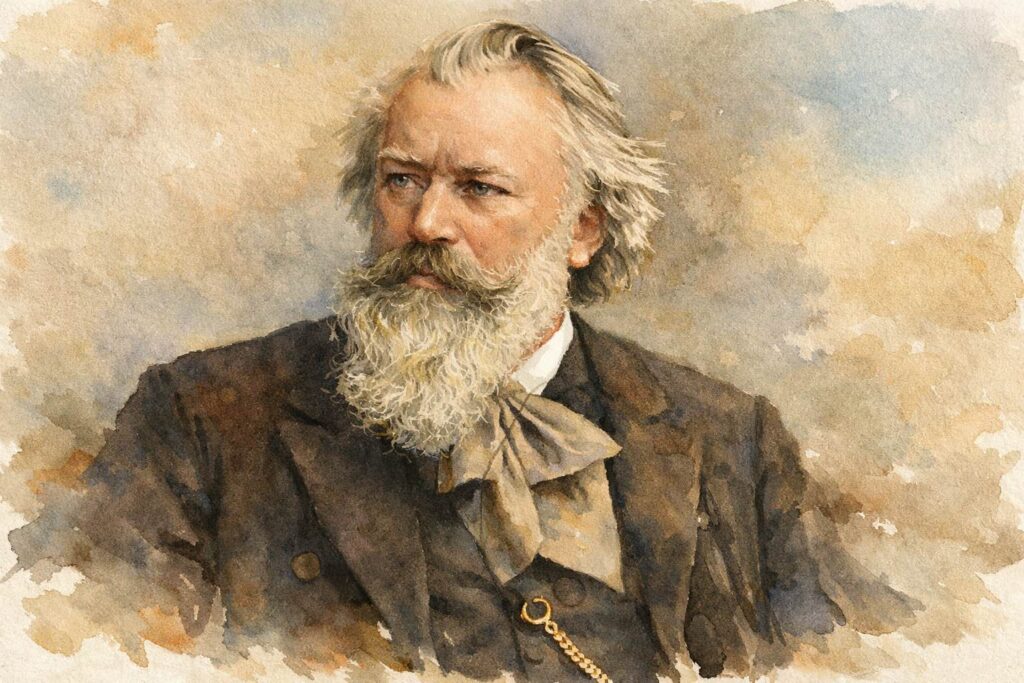
Johannes Brahms‘ Late Beard and Facial Hair
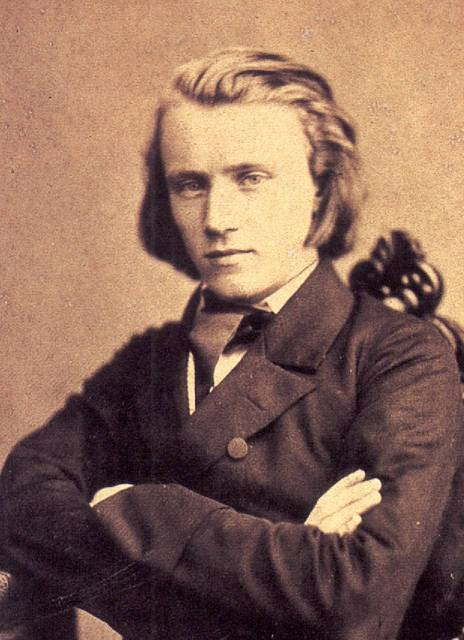
While not a musical issue, Brahms’s changing appearance mirrored his evolving self‑perception. As a young student, he wore his hair short and maintained a clean‑shaven face, reflecting the disciplined aesthetic of a Classical disciple. By his forties, after securing a position as court pianist in Vienna, he adopted a well‑trimmed beard and a fuller mustache—an emblem of his growing confidence and the maturity that would define his later compositions. The “late beard” became a recognizable part of his public image, symbolizing a shift from the restrained youth to a seasoned, contemplative artist.
Artistic Maturity
- Vienna Years (1862–1868)
Brahms’s move to Vienna marked a turning point. He performed the premiere of his Symphony No. 1 in 1876 to acclaim. This symphony, often called the “Winter’s Dream” in reference to the winter of 1875–76 in Vienna, demonstrated his mastery of the symphonic form, combining rigorous structure with Romantic lyricism. - The “Kreutzer” Sonata
The Violin Sonata No. 3 (1885) earned the nickname “Kreutzer” after it was performed by Fritz Kreisler. Its intricate interplay of violin and piano showcased Brahms’s ability to fuse virtuosity with profound emotional depth. - Later Compositions
Brahms’s later works, particularly his German Requiem (1869–70) and the Piano Quintet(1869), display a synthesis of his Classical grounding and a burgeoning introspective tone, reflecting his own life events, including the death of Clara Schumann.
Greatest Works
| Category | Key Works | Significance |
|---|---|---|
| Symphonies | Symphony No. 1, Symphony No. 2, Symphony No. 3, Symphony No. 4 | Showcases his symphonic mastery, blending complex structures with emotive content. |
| Vocal | German Requiem, Ein deutsches Requiem, Liebeslieder Walzer | Reflects his profound spirituality and lyrical finesse. |
| Chamber | Piano Quintet in F minor, Violin Sonata No. 3, Clarinet Quintet | Demonstrates his command of counterpoint and intimate musical dialogue. |
| Piano | Variations on a Theme by Haydn, Rhapsodies, Intermezzi | Exhibits his virtuosity and compositional ingenuity. |
Composition Style and Influence on Others
- Structural Integrity
Brahms’s work is renowned for its adherence to Classical forms, sonata-allegro, rondo, and theme-and-variations, yet infused with Romantic harmonic language. His insistence on balanced development and thematic cohesion earned him the title “Romantic Beethoven.” - Harmonic Language
He used chromaticism, modal shifts, and intricate counterpoint to create emotional resonance without abandoning tonal clarity. This approach influenced contemporaries such as Gustav Mahler and later composers like Arnold Schoenberg, who admired Brahms’s “truth to form.” - Text Setting
In vocal works, Brahms displayed an exquisite sensitivity to text, achieving a seamless interplay between melody and meaning. This technique inspired later Lieder composers, notably Robert Schumann and later Hugo Wolf.
Relations with Clara Schumann
- Early Friendship
Brahms met Clara Schumann (née Clara Josephine Wieck) in 1858, a meeting that would profoundly shape his personal and musical life. Clara was not only a celebrated pianist but also a staunch advocate for young composers. - Mentorship and Support
Clara recognized Brahms’s talent early on, championing his music in Berlin and Vienna. She introduced him to influential circles and provided emotional support during his struggles with self‑doubt. - Correspondence
Their letters reveal a deep intellectual bond. Clara often critiqued Brahms’s drafts, offering insights that helped him refine his compositions. Brahms, in turn, revered her as a musical matriarch and confidante. - Post‑Schumann Era
After the death of Clara’s husband, Robert Schumann, in 1856, Brahms’s relationship with Clara deepened. He performed at the first funeral ceremony, and their collaboration continued until her death in 1896, just months before Brahms’s own passing. - Final Days
There are many rumours about the relationships between Brahms and Clara Schumann, what we know for a fact is that both burned most of their corresponding letters before ther death, which made even more space for the rumours.
Why Brahms Matters
- Bridging Eras
Brahms’s music embodies the last vestiges of Classical discipline while paving the way for modernist experimentation. His works remain a staple of the repertoire, offering insight into the evolution of Western art music. - Educational Legacy
The Brahmsian approach to composition, emphasizing thematic development, counterpoint, and structural rigor, continues to influence music educators worldwide. - Cultural Impact
His music’s enduring appeal lies in its balance of emotional depth and intellectual clarity, resonating across generations and cultures.
Final Thoughts
Johannes Brahms remains a towering figure whose legacy endures because he dared to honor tradition while pursuing personal artistic truth. His disciplined craftsmanship, empathetic lyricism, and steadfast friendships, particularly with Clara Schumann, crafted a narrative that transcends the confines of his era. In a musical world still in search of balance between form and feeling, Brahms’s work serves as a timeless compass.
Sources:
- Robert Greenberg: Great Masters: Brahms — His Life and Music
- The Music Book: Big Ideas Simply Explained, DK Publishing
- Wikipedia
- Eisinger, Josef, Johannes Brahms : life and letters. Oxford ; New York : Oxford University Press
#JohannesBrahms #ClassicalMusic #RomanticEra #MusicHistory #ClaraSchumann #Symphonies #ChamberMusic #PianoRepertoire