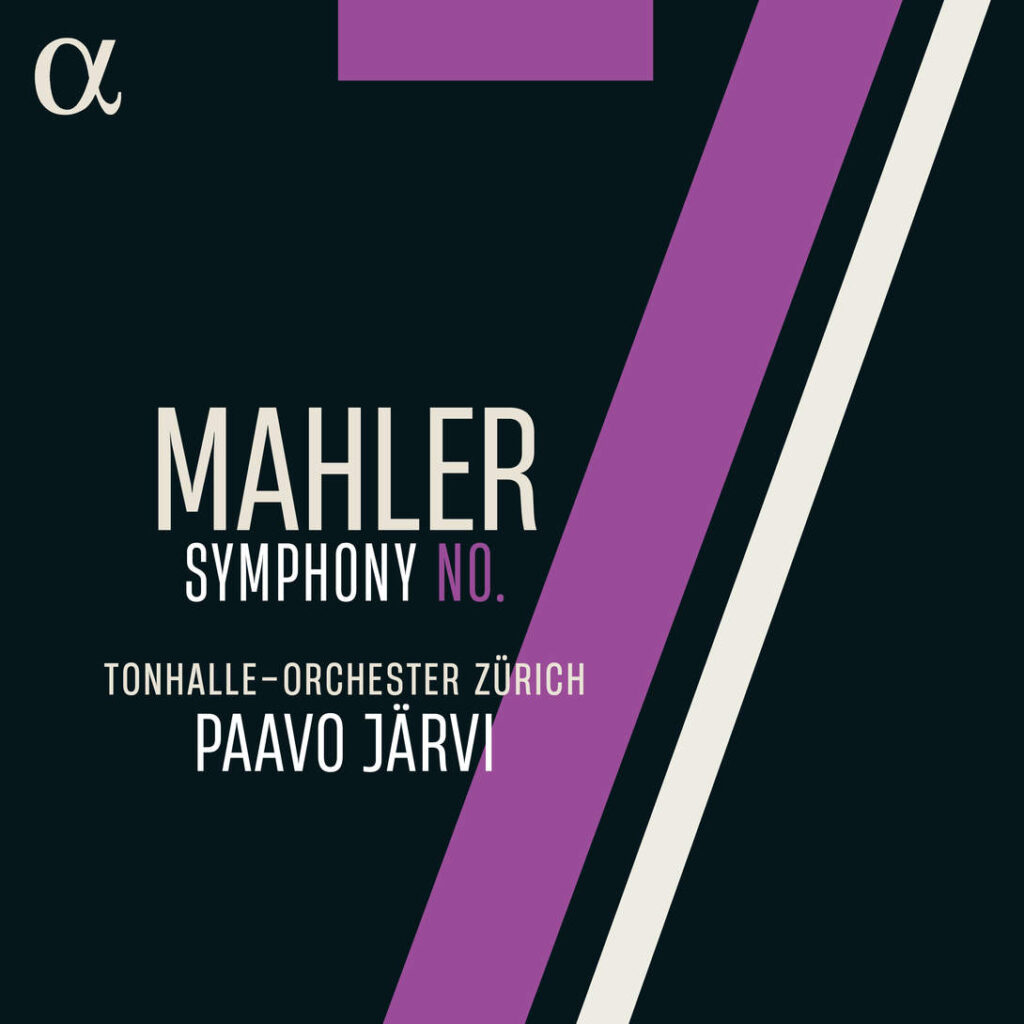
When Paavo Järvi and the Tonhalle-Orchester Zürich complete a full cycle of Mahler, they do more than catalogue the late composer’s output, they rewrite it for a new generation of listeners. Their latest addition, Symphony No. 7, arrives in a packaging that is as forward‑thinking as the music itself: vinyl and CD for the collectors and a digitally segmented edition that speaks to today’s playlist‑driven ears.
A Philosophical Re‑reading of Mahler
“The Mahler we encounter in Symphony No. 7 is more complex, darker and more philosophical than the Mahler we know from his previous works,” Järvi writes in the label’s press release. I share that sentiment wholeheartedly. To me, Gustav Mahler has never been a mere composer; he was a philosopher in symphonic form, a thinker whose scores demand contemplation as much as they demand admiration. Symphony 7, the “Song of the Night,” is one of the deepest entry in his catalog, a labyrinthine journey through human longing and existential dread. Järvi’s interpretation strips away the usual emotional “gloss” that can overwhelm Mahler’s darker moments and brings a crystalline clarity to the philosophical undercurrents.
The BBC Music Magazine echoes this:
Järvi and his sound team let no detail pass unilluminated, proving yet again that this has to be Mahler’s most fascinating and inexhaustible symphony.”
Their approach is meticulous, ensuring that the vast orchestral textures and the unexpected guitar and mandolin passages in the fourth movement are not just heard but felt.
The Performers: A Superlative Orchestra in Service
The Tonhalle-Orchester Zürich is no stranger to Mahler. Their Swiss heritage traces back to 1919, but Järvi, a late‑comer to the repertoire, has managed to coax a fresh voice from the ensemble. The result is an orchestra that is “superlatif” (Qobuz) and “repondant aux moindres sollicitations de son chef” (Qobuz), a description that rings true for every swell of brass and the subtle, eerie mandolin in the final movement.
“I like Järvi’s excitability and appreciation of the un‑fancy footwork,” the Gramophone points out, noting that the conductor avoids the typical pathos that can bog down the Seventh. In the coda, the crescendo swells into a bell‑laden climax that is, as the Europadisc reviewer notes, “joyous – as life‑affirming in its way as any other Mahler symphony.”
The ensemble’s restraint allows Järvi’s vision to shine. He never “slips into exaggerated caricature,” a pitfall many conductors hit with Mahler’s often-overblown dynamics. Instead, the orchestra follows Järvi’s precise structural guidance, preserving the integrity of the “plans sonores” while keeping the music intelligible.
A Modern Packaging for a Classical Monument
Beyond the sound, the album’s presentation is a bold statement. Alpha Classics has chosen to release the symphony both in physical and digital album formats, but the digital version is not a mere re‑stream of the five‑movement classic. Instead, each movement is divided into smaller, roughly 5‑minute segments: the first movement into seven parts, the second and third each into three, the fourth into two, and the fifth into four. This is not a truncation of the work; listeners still experience the full symphony in one sitting, but they can also engage with individual sections on the fly.
In a world where playlists dominate, long works are often skipped or only partially heard. By offering a digital edition that can be “playlist‑friendly” without compromising the integrity of the symphony, Alpha Classics and Järvi are making a statement: classical music can adapt without losing its essence. As a listener, you can now dive into the opening of the first movement and discover the “tenor horn solo” that Mahler famously described as “nature roars” in a single, powerful snippet. Or you can explore the mandolin’s lyrical interlude in the fourth movement without waiting for the entire section.
The way the album has been presented, is a sign of classical music yet adapting to the change of the music consumption. Whether this approach is Järvi’s idea or a producer’s strategy from Alpha Classics, it’s a welcome evolution that respects the long form while acknowledging the realities of contemporary listening habits.
The Critical Consensus
Colin’s Column offers a sharp assessment: “If Mahler Seven is ‘problematic’ then Paavo Järvi doesn’t agree. He gets it. The listener is hooked immediately …” The phrase “hooked immediately” captures the essence of Järvi’s performance, it’s both intellectually and emotionally engaging from the very first note.
La Libre Belgique (in French) highlights the clarity and “humour” Järvi brings, noting that the conductor’s approach “does not force the trait.” The result is a symphony that is “clear, with what is needed of humor but without forcing it.” Järvi’s nuanced touch is a reminder that even Mahler’s most complex works can be approached with a sense of playfulness, provided it is not contrived.
Apple Music’s review reads: “Mahler’s vast symphonic vision is revealed here in all its unsettling detail.” This is a fitting description of the Seventh: a work that is at once terrifying and awe‑inspiring, a masterpiece that reveals its layers with each listening.
A Verdict
Paavo Järvi’s rendition of Mahler’s Symphony No. 7 is a triumph on every level. Musically, he navigates the work’s philosophical depths with clarity and restraint, allowing the Tonhalle-Orchester Zürich to shine without overindulgence. Production-wise, the album’s digital segmentation is an innovative nod to contemporary listening, making Mahler’s “Song of the Night” accessible without compromising its monumental scale. For lovers of Mahler, it’s a definitive interpretation. For newcomers, it’s an inviting entry point into one of the late composer’s most challenging symphonies.
#PaavoJärvi #Mahler #SymphonyNo7 #TonhalleOrchesterZürich #AlphaClassics #DigitalMusic #PlaylistFriendly #ClassicalReimagined #MusicReview #SymphonicPhilosophy #MahlerRevisited #ModernClassical #MusicMagazine #VinylRecord #StreamingRelease #OrchestralMasterpiece
Cover photo: © 2026 Alpha Classics / Outhere Music France – Mahler: Symphony No.7