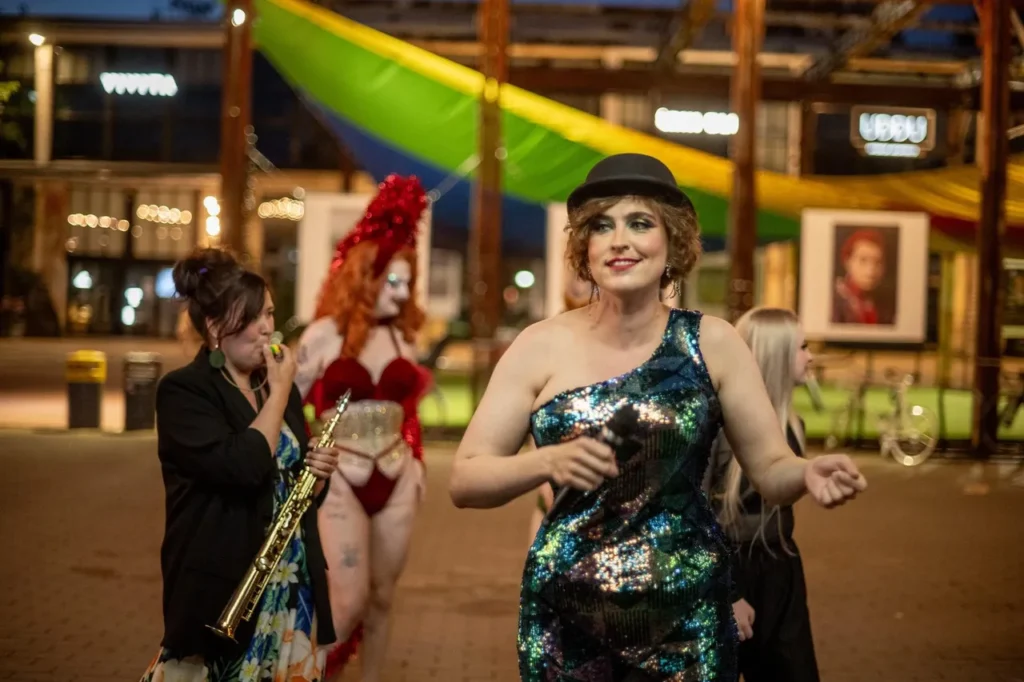
Triinu Upkin stands out as one of the most unique figures in Estonia’s cultural landscape. As quite likely the world’s only singing ballerina, she merges her background as an Estonian National Ballet performer, vocalist, songwriter, choreographer, and dance semiotician into a singular creative force.
I sat down with her to discuss the independent music scene, music and art industry, and her experience at the Fringe festival.
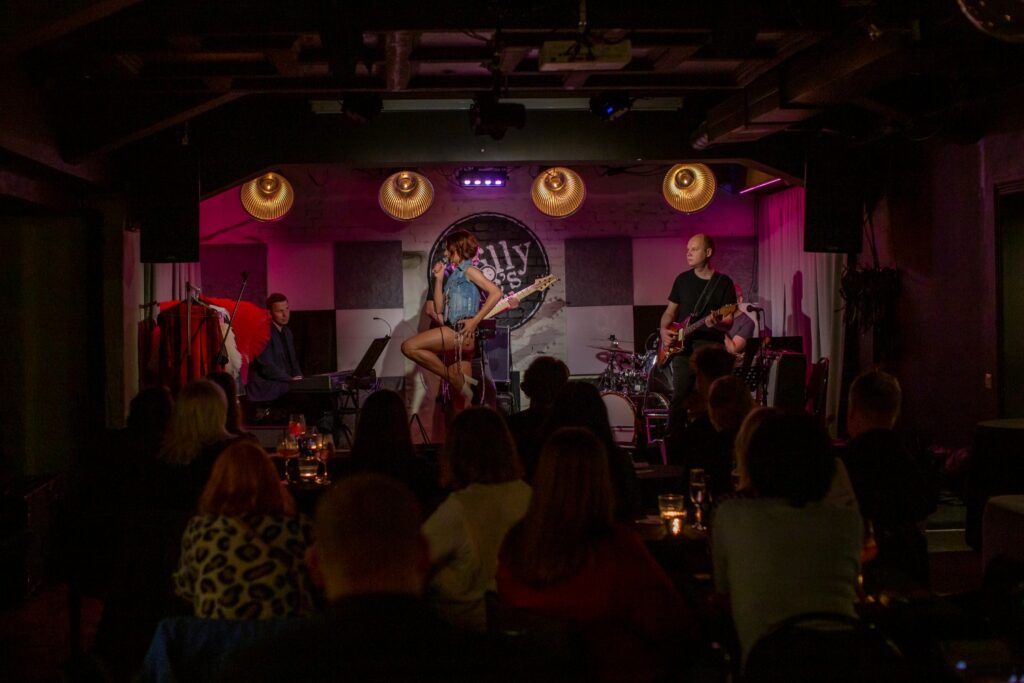
Arashk Azizi: How would you contrast performing on a grand opera stage with stepping into an independent venue, and how does being so close to the audience change the dynamic?
Triinu Upkin: Performing right up close to an audience is incredibly demanding. After taking the National Ballet’s main stage over a thousand times, shifting to smaller, more intimate spaces felt both thrilling and terrifying, but ultimately it proved to be a transformative and freeing shift. On a massive stage in a large-scale production, the weight of responsibility feels heavier in terms of audience size, professional standards, and not letting your colleagues down. Yet, because that burden is shared, it also feels lighter in a way, partners can cover a mistake, nobody is indispensable, and the show moves on regardless. When I run my own indie projects, the buck stops entirely with me. There is no ensemble or grand set to hide behind. It gives me the freedom to show up authentically and choose my own roles, but I have to bring the quality needed to pull it off. That level of closeness with a crowd is unsparingly raw!
Arashk: As a returning artist, what does the Fringe festival represent to you on a personal level?
Triinu: To me, Fringe stands for complete genre freedom. Because I bridge ballet, singing, songwriting, choreography, and directing, my work resists easy labels. People often wonder if my set is a concert, a dance piece, a musical, stand-up comedy, or an interactive event. What makes Fringe so refreshing is that it embraces the ambiguity, it can simply be a “Triinu show,” without needing any rigid classification.
Arashk: Looking back at your Fringe runs, what stands out as your most unforgettable or surprising memory?
Triinu: Full capacity audiences! Alongside the incredibly genuine camaraderie and support among fellow performers.
Arashk: Transitioning from an institutional ballet house with dedicated PR and tech crews to wearing every hat yourself, what was your biggest learning curve in self-management?
Triinu: Launching my music career while still in the ballet company gave me an early taste of self-promotion, so I wasn’t entering total unfamiliar territory. However, managing your own project forces you to step up and take charge very quickly. My steepest challenge was pushing past typical Estonian modesty. You realize that if you don’t actively showcase your work and talk about your show, no one will discover it, and the venue will stay empty.
Arashk: How do you keep up with the intense physical toll of stage work while simultaneously managing marketing, distributing flyers, and driving ticket sales?
Triinu: Luckily, years of training keep me in strong physical shape, and I’m quite resilient by nature. I simply tackle whatever tasks are in front of me, and my stamina allows me to give everything on stage while still having fun. Honestly, the real challenge is having someone around to remind me to actually take a break! 🙂
Arashk: Have you ever had a show or promotional attempt at Fringe go off-script, and what takeaways did you gain from it?
Triinu: I’ve always entered Fringe with an open and curious mindset, so I haven’t really experienced any major disasters. My biggest discoveries have been internal—realizing that I am adaptable enough to handle high-pressure, unfamiliar environments. It proved to me how crucial a solid artistic foundation is when you need to trust yourself and take risks on stage.
Arashk: Who do you think benefits most from experiencing Fringe, from both sides of the curtain?
Triinu: Anyone driven by curiosity; whether they are on stage or in the seats.
Arashk: What would you say to artists with classical training who want to bring bold ideas to Fringe but feel overwhelmed by its uncurated nature?
Triinu: I’d tell them to be brave. What’s the absolute worst-case scenario, lasting embarrassment? Haha, joking aside! Sharing a raw creative concept always exposes an artist to vulnerability. But staying safe means nothing gets made. Fringe is actually one of the most supportive spaces to experiment with unconventional ideas because the platform itself offers a safety net for risk-takers.
Arashk: How would you complete this statement: “Every artist needs to perform at Fringe at least once because…”
Triinu: It acts as an uncompromising mirror reflecting exactly where you stand as a performer.
#TriinuUpkin #TallinnFringe #FringeFestival #SingingBallerina #IndependentArtist #EstonianArt #EstonianNationalBallet #PerformingArts #LivePerformance #SelfProduced #SingerSongwriter #IndieMusician #BalletAndMusic #ArtsInterview #FringeEstonia
This interview was originally published on the Tallinn Fringe Festival website.