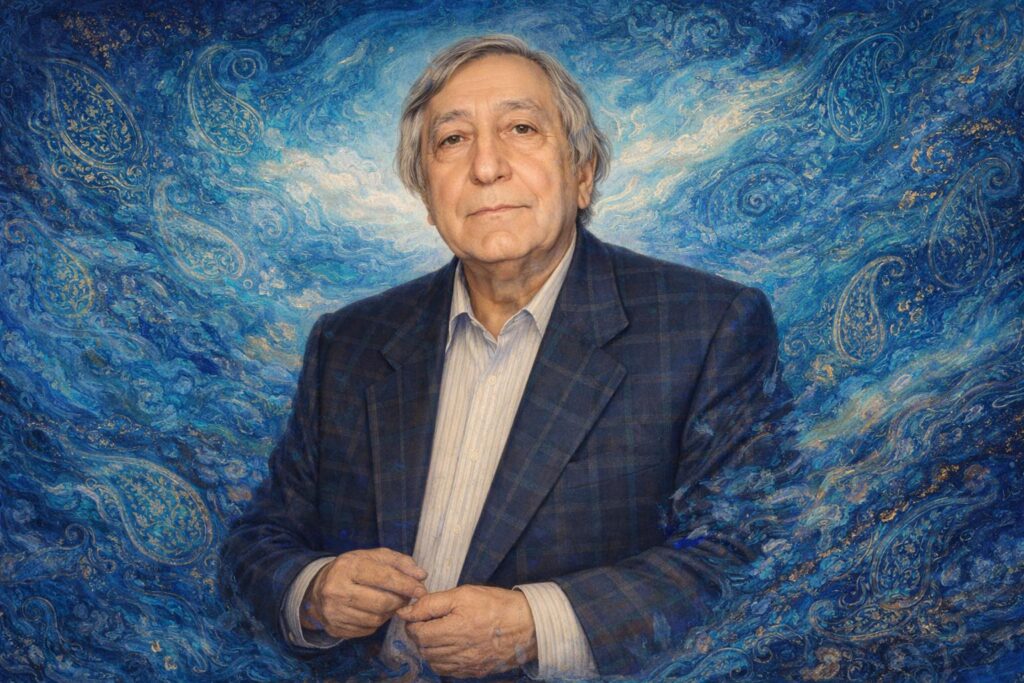
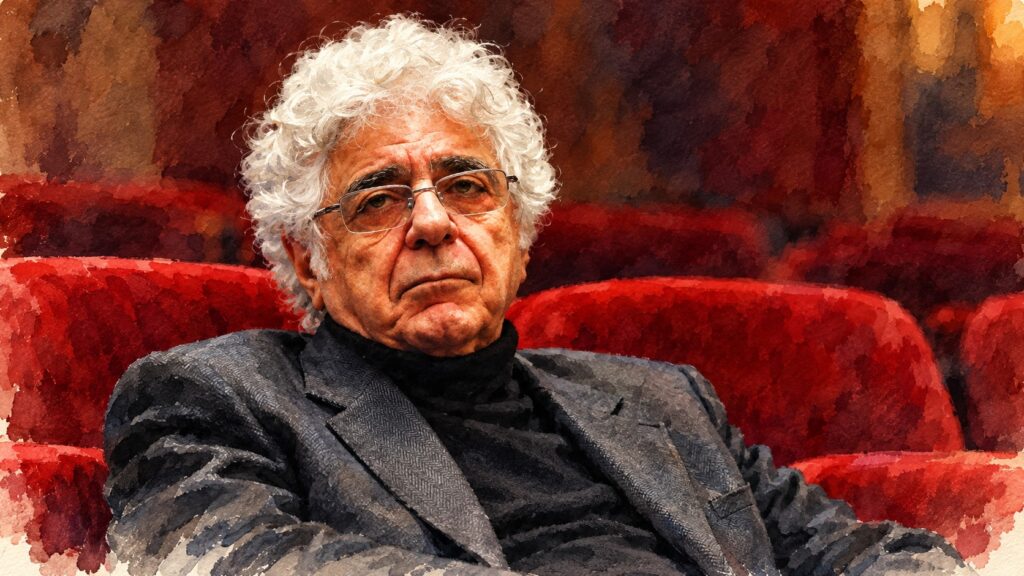
Loris Tjeknavorian (13 October 1937) is widely recognized as one of the most culturally significant figures in modern music history, serving as a vital bridge between Eastern heritage and Western orchestral traditions. As a distinguished Iranian composer and maestro of Armenian descent, his career spans over six decades of composition, orchestral conducting, musicology, and cultural advocacy. His oeuvre, encompassing operas, symphonies, concertos, chamber works, and celebrated film scores, occupies a singular position in global classical music. Tjeknavorian’s work is characterized by a seamless blend of Persian epic literature, Armenian sacred modes, and contemporary Western symphonic structures, marking a transformative epoch in Iran’s music history.
Introduction: A Titan of Cross-Cultural Composition
In the vast landscape of twentieth- and twenty-first-century composition, few music composers have achieved a synthesis of modal tradition and symphonic architecture as seamlessly as Loris Tjeknavorian. Rising to prominence during a dynamic era of modernization in Iran, Tjeknavorian elevated Iranian music onto international concert stages by embedding Persian mythology and regional folk traditions within the expansive sonic architecture of the Western orchestra.
Tjeknavorian’s approach transcends mere citation of folk melodies. Rather than treating regional themes as decorative motifs, he engages in what scholars describe as “ethnomusical thinking”—reconstructing the harmonic, rhythmic, and textural DNA of Eastern modes (dastgahs and church tones) and reinterpreting them through orchestral colors. His artistic journey reflects a lifelong effort to forge an authentic, universal language out of rich, multi-layered heritage.
Biography and Educational Foundation
Early Years in Boroujerd and Tehran (1937–1954)
Loris Tjeknavorian was born in Boroujerd, Iran, to an Armenian family whose history was deeply shaped by the geopolitical turbulence of the early twentieth century. His father hailed from Eastern Armenia, while his mother had fled Western Armenia during the 1915 genocide. Growing up in a multicultural household exposed to Armenian liturgical chants, Iranian folk songs, and Western classical records, young Tjeknavorian developed a keen ear for diverse musical idioms.
His musical abilities manifested early. At age eight, he began studying the violin. Lacking formal composition tutors in his immediate youth, he began composing piano pieces independently. By sixteen, his natural leadership and ambition led him to assemble a four-part choir and form his own amateur orchestra in Tehran, conducting performances that attracted local acclaim. Recognizing his exceptional talents, his family supported his move to Europe to pursue formal conservatory training.
    [1937] Born in Boroujerd, Iran
       │
    [1954] Enters Vienna Academy of Music (Graduates with honors, 1961)
       │
    [1961] Appointed Director of Tehran's Music Archives
       │
    [1963] Studies in Salzburg; Mentored by Carl Orff
       │
    [1966] Moves to USA; Composer-in-Residence & University Director
       │
    [1989] Principal Conductor, Armenian Philharmonic Orchestra
       │
    [2000s+] Symphonic premieres, epic operas, and cultural honors
European Studies and Mentorship under Carl Orff (1954–1965)
In 1954, Tjeknavorian enrolled at the prestigious Vienna Academy of Music, studying composition, violin, and choral conducting. During his student years in Vienna, he composed his Concerto for Violin and String Orchestra (1956) and Ballet Fantastique. He graduated cum laude in 1961, establishing a foundation in European contrapuntal and serial techniques.
Upon returning to Tehran in 1961, Tjeknavorian taught music theory at the Tehran Conservatory of Music and was appointed director of Tehran’s Music Archives. In this role, he collected, cataloged, and researched regional folk music and traditional instruments. This deep engagement with indigenous sonic traditions inspired him to begin working on an opera based on Ferdowsi’s epic poem Shahnameh (Book of Kings).
Seeking further artistic refinement, Tjeknavorian traveled to Salzburg in 1963 to study at the Mozarteum. There he met Carl Orff, the celebrated composer of Carmina Burana. Orff was captivated by excerpts of Tjeknavorian’s opera-in-progress, Rostam and Sohrab, and granted the young Iranian composer a full scholarship to remain in Salzburg and complete the opera’s first draft. Orff also commissioned him to write piano pedagogical pieces based on Armenian melodic structures for the Orff Schulwerk system, resulting in the two-volume collection Kaleidoscope for Piano (published in part as Bilder aus Armenien).
Academic and Conducting Career in America and Armenia
In 1965, Tjeknavorian moved to the United States to study conducting at the University of Michigan. From 1966 to 1970, he served as composer-in-residence at Concordia College and headed the instrumental and opera departments at Moorhead State University in Minnesota.
His conducting career reached international prominence in the late 1980s. Following the devastating 1988 Spitak earthquake in Armenia, Tjeknavorian organized major fundraising relief concerts and was named Artistic Director and Principal Conductor of the Armenian Philharmonic Orchestra (APO) in 1989. Over two tenures (1989–1998 and 1999–2000), he turned the ensemble into a internationally recognized recording orchestra. Under his baton, the APO recorded dozens of CDs for labels such as ASV, RCA Victor, Philips, and EMI, introducing worldwide audiences to works by Khachaturian, Tchaikovsky, and contemporary regional creators.
Key Works and Musical Style
Tjeknavorian’s catalogue spans more than 100 works, including 6 operas, 5 symphonies, major concertos, choral works, ballet music, and scores for over 30 documentary and feature films.
| Work Title | Category / Medium | Key Musical Elements & Significance |
| Rostam and Sohrab | Opera (Full Orchestra, Soloists, Choir) | Based on Ferdowsi’s Shahnameh; 25-year composition span; features modal Iranian motifs and rhythmic drive. |
| Simorgh | Ballet Suite | Inspired by Attar of Nishapur’s mystical poem; uses rich orchestral colors and modal harmony. |
| Pardis and Parisa | Fairy-Tale Opera / Orchestral Suite | Lyrico-dramatic narrative with lyrical folk-like melodies and lush orchestration. |
| Symphony No. 1 “Requiem for the Massacred” | Symphony (Trumpet & Percussion) | Dedicated to victims of the Armenian Genocide; uses stark percussive colors and trumpet laments. |
| Symphony of Persepolis (2005) | Symphonic Poem | Grand orchestral work celebrating ancient Persian history and architecture. |
| The Life of Christ | Oratorio (Male Choir & Soloists) | Built on medieval Armenian liturgical chants; deeply reflective and spiritual. |
Opera Masterpieces: Rostam and Sohrab & Pardis and Parisa
Tjeknavorian’s magnum opus is undoubtedly Rostam and Sohrab, an opera composed over a period of 25 years. Drawing directly from the tragic narrative in Ferdowsi’s epic poem Shahnameh, the work tells the heartbreaking story of the mythical warrior Rostam, who unknowingly slays his own son Sohrab in battle. Musically, the opera avoids simple Western tonal frameworks, using percussive rhythms, brass fanfares, and modal vocal lines that mirror the dramatic meter of Persian epic poetry. In 2005, a groundbreaking puppet opera production directed by Behrouz Gharibpour premiered at Tehran’s Ferdowsi Hall, establishing a permanent place in modern Iranian performance arts.
His fairy-tale opera Pardis and Parisa and his later opera Siawash further showcase his commitment to translating Persian literary narrative into operatic form.
Symphonic Works and Concertos
Tjeknavorian’s symphonic output reflects both his personal heritage and humanitarian values. His Symphony No. 1 (“Requiem for the Massacred”), scored for solo trumpet and percussion ensemble, stands as a stark, powerful monument to the victims of the 1915 genocide. The absence of traditional string instruments heightens the raw emotional impact of the piece.
His Symphony of Persepolis, commissioned in the early 2000s, offers a majestic sonic illustration of the Achaemenid Empire’s ceremonial capital. Filled with fanfare motifs, driving pulse, and dynamic brass writing, the work captures the grand scale of Iran’s historical heritage.
Importance and Legacy in Iran’s Music History
Tjeknavorian’s contribution to music history extends far beyond his composition scorebooks. At a crucial point in the mid-twentieth century, when Iranian musicians were debating how to reconcile traditional radif systems with global artistic trends, Tjeknavorian proved that native modes could maintain their integrity within grand symphonic structures.
                 LORIS TJEKNAVORIAN'S CULTURAL TRIAD

                       [Western Symphonics]
                      /                    \
                     /                      \
                    /                        \
      [Persian Literature] ──────────── [Armenian Sacred Modes]
- Persian Literary Heritage in Opera: By setting the Shahnameh to music, he pioneered a high-art operatic tradition for Iranian music, inspiring generations of contemporary regional composers.
- Archival and Educational Leadership: As Director of the Tehran Music Archives and head of various academic faculties, he preserved folk melodies and introduced modern pedagogical concepts to music education.
- Cultural Diplomacy: Through major conducting appearances with world-class orchestras—including the London Symphony Orchestra, Royal Philharmonic Orchestra, and Tehran Symphony Orchestra—he presented the depth of Eastern classical composition to global audiences.
His ongoing advocacy for peace through art, highlighted by historic concerts at ancient Persepolis and international charity performances, solidifies his status as a national cultural icon.
Conclusion
Loris Tjeknavorian stands as a monumental figure among modern music composers. His lifelong dedication to elevating regional literature, sacred chant, and folk melody into the global classical music canon has permanently enriched Iran’s music history. Through his epic operas, expressive symphonies, and energetic baton, Tjeknavorian remains a living monument to the power of music as a universal, cross-cultural language.
Sources
- Tjeknavorian, Loris. Official Biography and Chronology. loristjeknavorian.net.
- Gramophone Magazine. Profile on Loris Tjeknavorian (November 1976 issue).
- Armenian National Philharmonic Orchestra. Artistic Directors Archive: Loris Tjeknavorian.
- Roudaki Foundation Archive. Rostam and Sohrab Opera Production History, Ferdowsi Hall.
- Manukyan, Edward. Loris Tjeknavorian’s Compositional Catalogue and Analysis.
#LorisTjeknavorian #IranianComposer #ClassicalMusic #IranianMusic #MusicHistory #IransMusicHistory #MusicComposers #RostamAndSohrab #Shahnameh #SymphonicMusic #Opera #ArmenianMusic #OrchestralConducting #PersianCulture #ContemporaryComposers