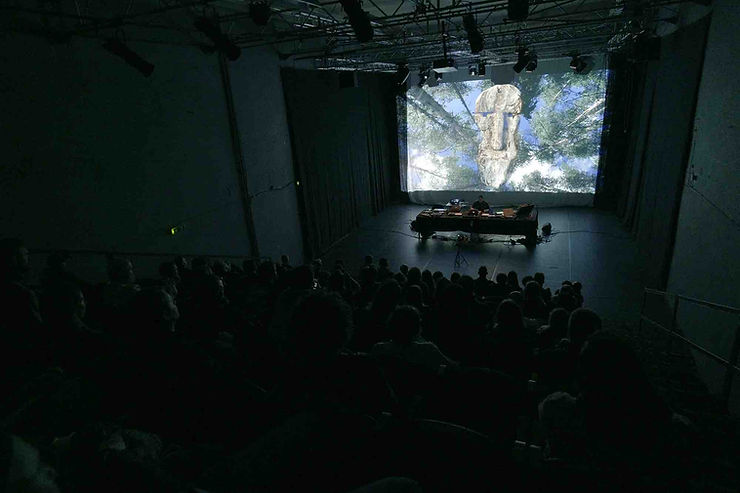
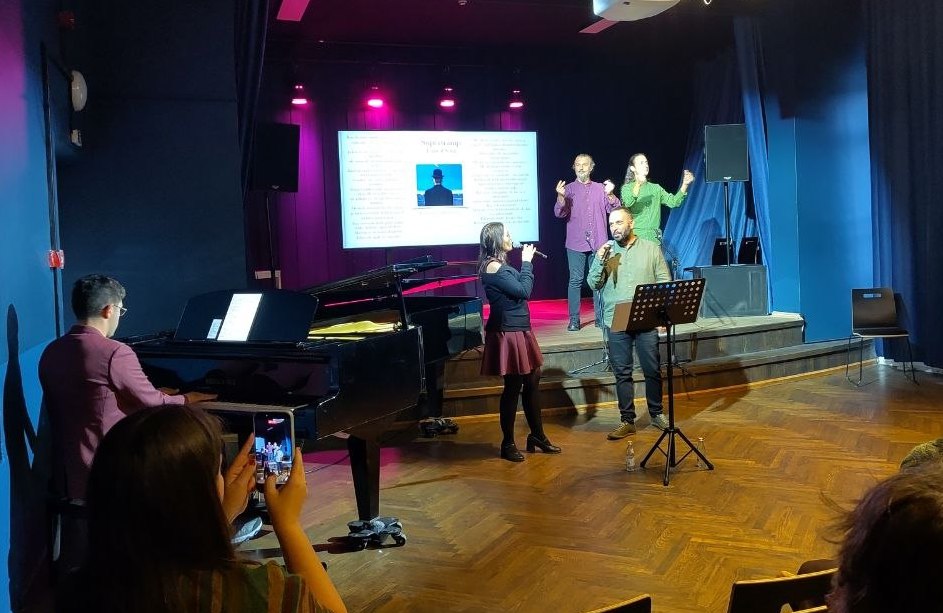
As part of Tallinn Fringe Festival, I went to Heldeke! to hear an intriguing solo piano concert by contemporary Cypriot pianist and composer Hüseyin Kırmızı, titled Metamorphosis.
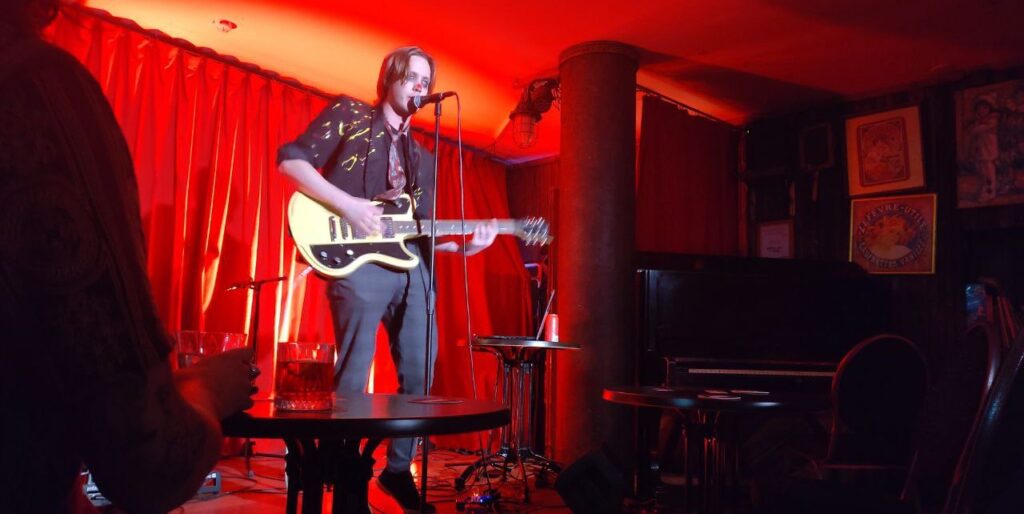
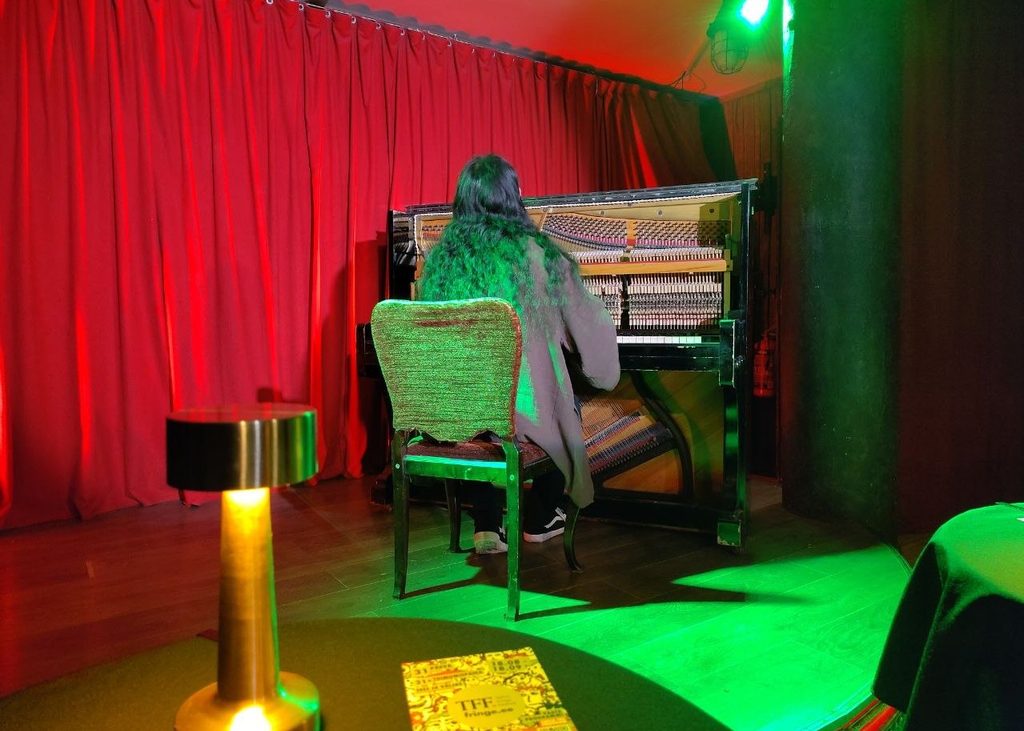
Hüseyin opened the upright piano’s lid fully, allowing the sound to resonate directly into the room rather than being filtered through the wooden cover. I personally like this approach. Some listeners may find the resulting sound too exposed or even slightly rough at times (I know of such people), but for me, there is something more natural about it. Beside the fact that t also makes the instrument visually more striking, the sound feels more natural, pure and expressive.
I should confess that, as a big fan of literature, there was a part of me hoping the concert might somehow be connected to Kafka’s The Metamorphosis. There was no indication of such a connection in the concert description, but the title naturally invited the association. In the end, however, the two were unrelated.
In fact, by the end of the concert, I was still not entirely sure how Metamorphosis related to the music itself. Hüseyin introduced each piece and spoke briefly about some of the ideas behind them, which made the experience more personal and gave the audience a sense of the stories behind the music. Yet the concept of metamorphosis itself remained somewhat elusive. This did not diminish my enjoyment of the concert, but it did leave me wondering about the connection between the title and the programme.
The music itself, however, was a different story. I genuinely enjoyed the concert. Hüseyin is a highly capable pianist who clearly knows his way around the instrument. Even in passages filled with rapid scales, arpeggios and technically demanding runs, his playing remained remarkably effortless. There was very little sense of struggle between the performer and the instrument. Instead, he seemed to have complete command of the piano, making it follow his intentions rather than negotiating with its limitations.
His musical language is expressive, melodic and at times highly cinematic. The overall atmosphere brought to my mind the contemporary neo-classical tradition, from Yann Tiersen to Ludovico Einaudi. But there is a distinctive flavour in Hüseyin’s music that separates it from a straightforward imitation of that style.
Much of that character comes from his Mediterranean background and his blending of Eastern and Western musical languages. Augmented seconds and melodic gestures associated with Turkish, Arabic and Persian musical traditions appear alongside rhythmic patterns that carry an unmistakably Eastern Mediterranean character. These elements are placed within Western melodic and harmonic structures, creating music that feels neither entirely Eastern nor entirely Western.
That mixture is perhaps where the idea of transformation becomes most apparent. Hüseyin’s music seems to move between musical worlds rather than remaining within one. The pieces carry traces of different cultures, but they are transformed into something personal.
The programme consisted of nine pieces, beginning with the sentimental and emotionally direct Breath with Me. The use of augmented seconds gave the opening piece an exotic quality in places, but it never became excessive or ornamental. It established the emotional and melodic language of the evening.
The programme continued with:
- Hope Is Still Here
- Harvest Time
- Angst – Deepest Depression, from the upcoming album
- Years Passing By
- Norwegian Wood (Cover of a piece by The Beatles)
- The Road Inside Us
- Mälepa, meaning “parents” in Thai
- Mediterranean Shadows
One interesting moment was Hüseyin’s interpretation of Norwegian Wood. Placing a familiar Beatles song among his original compositions created a useful contrast and showed how his musical language could be applied to material outside his own repertoire.
The concert then moved towards its most ambitious conclusion: Mediterranean Shadows, a four-part folk-dance suite. It was an exciting way to close the programme, bringing together many of the elements heard throughout the evening; rhythm, movement, Mediterranean influences and Hüseyin’s expressive approach to the piano.
What I appreciated most about Metamorphosis was not necessarily the concept suggested by its title, but the musical identity that emerged through the performance. Hüseyin Kırmızı has a clear affection for melody, atmosphere and storytelling, while his cultural background gives the music a character of its own.
Perhaps the metamorphosis is not a story that needs to be explained literally. Perhaps it is simply the transformation of different musical traditions into a language that belongs to one composer.
Either way, I left Heldeke! having discovered a pianist and composer whose music deserves to be heard.
#TallinnFringe #TallinnFringeFestival #HuseyinKirmizi #Metamorphosis #PianoConcert #SoloPiano #ContemporaryClassical #NeoClassical #CinematicMusic #MediterraneanMusic #CypriotMusic #PianoMusic #ClassicalMusic #LiveMusic #Tallinn