A nation is more than a territory, a government or a passport. It is a shared story, and culture is the language in which that story is told. So how should a country tax the very culture that defines it?
What makes Estonia; Estonia?
It is not simply the borders on a map or the institutions of the Republic. It is the Estonian language, the songs people know, the literature they read, the traditions they preserve, the architecture they recognise, the stories they tell their children and the artists who continue to reinterpret all of it for a new generation.
Culture is how a nation remembers itself.
It is also how it introduces itself to others.
UNESCO describes culture as encompassing the distinctive intellectual, emotional, material and spiritual features of a society, including art, literature, traditions, values and ways of living. Cultural diversity is expressed through artistic creation, production, dissemination and participation.
This is not merely a philosophical idea in Estonia. The country’s own cultural policy explicitly places the preservation of the Estonian nation, language and culture among the constitutional goals of the state. The Ministry of Culture says that cultural policy must balance preservation and continuation with innovation and openness, and that everyone should have the opportunity both to create culture and participate in it.
That raises an uncomfortable question.
If culture is fundamental to the continuity of a nation, should it really be treated like any other commercial product?
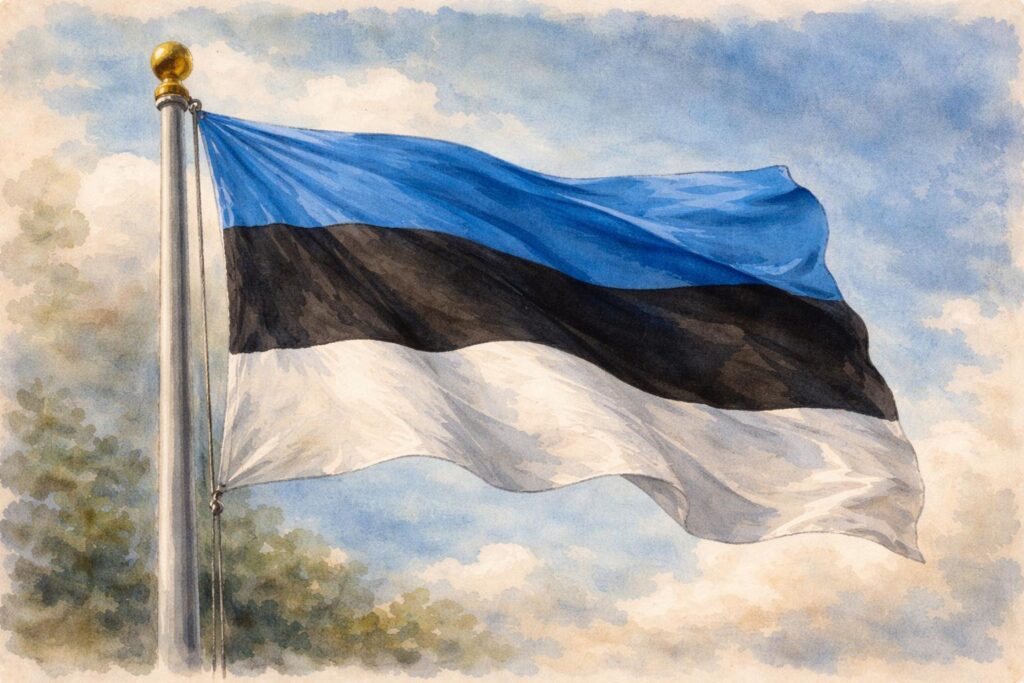
Estonia is not the only country with high VAT
There is an important misconception in the current debate. Estonia’s 24% VAT is high, but having a high standard VAT rate does not mean that a country has to apply that same rate to culture.
The European Union leaves member states considerable freedom to establish reduced VAT rates. Under the current framework, countries can apply reduced rates as low as 5% to eligible categories.
And several countries demonstrate what that looks like in practice:
| Rank | Country | Standard VAT Rate | Concert & Cultural Event VAT Rate |
|---|---|---|---|
| 1 | Hungary | 27.0% | 27% / 18% |
| 2 | Estonia | 24.0% | 24% |
| 3 | Slovakia | 23.0% | 23% |
| 4 | Romania | 21.0% | 21% |
| 5 | Bulgaria | 20.0% | 20% |
| 6 | Ireland | 23.0% | 13.5% |
| 7 | Finland | 25.5% | 13.5% |
| 8 | Lithuania | 21.0% | 12% |
| 9 | Czech Republic | 21.0% | 12% |
| 10 | Italy | 22.0% | 10% |
| 11 | Austria | 20.0% | 10% |
| 12 | Spain | 21.0% | 10% |
| 13 | Slovenia | 22.0% | 9.5% |
| 14 | Netherlands | 21.0% | 9% |
| 15 | Poland | 23.0% | 8% |
| 16 | Germany | 19.0% | 7% |
| 17 | Portugal | 23.0% | 6% |
| 18 | Sweden | 25.0% | 6% |
| 19 | Belgium | 21.0% | 6% |
| 20 | Greece | 24.0% | 6% |
| 21 | France | 20.0% | 5.5% |
| 22 | Croatia | 25.0% | 5% |
| 23 | Cyprus | 19.0% | 5% |
| 24 | Malta | 18.0% | 5% |
| 25 | Luxembourg | 17.0% | 3% |
| 26 | Latvia | 21.0% | Tax-exempt |
| 27 | Denmark | 25.0% | Tax-exempt |
The comparison is important because Sweden has a higher standard VAT rate than Estonia, yet admission to concerts is taxed at 6%. The Swedish Tax Agency explicitly confirms the 6% rate for concerts and similar performances.
France provides an even more striking example. Its standard VAT is 20%, but tickets for concerts and numerous other live performances are taxed at 5.5%, with certain newly created or newly staged works eligible for an even lower 2.1% rate under specific conditions.
The point is not that Estonia should blindly copy France or Sweden.
The point is that a high standard VAT rate and a strong cultural policy are not mutually exclusive.
Source: taxation-customs.ec.europa.eu and Music Estonia
What does a nation choose to value?
Tax systems are never only mathematical instruments. They also reveal priorities.
A government can decide that some things should carry the standard rate and others deserve preferential treatment. We already accept this principle in many areas of life. Countries distinguish between basic necessities, education, books, medicines, accommodation, public transport and many other categories.
Culture can be treated differently too.
The European VAT framework explicitly makes that possible.
So perhaps the question should not be whether culture deserves a tax privilege.
Perhaps we should ask whether culture deserves to be recognised as a public value.
Because when a country supports its language, protects its heritage, maintains museums, funds orchestras, preserves archives and celebrates its artists, it is making a very clear statement: culture matters to the existence of the country itself.
But culture is not something that can survive only in museums.
A nation is not defined only by the culture it inherited. It is also defined by the culture it creates now.
Culture must be allowed to evolve
This is particularly important for a country like Estonia.
Estonian culture has survived because previous generations created, protected and transmitted it. But preservation alone cannot keep a culture alive. A language that is never used to create something new becomes a historical artefact. A musical tradition that is never transformed by new generations becomes a museum piece. A national identity that cannot accommodate new artistic expression eventually becomes rigid.
Culture has to breathe.
That means supporting not only established institutions but also contemporary composers, independent musicians, writers, filmmakers, designers, performers and experimental artists who are creating the culture that Estonia will be remembered for decades from now.
Some of that work will receive public funding. Some will find sponsors. Some will become commercially successful.
Much of it will not.
And that is precisely why the economic environment matters.
If creating culture becomes too expensive, the country does not simply lose a few concerts. It gradually loses the diversity of voices through which its culture evolves.
The price of culture is ultimately a question of identity
There is a tendency to describe cultural VAT as an issue affecting promoters, musicians and event organisers. It is that. But it is also much bigger.
It concerns what kind of country Estonia wants to be.
The Ministry of Culture itself describes one of the objectives of Estonia’s Culture Development Plan as ensuring that Estonian culture is “vibrant, evolving and open to the world,” while also preserving cultural memory and strengthening participation in cultural life.
Those goals require more than preserving what already exists.
They require creating the conditions for new culture to emerge.
That is why the discussion about VAT deserves to be part of the national cultural conversation rather than being treated simply as an industry lobbying issue.
A reduced VAT rate would not magically solve the problems facing Estonian culture. It would not replace grants, sponsorship or public investment. It would not make every concert successful.
But it could make cultural participation more affordable and cultural production more viable.
And perhaps that is the principle worth considering:
A country should not only protect the culture that made it a nation. It should make it possible for its people to create the culture that will define it tomorrow.
If we believe that language, music, literature and art are fundamental parts of what makes Estonia; Estonia, then supporting culture is not charity.
It is nation building.
And perhaps our tax system should reflect that.