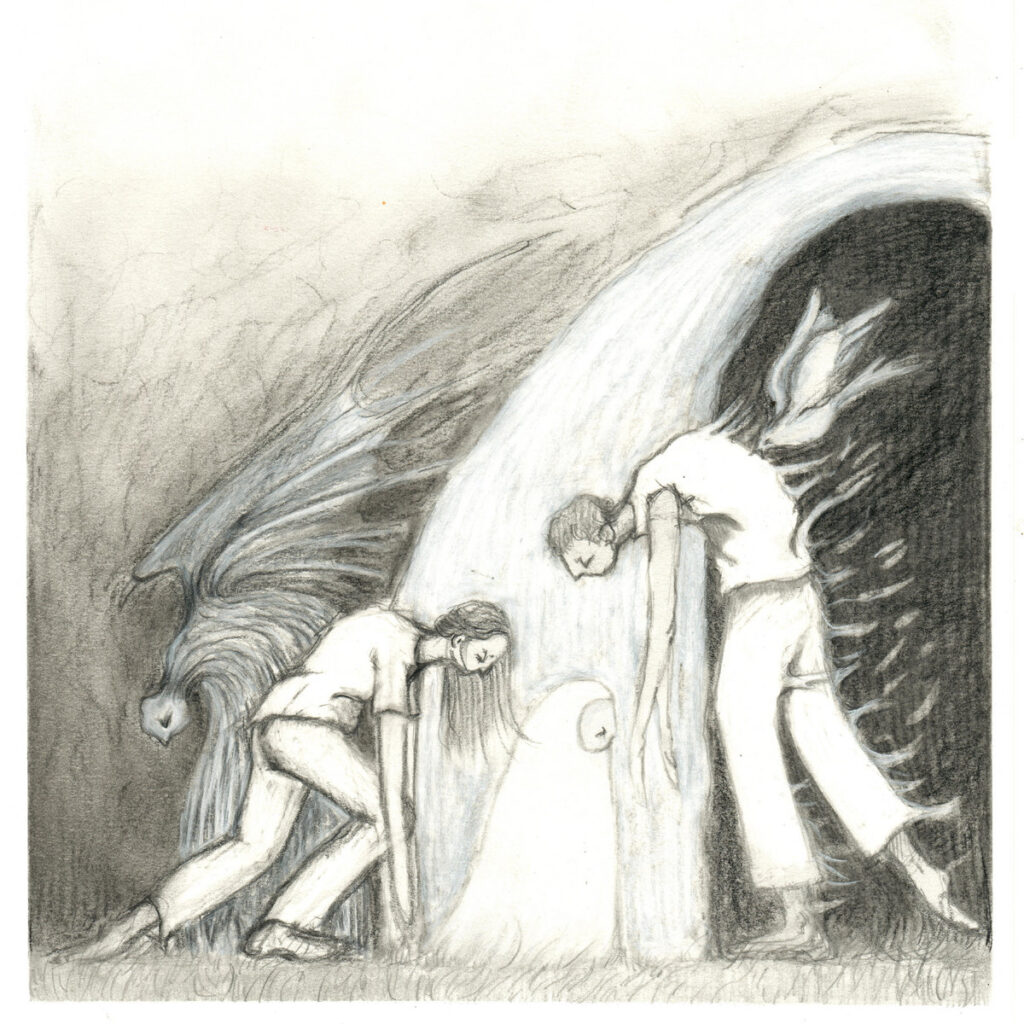
Euterpe by Joel D. Hitos is a ten-piece instrumental album rooted in the neoclassical tradition, yet it quietly resists being confined by it. From the very first moments, the record unfolds less like a collection of compositions and more like a contemplative passage through shifting emotional states, moving between light and shadow, nostalgia and renewal, while maintaining a striking consistency in its expressive depth.
The title itself carries weight. In Greek mythology, Euterpe is one of the nine Muses, traditionally associated with music and lyric poetry, often described as the “giver of delight.” But Hitos does not interpret delight as mere joy. Instead, he approaches it as something more fragile and complex, an emotional resonance that can emerge equally from sorrow, memory, or silence. In this sense, Euterpe becomes a guiding presence throughout the album: an invisible force that appears, inspires, and then fades, leaving only traces behind.

The Narrative Flow of Euterpe by Joel D. Hitos
“Euterpe Prelude” opens the album with sustained low strings, anchored by the cello, creating a sparse, almost ritualistic atmosphere. As layers gradually emerge, the piece establishes a tragic and introspective tone, less an introduction than an invocation.
“What Remains” follows as a delicate piano-led piece, supported by subtle strings. It feels intimate and restrained, embodying the essence of neoclassical writing while hinting at the album’s central theme: what lingers after something has passed.
“The Deep” shifts the timbral focus. The piano here carries a more classical tone compared to the softer textures of the previous track. Its arpeggios and harmonic progressions lean into darker territory, creating a sense of emotional gravity that borders on the tragic.
“Summer Overture” introduces contrast. Opening with expressive strings, particularly the velvet depth of the cello, the piece evolves into a dialogue between scattered piano gestures and sudden silences. A brief but dynamic surge follows, where fast-paced cello arpeggios meet a sentimental piano melody. Despite its short duration, the piece captures a full emotional arc, balancing tension and release with precision.
“End of Summer” brings the listener into a space of pure nostalgia. The piano takes center stage, carrying a deeply emotional and reflective tone that feels both personal and universal.
“All Things New” marks a subtle turning point. A soft piano line, accompanied by flute, introduces a repeating motif that drives the piece forward. There is a sense of renewal here, a quiet optimism that contrasts with the earlier melancholy without dismissing it.
“The Safe Place” expands the sonic space. Classical piano arpeggios, combined with a richly reverberant sound, create the impression of vastness, a large, quiet interior space. Within it, the melody unfolds with tenderness, offering a sense of refuge that aligns with one of the album’s underlying ideas: music as shelter.
Atmosphere, Memory, and Emotional Architecture
“Still Remains” distills the album’s language to its essentials. A simple piano arpeggio, a soft melodic line, and subtle cello accompaniment come together to form a piece that feels both minimal and complete. Its structure is particularly effective: maintaining a gentle atmosphere, dipping into near-silence at its core, and then returning with greater intensity. The result is deeply immersive, almost addictive in its emotional pull.
“Come, Euterpe” stands out with its tonal character. Drawing on what feels like an echo of ancient Greek music, the piece introduces a synth-based palette where one voice sustains while another carries the melody. It feels like a direct call to the Muse herself, an abstract yet evocative moment that bridges past and present.
The album closes with “End of Summer (Solo Piano),” a return to one of its central themes. Stripped of all additional textures, the piano alone carries the emotional weight. This version feels less like a repetition and more like a reflection, an afterthought, or perhaps a memory of a memory.
The Cinematic Sensibility of Euterpe by Joel D. Hitos
There is a subtle cinematic quality throughout the album. Each piece unfolds like a scene, with careful attention to pacing, silence, and transition. Yet the music never depends on external imagery. Instead, it suggests images without fixing them, allowing the listener to inhabit the space freely.
What ultimately sets Euterpe apart is its restraint. Hitos avoids unnecessary complexity or technical display, focusing instead on clarity, atmosphere, and emotional sincerity. The album does not seek to overwhelm; it invites stillness. It creates a space where the listener can confront not only the music, but their own reflections within it.
In a genre often saturated with similar textures and intentions, Euterpe by Joel D. Hitos stands out for its quiet confidence and its ability to transform simplicity into something deeply resonant. It does not insist, it lingers.
#Euterpe #JoelDHitos #Neoclassical #PianoMusic #InstrumentalMusic #AmbientClassical #ModernClassical #MusicReview #ContemporaryMusic #Minimalism #EmotionalMusic #CinematicMusic #ClassicalCrossover #NewMusic #AlbumReview
This post was written as part of a promotional service provided by Tunitemusic, based on information submitted by the artist.