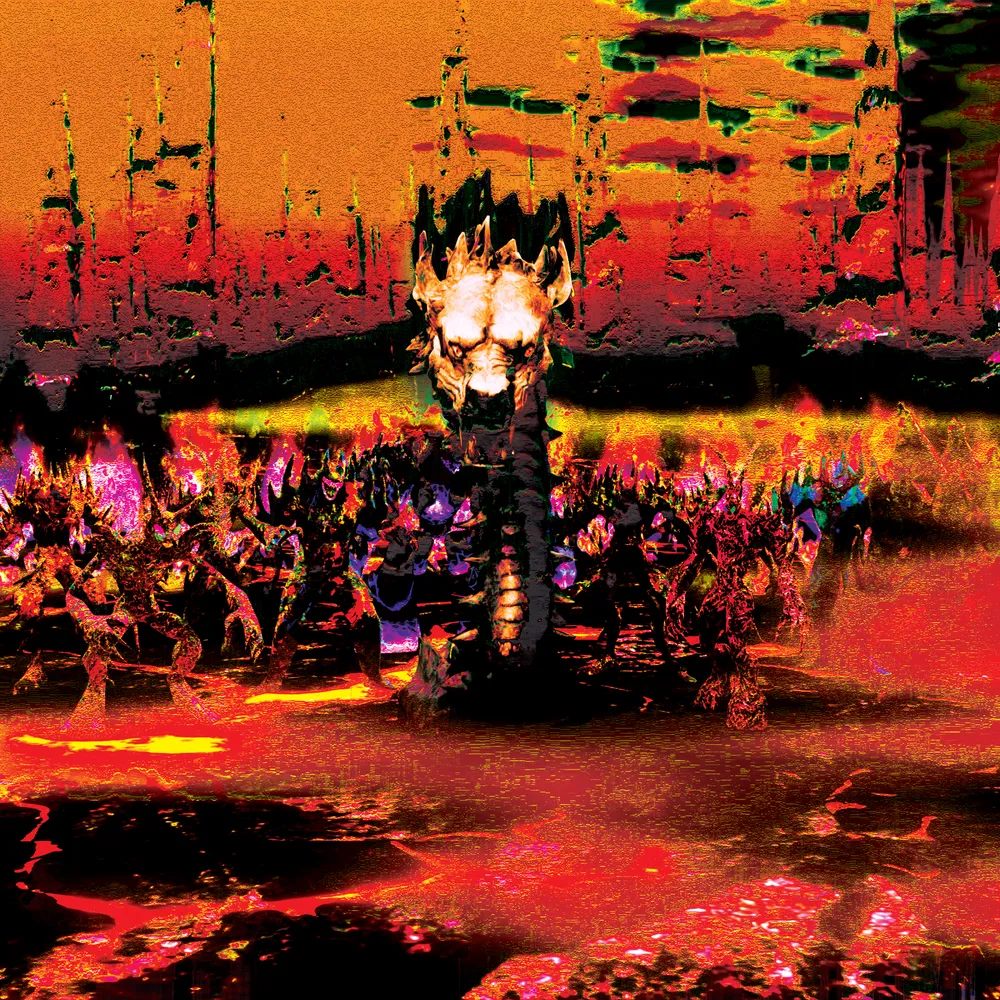
What Kind of World Is This? By NTHNL, is built on a fundamental collision: electronic music against flute. Industrial beats, dense pads, and synthetic textures are constantly set in opposition to the soft, velvet-like timbre of the flute, and this tension becomes the album’s main dramatic force. It is not a decorative contrast, it is structural, almost philosophical. From the very beginning, the album establishes a world where the mechanical and the human, the constructed and the breath-driven, are locked in an uneasy dialogue.
Throughout the album, NTHNL expands this collision with remarkable imagination. In pieces like “Tiresias Rock,” the entrance of the saxophone adds another layer of friction, turning the music into a volatile trio of breath, metal, and electricity. In “Destruction of the Institutes,” acoustic, and at times Middle Eastern, leaning—percussion confronts the electronic framework, creating a sense of ritualistic resistance against an otherwise industrial environment. These moments feel intentional rather than eclectic, each instrumental choice serves the narrative descent and return that the album follows.
The album is predominantly instrumental, which strengthens its cinematic nature. When vocals appear, they are used sparingly and with purpose. “face up, twilight (feat. Nakama)” leans toward a hip-hop idiom, but what lingers most is not the beat or the vocal delivery, it is the deeply sentimental flute solos that cut through the track with vulnerability. “A Tyrant’s Mercy,” on the other hand, introduces an affected, speech-like narration hovering over dark pad textures. It feels like a manifesto whispered from the abyss, a moment of direct confrontation within the album’s moral landscape, and perhaps its most explicitly “political” gesture.
The closing track, and title piece, “What Kind of World Is This?” is the album’s emotional resolution. It is also its most acoustic moment. Strings and flute dominate the sound world here, and the electronics recede into the background. It feels like a quiet triumph: not a victory of volume or force, but of endurance. Acoustic over electronic, soul over matter, survival over destruction. After the descent into darkness, this track does not offer naïve optimism, it offers clarity.
The flute performance throughout the album is nothing short of extraordinary. The control over the instrument, the dynamics, the phrasing, and the expressive range all point unmistakably toward a classical-level mastery. This is not a producer casually using flute as a color; this is a true virtuoso who understands the instrument from the inside out. While there are voices scattered across the album, the true narrator is the flute itself. It is the flute that argues with the synths, that duels with the saxophone and violin, that mirrors and challenges the human voice. It is the flute that opens the album, and it is the flute that closes it.
Ultimately, What Kind of World Is This? by NTHNL, feels less like an album in the conventional sense and more like a moral journey rendered in sound. It descends into chaos without glorifying it, confronts darkness without surrendering to it, and returns not with answers, but with a fragile, hard-earned stillness. In that sense, the album’s central question is never fully resolved, and perhaps that is precisely the point.

NTHNL #WhatKindOfWorldIsThis #TechnoOpera #ConceptAlbum #ExperimentalElectronic #FluteAndElectronics #ElectronicAndAcoustic #NarrativeMusic #CinematicSound #InstrumentalMusic #ContemporaryMusic #AvantGardeMusic #ElectronicMusicReview #AlbumReview #SoundAsStory #MusicAsPhilosophy #DarkElectronic #ModernComposition