Ghostlight by Jamie Trevaskis + James Lees is an atmospheric album built from piano, guitars, electronics and percussion, but its identity lies less in the instruments themselves than in the unstable space they create together. Across eight tracks, the music remains dark, suspended and often tense, deliberately avoiding a strong rhythmic centre. It feels less like floating peacefully and more like hovering without support; a rattle, a shake, a slow-moving nightmare in which there is nowhere solid to grasp.
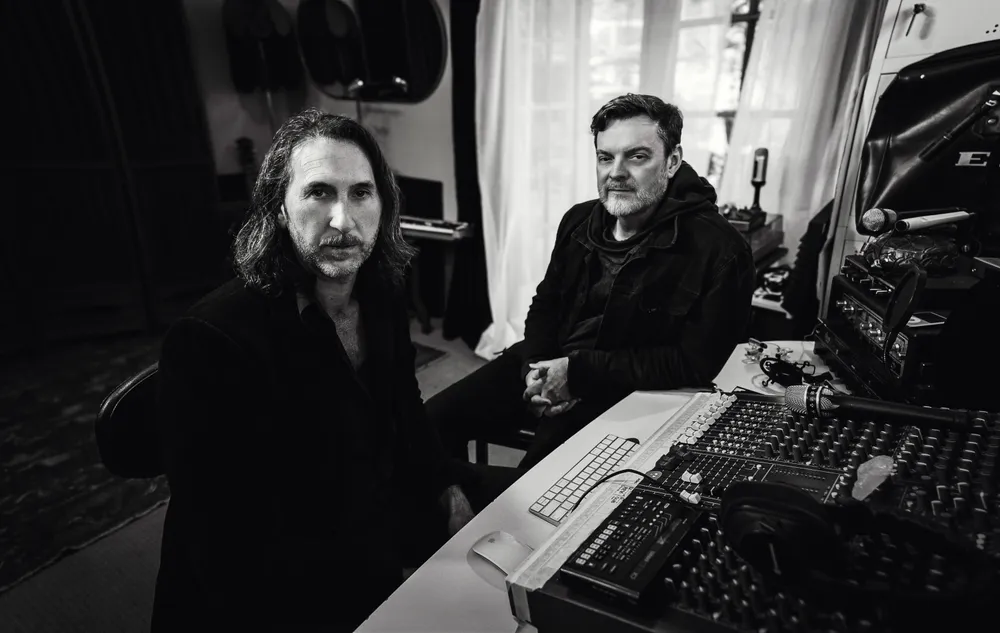
The album marks the first musical collaboration between Australian musicians Jamie Trevaskis and James Lees, following years of friendship and previous studio work together on projects including Ghostwoods and Silver Sircus. The material began with a series of extended guitar instrumentals recorded by Trevaskis in his Northern New South Wales hinterland studio: atmospheric studies filled with drones, broken chords and shimmering echoes. Lees later expanded those foundations through piano, synthesizers, drums and percussion, creating music that shifts continuously between the ethereal and the foreboding.
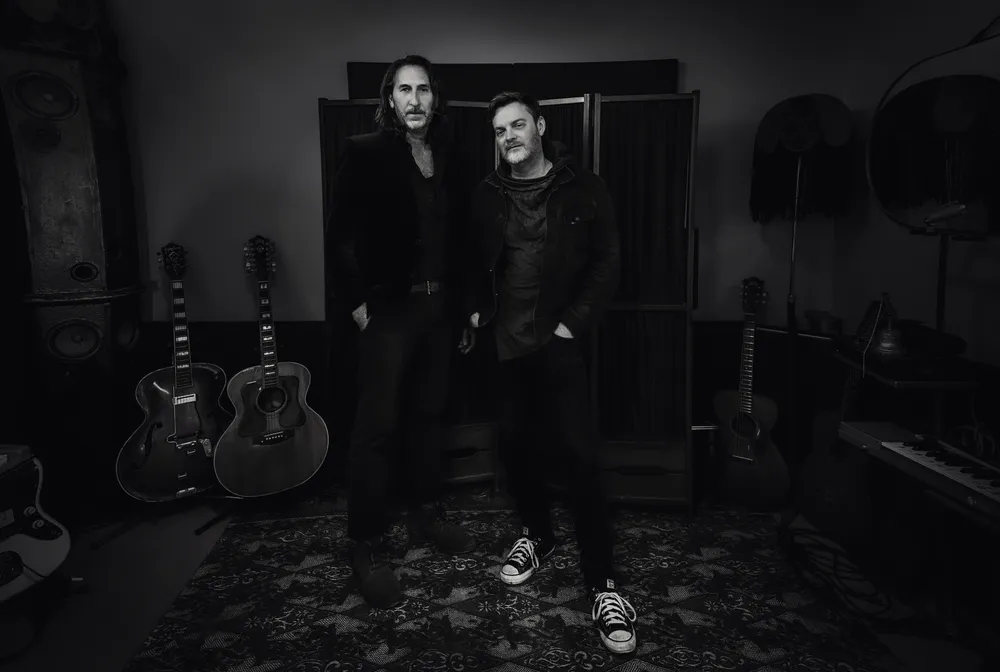
Ghostlight by Jamie Trevaskis + James Lees: Tension in Suspension
The opening title track, “Ghostlight,” immediately establishes the album’s language. A tense atmospheric layer emerges first, it is not a smooth, comforting pad often associated with ambient music. Its timbre seems unstable and slightly trembling, carrying darkness within the texture itself.
Against it, the piano enters from almost the opposite emotional direction: clean, restrained and melodic. Lees plays with a soft tone and an uncluttered line, and the contrast between the piano and the surrounding electronics becomes one of the most compelling features of the track. Relaxation and anxiety seem to occupy the same space.
The development is intentionally slow. Gradually the piano grows more active, moving toward arpeggiated figures, while the surrounding textures become increasingly dense. Deep electric-guitar tones begin to surface underneath, adding further weight before the entire structure seems to collapse inward. Sounds fall away, leaving quietness rather than a conventional resolution.
That sense of unresolved movement becomes fundamental to the album.
Darkness Without Drama
“Mettle” continues in a similar emotional territory, although the piano itself becomes more unsettled. Repeated chords create an insistent psychological tension while the guitar surrounds them with dark, atmospheric colour. What is interesting here is that the music does not need dramatic gestures to create unease. There are no sudden orchestral explosions or obvious climaxes. Instead, pressure accumulates through repetition, sustain and texture.
The album repeatedly works this way. Rather than telling the listener exactly when tension begins or ends, Trevaskis and Lees allow it to remain suspended.
“Yearning” changes the balance. Beginning with solo piano, it introduces one of the album’s most openly emotional moments. The playing is slow, delicate and sentimental without becoming exaggerated. Atmospheric layers gradually enter around it, and although the harmonic environment grows darker, the emotional centre remains firmly within the piano.
There is something almost fragile about the piece. The surrounding electronics seem to threaten the melodic clarity without ever completely consuming it. As the melody develops, the tension increases, yet the track remains deeply human and intimate.
Rhythm Emerging From Texture
“Sway Together” brings a more rhythmic piano approach into the album. Here, pulse becomes more noticeable, but it still does not function in a conventional groove-oriented way. The piano establishes movement while atmospheric guitars steadily expand around it, eventually becoming the dominant force.
This relationship between rhythm and atmosphere is important throughout Ghostlight. Pulse appears and disappears rather than remaining fixed. At times the listener feels a pattern forming, only for it to dissolve again into drones, echoes and sustained tones.
The result is music that constantly destabilises its own sense of direction.
“Echo Chamber” introduces another element: the human voice. A spoken narration appears against piano, guitar and atmospheric electronics, adding a more explicit sense of storytelling. Yet even here the voice does not completely clarify the music. Instead, it becomes another layer within the soundscape.
The track gradually enters increasingly dark territory before dissolving almost imperceptibly. Elements disappear one by one rather than reaching a decisive ending, making the piece feel as though it continues somewhere beyond what we are able to hear.
Sleepwalking Through Uncertainty
The title “Sleepwalking” is particularly appropriate for the album’s aesthetic. Rhythmic piano interacts with atmospheric pads and guitar, but the music still carries an unstable, dreamlike quality. There is motion, yet no obvious destination.
That tension between movement and disorientation is perhaps one of the album’s strongest characteristics. You are rarely standing still, but neither are you travelling along a predictable musical path.
“Afterimage” pushes this idea even further. Beginning with long guitar notes and sustained electronic textures, it initially offers almost no clear sense of pulse. Time becomes elastic. Notes hang in the air without being organised into an obvious rhythmic framework.
Only toward the later part of the track do melodic arpeggios begin creating a stronger impression of movement. It feels almost as if rhythm gradually materialises from inside the atmosphere rather than being imposed upon it.
The Third Sunday
The closing piece, “The Third Sunday,” begins with solo piano, immediately bringing melody and harmony into sharper focus. Strong melodic lines and arpeggiated figures give the track a more recognisable emotional shape than much of what has come before.
Yet the darkness never disappears.
Pads slowly enter around the piano, altering the emotional colour and pulling the piece back toward the album’s wider sonic world. The music grows heavier and more shadowed as it develops, but rather than ending in a dramatic climax, it finally resolves through the piano itself.
The last chord feels important precisely because so much of the album has resisted resolution. After nearly an entire record spent in suspension, instability and blurred edges, that final gesture feels like a momentary return to solid ground. The album does not end in a strong I-IV-V-I chord progression cadence, it is a soft cadence, but after hours of suspense, this ending feels strong and heavy.
An Album of Memory, Space and Unease
There is something deeply visual about this music. The artists describe the original guitar pieces as suggesting an unknowable past or a shadowy memory, and that idea can be felt throughout the album. These compositions often resemble landscapes remembered imperfectly: familiar in shape but obscured around the edges.
Trevaskis’ guitar, echo chamber, rattles and chains combine with Lees’ piano, synthesizers, drums and percussion to create a world where acoustic and electronic sounds rarely feel separate. Instead, they continuously bleed into one another.
The production reinforces that ambiguity. Recorded between Omni Studio and Music Farm Studios in Byron Bay/Arakwal Country, and mixed by Trevaskis, the album gives considerable space to resonance, decay and silence. Sounds are allowed to linger, collide and disappear gradually rather than being tightly controlled. That patience is essential to the success of the record.
Ghostlight by Jamie Trevaskis + James Lees is not an album built around immediately memorable themes or clearly defined rhythmic structures. Its strength lies elsewhere: in atmosphere, timbre, psychological tension and the subtle transformation of sound over time. It asks the listener to remain inside uncertainty rather than escape from it.
Dark, cinematic and emotionally unsettled, Ghostlight feels like wandering through a memory that may not entirely belong to you; beautiful in places, threatening in others, and never completely revealing what lies behind the shadows.
#Ghostlight #JamieTrevaskis #JamesLees #AmbientMusic #ExperimentalMusic #AtmosphericMusic #InstrumentalMusic #PostAmbient #DroneMusic #ExperimentalAmbient #CinematicMusic #PianoMusic #GuitarAmbient #IndependentMusic #NewMusic