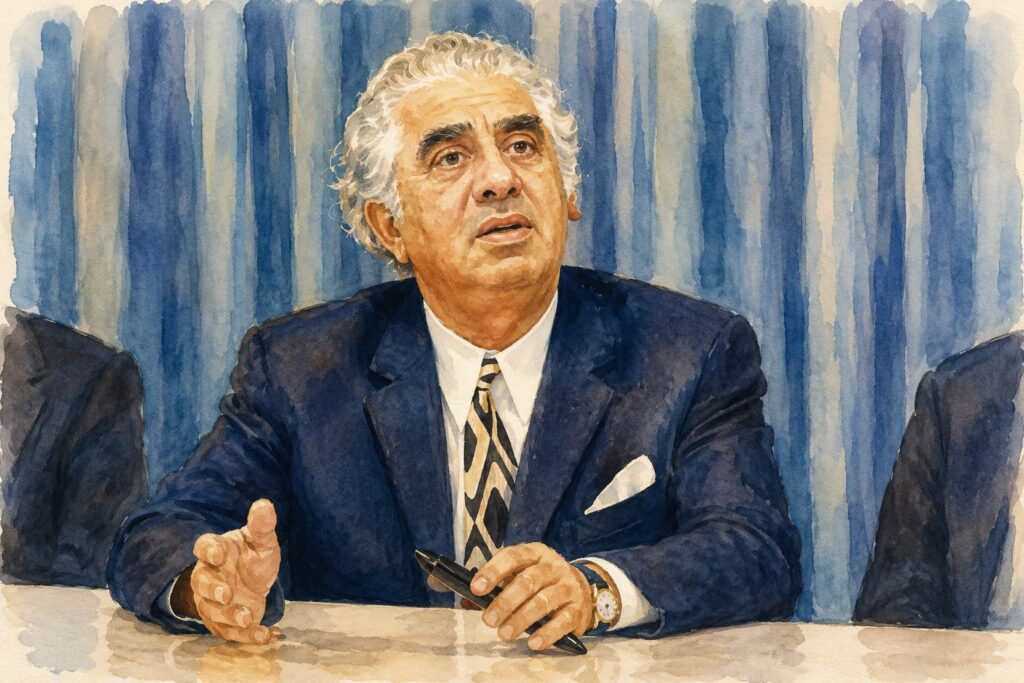
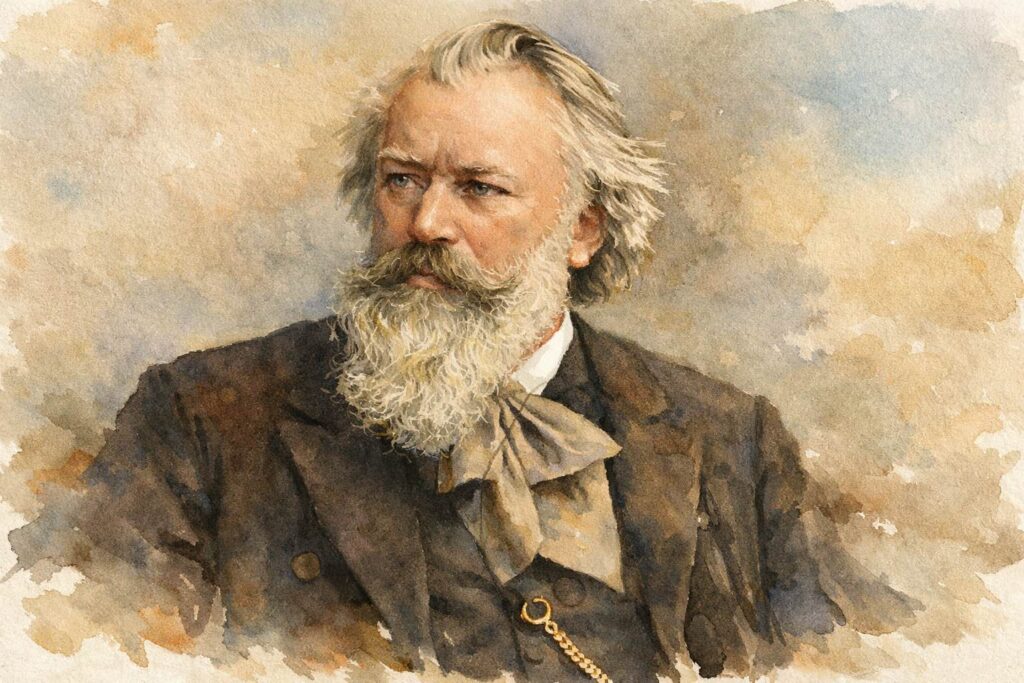
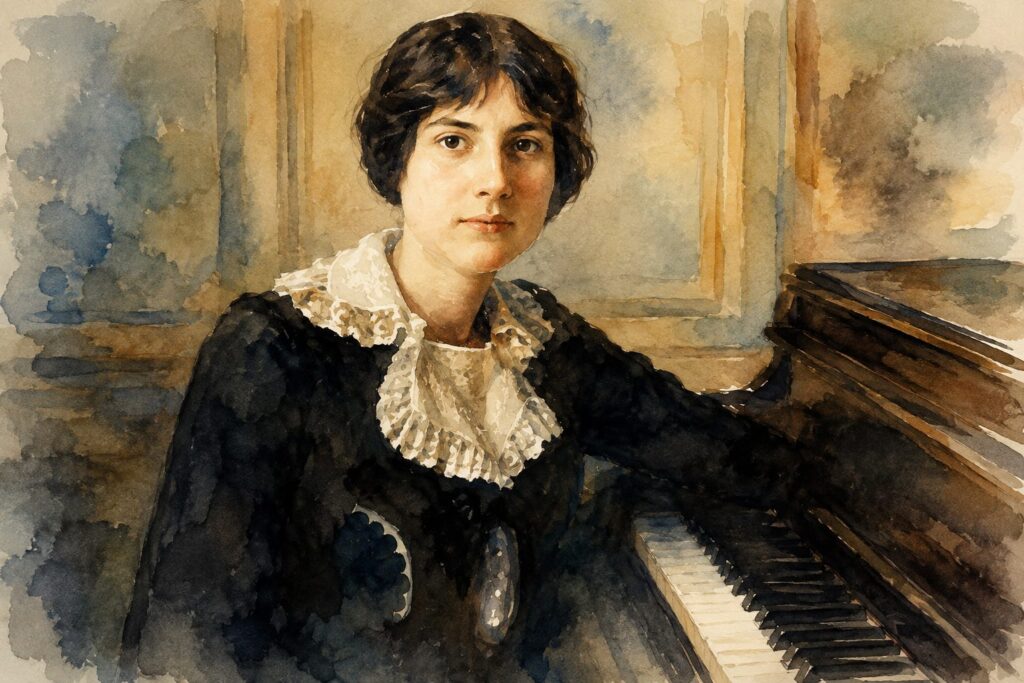
In the collective memory of modern classical music listeners, the name Tomaso Albinoni (8 June 1671 – 17 January 1751) evokes a very specific sonic atmosphere: the dark, mournful, and soaring lines of the Adagio in G minor. Yet this association presents one of the most striking paradoxes in music history. Albinoni, a contemporary of Antonio Vivaldi and a composer whose music was studied and transcribed by Johann Sebastian Bach, was not a composer of melancholic, late-Romantic pastiches. He was a quintessential voice of the Venetian High Baroque—an era characterized by structural equilibrium, buoyant rhythmic energy, and an unforced, cantabile melodic charm.
For decades, Albinoni’s historical identity has been obscured by a singular twentieth-century fabrication. To view him solely through the lens of the famous Adagio is to miss the true scope of a composer who was highly celebrated across Europe during his lifetime. As an independent gentleman who did not rely on church or court patronage, Albinoni carved out a unique position in the competitive musical marketplace of the Republic of Venice, contributing significantly to the development of the solo concerto and instrumental sonata.
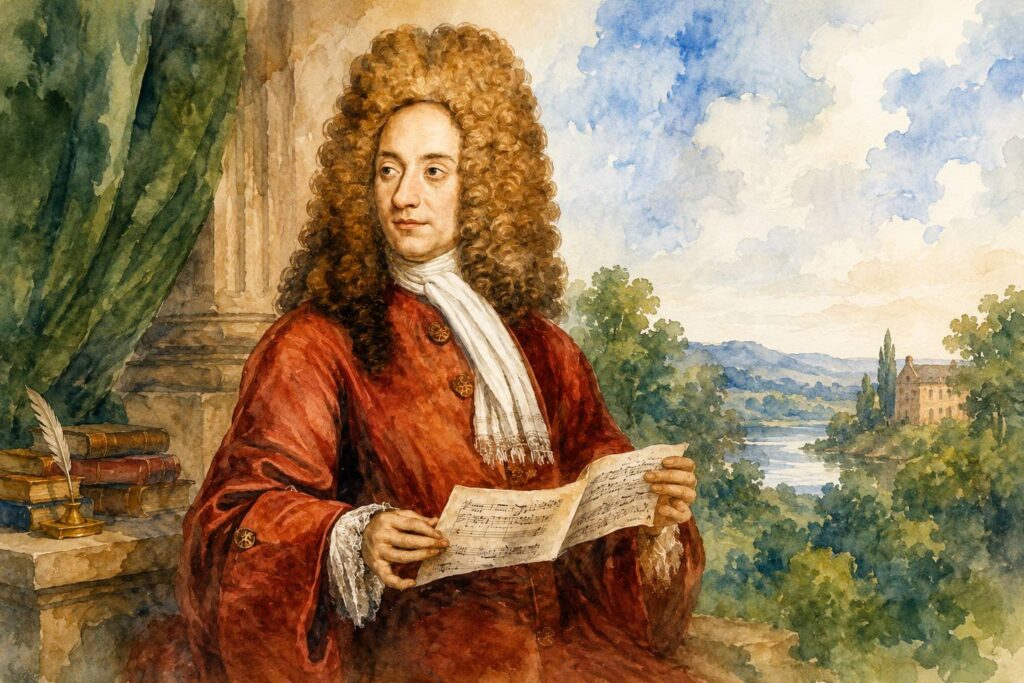
Biography: The Patrician Dilettante
Tomaso Giovanni Albinoni was born in Venice on June 8 (or 14), 1671, into a life of considerable material comfort. His father, Antonio Albinoni, was a wealthy paper merchant and manufacturer of playing cards who owned multiple shops and real estate holdings across the Venetian Republic. Unlike many of his contemporaries, such as Vivaldi or Arcangelo Corelli, who were trained through church institutions or grew up in families of professional musicians, Albinoni was positioned to inherit a lucrative commercial empire.
While he received rigorous training in violin and singing during his youth, music was initially an aristocratic pursuit rather than a financial necessity. In his early publications, Albinoni conspicuously signed his name as “Dilettante Veneto” (a Venetian amateur). In the context of the late seventeenth century, “dilettante” did not carry the modern connotation of superficiality; rather, it signaled that he was a man of independent means who composed out of pure artistic devotion, free from the institutional constraints of a courtly or ecclesiastical appointment.
This status shifted fundamentally in 1709 following the death of his father. Antonio Albinoni’s will structured the inheritance to pass the core operations of the family card-manufacturing business to Tomaso’s younger brothers. This structural division relieved Tomaso of administrative duties while providing him with an independent income, allowing him to transition fully into the life of a professional composer. From this point forward, he dropped the title of dilettante from his publications, identifying himself simply as an “Autore di Musiche” (Author of Music).
Albinoni’s domestic life centered around Venice, where he married the opera singer Margherita Raimondi in 1705. His theatrical career took him briefly to other Italian cultural centers, including Florence and Munich, where he achieved notable successes. However, he spent the twilight of his life in relative obscurity in Venice, living in the care of his children. He passed away on January 17, 1751, due to diabetic complications, at a time when the ornate Baroque style he had mastered was rapidly yielding to the simpler, lighter textures of the early Classical era.
The Oeuvre: Instrumental Innovation and Lost Operas
Albinoni’s musical output was vast and divided cleanly into two distinct worlds: secular vocal music for the public theater and highly polished instrumental music for publication.
The Secular and Operatic Works
During the Baroque era, opera was the primary vehicle for achieving widespread fame and financial windfall in Italy. Albinoni claimed to have written over eighty operas, though modern musicological cataloging definitively verifies around fifty productions. His first opera, Zenobia, regina de’ Palmireni (1694), premiered to immense acclaim in Venice, establishing him as a dramatic composer of the first rank.
He was also highly skilled in the composition of light comic intermezzos—most notably Vespette e Pimpinone (1708)—which served as crucial precursors to the opera buffa style. Tragically, because operatic scores in the eighteenth century were treated as ephemeral properties and rarely published in full, the vast majority of Albinoni’s theatrical works and secular solo cantatas have been lost to time.
The Published Instrumental Collections
Conversely, Albinoni took great care in curating and publishing his instrumental music. These works were distributed by major European publishing houses, such as Roger in Amsterdam and Walsh in London, ensuring his music was performed across France, Germany, and England. His instrumental legacy is anchored by ten major published opuses:
| Opus | Composition Type | Notable Characteristics |
| Opus 1 (1694) | 12 Trio Sonatas | Deeply influenced by Corelli; used as pedagogical models by J.S. Bach. |
| Opus 2 (1700) | 6 Sinfonias & 6 Concertos | Early exploration of the five-part string texture (a cinque). |
| Opus 5 (1707) | 12 Concertos for Strings | Features a highly driving, energetic rhythm in the outer movements. |
| Opus 7 (1715) | 12 Concertos (Strings and Oboe) | The first published Italian concertos to feature the oboe as a solo instrument. |
| Opus 9 (1722) | 12 Concertos (Strings and Oboe) | Considered his absolute instrumental masterpiece; exceptional lyricism. |
Albinoni’s historic contribution to the concerto genre cannot be overstated. He was among the very first composers to systematically employ the three-movement structure (Allegro–Adagio–Allegro), which later became the standard form for Western classical concertos. Furthermore, his Opus 7 and Opus 9 collections revolutionized the use of the oboe. Rather than treating the oboe as a mere orchestral doubling tool, Albinoni treated it as a surrogate human voice, writing long, elegant, breath-bound melodies heavily informed by his extensive experience in opera.
Importance and Influence in Italian Baroque Music
Within the landscape of Italian Baroque music, Albinoni represents the “thinking man’s” composer. While his contemporary Antonio Vivaldi was celebrated for dazzling virtuosity, radical programmatic experiments (such as The Four Seasons), and erratic, fiery textures, Albinoni favored a refined, classical restraint. His counterpoint was cleaner, his formal structures were more predictable, and his harmonic progressions exhibited a logical transparency.
“Albinoni’s music is characterized by an almost perfectly realized equilibrium between form and content, avoiding the eccentricities of Vivaldi in favor of a pure, architectural lyricism.” — Late 20th-century musicological consensus.
This architectural clarity caught the attention of Johann Sebastian Bach. The German master, who famously transcribed and adapted the works of Italian composers to refine his own style, studied Albinoni’s Opus 1 Trio Sonatas with immense scrutiny. Bach went so far as to extract themes from Albinoni’s works to compose at least four major keyboard fugues (including the Fugue in A major, BWV 950, and the Fugue in B minor, BWV 951). Bach also used Albinoni’s bass lines as pedagogical exercises for his composition students, recognizing them as supreme examples of structural integrity and harmonic balance.
The Curious Case of the “Albinoni” Adagio
No comprehensive examination of Albinoni can ignore the work that paradoxically made his name a household staple while fundamentally misrepresenting his artistic voice: the Adagio in G minor for Strings and Organ.
The Origin Myth
In 1958, the prominent Italian musicologist and critic Remo Giazotto published a lush, deeply moving piece titled Adagio in G minor for strings and organ, on two thematic ideas and on a figured bass by Tomaso Albinoni. Giazotto, who had published a definitive biography of Albinoni in 1945, claimed that shortly after the conclusion of World War II, he salvaged a tiny manuscript fragment from the ruins of the Saxon State Library in Dresden. The library, which housed a massive repository of Albinoni’s original manuscripts, had been decimated during the Allied firebombing campaigns of February 1945.
According to Giazotto, this recovered scrap contained only a baseline (basso continuo) and a few scattered bars of a melody, spanning roughly six measures in total. He hypothesized that the fragment belonged to a slow movement of an uncataloged church sonata (sonata da chiesa) from Albinoni’s Opus 4 period (circa 1708). Giazotto claimed that he merely “reconstructed” the piece out of historical duty, filling in the harmonies and orchestration according to Baroque principles.
The Exposure of a Musical Hoax
As the Adagio skyrocketed to global popularity—becoming a staple in film scores (such as Manchester by the Sea and Werner Herzog’s The Enigma of Kaspar Hauser), television, and memorial services—scholars began requesting to view the original Dresden fragment. Giazotto never produced it. Subsequent investigations of the Saxon State Library archives revealed no official record or entry showing that such a document ever existed in their collection.
By the late twentieth century, the musicological community reached a decisive consensus: the Adagio in G minor was entirely an original, twentieth-century composition by Remo Giazotto.
[Albinoni Legacy Paradox]
   ├── True Historical Persona: Clear, balanced, vocal Baroque style (Op. 7 & 9)
   └── Popular Modern Perception: Heavy, post-Romantic, somber faux-Baroque (Adagio)
The piece belongs stylistically to the late-Romantic or early-modern neo-Baroque idiom, reminiscent of works like Ralph Vaughan Williams’s Fantasia on a Theme by Thomas Tallis. The sweeping string crescendos, the rich organ textures, and the heavy emotionalism are entirely foreign to the transparent, polyphonic language of the actual eighteenth-century Venetian master. Though Giazotto’s last assistant, Muska Mangano, allegedly discovered a modern manuscript transcription of a figured bass with a Dresden stamp among Giazotto’s papers, the creative authorship of the melody and structure remains indisputably Giazotto’s. It stands as one of the most successful and enduring musical hoaxes of the modern era.
Legacy and Conclusion
The historical irony of Tomaso Albinoni is that his global fame rests on a foundation he did not build. Yet, the Adagio ultimately served an accidental, noble purpose: it acted as an entry point that rescued Albinoni from complete historical obscurity. The immense commercial success of Giazotto’s piece prompted recording ensembles and music historians in the mid-to-late twentieth century to explore Albinoni’s authentic catalog.
When stripped of the myth of the Adagio, the true Albinoni emerges as a composer of exceptional clarity, dignity, and historical importance. His pioneering work in establishing the solo concerto form and his exquisite writing for the oboe solidified Venice’s status as the epicenter of instrumental innovation during the High Baroque. He remains a vital, distinct voice of La Serenissima—a master of poise, melody, and independent artistic vision.
References
- Arnold, D. (1980). The New Oxford Companion to Music. Oxford University Press.
- Giazotto, R. (1945). Tomaso Albinoni: ‘Musico di violino’ dilettante veneto (1671–1750). Fratelli Bocca.
- Selfridge-Field, E. (1975). Venetian Instrumental Music from Gabrieli to Vivaldi. Praeger Publishers.
- Talbot, M. (1980). Albinoni: The Man and His Music. Clarendon Press / Oxford University Press.
- The Editors of Encyclopaedia Britannica. (2026). “Tomaso Giovanni Albinoni”. Encyclopaedia Britannica.
#TomasoAlbinoni #BaroqueMusic #ClassicalMusic #MusicHistory #VenetianBaroque #OboeConcerto #RemoGiazotto #AdagioInGMinor #MusicalHoax #Musicology #VeniceHistory #JSBach #StringConcerto #EarlyMusic #ClassicalComposers