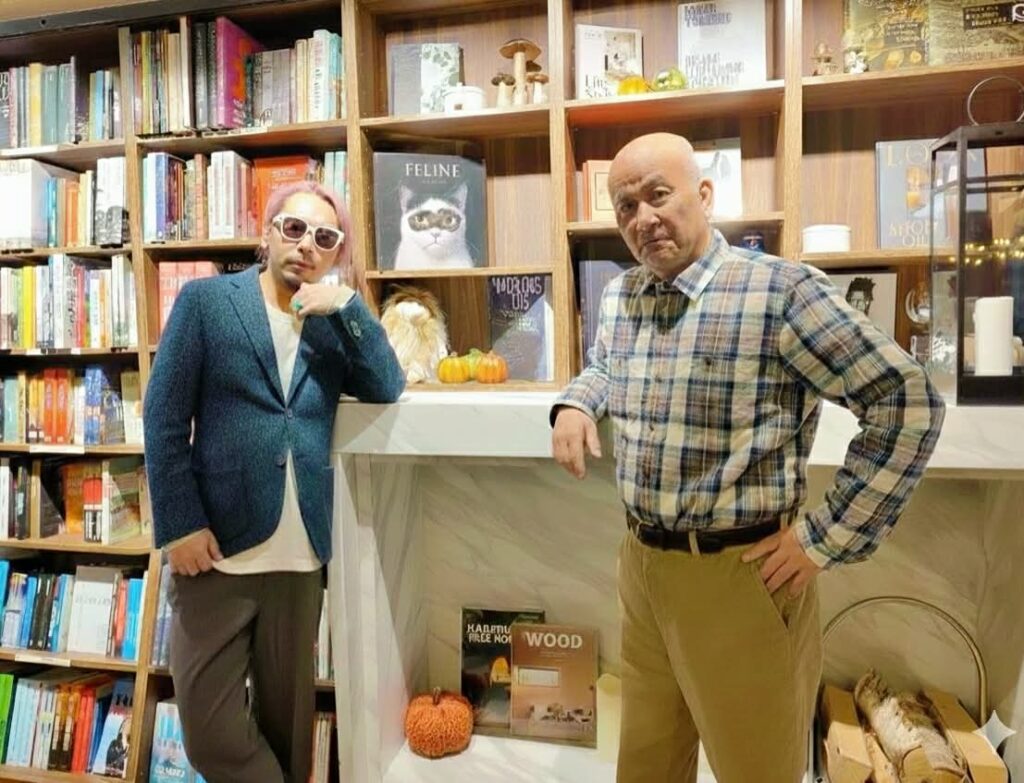
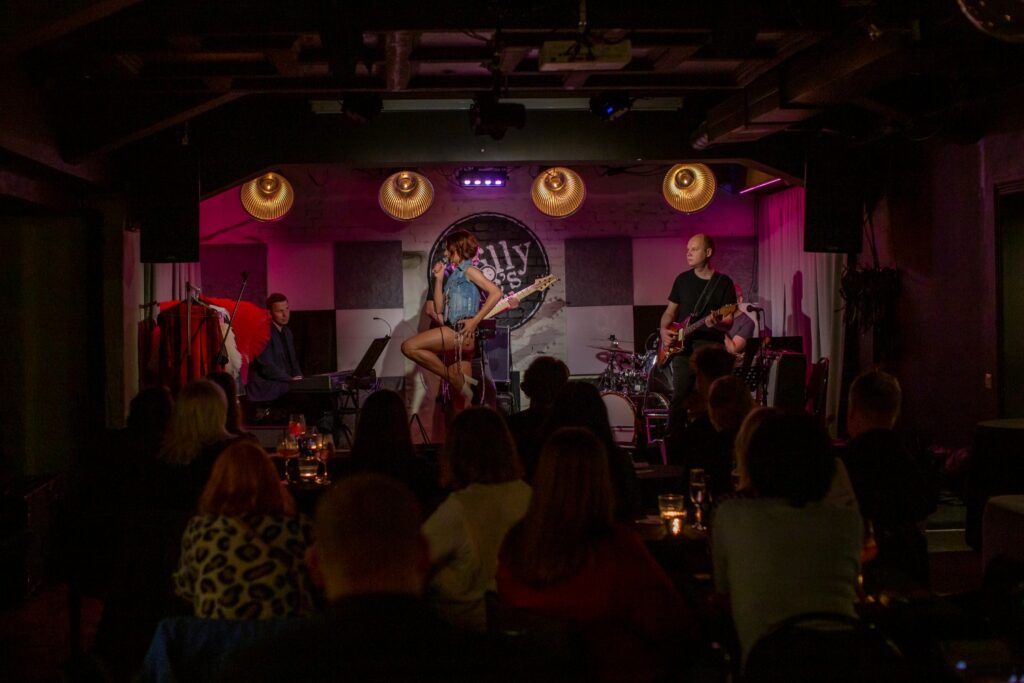
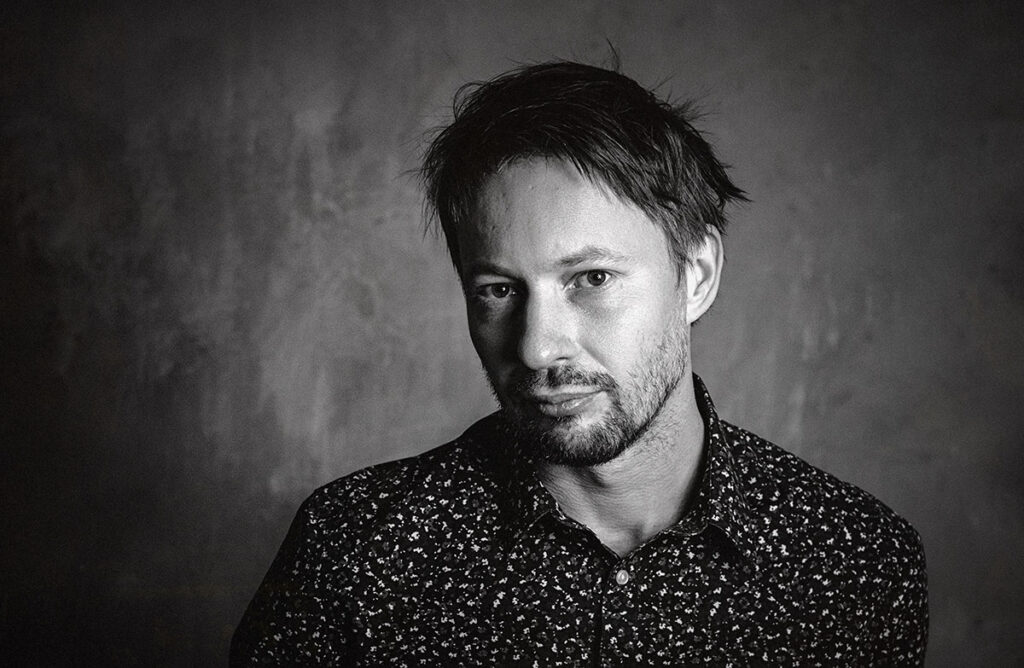
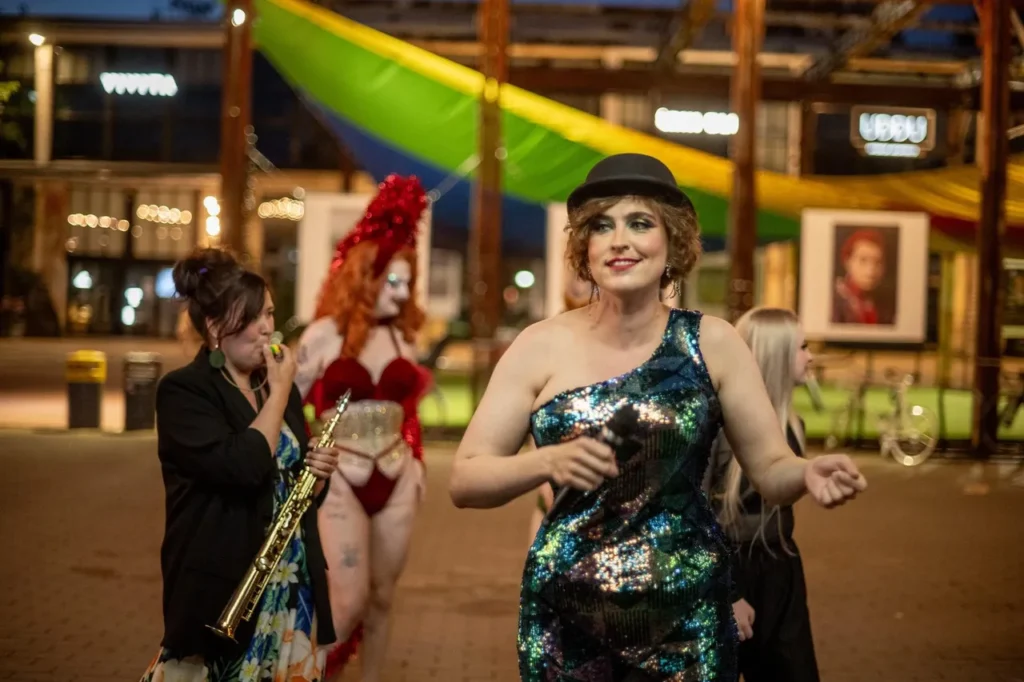
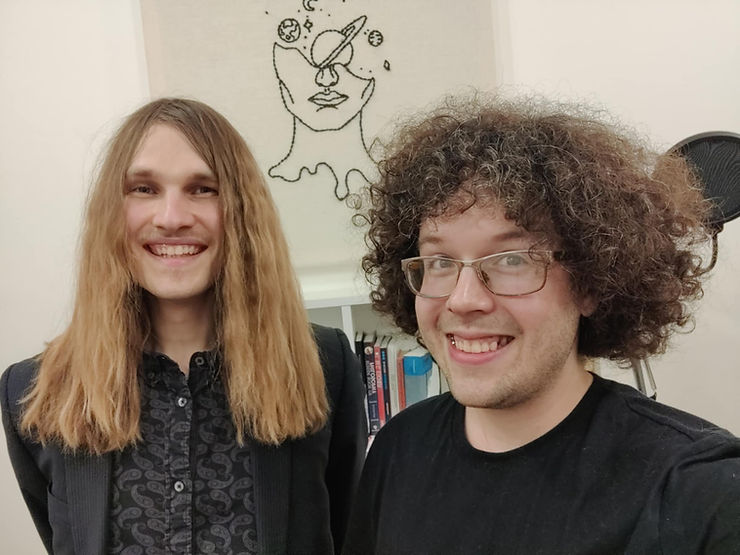
I’ve known Dan for a while now, and I’ve always been mesmerized by both his work and his character. He is a phenomenal artist in his own right—trained in circus and physical theatre—but what’s even more impressive is his dedication to helping other independent artists shine.
One of his greatest achievements is building and sustaining the Tallinn Fringe Festival, a month-long, city-wide, multi-genre explosion of creativity that has now run for ten consecutive years. Based on the “open-access” model born in Edinburgh in 1947, the festival removes the gatekeepers, allowing anyone with a vision and a venue to take the stage.
Through his own performance background and his work running the venue Heldeke!, Dan has become a cornerstone of the Estonian alternative scene. I recently had the chance to sit down with him to discuss the festival’s history, the struggle for funding, and his unwavering belief in the power of the independent arts.
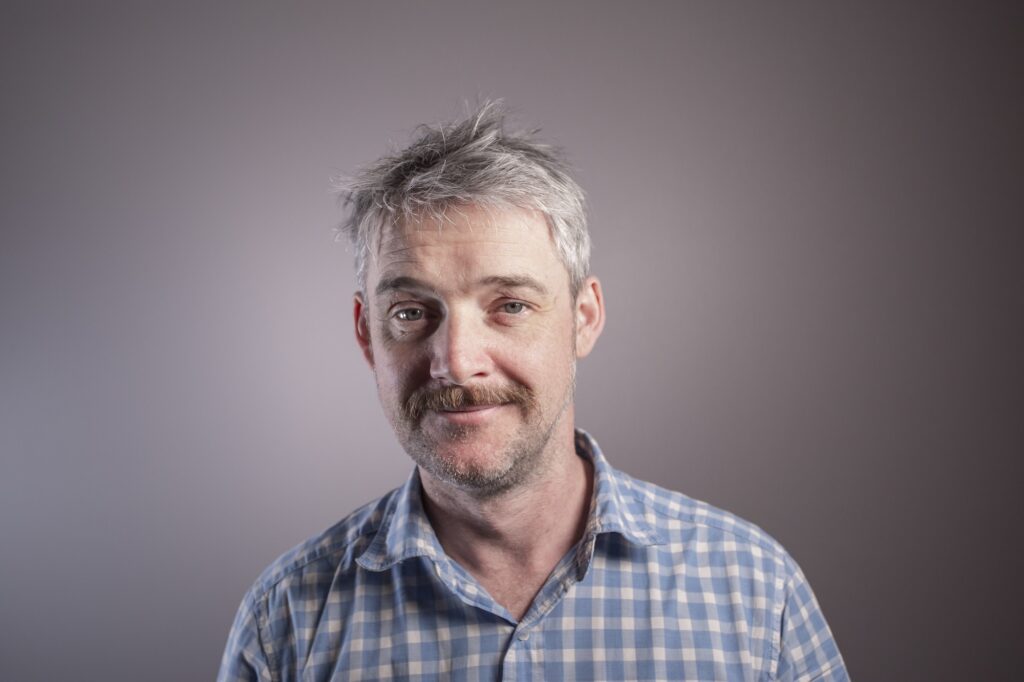
Arashk: Can you describe what Fringe is for someone who knows nothing about it?
Dan: Fringe originated in Edinburgh in 1947 when a group of theatre companies, excluded from the curated Edinburgh Festival, created their own open platform. They called it the Edinburgh Fringe Festival. Its defining principle was that any artist who could find a venue was welcome, no central board decided who was “good enough.” Today, Edinburgh Fringe is the world’s largest arts festival.
Broadly speaking, a fringe festival is a platform where no central organization decides what or who is “good enough” to be in the program.
There are approximately 300–350 fringe festivals worldwide. While not all strictly follow the original open-access model, some use lotteries or light curation due to capacity constraints, all operate under the shared banner of giving platforms to voices that might otherwise go unheard.
Arashk: From your personal point of view, what does Fringe mean to you? Why did you start it in Estonia?
Dan: I began as a performer trained in circus and physical theatre. After struggling to find direction, I decided I wanted to create a 60-minute solo show. I attended the Edinburgh Fringe in the early 2000s as a young emerging artist performing street shows, because no other festival would have accepted me at that stage.
The experience was transformative. Performing up to ten shows a day, networking with professionals, and learning by doing gave me the best arts education I had ever received. That experience shaped how I see gaps in support for emerging artists, particularly those from non-traditional backgrounds.
When I moved to Estonia, I recognized that same gap. I started Tallinn Fringe to provide a complementary structure supporting Estonian artists who fall outside the repertory theatre mainstream. My personal measure of success is not performing for 5,000 people; it is building a strong, vibrant arts community where art is valued and artists are supported to develop professional careers.
It makes me happy to see up-and-coming artists and producers shine. If I can help them by giving them a platform to present their art, that’s all I want.
Arashk: You’ve had Fringe in Estonia for 10 years. How do you see the response from audiences and artists?
Dan: From audiences, the response has been very positive, with consistent growth over the years. Audiences are sometimes initially apprehensive, and unsure what to expect, but once they engage, they respond well. The broader ecosystem of non-traditional arts in Estonia has strengthened, with more venues and shows available year-round.
From artists, the response is also positive, but the consistent challenge is helping them understand that Fringe is fundamentally different from curated festivals. It takes repeated messaging for artists to grasp that participation is their own choice and responsibility. This is the same challenge Edinburgh Fringe faces with new generations.
Notably, Tallinn Fringe has achieved a near 50/50 gender split among performers in recent years. I believe this reflects our success in providing platforms for female voices that are often underrepresented in our region’s curated festival circuit.
Arashk: As director of Fringe, have you interacted with directors of other festivals in Estonia? How is the relation between the festivals here?
Dan: I rarely network meaningfully with directors of other festivals because the two models are fundamentally different at their core. Traditional festival directors focus on curating acts they believe will attract audiences or satisfy funding requirements.
I don’t see myself as the “director” in that sense. I don’t curate the shows; instead, I curate the structures and systems that allow artists and venues to put on performances themselves. This difference means there is often little common ground for dialogue.
But perhaps more importantly, we have not been able to join any union, even though there are unions that other festivals can join.
Arashk: People often think ‘open-access’ means there is no quality control at all. Can you explain how curation actually works within the Fringe ecosystem through the venues and producers?
Dan: There have even been instances where I was told that the Fringe does not fit the traditional definition of “art and culture” simply because it does not require academic credentials or professional certification. This makes no sense to me. I believe this pushback stems from the fact that the open-access model isn’t curated by a central board, which seems to scare some people. Right now, this model is still widely misunderstood in Estonia.
One thing to remember is that even though the festival as a whole is not curated, each venue has its own curation. If someone has no idea what they are doing, finding a venue and inviting an audience is practically impossible. In other words, Fringe is curated at a different level. Instead of one person or one team, there are many different teams (venues and producers) who curate. This gives a much broader opportunity to the artists, and a much broader spectrum of shows and events to the audience.
Arashk: Where do you get the money to run a month-long festival citywide? Do you have funding or support from inside or outside?
Dan: Tallinn Fringe is funded primarily through my own personal resources, money earned from my performance and hosting businesses, my time, and the operational capacity of my venue, Heldeke!. I personally have not been paid by Fringe in 10 years.
The festival benefits from a lower administrative overhead than curated festivals because we do not book or pay artists directly; ticket revenue goes straight to the artists. Our team is largely composed of volunteers or staff pivoted from venue work.
We don’t receive any guaranteed ground public funding yet. We apply for it specifically for each edition, so as soon as the festival wraps, we start applying for public funding again. Our goal is to get secured ground funding for 5 years so we can focus resources on executing the festival that has now grown to a size that it can no longer be administered by volunteers. It’s also now too big for me to be able to financially secure it.
Arashk: What are you doing to help cultural funding bodies in Estonia recognise your worth to the arts and culture scene?
Dan: This has been the bulk of the work over the last 10 years to get public funding bodies to understand the value that we bring. It’s also that the structures need re-working, which takes lots of time, as often there just isn’t a way for us to apply for support as the programs don’t cater to a Fringe open access model and they don’t know where we should apply or how we fit in.
I’m very happy that this year we’re taking a delegation of Estonian cultural stakeholders over to Edinburgh Fringe for 2 days, to see and meet with the people that run the world’s largest arts festival and what we can learn from the ecosystem that supports that to happen each year. Excited to see how this can help with our goal of getting real structural funding to give the festival a solid financial base from which we can continue to grow.
Arashk: Beyond the big names and one-off events, how can Estonia better support its local independent scene?
Dan: It is amazing to have big bands coming to Estonia for a concert, but we shouldn’t leave it at that. We need to support Estonian musicians and independent artists, and Fringe-style festivals help a lot with that, as well as with bringing tourism into the country.
In 2024, Tartu was the European Capital of Culture. The city breathed art for a year, but then it ended. All the infrastructure and talent that worked there are now scattered. Why can’t we keep that momentum going?
Artists are eager to work; they just need a bit of help and a platform. Tallinn Fringe has provided that, and it can be more. I’m not saying we don’t have good festivals in Estonia, I’m saying we have much more to offer.
Arashk: What advice do you have for audience members attending Fringe for the first time?
Dan: I encourage first-time audience members to embrace the freedom of the festival. There is no main stage, no single “must-see” event. There’s no wrong way to experience Fringe.
I challenge you to see something familiar, something outside your usual taste, and something entirely outside your comfort zone. Shows are 45–60 minutes long, making it easy to see multiple performances in a day. On a weekend, you can attend four shows: a street performance, an afternoon show, an early evening show, and a late-night cabaret.
Try to see as many shows as possible between August 18 and September 18. It is a celebration of Tallinn’s identity as a cultural capital.
Arashk: Finally, what advice do you have for artists participating in Fringe for the first time?
Dan: My primary message is: know why you are coming and what you want to get out of Fringe.
Unlike curated festivals that pay artist fees, at Tallinn Fringe the audience pays the artist. This means your income depends entirely on ticket sales, which in turn depends on your own promotional efforts.
The festival cannot individually market 150 shows to specific demographics; you must take the lead in promoting your own work. We will support you from behind, but you must drive your own plan, communicate what support you need, and take ownership. This festival is a tool for building a career, not a guaranteed platform that delivers an audience automatically.
Final Thoughts
Ultimately, Tallinn Fringe is more than just a month of performances; it is an exercise in cultural democracy of Estonia. For Dan le Man, the dream is to move away from the rigid, certificate-heavy structures of the past and toward a future where the arts are accessible, sustainable, and self-driven.
Whether you are an artist looking for your first break or an audience member looking for something that makes you feel alive, the Fringe offers a seat at the table. As Tallinn continues to grow as a cultural capital, Dan remains at the helm of this open-access revolution, inviting everyone to step out of their comfort zone and into the wonderful, unpredictable world of the Fringe.