When a program lists Prelude in C‑Sharp Minor, Op. 3, No. 2 by Sergei Rachmaninoff, a quick web‑search will also bring up Rachmaninov. The difference is not a typo, it’s a transliteration issue that has lingered for more than a century. For musicians, editors, and enthusiasts who care about a composer’s identity, the choice of spelling can feel surprisingly significant. Let’s dig into the history, the linguistics, and the practical implications for anyone who writes, records, or performs this great Russian virtuoso’s music.
The name on the paper
Sergei Artemyevich Rakhmaninov’s birth certificate (1842, Semyonov) records his surname in Cyrillic as Рахманинов. The family’s original Russian spelling has always been “Rakh‑ma‑nino‑v” – the last letter “‑ов” is the classic masculine surname suffix meaning “son of.”
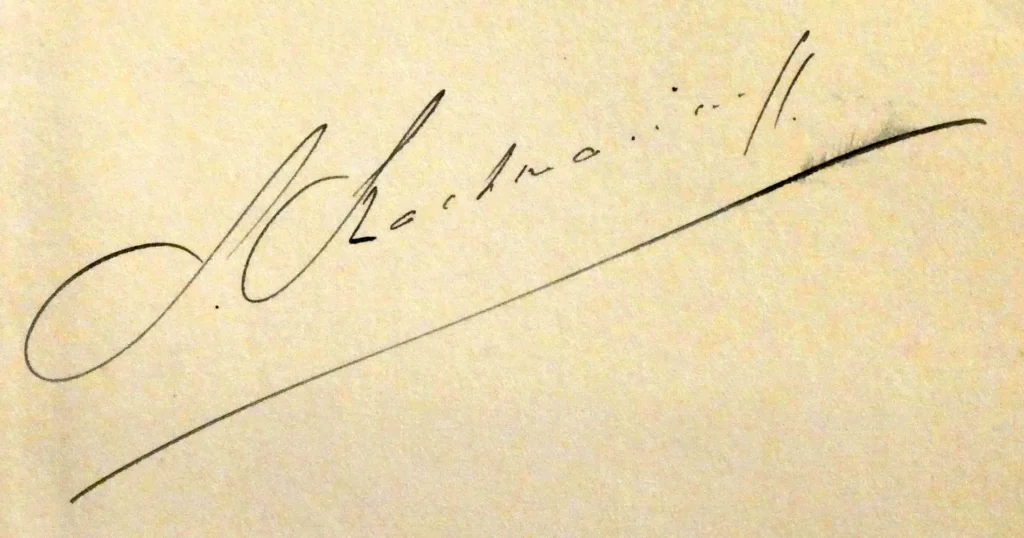
When he emigrated to the United States in 1918, the composer made a deliberate alteration: he added a second “f” to the end of the name, turning Rakhmaninov into Rachmaninoff. The reason? He wanted a rendering that would be unmistakably “western” and easier for English‑speaking audiences to pronounce, while still sounding distinctly Russian. In a letter to his publisher in 1919, Rachmaninoff wrote, “I have chosen the double f for the sound of a full, resonant ‘f’—the sound in my own name.” The composer himself used this spelling in all his autographs and in the liner notes of his recordings.
The composer’s own preferred spelling is Rachmaninoff.
Transliteration: From Cyrillic to Latin
Transliteration is the process of converting a word from one alphabet to another. Russian scholars and publishers use several standard systems.
The double “ff” is a non‑standard feature that arose from the composer’s personal choice rather than an established transliteration rule. Most Russian names ending in “‑ов” are rendered with a single “f” (e.g., Chekhov → Чехов). By contrast, Rachmaninoff is an exception that reflects the composer’s own branding.
For reference, here’s how the name looks in the three most common transliterations:
| Transliteration | Cyrillic | Pronunciation |
|---|---|---|
| Rachmaninov | Рахманинов | rah‑kha‑MEE‑noh‑v |
| Rachmaninoff | Рахманинов | rah‑kha‑MEE‑noff |
Notice the same phonetic shape; only the final ‑ff versus ‑f distinguishes them.
Why “Rachmaninoff”?
- Personal Branding: When Sergei Rachmaninoff moved to the West (eventually settling in the United States), he adopted the “-off” spelling for his professional life, signatures, and legal documents.
- The French Influence: At the time, it was common to use French-style transliterations for Russian names. The “-off” ending was intended to guide non-Russian speakers toward a more accurate pronunciation of the final “v” sound, which in Russian is often devoiced to an “f” sound at the end of a word.
- Consistency: Because he signed his scores, letters, and contracts this way, his publishers (like Boosey & Hawkes) maintained this spelling, cementing it as the standard for his body of work.
The Scholarly Flip-Side
In modern academic settings or library catalogs, you will frequently see Rachmaninov. This is because many bibliographical standards (like the Library of Congress) use a consistent phonetic transliteration system for all Russian names, regardless of the individual’s personal preference.
Fun Fact: Even though he was stickler for the “-off” spelling, his first name also has variations. He used Sergei professionally, but you’ll occasionally see the French Serge or the transliterated Sergey.
So, if you’re writing a program note or a formal essay, using Rachmaninoff is widely considered the most respectful choice, as it honors the composer’s own “signature” identity.
#Rachmaninoff #Rachmaninov #Transliteration #RussianMusic #ClassicalMusic #PianoConcerto #Composer #MusicHistory #MusicTrivia #MusicFacts #SheetMusic #ProgramNotes #MusicPublishing #MusicEducation #MusicLovers #MusicCommunity #MusicMagazine #Score #ConcertProgram #MusicCulture