The most recent addition to Warner Classics’ catalogue invites listeners to step inside a private chamber conversation with the Romantic master Franz Schubert. The 2‑CD set, recorded by violinist David Moreau, cellist Edgar Moreau, and pianist Jérémie Moreau, brings a fresh, sibling‑sourced perspective to Schubert’s only two surviving piano trios, while also featuring newly arranged trio transcriptions of some of his most beloved lieder.
“To play Schubert together, as brothers, is more than simply a matter of making music,” says violinist David. “It becomes an intimate conversation, a dialogue in hushed voices that crosses time and memory … It is as if Schubert’s voice were joining with ours to tell a story – a story of life with all its joys and in all its fragility.”
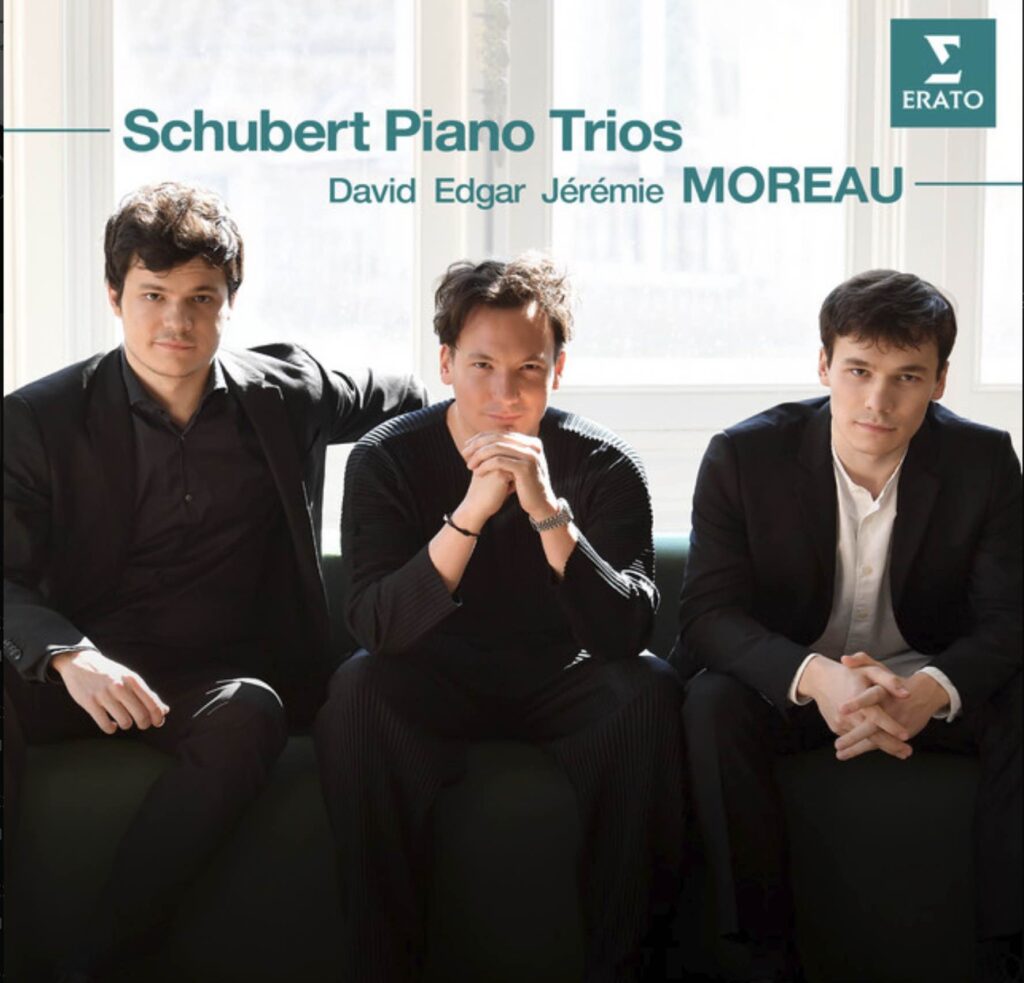
The release arrives at a time when the world of classical music is rediscovering the depth of Schubert’s late output, which, though technically a late Classical work, foreshadows the lyrical and thematic breadth that would come to dominate the Romantic era. The trio set is the Moreau brothers’ first recording as a full‑time trio, a collaboration that brings a unique familial chemistry to Schubert’s music. The inclusion of newly arranged trio versions of the composer’s famed songs—Der Hirt auf dem Felsen (The Shepherd on the Rock), Du bist die Ruh, Auf dem Wasser zu singen, and Ständchen—rounds out the collection with a touch of lieder‑schön that has never before been heard in a piano‑trio format.
The Two Trios: An Overview
Schubert wrote both trios late in his life, in 1827–1828, a period of intense creativity despite his declining health. His Piano Trio No. 1 in B♭ major, D 898, finished in 1828 and published posthumously in 1836 as Opus 99, is the larger of the two, running approximately 40 minutes in performance. The work’s four movements—Allegro moderato, Andante un poco mosso, Scherzo. Allegro, and Rondo. Allegro vivace—display a sophisticated blend of Classical formalism and Romantic expressivity.
- Allegro moderato (4 4, B♭ major): A sonata form with two distinct themes: the first with dotted rhythms and irregular phrasing, the second offering lyrical melodies and regular lines. The development pushes both themes into remote keys before returning them in increasingly closer tonal centers.
- Andante un poco mosso (6 8, E♭ major): Evokes the gentle sway of a gondola, with a lilting melody that is interrupted by a more turbulent section before tranquility is restored.
- Scherzo (3 4, B♭ major): Classical minuet form, the scherzo proper is dominated by heavy counterpoint and constant imitation among the three instruments, while the trio section presents a relaxed waltz.
- Rondo (2 4, B♭ major): The principal theme bears resemblance to Schubert’s song “Skolie.” The use of a two‑bar rhythm gives a sense of alla breve feel, while occasional 3 2 passages suggest a polonaise flair. The movement culminates in a Presto coda that closes the set with a flourish.
The second piano trio, in E♭ major, follows a similar pattern of expressive breadth, albeit with a shorter duration. Together, the two works illustrate Schubert’s mastery of balancing lyrical tenderness with dynamic intensity, a duality that the Moreau brothers have captured with remarkable sensitivity.
A Conversation Across Time
The Moreau brothers’ statement reflects their understanding that Schubert’s music is a living dialogue. “Schubert has been with us forever,” they note. “We feel we are returning to an essential source.” Their familial intimacy is palpable: the way David’s violin lines echo Edgar’s cello resonances, and how Jérémie’s piano textures act as both foundation and conversation partner. The result is a rendition that feels as much an act of listening as of playing.
In a world where recordings can sometimes feel sterile, this album offers a warm, human element. The brothers’ interpretations emphasize subtle shifts in tempo and dynamics, breathing new life into a work that has been recorded by more than a hundred ensembles. Their approach also pays homage to Schubert’s own practice of composing in a “conversational” style—his music invites dialogue, not dictation.
From Lieder to Trio
The inclusion of the newly arranged trio transcriptions of Schubert’s lieder is a bold, innovative addition. Traditionally, pieces like Der Hirt auf dem Felsen were scored for soprano, piano, and clarinet; Du bist die Ruh and Ständchen were often set for voice and piano. By arranging them for violin, cello, and piano, the Moreau brothers open up fresh possibilities for texture and timbre, allowing the songs’ lyrical lines to weave through the instrument voices instead of a solo singer.
Dimitri Soudoplatoff and the Moreau brothers themselves handled the arrangements, ensuring that the integrity of Schubert’s melodic material remained intact while adapting it to the trio format. This creative decision not only showcases the trio’s versatility but also offers listeners an uncommon perspective on Schubert’s vocal art.
Release and Reception
Warner Classics will distribute the 2‑CD set in both digital and physical formats, making it accessible for streaming services as well as for collectors who appreciate the warmth of a vinyl record. Early reviews from respected critics in Gramophone and The Strad have praised the album’s “intimate immediacy” and “expertly balanced sonority.” The Moreau brothers are slated to perform a live showcase in Berlin in late May, where they will present selections from the new recordings.
For those seeking a new lens on Schubert’s piano trios, the Moreau brothers offer a release that is as conversational as it is conclusive—a reminder that music is, at its heart, a shared experience.
#Schubert #PianoTrio #WarnerClassics #MoreauBrothers #ClassicalMusic #Lieder #NewRelease #MusicMagazine #LiveInConcert #RomanticEra #ClassicRecordings #MusicHistory #MusicReview #InstrumentalMusic
Cover Album: © A Warner Classics/Erato release, © 2026 Parlophone Records Limited