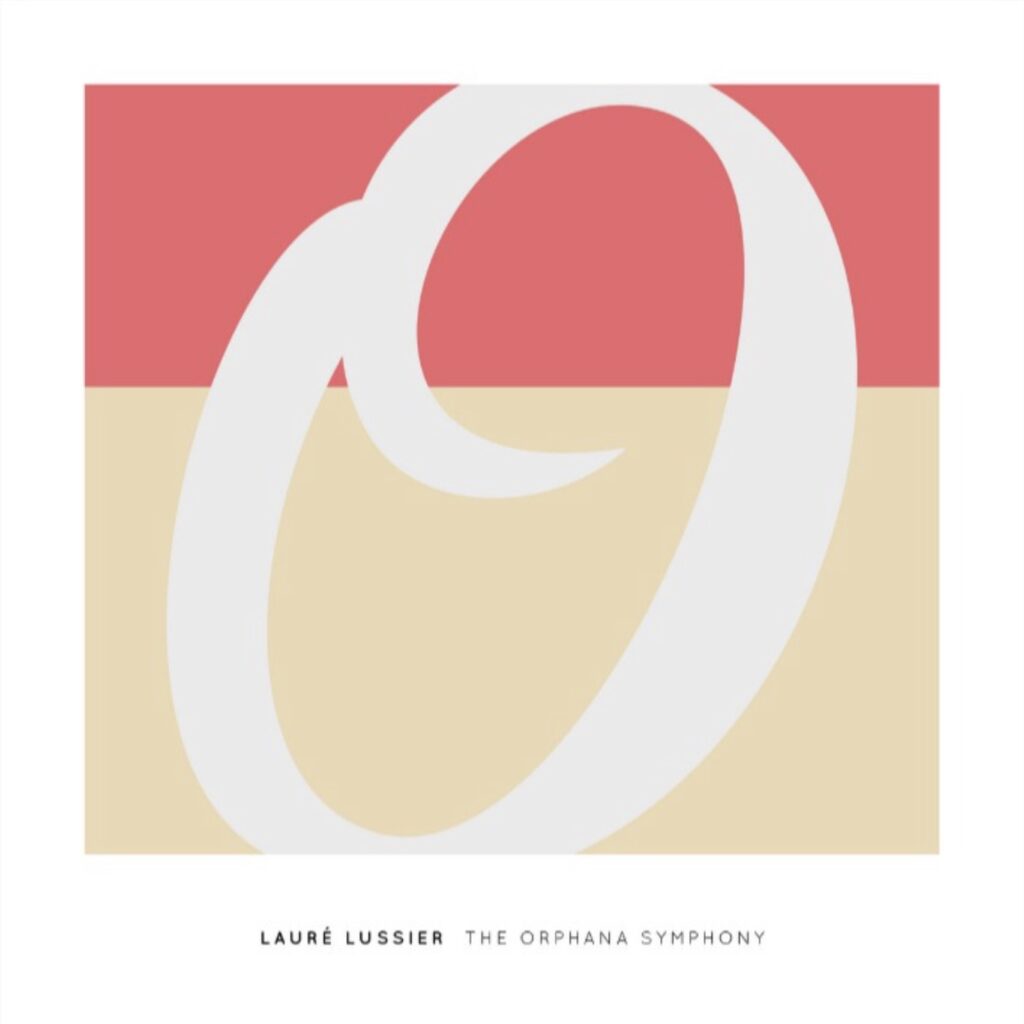
A new large-scale contemporary symphonic release is entering the experimental orchestral landscape in 2026: The Orphana Symphony by Lauré Lussier, the second installment in an ambitious wordless symphonic triptych that is already positioning itself as one of the more unusual long-form narrative projects in recent electro-orchestral composition.
A symphony that moves forward rather than explains
Clocking in at approximately 80 minutes across five movements, The Orphana Symphony unfolds as an emotional architecture rather than a traditional narrative arc. It does not present a program in the conventional sense. Instead, it traces states of being, contained fury, fragile intimacy, ruins remembered through resonance, and something close to transfiguration.
Silence plays a structural role equal to sound. The piece often feels less like storytelling and more like excavation: the listener is invited to assemble meaning from fragments rather than receive it fully formed.
This approach aligns with a growing tendency in contemporary symphonic writing to move beyond descriptive program music toward experiential narrative, music that asks listeners to participate rather than observe.
The second chapter of a “wordless epic” in three symphonies
The Orphana Symphony stands at the center of Lussier’s unfolding Symphonic Triptych, framed by Strange Symphony (2024) and the forthcoming The Swan Symphony.
Together, the three works form what the composer describes as a shared drama between two abandoned “twin” symphonic identities that never meet directly. Instead, they intersect through echoes, reflections, and structural correspondences across the trilogy. The result is closer to a literary cycle than a conventional orchestral sequence.
If the first symphony introduced the fracture, The Orphana Symphony deepens the psychological terrain. The third promises escalation, toward conflict, social tension, and vengeance, suggesting that the trilogy is ultimately less abstract than it first appears.
Electro-orchestral language as environment rather than effect
One of the defining features of Lussier’s writing is his refusal to treat electronics as accompaniment. Instead, acoustic instruments and sound effects coexist inside a single sculpted sonic environment.
Rather than the familiar “orchestra plus electronics” model, The Orphana Symphony behaves like a hybrid organism. Environmental textures, synthetic resonance, and instrumental gesture merge into a single evolving surface. The effect is not decorative, it is structural.
Lussier describes his scores as “living architectures.” That description feels accurate. His compositions behave like spaces you enter rather than pieces you hear from the outside.
Between minimalism, symbolism, and cinematic imagination
While traces of post-minimalist gesture appear, particularly in the string writing and rhythmic layering, Lussier’s sound world is less urban and pulse-driven than that tradition might suggest. Instead, it feels elemental and geological.
Critics have drawn comparisons to figures as different as Igor Stravinsky, Pierre Boulez, Frank Zappa, and Barrington Pheloung, an unusual constellation that points less to stylistic imitation than to Lussier’s refusal to remain inside one tradition.
There is also a literary dimension underpinning the project. The composer’s earlier work grew directly from a novel he authored, and that narrative impulse continues here. In this symphonic universe, protagonists are rarely characters. They are forces: nature, time, conflict, transformation.
That shift from character to force is one of the most compelling aspects of his aesthetic voice.
A symphonic trilogy worth following closely
Large-scale contemporary symphonic cycles are rare today, not because composers lack ambition, but because audiences are rarely invited to follow orchestral narratives across multiple releases.
With The Orphana Symphony, Lauré Lussier is attempting exactly that: a long-form electro-orchestral mythology unfolding across years rather than movements.
If the final installment fulfills the dramatic trajectory suggested here, the Symphonic Triptych could emerge as one of the more distinctive independent symphonic statements of this decade, an experiment not just in sound, but in how a symphony can exist as an evolving narrative organism across time.
LaureLussier #TheOrphanaSymphony #ContemporaryClassical #NewSymphonicMusic #ElectroOrchestral #ExperimentalSymphony #ModernComposition #LivingArchitectures #SoundArt #ElectroacousticMusic #SymphonicTriptych #StrangeSymphony #TheSwanSymphony #AvantGardeMusic #NarrativeMusic #ConceptSymphony #OrchestralInnovation #NewMusicRelease #21stCenturyComposition #MusicAndTechnology #SymbolicMusic #ImmersiveSound #LongformComposition #IndependentComposer #DigitalAlbumRelease