Maurice Ravel (7 March 1875 – 28 December 1937) remains one of the most celebrated French composers of the late 19th‑ and early 20th‑century. Though often compared to Claude Debussy—his contemporary, colleague, and sometimes rival—Ravel carved a distinct musical path. He blended lush orchestration, meticulous craftsmanship, and a restless curiosity for exotic textures. This article traces Ravel’s journey from his humble beginnings in the south‑western French province of Bouches‑de‑France to his status as a pioneering force in modern music. It examines his education, influences, artistic maturation, major works, compositional style, and enduring influence on generations of composers and performers.
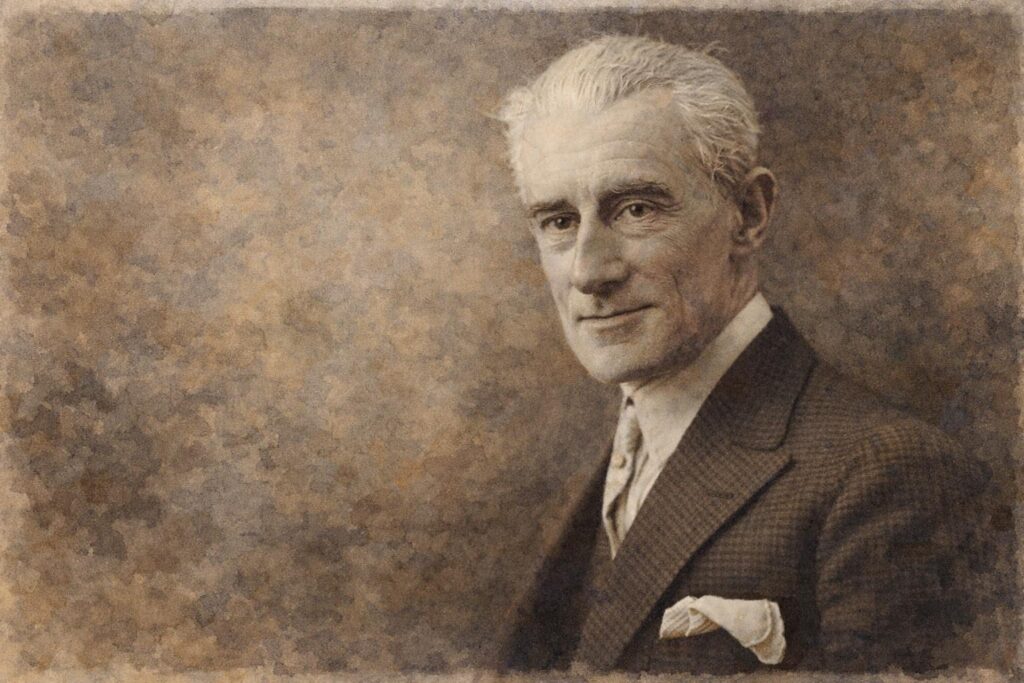
Early Life
Maurice Ravel was born in the small town of Ciboure, located at the foot of the Pyrénées in the Basse‑Côte‑d’Azur region of France. The son of Pierre Ravel, a cooper and part‑time organist, and Géraldine Ravel (née Cousin), a local piano teacher, Maurice grew up in a modest, musically inclined household. While his parents were not professional musicians, they fostered an environment where church music, folk songs, and the vibrant sounds of the Basque region filled the air. From a young age, Ravel showed a natural affinity for music, taking his first piano lessons from a local teacher, M. Jouvenot, and soon exploring the melodies and rhythms that characterized Basque and Catalan folk traditions.
In 1885, when the family relocated to Bayonne, Maurice attended the municipal music school, where he continued to develop his pianistic technique and began to experiment with composition. His talent soon caught the attention of local musicians, and in 1891, at the age of sixteen, he secured a scholarship to the prestigious Conservatoire de Paris. There, he studied harmony, piano, and counter‑point under the guidance of renowned teachers such as Isidore Delcroix, Émile Decomble, Georges Mathias, and later, Henri Dallapiccola. Ravel earned his Premier Prix in Piano in 1895, performing Alfred Wagner’s Sonata in G major, and followed it up in 1900 with the Premier Prix de Composition for his Suite italienne, a work that showcased his early mastery of orchestral color.
Ravel’s formative years were shaped by a rich tapestry of cultural influences, from the Basque folk music of his hometown to the formal rigors of Parisian conservatory training. This blend of folk vitality and classical discipline laid the groundwork for a compositional voice that would later challenge and expand the horizons of 20th‑century music.
Family Background
Ravel’s father, Pierre Ravel, was a cooper and a part‑time organist at the parish church of Ciboure. His mother, Géraldine Ravel (née Cousin), taught piano to the town’s children. While neither parent was a professional musician, their musical household cultivated a deep appreciation for church music, folk songs, and the rich tonal palette of the local region.
Cultural Influences
Growing up near the Spanish border, Ravel was exposed to Basque and Catalan folk music. These early encounters left an indelible mark on his harmonic and rhythmic sensibilities. In later works, most notably Alborada del gracioso (1900) and the “Spanish” section of La valse, Ravel integrated dance rhythms, modal scales, and percussive textures reminiscent of Andalusian and Basque traditions.
Education
Conservatoire de Paris
Ravel entered the Conservatoire in 1891, an institution that was at the epicenter of French musical life. His mentors included:
- Isidore Delcroix (Harmony): Emphasized classical counter‑point and strict harmonic practice.
- Émile Decomble (Composition): Encouraged experimentation with form and orchestration.
- Georges Mathias (Piano): Developed Ravel’s impeccable pianistic technique.
- Henri Dallapiccola (Composition, later a student): Provided exposure to early modernist trends.
Ravel earned his Premier Prix in Piano in 1895, with a performance of the Sonata in G major by Alfred Wagner. In 1900, he received the Premier Prix de Composition for his Suite italienne, an early display of his mastery of orchestral color.
Key Achievements During Studies
- 1895 – Premiere of Suite italienne at the Conservatoire.
- 1900 – Publication of Alborada del gracioso (a piano piece with Basque flavor).
- 1904 – Completion of Miroirs for piano, a suite that would become a staple of the repertoire.
Ravel’s formal training gave him a solid foundation in counter‑point and harmony while also fostering his sense for orchestration—an attribute that would define his later works.
First Musical Influences
Maurice Ravel’s early compositional style emerged from an eclectic mix of musical forces that fascinated him throughout his development. He was particularly drawn to the lush harmonic language and evocative piano writing of German Romantic composers such as Ludwig van Beethoven, Franz Liszt, and later, Richard Wagner. Their approaches to texture and orchestration left a lasting impression on the young Ravel, who admired their capacity for creating emotional depth within a structured form.
Ravel also absorbed the pioneering techniques of his contemporary, Claude Debussy. Both composers shared a fascination with impressionistic color and exploration of non‑traditional scales; yet Ravel consistently sought to avoid being pigeonholed into a purely “impressionistic” label. Instead, he pursued a more disciplined synthesis of harmonic innovation and formal clarity, often drawing upon Debussy’s nuanced orchestration as a point of reference while carving his own distinct path.
The rich folk traditions of the Basque and Andalusian regions that surrounded Ravel’s childhood also proved influential. Whether it was the modal melodies, syncopated rhythms, or percussive qualities inherent in those styles, Ravel incorporated these elements into works such as Alborada del gracioso and the “Spanish” segments of La valse. These pieces illustrate how he internalized cultural motifs, weaving them into sophisticated classical forms without resorting to superficial imitation.
Other modernist currents, especially those from Edvard Grieg, Maurice Barrière, and early Russian composers, further broadened Ravel’s musical vocabulary. Their experimentation with tone color, rhythmic drive, and thematic transformation encouraged Ravel to push beyond conventional boundaries.
In sum, Ravel’s first musical influences ranged from Romantic virtuosity and impressionistic color to folk traditions and nascent modernist experimentation. This wide spectrum of inspiration helped him develop a compositional voice that was at once rooted in the past and boldly forward‑looking, a trait that would define his enduring legacy.
Debussy’s Shadow
Debussy’s Prélude à l’après‑midi d’un faune (1894) and early works were a reference point for Ravel, who admired Debussy’s innovative harmonic approach. However, Ravel resisted the pure “impressionistic” label, striving instead for a more structured, sometimes “classical” form while retaining the lushness of color.
Folk Music’s Resonance
Ravel’s “Spanish” works, Alborada del gracioso, La valse, and Daphnis et Chloé’s “Spanish” interludes, were direct outcomes of his fascination with folk traditions. He absorbed these influences without resorting to pastiche; instead, he integrated them into sophisticated orchestral contexts.
Artistic Maturity
The 1900s: Early Maturity
- Miroirs (1904): A suite of five piano pieces that display Ravel’s growing interest in timbre and modern harmonies. The piece is considered a turning point, establishing his signature style.
- L’Après‑midi d’un faune (1911): Although composed earlier, it was performed posthumously at the 1911 premiere, and the piece exemplifies Ravel’s mastery of tone color and subtle phrasing.
1910–1920: The “Spanish” Period
- Bolero (1928): A prime example of Ravel’s fascination with rhythm and orchestration. The piece demonstrates his mastery of gradual dynamic build‑up, showcasing his ability to sustain a simple motif over extended time.
- Daphnis et Chloé (1912): The ballet score showcases lush orchestration, complex harmonic language, and a delicate interplay between dance and music.
1920s–1930s: Refinement and Legacy
- La valse (1920): A masterful reinterpretation of the Viennese waltz; the piece is a psychological tour de force of modernist dissonance within the waltz structure.
- Piano Concerto in G (1931): Ravel’s only piano concerto, which integrates jazz elements and showcases his intricate writing for the piano.
- Rhapsodie espagnole (1908): A virtuosic concerto for piano and orchestra, featuring a suite of Spanish dances.
Ravel’s late style demonstrates an almost minimalistic restraint: he distills harmonic language, focusing on texture, rhythmic precision, and color rather than ornate virtuosity.
Importance of Maurice Ravel
Musical Significance
- Innovation in Orchestration: Ravel pioneered the use of specific instrumental combinations to achieve a wide spectrum of colors, influencing 20th‑century orchestral writing.
- Rhythmic Sophistication: His mastery of syncopation, irregular meters, and jazz-inspired rhythms broadened the rhythmic possibilities in classical music.
- Bridge Between Impressionism and Modernism: Ravel successfully fused the harmonic and timbral innovations of Impressionism with the structural clarity and rhythmic vitality of modernism.
Historical Context
- Ravel was active during a period of great change in Europe: the rise of nationalistic music, the impact of World War I, and the transition to the 20th‑century musical language. His works were both a product of and a response to these changes, making him a vital link between the late Romantic and the modernist worlds.
Greatest Works
| Work | Year | Genre | Why It’s Important |
|---|---|---|---|
| Miroirs | 1904 | Piano Suite | Establishes Ravel’s signature coloristic style. |
| Boléro | 1928 | Orchestral | Masterclass in orchestration and dynamic build‑up. |
| La valse | 1920 | Orchestral | Modernist reimagining of a dance form; psychological depth. |
| Piano Concerto in G | 1931 | Piano Concerto | Unique blend of jazz, romantic lyricism, and modernist elements. |
| Daphnis et Chloé | 1912 | Ballet | Influential ballet score; showcases Ravel’s orchestration prowess. |
| Rhapsodie espagnole | 1908 | Piano Concerto | Combines Spanish dances with virtuosic piano writing. |
| Alborada del gracioso | 1900 | Piano | Early work demonstrating Ravel’s fascination with folk influences. |
| Gaspard de la nuit | 1908 | Piano | Virtuoso piano writing; one of the most technically demanding piano pieces. |
| L’Après‑midi d’un faune | 1911 | Piano/Orchestral | A refined orchestral texture; widely studied. |
Highlight: Boléro
Composed for the Ballets Russes in 1928, Boléro is often considered Ravel’s most iconic piece. Despite its apparent simplicity, a single repeating rhythmic motif, the work is a tour de force of orchestration and dynamic progression. It takes only a few minutes to become a monumental statement, demonstrating Ravel’s unique ability to turn minimalistic ideas into sweeping masterpieces.
Composition Style and Influence on Others
Harmonic Language
- Non‑Traditional Scales: Ravel used whole‑tone scales, octatonic (eight‑note) scales, and augmented triads to create an ambiguous tonality.
- Modal Interplay: He blended major/minor modes with folk modal scales to create evocative color.
Orchestration
- Instrumental Color: Ravel’s scores often employ unconventional combinations, such as pairing a flute with a muted trumpet or using a glockenspiel to highlight melodic lines.
- Transparency: He carefully balanced thick orchestral textures with clear counter‑point.
Rhythm
- Syncopation and Polyrhythms: In works like Daphnis et Chloé, Ravel used irregular meters to create rhythmic tension.
- Jazz Influence: The Piano Concerto in G incorporates swing rhythms, foreshadowing later jazz‑classical hybrids.
Influence on Later Composers
- Olivier Messiaen: Admired Ravel’s coloristic orchestration; his own use of birdsong and rhythm owes a debt to Ravel.
- Darius Milhaud: Borrowed Ravel’s polytonal techniques and vibrant orchestrations.
- John Williams: Ravel’s film‑score sensibilities can be traced in the lush orchestration of contemporary Hollywood.
- Contemporary Artists: Musicians such as Yo-Yo Ma and Gustavo Dudamel frequently incorporate Ravel’s pieces into concert programs, perpetuating his influence.
Maurice Ravel in a Nutshell
- A Visionary Bridging Two Eras: Ravel connected the harmonic and timbral innovations of the Impressionists with the structural clarity of early modernism, paving the way for composers like Stravinsky and Schoenberg.
- An Architect of Orchestration: His meticulous attention to timbre and instrumental color set new standards for orchestral writing.
- A Pioneer of Jazz‑Classical Fusion: Works such as the Piano Concerto in G prefigured the later assimilation of jazz into classical music.
- A Master of Form and Economy: Ravel’s compositions often achieve depth with minimal material—a lesson in efficiency for modern composers.
- Cultural Ambassador: By integrating Basque and Spanish folk motifs, Ravel celebrated multicultural influences, encouraging composers to draw upon diverse traditions.
Final Thoughts
Maurice Ravel’s legacy is one of relentless curiosity and relentless precision. His music, whether it is the hypnotic refrain of Boléro or the delicate lyricism of Miroirs, continues to captivate audiences and musicians alike. Ravel’s insistence on clarity of texture, color, and rhythmic drive remains a touchstone for composers and performers striving to push the boundaries of modern music. As we listen to his timeless works, we are reminded that the most profound innovation often emerges from a deep understanding of tradition, a willingness to experiment, and a commitment to artistic integrity.
Sources:
#MauriceRavel #FrenchMusic #Impressionism #ClassicalMusic #Orchestration #Boléro #LaValse #PianoConcerto #RavelLegacy #MusicHistory #ContemporaryClassical #20thCenturyMusic #MusicTheory #CulturalHeritage #ArtisticMaturity #ComposerSpotlight