Heino Eller (7 March 1887 – 16 June 1970) is one of the towering figures in 20th-century Estonian music, widely recognized as the foundational force behind Estonia’s professional symphonic and instrumental tradition. Composer and pedagogue, his creative output and extraordinary influence as a teacher shaped not just his own generation, but several that followed, including some of the most renowned Estonian composers of the later 20th century.
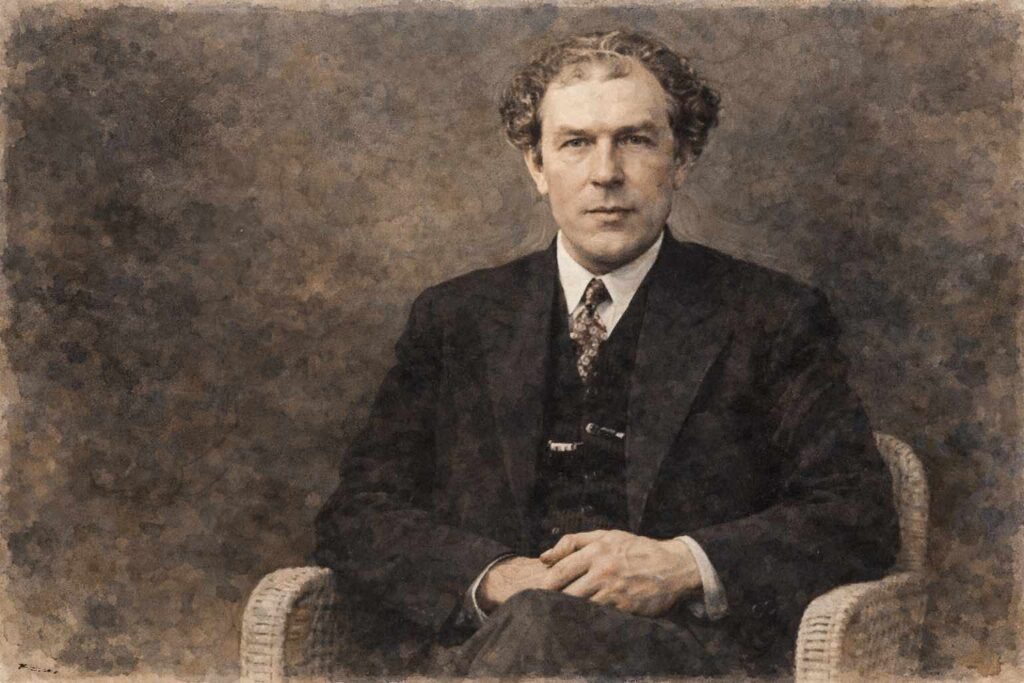
Early Life, Education, and First Musical Influences
Born on in Tartu (then Dorpat, Governorate of Livonia), Heino Eller grew up in a culturally rich household, his parents were engaged in music in addition to their business. He began private violin lessons and music theory studies at a young age, performing in ensembles and even as a violin soloist before adulthood.
In 1907 Eller entered the Saint Petersburg Conservatory to study violin, later expanding into composition and graduating from what became the Petrograd Conservatory in 1920. For a time he also studied law at the University of St. Petersburg, a lesser-known but fascinating detour alongside his musical studies.
During these formative years, his musical language absorbed a rich array of influences: the lyrical intensity of Chopin and Grieg, the sweeping Romantic tradition, French impressionism, early expressionist currents, and even elements of emerging modernism, all of which he would later infuse with Estonian national traits.
Artistic Maturity
After his studies, Eller returned to Estonia and established himself as both composer and educator. In 1920 he began teaching composition and music theory at the Higher School of Music in Tartu, where he founded what came to be known as the “Tartu School” of composition. This fertile environment nurtured a remarkable roster of young talent who would go on to define Estonian music, among them Eduard Tubin and Arvo Pärt.
In 1940 he moved to Tallinn, joining the faculty of the State Conservatory (now the Estonian Academy of Music and Theatre), where he taught until his death in 1970. His pedagogical approach was extraordinary for its openness: Eller encouraged individual artistic voices, embracing modern currents while stressing craft, integrity, and expressive depth in every student.
Importance
Eller’s importance to Estonian musical life cannot be overstated. He helped forge a distinct Estonian symphonic tradition at a time when national identity in the arts was emerging from under the shadow of larger cultural centers. His early works, especially orchestral poems like Koit (“Dawn”) and Videvik (“Twilight”), chart new expressive territory by mixing national folk inflections with contemporary harmonic and textural language.
But perhaps his greatest legacy lies in his students. Composers such as Arvo Pärt, Eduard Tubin, Lepo Sumera, and many others absorbed from Eller a deep respect for craft balanced with creative freedom, a lineage that leads directly to the international success of Estonian composers today.
Greatest Works
Eller’s compositional output is extensive, nearly 300 works, almost exclusively instrumental, ranging from symphonic canvases to chamber music and piano miniatures. Some of his most revered pieces include:
- Koit (Dawn), tone poem (1915–1918, 1920) — a hallmark of his early orchestral voice.
- Videvik (Twilight), tone poem (1917) — rich in mood and color.
- Elegia for harp and string orchestra (1931) — one of his most lyrical and beloved works.
- Violin Concerto in B minor (1937) — Estonia’s first major violin concerto.
- Piano works such as themes with kodumaised motiivid (Estonian motifs), Butterflies, and Bells — essential in understanding his pianistic voice.
In chamber and string music, his output includes five string quartets, various sonatas, and evocative short pieces for strings and solo instruments.
Composition Style and Influence on Others
Eller’s style evolved across distinct phases. His early work shows lyrical Romantic roots and the influence of impressionist and expressionist coloristic techniques. Later, his mature Estonian period integrated modal inflections and interval structures drawn from folk music, crafting a sound that was both nationally rooted and cosmopolitan.
This synthesis of tradition and innovation, grounded in expressive melody, refined orchestration, and structural clarity, gave Elleri music a powerful emotional resonance. More significantly, as a teacher he championed individualism, urging students to find personal idioms rather than mimic prevailing trends. Arvo Pärt famously reflected on Eller’s generosity, openness to modern ideas, and insistence on artistic responsibility and self-truth.
Why Heino Eller Is Important
Heino Eller’s enduring importance springs from two intertwined legacies. As a composer, he laid the cornerstone of modern Estonian symphonic and instrumental music, capturing a unique blend of national identity and European art music currents. As an educator, he cultivated a generation of leading composers, profoundly shaping the trajectory of Estonian musical culture throughout the 20th century and beyond.
His influence resonates in concert halls around the world wherever Estonian instrumental music is performed, and in the global esteem of those he taught.
Final Thoughts
In the narrative of Estonian music history, Heino Eller stands as a singular figure, a bridge between tradition and modernity, individuality and community. His artistic vision and pedagogical legacy continue to define what it means to be part of Estonia’s classical music lineage. For students, performers, and listeners alike, Eller’s music offers an invitation to explore profound lyricism, cultural depth, and expressive honesty.
Sources:
HeinoEller #EstonianMusic #ClassicalMusic #SymphonicMusic #MusicHistory #ArvoPärt #EduardTubin #EstoniaCulture #InstrumentalMusic #MusicEducation #TartuSchool #Modernism #FolkInfluence #Composition