Few instruments have shaped musical imagination as profoundly as the piano. It is at once orchestral and intimate, architectural and emotional, mechanical and poetic. Across more than three centuries, the piano has continuously reinvented itself, technically, culturally, and artistically, while remaining the central laboratory of Western musical thought.
Understanding the piano’s history means understanding the history of modern music itself.
The Birth of the Piano
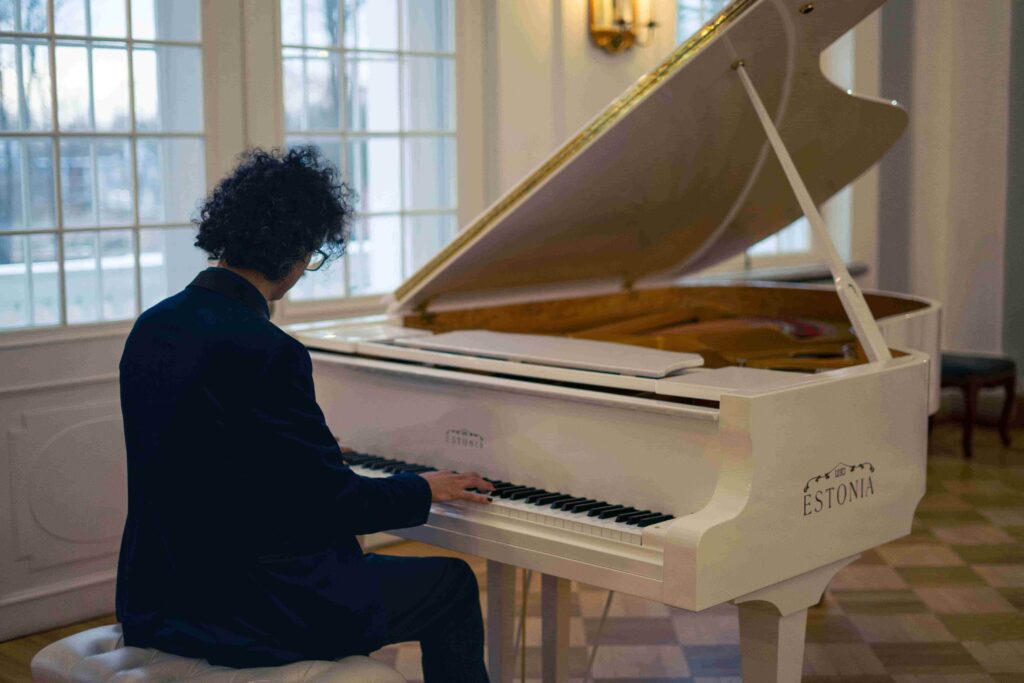
The piano emerged around 1700 in Padua through the work of the Italian instrument maker Bartolomeo Cristofori. His invention, called gravicembalo col piano e forte (“harpsichord with soft and loud”), solved a fundamental expressive limitation of earlier keyboard instruments: dynamic control. Instead of plucking strings like a harpsichord, Cristofori designed a hammer mechanism that struck strings with variable force depending on touch.
This change was revolutionary, not merely technical but aesthetic.
Earlier keyboard instruments such as the clavichord and harpsichord supported articulation and nuance, but they could not sustain a truly orchestral expressive range. Cristofori’s action allowed:
- gradation of dynamics
- repetition control
- tonal shaping through touch
- structural independence of melodic voices
Three of Cristofori’s original instruments survive today, demonstrating that the essential logic of the piano mechanism was already remarkably mature at birth.
Yet the instrument spread slowly at first. Early pianos were quieter than harpsichords and expensive to build. Only during the later 18th century did the piano begin its ascent toward dominance.
Piano and the Classical Era
The Classical period transformed the piano from invention into cultural necessity.
Instrument makers such as John Broadwood expanded the compass, strengthened the frame, and improved resonance. Their innovations helped shape the instrument used by composers like Wolfgang Amadeus Mozart and Ludwig van Beethoven.
Mozart treated the piano as a conversational instrument, clear, balanced, elegant. Beethoven treated it as a battlefield.
He expanded:
- keyboard range
- expressive extremes
- structural tension
- dramatic rhetoric
In fact, Beethoven’s relentless demands often pushed contemporary instruments to their physical limits. Instrument builders responded accordingly, accelerating technical evolution.
By the early 19th century, the piano had replaced the harpsichord as the primary keyboard instrument of European musical life.
Piano in the Romantic Era
If the Classical era established the piano’s grammar, the Romantic era revealed its psychology.
Composers such as:
- Frédéric Chopin
- Robert Schumann
- Franz Liszt
- Johannes Brahms
transformed the instrument into a vehicle for inner narrative.
Chopin expanded lyrical touch and harmonic color, effectively creating a new pianistic language. Liszt, meanwhile, invented the modern piano recital and elevated the performer to heroic status, redefining the public identity of the pianist. His touring career helped establish the piano as the dominant concert instrument of the 19th century.
Technically, this era also saw major innovations:
- heavier string tension
- stronger metal bracing
- expanded keyboard compass
- development toward the cast-iron frame
- sustain pedal refinement
By the late 19th century, the modern concert grand had essentially reached its current form.
Piano in the Modern Era
The 20th century did not replace the piano, it liberated it.
Composers such as:
- Béla Bartók
- Arnold Schoenberg
- Ferruccio Busoni
treated the instrument as a laboratory of sound rather than a vehicle of tradition.
Meanwhile, John Cage introduced the prepared piano, placing objects between strings to create percussion-like textures and entirely new sonic worlds.
At the same time, manufacturers experimented with:
- detachable instrument sections
- alternative body shapes
- hybrid acoustic-electronic systems
- modernist visual design concepts
The piano became not only a musical instrument but also an object of design philosophy.
Piano in Contemporary Times
Today the piano exists in multiple parallel forms:
- concert grand
- upright
- digital piano
- hybrid acoustic-electronic systems
- MIDI-controlled instruments
- experimental sculptural instruments
Late-20th-century instrument makers increasingly explored combining acoustic resonance with digital sound processing possibilities, expanding both performance practice and composition. As your book images show, some modern pianos incorporate MIDI integration directly into acoustic structures, bridging craftsmanship and circuitry.
Despite these changes, traditional hand-crafted pianos remain central to concert life. Builders continue refining resonance stability, tuning durability, and mechanical responsiveness.
The instrument is now in its fourth century, and still evolving.
Piano in Jazz Music
No genre reshaped piano identity more radically than jazz.
Jazz pianists transformed the instrument from a composed medium into an improvisational engine. Figures such as:
- Art Tatum
- Thelonious Monk
- Bill Evans
- Herbie Hancock
expanded harmonic language beyond Romantic tonality.
Jazz introduced:
- extended harmony
- rhythmic independence between hands
- swing articulation
- modal structures
- conversational ensemble interaction
The piano became both rhythmic engine and harmonic universe.
Piano in Popular Music
In popular music, the piano became a storytelling instrument.
From early ragtime through rock and film scoring, it served as:
- accompaniment framework
- songwriting platform
- studio composition tool
- emotional anchor of recorded music
Artists such as:
- Elton John
- Billy Joel
- Stevie Wonder
demonstrated that piano technique could function simultaneously as classical inheritance and pop innovation.
Unlike orchestral instruments, the piano adapts effortlessly between genres without losing identity.
Piano and Technology
Technological change has repeatedly reshaped the piano’s trajectory.
Major milestones include:
18th century
escapement mechanism refinement
19th century
cast-iron frame and increased string tension
late 19th century
three-pedal system standardization
20th century
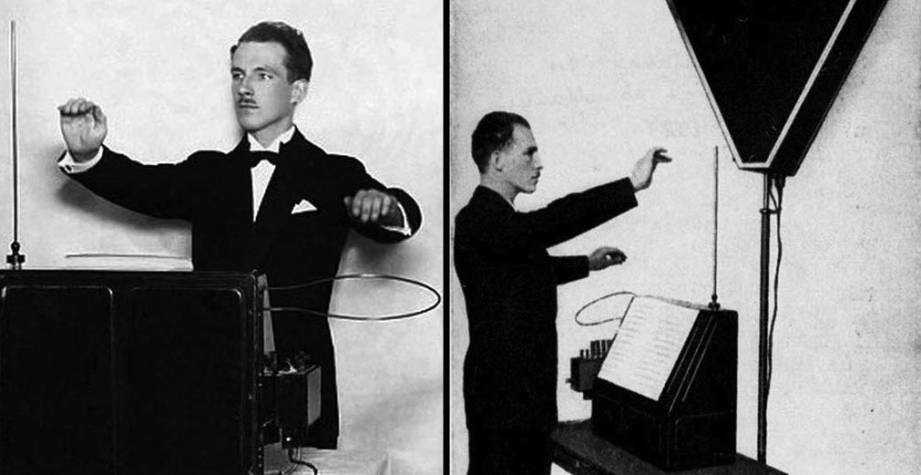
electric keyboards and amplification
late 20th century
digital synthesis and MIDI integration
Electronic keyboards introduced portability and perfectly stable tuning, making them especially influential in popular music production environments. Meanwhile hybrid acoustic-digital systems expanded possibilities for composers and performers alike.
The piano remains one of the most complex mechanical devices commonly found in homes, containing thousands of moving components interacting under enormous string tension.
Most Influential Pianists of All Time
The piano’s history is inseparable from its performers.
Among the most influential figures frequently cited by critics and institutions such as Classic FM are:
- Franz Liszt — inventor of the piano recital
- Frédéric Chopin — architect of lyrical pianism
- Ludwig van Beethoven — expanded expressive scope
- Glenn Gould — redefined recorded performance culture
- Claudio Arrau — orchestral tone conception
- Vladimir Ashkenazy — interpreter across eras
- Daniel Barenboim — performer-philosopher tradition
- Martha Argerich — modern virtuoso archetype
These artists reshaped how audiences understood the piano itself. By expanding the expressive borders of the instrument, they gave greater oppurtunities to composers to write music that was unthinkable before them.
The Piano’s Continuing Journey
Perhaps the most remarkable aspect of the piano is not its invention, but its adaptability.
It has survived:
- orchestral expansion
- recording technology
- electronic instruments
- digital synthesis
- algorithmic composition
And yet it remains central to composition, pedagogy, improvisation, and performance across the world.
The piano began as an attempt to make a harpsichord expressive.
It became the expressive core of modern music.
Sources:
- The Music Book: Big Ideas Simply Explained, DK Publishing
- Illustrated Encyclopedia of Musical Instruments
- Musical Instrument Museum
- Classicfm
#PianoHistory #HistoryOfThePiano #ClassicalMusic #RomanticEraMusic #ModernMusicHistory #ContemporaryMusic #KeyboardInstruments #MusicHistory #MusicEducation #PianoCulture #PianoEvolution #MusicTechnology #PreparedPiano #JazzPiano #PopularMusicHistory #PianoPerformance #GreatPianists #MusicAppreciation #InstrumentHistory #WesternMusic #ArtMusic #ConcertPiano #DigitalPiano #MusicEnthusiasts