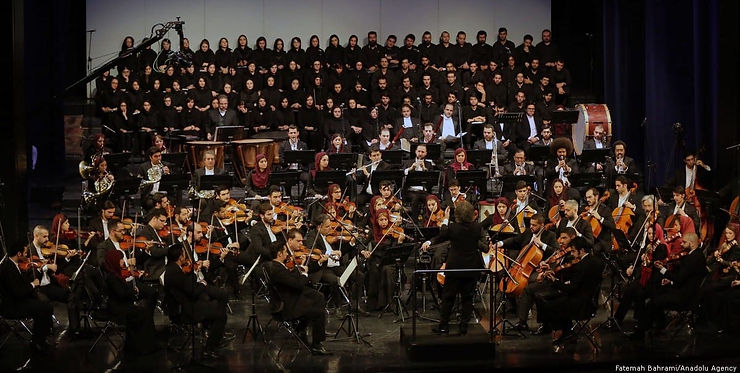
The Estonian National Symphony Orchestra (ERSO), known in Estonian as Eesti Riiklik Sümfooniaorkester, stands as one of the most important cultural institutions in Estonia. Founded in 1926 in Tallinn, ERSO is the country’s oldest professional symphony orchestra and one of its most enduring artistic symbols. For nearly a century, the orchestra has reflected Estonia’s political changes, cultural ambitions, and musical identity—serving not only as a performing ensemble, but as a guardian of national memory and a voice for Estonian Composers on the international stage.
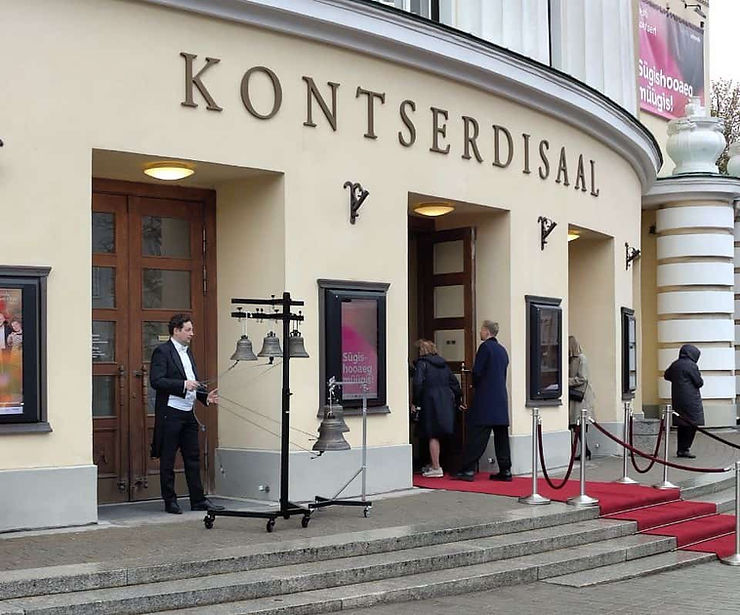
From Radio Orchestra to National Institution
ERSO began its life as the Radio Symphony Orchestra of the Estonian Broadcasting Committee, giving its first concert on 18 December 1926. In the early decades, radio played a decisive role in shaping musical life in Estonia, and the orchestra’s original mission was closely tied to broadcasting. Yet from the very beginning, it aspired to more than studio work: symphonic concerts, live performances, and the cultivation of a national repertoire were central goals.
By the late 1930s, the ensemble had grown significantly, developing into a full symphony orchestra. Despite the disruptions of war and occupation, ERSO continued to perform—an act that in itself carried cultural and symbolic weight during periods when Estonian identity was under pressure.
Conductors Who Shaped ERSO
Throughout its history, ERSO has been defined by strong artistic leadership. Early conductors such as Olav Roots, Paul Karp, and Roman Matsov established the orchestra’s technical foundations and repertoire during difficult decades.
A decisive turning point came in 1963, when Neeme Järvi became chief conductor. His tenure transformed ERSO into an orchestra of international stature. Järvi’s championing of Nordic and Estonian repertoire, his insistence on artistic discipline, and his global outlook positioned ERSO far beyond regional boundaries.
Later conductors—including Peeter Lilje, Arvo Volmer, and Nikolai Alekseyev—guided the orchestra through the post-Soviet transition, a time marked by both artistic freedom and severe institutional instability. Many musicians left Estonia in the 1990s, and rebuilding the orchestra required long-term vision and commitment.
Since 2020, ERSO’s chief conductor and artistic director has been Olari Elts, representing a new generation of leadership. At the same time, Neeme Järvi holds the title of Honorary Artistic Director for Life, underlining the continuity of ERSO’s artistic lineage.
ERSO and Estonian Composers
One of ERSO’s most vital roles has always been its close relationship with Estonian Composers. The orchestra has premiered and recorded works by nearly every major figure in Estonia’s modern music history. Composers such as Arvo Pärt, Eduard Tubin, Ester Mägi, Lepo Sumera, Erkki-Sven Tüür, and Tõnu Kõrvits have all found in ERSO a committed and authoritative interpreter of their music.
Ester Mägi’s restrained lyricism and deep connection to Estonian folk tradition, and Lepo Sumera’s bold, structurally innovative symphonic language, exemplify the breadth of voices ERSO has supported. Through these works, the orchestra has helped define what Estonian symphonic music sounds like—both at home and abroad.
International Presence and Recognition
ERSO has toured extensively across Europe and beyond, performing in major halls such as Vienna’s Musikverein, Berlin’s Konzerthaus, and New York venues. Its discography includes critically acclaimed recordings, most notably the Grammy Award–winning Sibelius cantata recordings in 2004, one of the highest international honors ever received by an Estonian classical ensemble.
At festivals and concert series, ERSO often appears as a representative of Estonia itself—an orchestra that carries national culture into global dialogue.
ERSO and the world of digital album
In recent years, ERSO has also adapted to the digital world, expanding its reach far beyond the concert hall through digital album releases and online distribution platforms. By making recordings available globally, the orchestra has ensured that performances of key works by Estonian Composers are accessible to international listeners, researchers, and curators alike. These digital albums not only preserve landmark interpretations but also position ERSO within contemporary listening habits, where streaming and on-demand access shape how classical music is discovered and revisited. In this sense, ERSO’s digital presence is not a departure from tradition, but a continuation of its original radio-era mission: to bring symphonic music to audiences wherever they are.
The Present Moment: Financial Pressure and Uncertain Futures
As ERSO approaches its 100th anniversary, it faces serious challenges. At the start of the current season, chief conductor Olari Elts publicly addressed the impact of budget cuts, warning that low salaries and insufficient funding are forcing musicians to leave. These statements sparked renewed public debate about cultural priorities in Estonia.
I remember the opening concert of the 99th season back in 2025, where after the concert, all musicians left the stage except 3 of them who remained with conductor. Olari Elts took off his jacket, grabbed the microphone and with a low quiet voice talked about the situation, the budget cuts from the government and financial difficulties. All of the musicians in ERSO are either leaving or planning to leave Estonia except for the three musicians who stayed on the stgae. It got me thinking, if we are not fighting for culture, what are we fighting for?
For an orchestra that depends on long-term artistic continuity, losing players is not merely an administrative issue, it threatens the very sound and identity of the ensemble and in bigger picture, Estonia.
What ERSO Means for Estonia
ERSO is not just an orchestra; it is a cultural institution that embodies Estonia’s resilience, artistic ambition, and historical memory. It educates audiences, nurtures Estonian Composers, collaborates with international artists, and maintains a living connection between past and present.
Whether Estonia chooses to strengthen its support for ERSO in the coming years will say much about how the country values its cultural legacy. The orchestra stands today at a crossroads, carrying nearly a century of achievement, while confronting the realities of the future.
#ERSO #EstonianNationalSymphonyOrchestra #OlariElts #NeemeJärvi #EstonianClassicalMusic #EstoniaArtNews #SymphonyOrchestra #ClassicalMusicCulture #MusicFundingMatters #EstonianMusicHistory #OrchestralLife #ContemporaryMusicNews #CulturalAmbassador #EstoniaMusicScene