The Quiet Shelter by Ali A. Jafari is an intimate exploration of human emotions, shaped by shimmering strings, atmospheric textures, and subtle piano writing. Jafari’s music is rooted in sensation, seeking to reach the listener through feeling rather than narrative explanation. Across ten compositions, the Iranian composer and music producer constructs a musical landscape that moves between hope, nostalgia, melancholy, and tranquillity. Somewhere between the compositional sensibilities of Max Richter and the cinematic atmospheres of Hans Zimmer, the album occupies familiar territory within contemporary neoclassical and ambient music, yet maintains a personal character through its melodic writing and carefully controlled emotional contrasts.
Rather than presenting a collection of unrelated compositions, Jafari arranges the album as an emotional journey, following the passage from dawn through the warmth and uncertainty of the day to the stillness of night, before returning to the promise of another morning. The result is an album whose coherence lies not in dramatic development but in the gradual transformation of musical colour, texture, and mood.
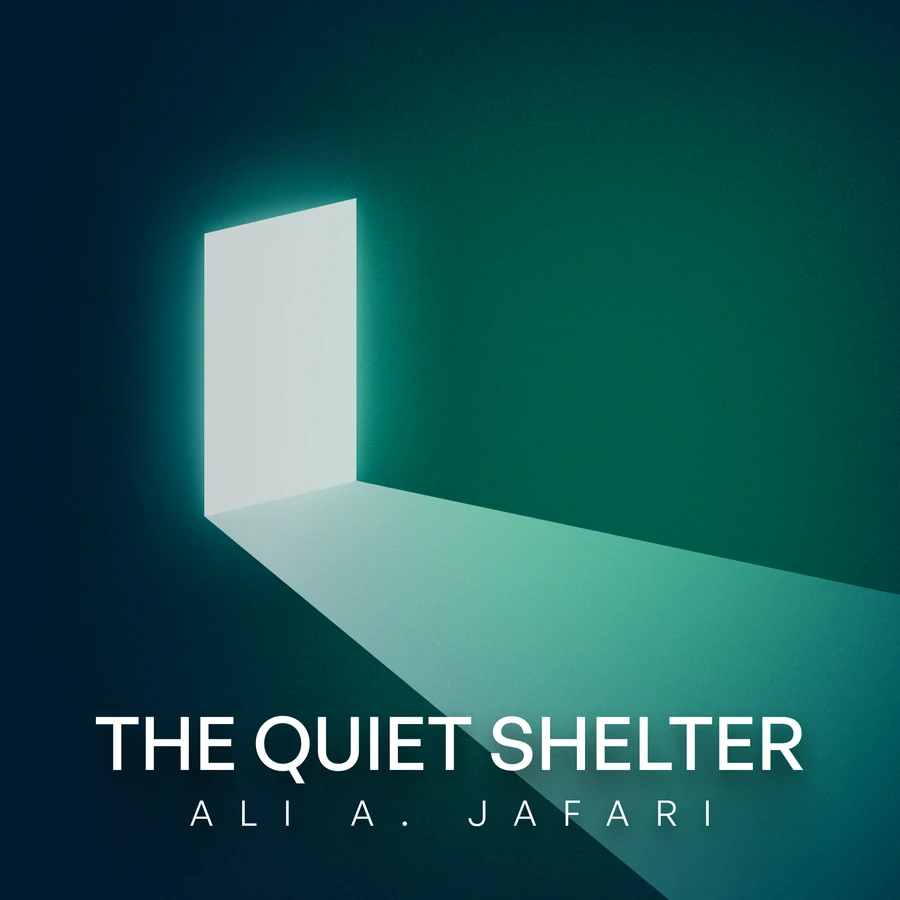
The Quiet Shelter by Ali A. Jafari: From Dawn to Dusk
The album opens with the brief Prologue: Another Day, an atmospheric introduction built around soft strings. The music gradually develops towards more open harmonies, creating a sense of quiet optimism. It evokes the first light of dawn, when the sun begins to emerge and the possibility of a new day takes shape. The writing is restrained, allowing the harmonic movement to establish the emotional direction without relying on an elaborate melodic statement.
Found in the Dawn continues this atmosphere through shimmering string arpeggios. Soft but never sorrowful, the composition carries a contemplative sense of hope. Its motion is gentle rather than energetic, suggesting an awakening that happens internally rather than through outward action. The arpeggiated figures provide continuity while the harmonic atmosphere gives the music its emotional weight.
With The Shining of the Sun, the piano makes its first appearance as a prominent voice. A delicate arpeggiated figure establishes the foundation before a beautiful cello melody gradually enters, adding warmth and a more distinctly lyrical dimension. The relationship between the instruments is one of the album’s strengths: the piano provides a quiet harmonic framework, while the cello introduces a melodic line that feels almost vocal in its expression.
The emotional landscape darkens with The Light of Pain. Here, the harmonies feel less open, and the interplay between piano and strings acquires a subdued, slightly sombre character. The music remains sentimental, but its emotional direction becomes less certain. This shift is important to the album’s overall structure, preventing its prevailing gentleness from becoming monotonous. Jafari understands that tranquillity does not necessarily mean the absence of pain; sometimes, it is precisely the quiet moments that allow difficult emotions to surface.
Remembrance of the Faded Days extends this reflective atmosphere. Slow and understated, the piece suggests the particular melancholy of looking back at something that cannot be recovered. Its emotional impact comes from restraint rather than intensity, as though the music is recalling a memory without attempting to recreate it completely. The result is a nostalgic interlude that fits naturally within the album’s progression.
Between Ambient Soundscapes and Personal Memories
One of the album’s more distinctive moments arrives with A Sunrise Seen Only Once Every 200 Years. Unlike the more conventionally neoclassical pieces surrounding it, this composition leans towards ambient music and cinematic sound design. Its spacious textures evoke the atmosphere of a film soundtrack, while spoken dialogue in Farsi introduces a human presence within the otherwise abstract soundscape.
The following track, Sam, dedicated to Jafari’s nephew, offers a more direct and personal form of musical expression. Built around a lullaby-like piano melody, the composition is tender without becoming overly sentimental. Its simplicity is appropriate to its dedication: the music does not need elaborate gestures to communicate affection. The melodic line carries the piece, supported by an accompaniment that allows its emotional character to remain clear and unforced.
With Color of the Night, Jafari returns to the language of strings, creating what feels like a bed of sound through sustained, legato writing. The absence of sharp contrasts gives the composition a soft, enveloping quality. If the album’s opening pieces evoke the clarity of morning, this one inhabits a deeper, darker emotional register. To me the colour suggested by the title seems to be a deep dark blue, a shade full of stillness, introspection, and the quiet intensity of emotions that become more apparent when the world grows silent.
The title track, The Quiet Shelter, is among the album’s most intimate moments. Performed on felt piano, it draws much of its character from the instrument’s muted timbre, which softens the attack and gives the notes a close, almost private quality. The melody is deeply expressive, while the accompaniment remains simple enough to preserve its clarity. There is a notable sense of balance here: the music is emotionally direct, yet its restrained dynamics and uncomplicated harmonic foundation prevent it from becoming excessive.
The piece also provides a useful point of reference for understanding the album as a whole. On his official website, Jafari describes the composition as emerging from the sense of peace he experienced at his sister’s home, which became a refuge from the noise of everyday life. He explains that the atmosphere of that space shaped the piece’s chords, textures, and dynamics. This personal origin offers a compelling context for the music’s restrained character. The idea of shelter is expressed not through grand gestures, but through warmth, softness, and a feeling of being allowed to pause.
A Circular Journey and a Quiet Goodbye
The closing composition, Epilogue: And the Morning Awaits, brings the album full circle. Returning to the string textures and gentle atmosphere of the opening, Jafari gives the listener a sense of resolution without suggesting that the emotional journey has reached a definitive end. The day has passed through its different states: the hope of dawn, the warmth of sunlight, the pain of recollection, the tenderness of personal memories, and the deep calm of night. Now, the possibility of another morning remains.
The use of an epilogue is particularly effective in this context. Rather than introducing a dramatically new musical idea, Jafari recalls the album’s established vocabulary and allows it to acquire a different meaning through repetition. The opening’s promise of a new day becomes, by the end, an understanding that every beginning follows an ending. The legato strings and softly touched piano contribute to a farewell that feels natural rather than conclusive.
At the same time, the album’s reliance on sustained emotional atmospheres occasionally limits the degree of contrast between its compositions. Several tracks share a similar dynamic restraint, harmonic language, and sentimental approach to melody. Listeners looking for substantial formal development, rhythmic complexity, or unexpected compositional turns may find the music’s vocabulary somewhat familiar. Yet this consistency is also central to the album’s identity. Jafari is less interested in challenging the listener through structural surprises than in creating a continuous emotional space in which individual pieces can unfold.
Ali A. Jafari and the Art of Emotional Composition
Ali A. Jafari approaches composition as a means of translating emotional experiences into sound. Throughout The Quiet Shelter, each piece resembles a painting devoted to a particular aspect of human experience, whether the quiet optimism of a new morning, the ache of faded memories, the tenderness of familial affection, or the peace found in a familiar place. Nature and personal experience become starting points for musical expression, with melody, harmony, and timbre serving as the composer’s principal colours.
The album’s strongest quality is its understanding of restraint. Jafari does not consistently seek emotional intensity through dramatic crescendos or elaborate orchestration. Instead, he often allows a simple melodic gesture, a sustained string texture, or the muted resonance of a felt piano to carry the expressive burden. His music inhabits the space between neoclassical composition and cinematic ambience, drawing on the evocative qualities of both without entirely surrendering to either.
The Quiet Shelter by Ali A. Jafari is therefore best approached not as a collection of grand musical statements, but as a sequence of intimate observations. Its compositions invite the listener to slow down and recognise the emotional significance of moments that might otherwise pass unnoticed. While its musical language remains within the familiar territory of contemporary neoclassical and ambient music, the album’s carefully shaped atmosphere and personal undertones give it a coherent identity. Like a painting made of sound, it captures fleeting sensations and gives them a form that can be revisited. By the time the final notes fade, the shelter Jafari has created feels less like an escape from the world than a quiet place from which to return to it.
#AliAJafari #TheQuietShelter #AlbumReview #NeoclassicalMusic #ContemporaryClassical #ModernClassical #PianoMusic #AmbientMusic #CinematicMusic #EmotionalMusic #ContemporaryComposer #StringMusic #FeltPiano #InstrumentalMusic #MusicReview