Verso Casa by Luca Basile places the cello at the heart of an album where classical writing, pop accessibility and the energy of rock meet without ever feeling forced together. Across twelve tracks, Basile builds a musical language in which the cello is not simply a solo instrument placed over an accompaniment, but the central narrative voice around which the entire arrangement develops.
Released on 24 April 2026, Verso Casa contains twelve pieces and runs for roughly 38 minutes. The album continues Basile’s exploration of the cello beyond the boundaries of conventional classical repertoire, moving freely between melodic contemporary classical music, cinematic writing, pop structures and occasionally much heavier rock influences.
The result is remarkably light and pleasant to listen to, despite the variety of musical languages involved. Pop-oriented arrangements and clear rhythmic patterns provide the music with immediacy, while the melodic development of the cello remains rooted in a more classical way of thinking. Themes are introduced, transformed, repeated and brought back, giving even the more accessible pieces a clear sense of compositional direction.
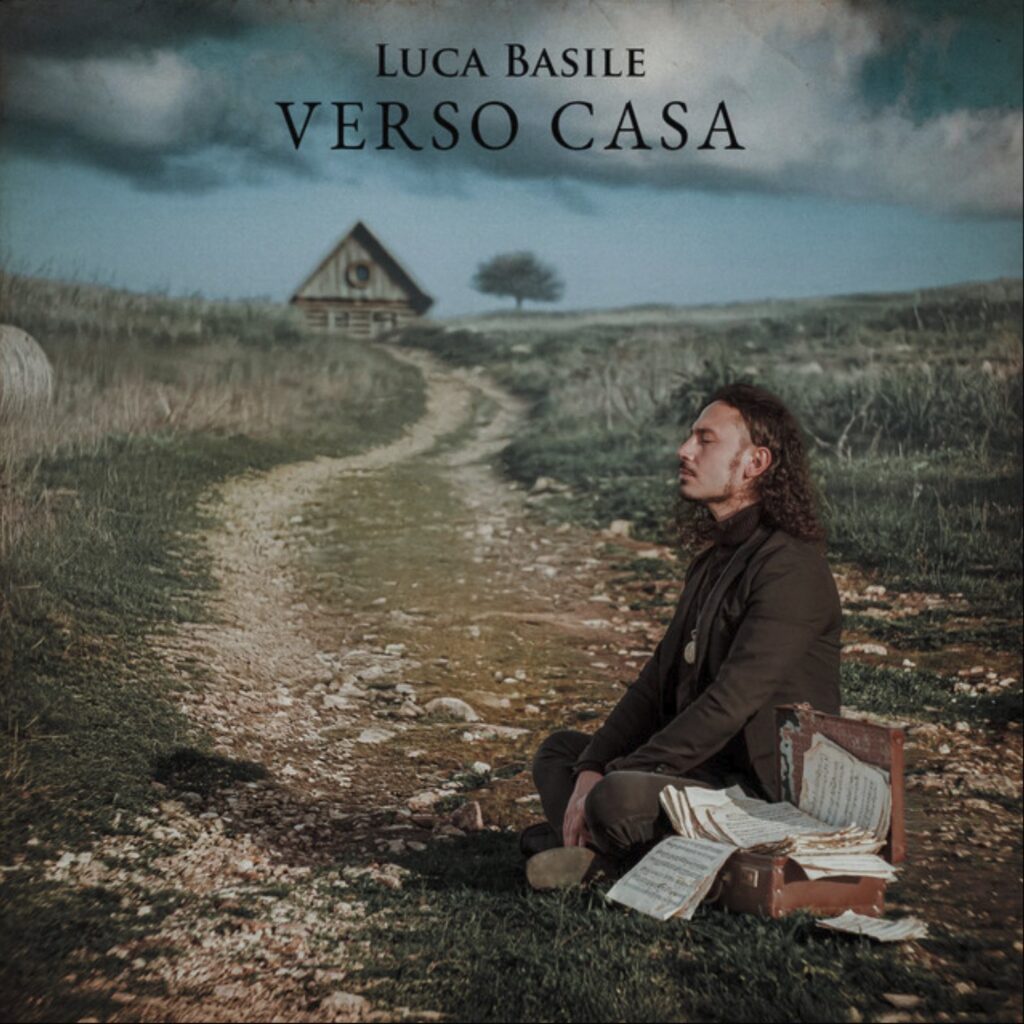
Verso Casa by Luca Basile: The Journey Back Home
Basile himself describes the meaning behind the album by saying that Verso Casa means returning home, but that home is not necessarily a physical place. Instead, it is a feeling: the moment in which we feel happy, settled and exactly where we belong. That idea is present not only conceptually, but also musically.
Many of the pieces behave like small journeys. The cello moves away from a tonal or emotional starting point, the surrounding instrumentation gradually changes the landscape, and the composition explores different harmonic and rhythmic territories before eventually finding its way back. Strong cadences appear repeatedly throughout the album, often providing a clear sensation of arrival.
It creates an interesting relationship between form and meaning. Home becomes something we recognise because the music has taken us somewhere else first.
This idea of journey has appeared in Basile’s music before. In my previous review release Sentieri by Luca Basile, I wrote about his ability to use the cello almost as a storytelling instrument, allowing melody to suggest landscapes, movement and emotional spaces. Verso Casa feels like a broader continuation of that musical personality, but here the stylistic palette is considerably wider.
Between Classical, Pop and Rock
One of the strongest characteristics of Verso Casa is its refusal to remain inside a single genre.
At times there are echoes of the crossover tradition associated with artists such as Vanessa-Mae, where virtuosity and classical technique are placed inside accessible modern arrangements. Elsewhere, the cello becomes darker and heavier, approaching the weight and physicality associated with groups such as Apocalyptica. Yet Basile does not simply imitate either world. Instead, he moves between them.
“Il Ponte degli Aceri,” for example, is one of the softer pieces on the album. There are subtle suggestions of Eastern harmonic and melodic colours in the writing, but they remain integrated naturally into the composition rather than becoming ornamental gestures. The cello sings over an arrangement that feels spacious and reflective.
“On the Road,” by contrast, pushes much closer towards hard rock. Strong riffs establish the rhythmic foundation of the piece, but what is particularly interesting is the way those riffs gradually become melodic material themselves. The boundary between accompaniment and melody begins to disappear, giving the cello an opportunity to move between lyrical playing and something far more aggressive.
The piece demonstrates one of Basile’s greatest strengths on the album: he understands that the cello can carry considerable weight without losing its ability to sing.
Anatolia and a Sense of the East
“Anatolia,” as its title suggests, enters another musical landscape entirely. Repeating ostinatos create a hypnotic foundation while the melodic writing introduces colours associated with Turkish and broader Middle Eastern traditions. Rather than functioning as a direct imitation of a specific musical tradition, however, these elements contribute to the atmosphere of the piece.
There is something mystical in its repetition. The ostinatos keep the listener suspended in one place while the cello moves above them with sentimental, almost vocal melodies. The contrast creates the feeling of travelling through a landscape while something underneath remains permanently fixed.
It is one of the album’s clearest examples of how Basile uses repetition not simply as rhythm, but as an emotional device.
When the Instruments Begin to Sing
“Melodia” moves in the opposite direction. Here almost everything is stripped back to the relationship between piano and cello. The piece is soft, intimate and extremely direct. Rather than presenting virtuosity for its own sake, both instruments seem to listen to one another. The result feels almost like a love song without words.
The cello carries the expressive line while the piano provides both harmonic support and its own melodic responses, creating a genuine dialogue rather than a soloist-and-accompaniment relationship. Francesco Maria Mancarella is credited alongside Basile on the track, and the intimacy of the piano-cello combination makes “Melodia” one of the gentlest moments of the record.
Elsewhere, the album continues expanding its musical landscape through pieces such as “Universo,” “Itaca,” “Foresta,” “Alba” and “Noha.”
“Itaca” also features pianist Francesco Taskayali, adding another collaborative colour to the album’s instrumental world.
Despite these different personalities, the tracks rarely feel disconnected. There is a consistent melodic sensibility running through the album, and Basile’s cello remains the thread tying everything together.
The Emotional Centre of the Album
The opening and title track, “Verso Casa,” is perhaps the clearest representation of the album’s emotional language.
There is a sense of longing within the melody, but also a strong feeling of resolution. The music seems constantly pulled forward, yet it never becomes restless. Instead, each phrase feels as though it already knows where it wants to arrive.
The track is also an excellent showcase for Basile’s control of tone. His playing can move from a restrained, almost fragile sound to a much broader and more powerful resonance without losing clarity.
The accompanying music video reinforces that atmosphere. Directed by Eugenio Pranzo, the production credits include Lino Pariota, with mixing by Gigi Russo at Il Cantiere Lab and mastering by Francesco Maria Mancarella at L’Arca del Blues. Giuseppe Astore and Luigi Marra perform violin, while Cristian Rizzo plays double bass.
The visual presentation allows the listener to observe something that is already evident in the recording: Basile’s music depends heavily on control of timbre. The emotional character of the track does not come only from melody or harmony, but from the way individual notes are shaped.
Twelve Different Roads to the Same Place
What makes Verso Casa work as an album is ultimately its sense of unity despite its stylistic range.
Moving from soft piano-and-cello writing to Eastern-influenced harmonies, cinematic passages and heavy rock riffs could easily result in an album that feels fragmented. Instead, Basile makes these elements sound like different stages of the same journey. The cello is responsible for much of that continuity.
Sometimes it sings. Sometimes it functions almost like a guitar. Sometimes it becomes part of the rhythmic machinery of the arrangement, and at other moments it returns to the long lyrical lines associated with its classical tradition. Yet it always sounds unmistakably central.
There is also something refreshing about how little the album seems interested in proving what genre it belongs to. Verso Casa simply allows the cello to move wherever the music requires it to go. And perhaps this brings us back to the idea behind the title.
Home, in this album, is not necessarily where the music begins. It is the place the music eventually recognises.
Across twelve pieces, Verso Casa by Luca Basile moves through different musical landscapes, moods and traditions, but again and again the cello guides us towards that feeling of arrival. The journey changes every time; the sensation of finally reaching home remains.
#LucaBasile #VersoCasa #Cello #CelloMusic #ContemporaryClassical #ClassicalMusic #InstrumentalMusic #NeoClassical #CinematicMusic #RockCello #ModernClassical #ItalianMusic #InstrumentalRock #NewMusic #AlbumReview
This review was written as part of a promotional service provided by Tunitemusic, based on information submitted by the artist.