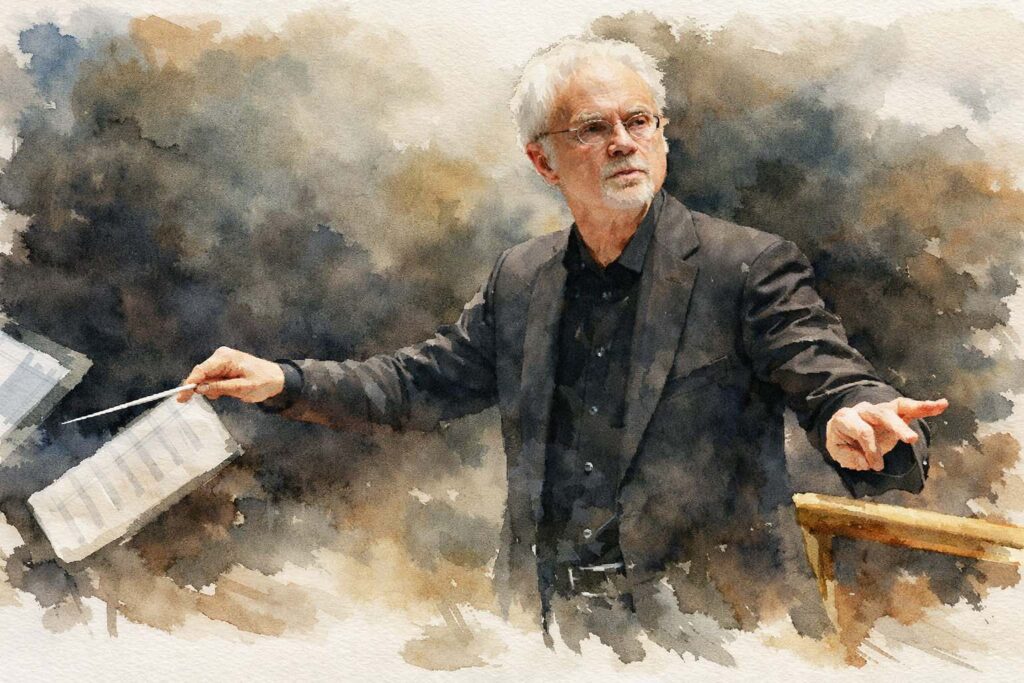
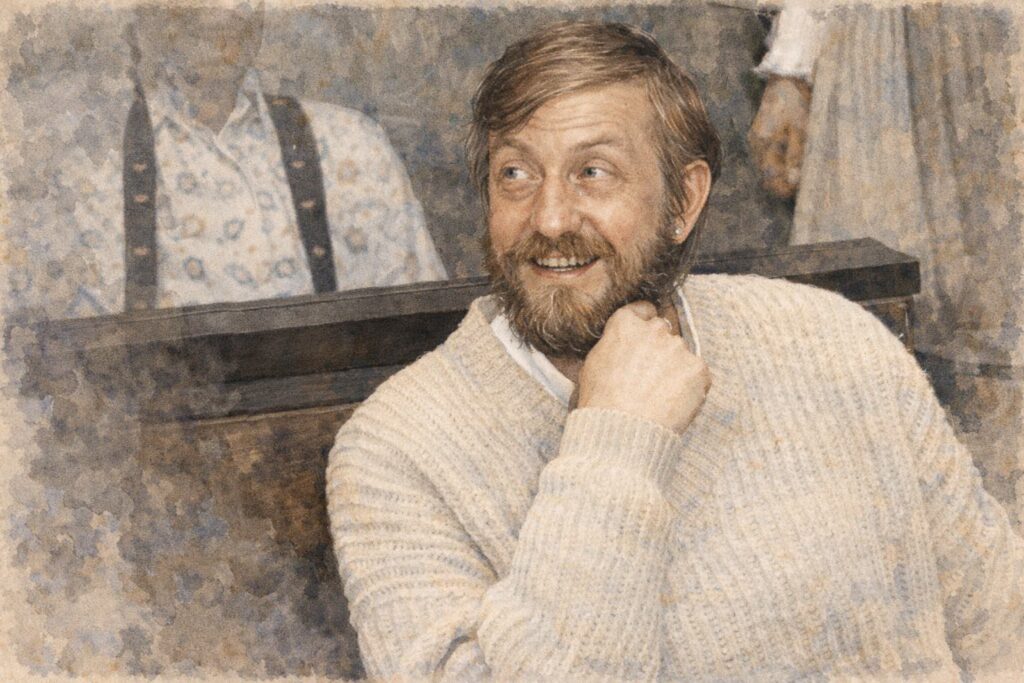
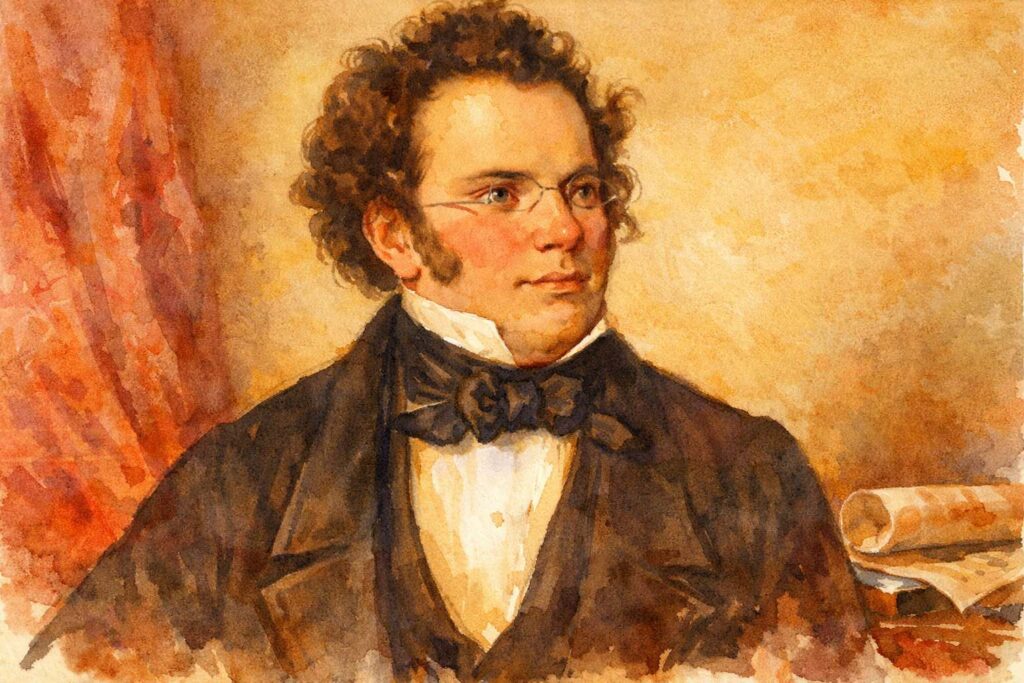
Eduard Tubin (18 June 1905 – 17 November 1982) is widely celebrated as a giant among Estonian composers, yet his towering symphonic legacy remains one of classical music’s best-kept secrets. Cut off from the global stage by the geopolitical fractures of World War II and the chilling damp of the Cold War, his massive body of orchestral music stands shoulder-to-shoulder with masters like Gustav Mahler, Sergei Prokofiev, and Jean Sibelius. By anchoring a sophisticated, modern symphonic architecture to the deep folklore of his native Baltic home, Tubin created an artistic testament that defined a nation’s resilience.
Tubin’s life and art were fundamentally split in two by history. Half of his career was rooted in the vibrant cultural landscape of independent interwar Estonia, and the other half was spent in the quiet, sometimes isolating landscape of Swedish exile. Despite being severed from his homeland, Tubin forged a unique musical language that blended the modal, earthly textures of Estonian folk music with a sophisticated, hard-edged symphonic structuralism. He wrote ten completed symphonies, two operas, two historic ballets, and an array of concertos and chamber works. To understand Tubin is to understand not only the resilience of the Baltic creative spirit but also one of the finest architectural minds in modern orchestral history.
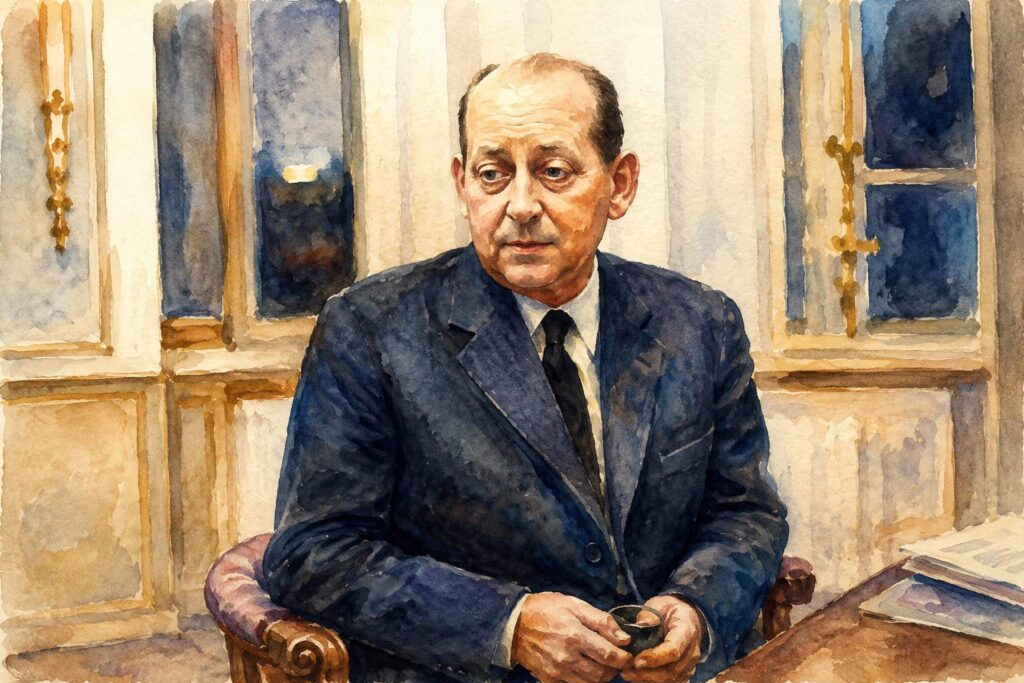
Early Foundations and the “Eller School” (1905–1930)
Eduard Tubin was born on June 18, 1905, in Kallaste, a small village on the shores of Lake Peipus in eastern Estonia. He grew up in an environment shaped by modest circumstances and deep regional culture. His family was musical—his father played the trombone and his brother the flute—which provided a young Tubin with an organic introduction to music-making.
At the time of his birth, Estonia was still a governorate of the Russian Empire, and the native art-music tradition was in its infancy. For centuries, Estonian culture had been preserved primarily through its staggeringly vast oral tradition of folk song and folklore. Following the Estonian War of Independence and the establishment of the first sovereign Estonian Republic in 1918, the country experienced a massive cultural awakening. Suddenly, a new generation of artists was tasked with building a national classical music identity from the ground up.
Tubin initially trained as a schoolteacher at the Tartu Teachers’ Seminar, where he also directed choirs and began exploring composition. However, his true artistic life began in 1924 when he enrolled in the Tartu Higher Music School. There, he entered the composition class of Heino Eller, the founding father of Estonian instrumental modernism.
The Eller School Influence: Heino Eller did not teach his students to copy a specific style. Instead, he taught them rigorous craftsmanship, precision in orchestration, and how to look at their native folk music with fresh, objective eyes. Under Eller’s guidance, Tubin moved away from simplistic, late-Romantic imitations and began building a leaner, more rhythmically active musical vocabulary.
Tubin graduated in 1930, submitting a cantata as his graduation work, and immediately stepped into the center of Estonia’s cultural engine.
The Golden Estonian Period and Breakthroughs (1930–1944)
Following his graduation, Tubin secured a position as a conductor at the prestigious Vanemuine Theatre in Tartu, Estonia’s intellectual capital. This role was critical to his development. Night after night, he conducted operas, operettas, and symphonic concerts. The theater pit became his laboratory; he learned exactly how instruments blended, how theatrical pacing worked, and how to command large ensembles.
During the 1930s, Tubin’s creative output exploded. This era is often called his nationalist or folk-influenced period, though it was far from naive. He traveled into the Estonian countryside, particularly to the island of Hiiumaa, to record and transcribe old bagpipe tunes and folk dances. Unlike earlier nineteenth-century composers who simply slapped a folk melody over basic European harmonies, Tubin used the unusual intervals and driving rhythms of folk music to build complex, modern symphonic textures.
This synthesis bore magnificent fruit in several landmark works:
- Symphony No. 1 in C minor (1934): A sweeping, confident debut that showed a strong affinity with the expansive structures of Jean Sibelius.
- Symphony No. 2 “Legendary” (1937): Widely considered the work where Tubin truly found his mature voice. It is an extraordinary, atmospheric piece inspired by the rocky coastlines, ancient myths, and spiritual endurance of the Nordic landscape.
- Symphony No. 3 “Heroic” (1942): Composed during the dark days of World War II, this symphony is propelled by an unstoppable, heavy rhythmic energy that reflects a nation trying to maintain its identity amidst global chaos.
The Tragedy of Kratt
Tubin’s absolute masterpiece of this era was Kratt (The Goblin), the very first Estonian ballet. Based entirely on Estonian mythology, a “kratt” is a creature built from household tools by a greedy farmer, brought to life by the Devil to steal wealth. The score is a riotous display of rhythmic vitality, flashing orchestration, and dark folk humor.
[Estonian Folk Materials] ---> [ Eller's Craftsmanship ] ---> [ Masterworks like 'Kratt' ]
                                                                      |
                                                              (WWII Disrupts Premiere)
The fate of Kratt is forever tied to one of the most tragic nights in Estonian cultural history. On March 9, 1944, during a triumphant run of the ballet at the Estonia Theatre in Tallinn, Soviet long-range bombers launched a devastating raid on the city. As bombs fell, the theater caught fire. The performers fled out into the streets, still wearing their stage costumes and demonic makeup, as the building burned to the ground behind them. Tubin managed to rescue the manuscript score from a safe days later, but the physical world he knew was collapsing.
The Harrowing Flight and Life in Exile (1944–1982)
By late 1944, the geopolitical situation in the Baltic states was terrifying. The German occupation was retreating, and the Soviet Red Army was sweeping back in. Knowing that artists who valued intellectual freedom faced severe censorship, imprisonment, or deportation to Siberia under Stalinist rule, Tubin made a agonizing choice.
In September 1944, Tubin, his wife Erika, and their two sons boarded a small, dangerously overcrowded sailboat and fled across the stormy Baltic Sea to Sweden. They were part of a massive wave of nearly 80,000 Estonian refugees who risked everything to escape the iron curtain.
Arriving in Stockholm as a displaced person, Tubin faced the grim reality of starting over at age 39. In Estonia, he had been a celebrated cultural icon; in Sweden, he was a nameless refugee. To support his family, he took an archival job at the historic Drottningholm Palace Theatre, where he spent decades painstakingly restoring and copying old Baroque and Classical opera scores. While this kept him close to music, it left him on the margins of the contemporary Swedish musical establishment.
                    EDUARD TUBIN'S DUAL LIFE
+-----------------------------------+-----------------------------------+
|     Estonian Period (1905-1944)   |      Swedish Exile (1944-1982)    |
+-----------------------------------+-----------------------------------+
| • Deep immersion in folk origins  | • Structural isolation & longing  |
| • Artistic freedom & celebrity    | • Marginalized by the Avant-Garde |
| • Expansive, tonal symphonies     | • Lean, compact, modern language  |
| • Key Work: Symphony No. 2        | • Key Work: Symphony No. 5 & 8    |
+-----------------------------------+-----------------------------------+
Despite the emotional weight of displacement, Tubin did not stop composing. In fact, his first major work written in exile, the Symphony No. 5 in B minor (1946), became an artistic monument to the refugee experience. It is a work of immense dramatic power, capturing the trauma of war, the sorrow of a lost homeland, and a final, defiant surge of hope. When it premiered in Stockholm, it was recognized by critics as a masterpiece, but institutional roadblocks would soon slow Tubin’s momentum.
Stylistic Evolution: From Folklore to Dark Modernism
As the 1950s and 60s progressed, Western European music became dominated by the radical avant-garde: total serialism, electronic music, and the rejection of traditional forms. Tubin refused to follow fashion blindly, but he also refused to stay stuck in the past.
His style underwent a fascinating evolution. The expansive, singing lines and obvious folk melodies of his Estonian years gave way to a leaner, more compact, and psychologically complex language. He adopted elements of dodecaphony (twelve-tone technique) and polytonality (using multiple keys at once), but he always anchored them to a firm sense of rhythm and tonal gravity.
| Symphony Period | Key Characteristics | Recommended Starting Point |
| Early / Nationalist (Nos. 1–4) | Expansive, heavily melodic, explicit use of Estonian folk modes, romantic orchestration. | Symphony No. 2 “Legendary” |
| Transition / Crisis (No. 5) | Monumental, dramatic, wrestling with exile, highly percussive, massive emotional scale. | Symphony No. 5 |
| Late / Modernist (Nos. 6–10) | Lean textures, angular melodies, compact structures, biting dissonance, philosophical. | Symphony No. 8 or No. 10 |
His Symphony No. 6 (1954) introduced nervous, urban rhythms and saxophone textures, reflecting the alienation of modern city life. His Symphony No. 8 (1966) is perhaps his darkest creation—a deeply tragic, expressionist canvas that feels like a long, agonizing look into an abyss of personal and national loss. Yet, by the time he reached his Symphony No. 10 (1973), his music had clarified into a noble, elegant, and concentrated single-movement architecture that radiates late-life wisdom.
Catalog of Essential Masterworks
To fully appreciate Tubin’s range, one must look beyond his symphonies into his diverse catalog of stage and instrumental music.
The Operas
Tubin composed two major operas, both set in the historical Baltic past but dealing with universal, intense psychological themes. Both were written to Estonian librettos, serving as an emotional bridge back to his culture.
- Barbara von Tisenhusen (1968): A heartbreaking opera concerning a noblewoman in sixteenth-century Livonia who is sentenced to death by her own brothers for marrying a commoner. The music is highly unified, structured via a series of passacaglias (variations over a repeating bassline) that mirror the inescapable tragedy of her fate. Even Dmitri Shostakovich, upon studying the score, praised its superb dramatic pacing.
- The Parson of Reigi (Reigi õpetaja, 1971): A taut, dark tale of love, betrayal, and religious conflict on the isolated island of Hiiumaa.
Instrumental and Chamber Music
Tubin was a highly skilled violinist in his youth, and this comfort with string playing is visible across his instrumental works.
- Violin Concerto No. 1 (1942) & No. 2 (1945): These concertos track his transition from the lush lyricism of his home country to the anxious, sharp realities of his early exile.
- Double Bass Concerto (1948): This is one of the most important pieces of music ever written for the double bass. Tubin managed the impossible task of writing a concerto for a low, heavy instrument that remains agile, virtuosic, and clearly audible over a full orchestra.
- Piano Sonata No. 2 “Northern Lights” (1950): Inspired by the eerie, dancing winter skies of Sweden, this sonata uses shimmering, complex variations to evoke the cold brilliance of the northern atmosphere.
Importance, Global Suppression, and Late Rediscovery
The historical neglect of Eduard Tubin during his lifetime is a classic tragedy of cold-war cultural politics. He was a man caught between two worlds, belonging fully to neither.
In the Soviet Union, because Tubin had fled to the West, he was officially branded a traitor to the state. For decades, his name was stripped from textbooks, and public performances of his music were strictly banned or heavily restricted in his native Estonia. The Soviet regime tried to erase him from the collective memory of the nation he loved.
In Sweden and the West, he was marginalized by a different kind of dogmatism. The Swedish musical establishment became heavily dogmatic about avant-garde modernism. Because Tubin continued to write structured symphonies with tonal centers, he was dismissed by trendy critics as an outdated traditionalist, despite the deep modern harmonic complexities within his scores.
       THE CHILLING OF RECOGNITION
[ Soviet Union ] ------------> Banned as a "Refugee Traitor"
[ Western Europe ] ----------> Dismissed as "Too Traditional"
       Result: Tubin's music falls into historical obscurity.
The turning point did not arrive until the very end of his life, driven by the unwavering dedication of another Estonian exile: conductor Neeme Järvi.
Järvi, who emigrated from Estonia to the West in 1980, made it his life’s mission to introduce Tubin to the global stage. In 1981, Järvi conducted Tubin’s Tenth Symphony with the prestigious Boston Symphony Orchestra to immense critical acclaim. Suddenly, the international music world woke up to the fact that a master symphonist had been living quietly in Stockholm for nearly forty years.
Shortly after this late breakthrough, Tubin passed away on November 17, 1982, in Stockholm, at the age of 77. He lived just long enough to see the world begin to listen.
Legacy and the Restored Voice of a Nation
Following his death and the collapse of the Soviet Union in 1991, Tubin’s legacy underwent a profound transformation. With Estonia’s restored independence, Tubin was rightfully restored to his throne as a pillar of national identity.
In 2000, the International Eduard Tubin Society was founded to preserve, publish, and promote his complete works. Today, his scores are beautifully edited and accessible to orchestras worldwide. Musicians like Paavo Järvi, Arvo Volmer, and international ensembles have recorded his complete symphonic cycles, revealing a catalog that contains zero filler—every symphony is a lean, structurally sound masterpiece.
Ultimately, Tubin’s historical importance is twofold:
- The Bridge of Identity: During the darkest decades of Soviet occupation, when Estonian culture was under intense pressure to conform to Moscow’s guidelines, Tubin’s music kept the uncompromised, free spirit of Estonian high modernism alive in exile. He proved that a nation’s soul can live on in a suitcase full of manuscript paper.
- The Evolution of the Symphony: Along with figures like Shostakovich and Sibelius, Tubin proved that the traditional symphony was not a dead art form in the twentieth century. He showed that with enough rhythmic invention, orchestration mastery, and emotional honesty, the symphony could still capture the entire scale of modern human experience.
For anyone looking to venture off the beaten path of standard concert hall repertoire, the music of Eduard Tubin offers a vast, deep, and thrillingly dramatic world waiting to be explored.
#EduardTubin #EstonianMusic #ClassicalMusic #Symphony #BalticCulture #HeinoEller #NeemeJarvi #NorthernSymphonist #TwentiethCenturyMusic #OrchestralMusic #KrattBallet #ExileArt #ComposerBiography #NordicClassical #SymphonicMasterpieces