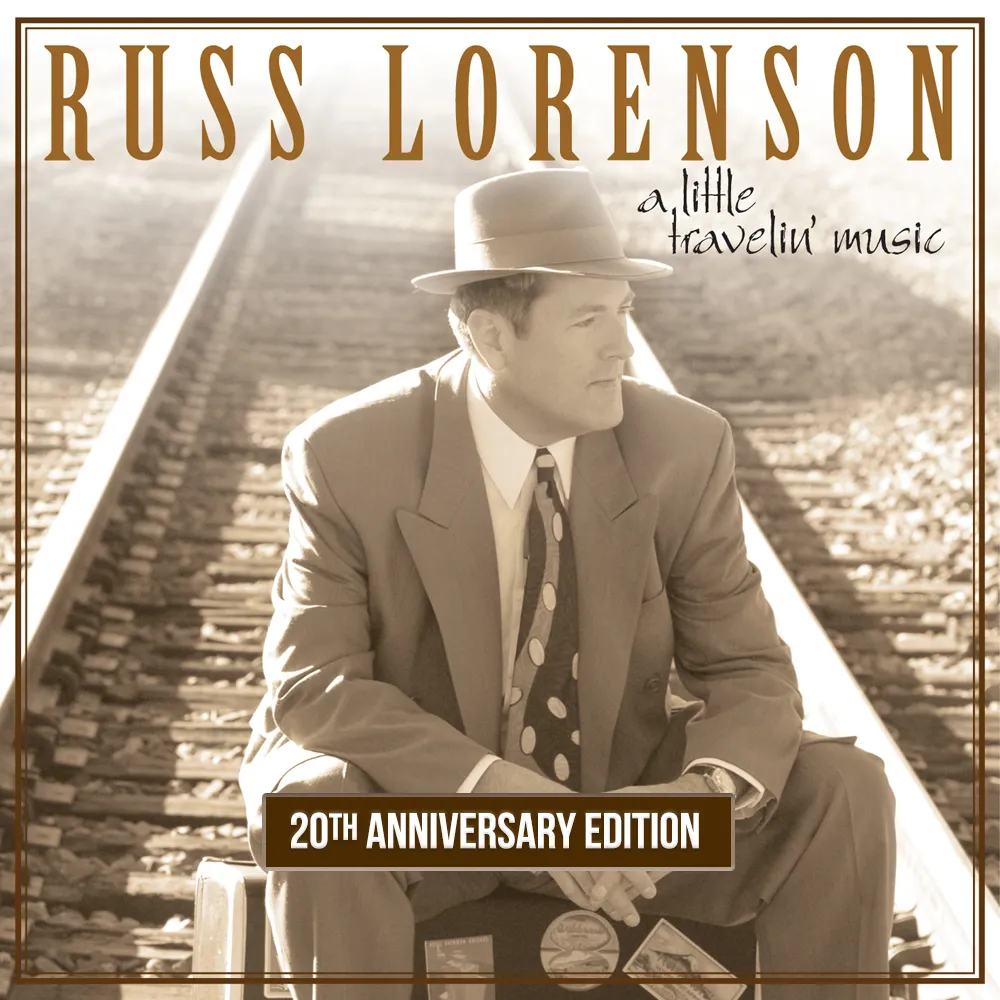
Originally released in 2006 as a companion to a live performance program built around themes of travel and musical exploration, A Little Travelin’ Music by Russ Lorenson now returns in a thoughtful and carefully reconstructed 20th-anniversary edition. Rather than presenting a simple remaster, Russ revisits the material from the perspective of two decades of artistic development, reshaping the album into a more cohesive and clearly defined vocal jazz statement.
At the time of the original recording, Lorenson stood at a stylistic crossroads between musical theatre, cabaret, and jazz. Since then, his work has moved decisively toward a jazz-centered vocal identity, shaped through performance experience and collaboration with seasoned instrumentalists. This new edition reflects that evolution directly: select tracks have been retired, previously unreleased material introduced, arrangements refined, and the entire album remixed and remastered with a stronger acoustic emphasis.
The album now presents itself as a mature vocal jazz document with a clearer stylistic direction, warmer instrumental character, and more confident phrasing across the repertoire.
Vocal
Russ demonstrates exceptional control over his voice throughout the album, most noticeably in his sustained legato lines. He holds long tones with remarkable stability and clarity, yet never sounds artificial or over-processed. There is no sense of technical correction shaping the performance, the voice moves naturally, but with striking precision and intention.
The introduction to “Moonlight in Vermont” showcases this ability especially well. Beginning completely exposed, without accompaniment, the opening vocal line immediately establishes both intimacy and confidence. The tone remains soft and tender while maintaining structural control, allowing the phrasing itself to carry expressive weight.
Across the album, Lorenson’s usable vocal range spans more than two octaves, but what stands out most is the effortlessness of the delivery. At no point did I feel strain in either the upper or lower registers. Every note sits comfortably within the voice’s expressive center, which is a defining characteristic of an experienced jazz vocalist rather than a performer pushing toward effect.
Whether sustaining the long lyrical lines of “When In Rome” and “Home To Stay,” shaping the light, staccato-driven motion of “The Air-Minded Executive,” or navigating the speech-like, recitative-style delivery of “Rhode Island Is Famous For You,” Russ maintains remarkable precision and clarity throughout. In each case, the phrasing remains controlled yet expressive, allowing emotional nuance to emerge naturally without sacrificing technical cleanliness or stylistic flexibility. The result is a vocal performance that feels both disciplined and alive, balancing structure with spontaneity in a way that serves the character of each song.
Composition and Harmonic Language
The repertoire maintains stylistic coherence within the vocabulary of classic vocal jazz standards. Syncopation drives the rhythmic character of the arrangements without ever dominating them, allowing the melodic line to remain central.
From the relaxed cocktail-jazz harmonic atmosphere of “Fly Me To The Moon” to the richer harmonic colors of “Gay Paree,” shaped through the interaction between accordion and piano textures, the arrangements remain faithful to the tradition while avoiding predictability.
Importantly, the arrangements prioritize melodic clarity. Rather than competing with the vocal line, the accompaniment consistently reinforces it, deepening its expressive direction. This reflects a mature compositional approach in which accompaniment functions as dialogue rather than decoration.
The saxophone countermelodies deserve special mention. Frequently acting as a second voice alongside the singer, they intertwine with the vocal line in ways that feel conversational rather than ornamental. The result is a true ensemble interaction rather than a voice-with-background format. For me it feels like the sax is singing at times.
Instrumentation and Arrangement
Although the vocal remains the central focus throughout the album, the instrumental writing, especially for piano and saxophone, plays an essential structural role in shaping the listening experience.
The piano frequently establishes the emotional frame of each track before the vocal enters. In “When In Rome,” for example, the piece opens with a solo piano introduction that is deeply emotional and immediately creates a soft, warm atmosphere, preparing the listener for the entrance of the vocal. As the track develops and the bass, percussion, and later the saxophone join in, the piano continues to play a central role in shaping the flow of the piece. It drives the movement forward while at the same time creating a harmonic bed where the vocal can move freely and where the expressive saxophone solo can naturally emerge.
A similar emotional architecture appears in “I Left My Heart in San Francisco.” Here again, the piano deepens the sense of nostalgia already present in the vocal line. While the melody itself carries the emotional narrative, the harmonic framing intensifies its impact, reinforcing the song’s reflective character.
Across the album as a whole, the instrumental writing demonstrates restraint and purpose. Solos and countermelodies are placed carefully, allowing the arrangements to breathe while maintaining forward motion and stylistic clarity.
Lyrics and Narrative Arc
Beyond its vocal and instrumental qualities, one of the most compelling aspects of the album appears in the way the lyrics are arranged across the program. The track order creates a clear narrative arc, moving from the excitement of departure and discovery toward reflection and, ultimately, a quiet emotional return home. Even when reading the titles in sequence, they feel like entries in a carefully shaped travel diary.
Although throughout the album the places and names mainly act as metaphors for deeper emotional layers, their surface-level presence still creates a clear narrative arc.
The album opens with “Come Fly with Me / Let’s Get Away from It All,” which immediately sets the tone of movement and departure. It invites the listener into the idea of travel itself. From there, the journey becomes geographical and concrete with “When In Rome,” “I Love Paris,” and “Moonlight in Vermont,” forming a sequence that captures the romance of place through different cultural atmospheres and emotional colors.
With “The Air-Minded Executive,” “Fly Me To The Moon,” and “Rhode Island Is Famous for You,” the sense of place begins to feel more personal and observational than purely adventurous.
By the time the album reaches “Home to Stay,” the emotional direction becomes clear. The journey is no longer outward, it turns inward. This shift prepares the listener naturally for “I Left My Heart in San Francisco,” which functions as a quiet emotional destination rather than simply another stop along the route. The album closes not with departure, but with attachment and belonging.
Final Thoughts on A Little Travelin’ Music by Russ Lorenson
What makes A Little Travelin’ Music (20th Anniversary Edition) particularly compelling is that it does not attempt to preserve the past, it reframes it. The revisions reflect an artist who understands his stylistic direction more clearly now than he did twenty years ago, and who is willing to reshape earlier material accordingly.
The strengthened acoustic piano presence, refined arrangements, and confident vocal phrasing collectively shift the album toward a more unified jazz identity. Rather than sounding like an archival release, the record feels present and intentional, shaped by experience and interpretive maturity.
Most importantly, the album demonstrates how revisiting earlier repertoire can become an act of artistic clarification. In this anniversary edition, Russ Lorenson’s phrasing is more relaxed yet more precise, the harmonic environment warmer, and the ensemble interaction more integrated. The result is a recording that functions not only as a retrospective milestone but as a convincing contemporary statement within the tradition of classic vocal jazz listening.
RussLorenson #ALittleTravelinMusic #VocalJazz #JazzStandards #JazzVocals #AlbumReview #MusicReview #SwingMusic #ClassicJazz #CabaretJazz #AcousticJazz #JazzInterpretation #AmericanSongbook #JazzArrangements #MusicCriticism #AnniversaryEdition #TravelInMusic #StorytellingInMusic #ListeningGuide #Tunitemusic