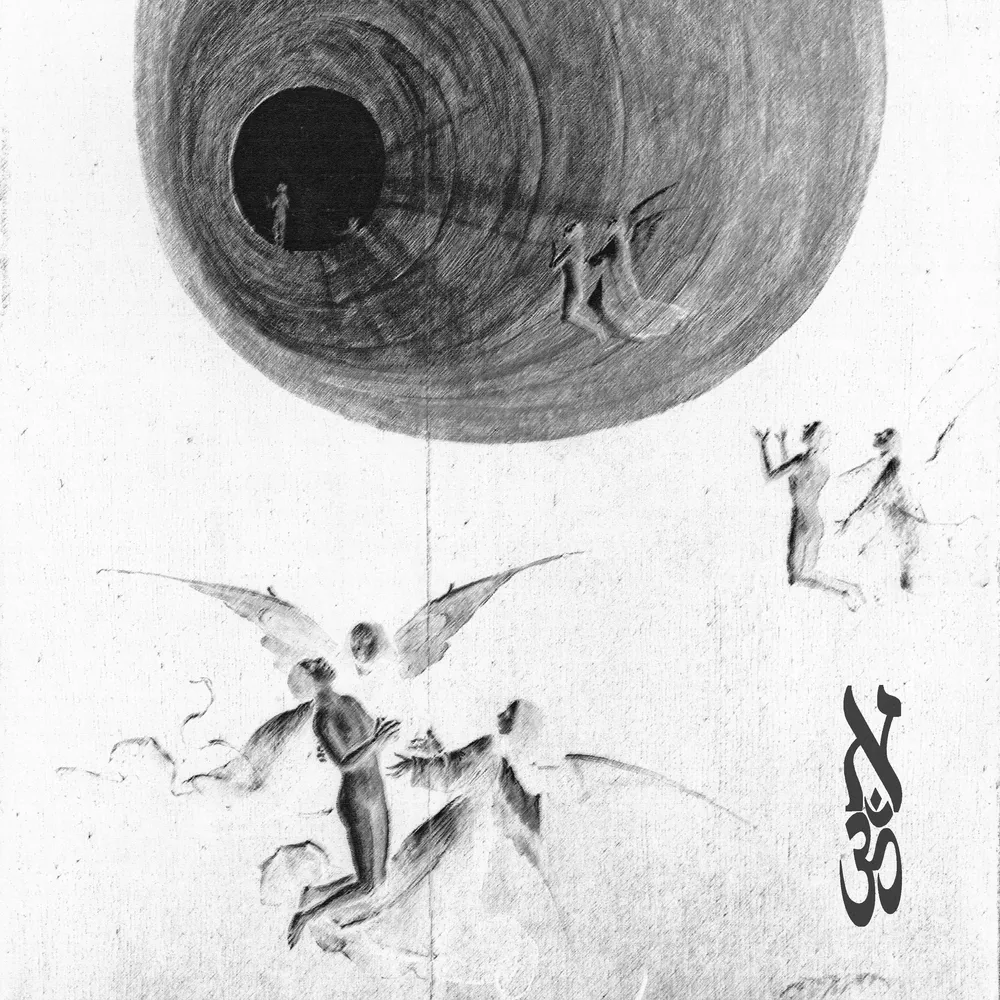
Venerable Extremities: Vol. I, II, III by Alexander Brown (aleph om) unfolds as a story told not through events, but through texture, weight, and presence. Across 21 chapters, this trilogy does not ask the listener to follow a narrative in the traditional sense; instead, it invites close attention to sound itself, as matter, as space, as a sculptural form shaped by time, decay, and restraint.
This is not music built around classical harmonic logic or clearly defined pitch systems. Rather than melodies existing for their own sake, sound here functions as a narrator in itself. Tone, noise, resonance, and silence operate as a single expressive language. Alexander Brown introduces a world where sound is not arranged to impress, but to mean, where every gesture carries intention, and nothing is ornamental.
That said, Venerable Extremities is not an exercise in abstraction or purely experimental sound art. Melodic fragments appear: slow arpeggios, fragile piano figures, shimmering string steccatos, sustained harmonic centres. But these elements never demand attention. They serve the larger form, contributing to an emotional architecture rather than offering moments of surface beauty. This is music that resists immediacy and rewards patience.
A key to understanding the album lies in seeing these trilogy as three sound sculptures. Each volume exists as a self-contained form, yet all three are connected through material, texture, and spatial thinking. The continuity between them is not thematic in a literary sense, but physical, like variations in stone shaped by the same hand.
In what could be described as the first sculpture, pieces such as “Dust, Sunlight” exemplify the album’s sound-painting approach. A constantly rising sonic force, wrapped in hazy atmospherics, conjures an unmistakably visual image: a dust-filled landscape, a dune under a bleached, unrelenting sun. The effect is cinematic. It is observational, almost tactile. Each sound feels placed rather than composed, as if the piece were carved rather than written.
As the trilogy progresses, the material subtly shifts. The soundscape becomes more melodic, yet never loses its ambient core. Tape degradation, lo-fi textures, and analog instability are not aesthetic gestures here; they are structural elements. Imperfection becomes a form of honesty. Influences, from ambient minimalism and tape music to krautrock repetition and meditative traditions, are present, but never foregrounded. Genre dissolves into emotional texture.
In the third sculpture, “Hours on the Walls,” and my favorite piece of the album, marks a deep philosophical scene. The opening string textures resemble a clock, but not one that measures time precisely. Instead, they suggest how time is felt: elastic, uneven, shaped by memory and attention. The flow exists, but it is unstable, deeply human. Here, the neoclassical elements emerge most clearly, fragile and restrained, informed by both Celtic melancholy and Buddhist stillness.
Across all three sculptures, each track functions as a necessary component of a larger form. Remove one, and the balance shifts. This is not music designed for casual listening or background presence. Venerable Extremities demands scrutiny, not intellectual analysis, but emotional attention. It asks the listener to slow down, to sit inside the sound, to experience duration rather than consume it. It is not music for study or background music in any sense, it is music as music, and needs the audience to sit and listen to understand the meaning of it.
In the context of contemporary ambient and experimental music, Alexander Brown’s work stands apart through its refusal of excess. Where many artists pursue scale, Venerable Extremities chooses intimacy. Where others chase clarity, this trilogy embraces blur, decay, and silence. It is a body of work shaped by restraint, and strengthened by it. I personally put Alexander Brown somewhere between Kristjan Kannukene, the Estonian musician whose music is focused on improvisation and creating scenes, and Matteo Ramon Arevalos, the contemporary composer and pianist who has a more dramatic approach to music.Ultimately, Venerable Extremities: Vol. I, II, III by Alexander Brown is less an album than a space one enters. A place where sound becomes form, time becomes texture, and listening becomes an act of presence.
VenerableExtremities #AlexanderBrown #AlephOm #AmbientMusic #ExperimentalMusic #SoundArt #DroneMusic #LoFiAmbient #DeepListening #ContemporaryAmbient #ElectronicMusicReview