Eight pieces of epic symphonic music form The Bell Tower and The Cross, a cinematic album by Chameleon Music, the pseudonym of UK-based composer and media creator Mark Taylor. Known for his long career in film, television, theatre, games, and advertising, Taylor here steps decisively into the album format, shaping a cohesive narrative experience rather than a collection of standalone cues.
The general atmosphere recalls the grand emotional sweep of Immediate Music and E.S. Posthumous, while maintaining a distinctly personal voice. Orchestra, choir, and electronic textures are woven together to create music that is unapologetically cinematic, immersive, and most importantly melody-driven. Every track is led by a clear thematic idea, reinforcing Taylor’s reputation for memorable and slightly “quirked” melodic construction.
The album opens with “Last Adventure for a Pirate King?”, a dramatic introduction that immediately establishes the storytelling intent of the release. The sound of the sea and the fragile, fading notes of a music box suggest nostalgia and loss, but this calm is deceptive. A strong arpeggio by cello section restores motion, and the orchestra rises from restraint into full adventure mode. It feels like a final voyage, not an ending, but a last defiant surge toward myth.
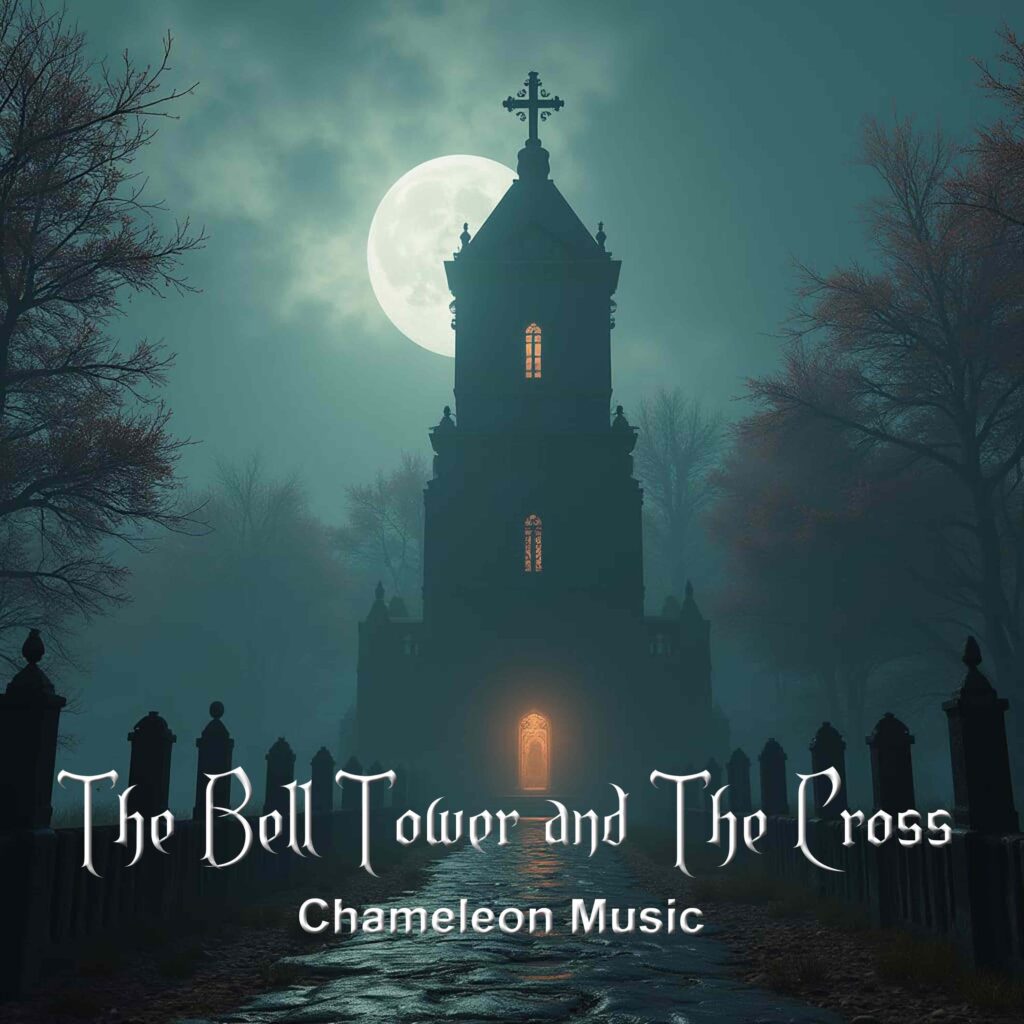
The title track, “The Bell Tower and The Cross”, follows seamlessly, expanding the cinematic language. Bells, chants, and church-like acoustics create a religious and ritualistic setting, rich in imagery and atmosphere. Sound design plays a crucial role here, guiding the listener through an imagined visual space. When the orchestra enters, it subtly references the main theme from the opening track, reinforcing the album’s internal continuity. Just as the piece seems to resolve, dissonant string chords interrupt the calm, leaving the music suspended in an unsettling limbo, a striking compositional choice that refuses easy closure.
With “Each Face Retains the Mask it Wore”, the album shifts its palette. Electronics and rhythmic elements move to the foreground, interacting tightly with the string writing. A solo vocal line with an almost oriental, ritualistic character introduces a mystical dimension. This hybrid approach, electronica, classical, ambient, highlights Taylor’s stylistic flexibility without abandoning the album’s core cinematic identity.
“Whispers Across the Wasteland” stands out for its textural and narrative ambition. Inspired by Ennio Morricone, the piece adopts a folk-inflected, Spaghetti Western atmosphere. Rather than relying on constant epic intensity, it allows space for gradual development. Midway through, a forceful and dissonant orchestral surge transforms the piece entirely, before retreating again into whispers and fragile textures. The return of the orchestra in the final act feels earned, almost inevitable, like the closing scene of a long-unfolding film.
“Exiles Return” is among the most energetic tracks on the album. Strong rhythmic patterns, evolving motifs, and flowing melodic lines generate a sense of forward motion and triumph. It is epic without becoming static, a balance that many cinematic releases attempt but few achieve convincingly.
One of the conceptual highlights is “Dante: The Lost Poet”. Rather than a literal programmatic retelling of Inferno, Purgatory, and Paradise, the piece feels more like a cubist interpretation of Dante’s journey. Emotional states overlap, collide, and transform. Darkness, hope, struggle, and revelation coexist within the same musical space, mirroring the psychological complexity of Dante’s inner voyage rather than its linear narrative.
“Flash of the Blade” delivers pure action. A concise, high-energy track built around a strong melodic line, it moves swiftly toward a dramatic climax, crowned by a powerful choral conclusion. It feels tailor-made for the screen, yet works just as effectively as a standalone musical statement.
The album closes with “Dust of Dreams”, a fittingly ambiguous finale. Beginning in mystery and blurred textures, the piece gradually evolves into something approaching a rave-like intensity, before dissolving back into uncertainty. Ending the album in this unresolved space feels intentional, a reminder that dreams, stories, and memories rarely conclude with clean lines.
All composing, performing, recording, mixing, and mastering were handled by Mark Taylor in his private studio in Birmingham, reinforcing the sense of a singular artistic vision. This total authorship gives The Bell Tower and The Cross a coherence that is often missing from large-scale cinematic releases.
For listeners familiar with Chameleon Music’s earlier album Subway to Saturn, previously featured on Tunitemusic — a deeply personal tribute to Vangelis — this new release marks a clear evolution. Where Subway to Saturn looked inward and backward, The Bell Tower and The Cross looks outward, toward narrative, drama, and imagined worlds. Together, they position Mark Taylor as a composer who moves fluently between homage, personal expression, and large-scale cinematic storytelling.
#ChameleonMusic #TheBellTowerAndTheCross #CinematicMusic #EpicOrchestral #FilmMusic #SymphonicMusic #HybridOrchestral #MediaComposer #SoundtrackMusic #OrchestralAlbum #EpicMusic #ModernClassical #ContemporaryClassical #InstrumentalMusic #ChoirAndOrchestra #ElectronicOrchestral #ComposerLife #FilmScore #MusicForFilm #Tunitemusic #IndependentMusic #MusicReview #AlbumReview #DigitalRelease
This post was written as part of a promotional service provided by Tunitemusic, based on information submitted by the artist.