After five years of using Spotify, I decided to switch to Apple Music (for ethical reasons), and the difference surprised me! There are countless posts comparing sound quality across streaming platforms, but this isn’t one of them. Instead, I want to talk about what really changed for me as both a listener and a musician: the experience of the digital album.
Interface and Listening Habits
Let’s start with the interface. People love to argue over which platform looks or feels better, but the truth is, neither Spotify nor Apple Music is objectively superior, they simply serve different listening habits.
Spotify is built for discovery. Its algorithms constantly shuffle and recommend, encouraging you to jump from song to song. Apple Music, on the other hand, feels more like a digital continuation of the old iTunes era, it’s centered around albums and genres rather than moods and playlists.
That subtle difference changed the way I listened.

What Is a Digital Album, Really?
You might ask, what is a digital album? In simple terms, a digital album is the online version of a traditional album, a collection of songs designed to be experienced as a whole, just as the artist intended. The digital album meaning goes beyond format; it’s about preserving the artistic narrative, the flow, and the emotional arc of a complete musical work.
While Spotify encourages fragmentary listening — one part from a symphony here, one movement from a sonata there — Apple Music still promotes the full album experience. It reminds you that music is not just background sound, but storytelling through sound.
Rediscovering the Narrative of Music
As a composer, I deeply value the narrative structure of an album. A playlist might set a mood, but an album tells a story. On Spotify, I often lost that sense of continuity, it became a collage of disconnected tracks. But Apple Music brought me back to that immersive feeling of listening to a work from start to finish, exactly as the artist envisioned.
User Experience and Performance
I said I’m not going to talk about it, but here’s a very short description of what it felt to me using Apple Music rather than Spotify.
Spotify still wins when it comes to usability. Syncing between devices is smoother, navigation feels more intuitive, and everything just works faster. Apple Music, in contrast, took me a few days to get used to, especially the app interface. The desktop version is more stable, but overall, it’s slightly less user-friendly.
Audio quality, however, tilts in Apple’s favor. When connected to studio monitors, I noticed a clearer, more balanced sound. That said, this advantage comes with a small price: slightly longer load times, especially on slower connections. But keep in mind that if you are listening to music on your phone using normal headphones or earplugs, the quality limit will be dictated by your device rather than the platform.
I need to have a disclamer here, I’m not using an iPhone, I use android on a Fairphone, and that might have some effects both on the interface and speed of the apps.
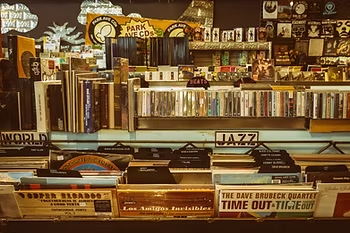
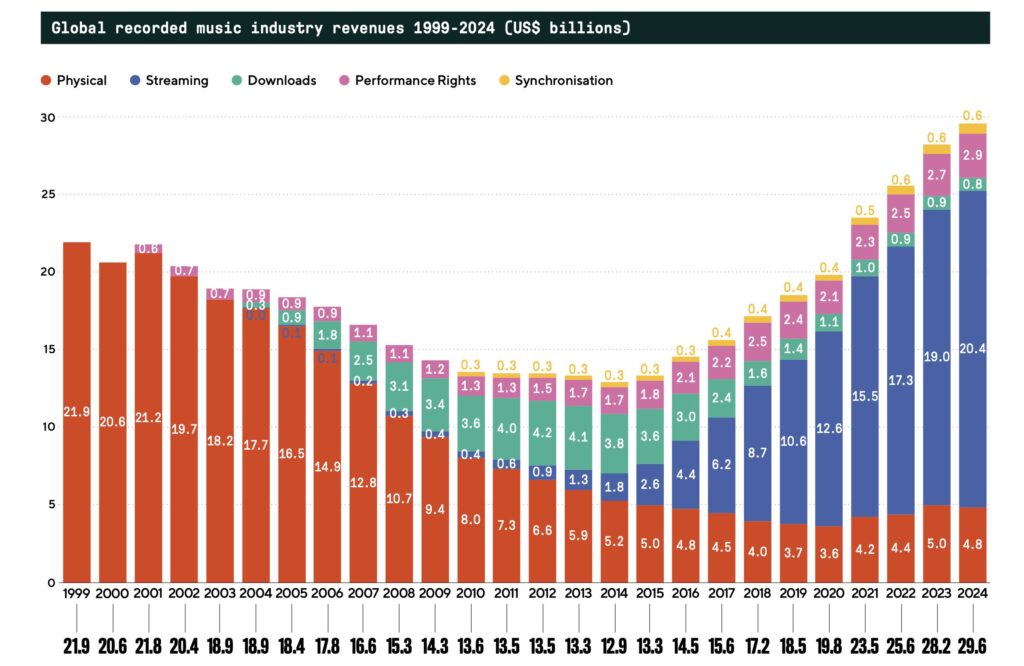
From Vinyl to Spotify: How Music Consumption Has Evolved Over Time
The Artist’s Perspective
Now, let’s talk about something that matters to me personally, how these platforms treat artists. Spotify has long been criticized for its unfair payment model, and the criticism is justified. While Apple Music pays artists per stream more fairly, and even compensates for as few as two plays, Spotify requires over 1,000 streams per release before royalties are paid out. And even then there are many streams that are counted as “ineligible” on Spotify, because their systems detect it as bots listening to your music not actual people. Is it 100% accurate? Who knows!
Yet, Spotify does offer independent musicians more visibility. Its algorithmic playlists make it easier for lesser-known artists to reach new audiences. So the situation isn’t black and white — Spotify helps with better discovery, Apple Music offers better pay per stream.
Ethics, Choice, and the Future
Still, recent controversies, including Spotify’s CEO investing in military technology, have raised serious ethical concerns. As artists, we might not always be in a position to remove our music from major platforms — discovery still matters — but as listeners, we have the power to choose.
If more listeners migrate to ethical, artist-friendly services like Tidal, Deezer, and many others, then the digital music ecosystem might finally begin to value creativity over exploitation.
#DigitalAlbum #WhatIsDigitalAlbum #DigitalAlbumMeaning #AppleMusic #Spotify #MusicStreaming #AlbumListening #MusicDiscovery #OnlineMusic #MusicLovers #SoundQuality #IndependentArtists #MusicIndustry #ComposerLife #DigitalMusicExperience #StreamingPlatforms #AlbumCulture #ListenToAlbums #MusicStorytelling #EthicalStreaming