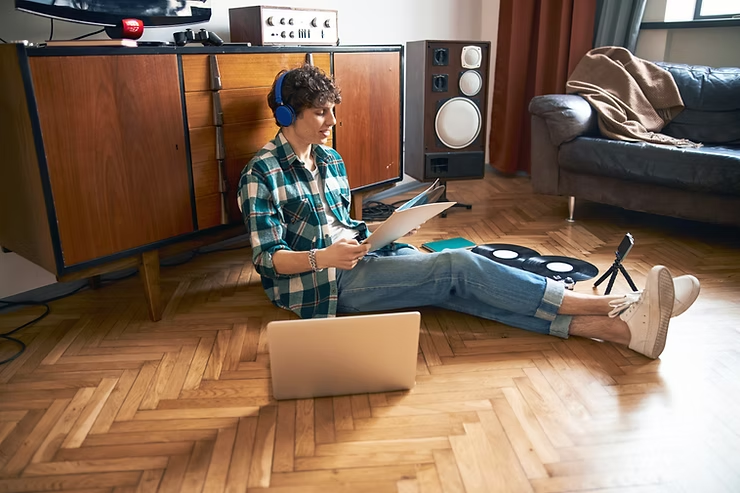
Independent musicians building an artist identity face a stubborn problem: the music can be strong while the visuals feel generic, scattered, or borrowed. In a crowded feed, visual branding sets audience perception before a single note plays, signaling genre, mood, and credibility in seconds. Treating brand development as “pick a logo” leaves music marketing doing extra work, because the story and style don’t match the sound. A clear visual brand gives the music a frame people recognize and remember.

Understanding Visual Branding as a Unified Narrative
Visual branding is the translation layer between your sound and what people see before they listen. A strong approach treats your photos, colors, typography, and styling as one story, so the same personality and emotional tone show up everywhere. The idea of imagery style and narrative matters because fans read these cues fast, even when they cannot name them.
When your visuals align, promotion gets easier because each post reinforces the same meaning. When they clash, your audience has to work harder to figure you out, and many simply scroll past. A consistent aesthetic establishes recognition, which is what turns casual viewers into repeat listeners.
Picture two artists with similar songs: one uses neon club shots, the other uses warm film portraits and handwritten notes. Even if the tracks are close, the second choice signals intimacy and nostalgia, shaping expectations before play. That is a unified narrative doing its job. With that story clear, portraits can be generated to match your genre and narrative across every asset.
Create Stylized Artist Portraits That Stay Consistent Everywhere
A portrait generator can help you develop stylized personal imagery that reinforces your brand identity without rebuilding each promo asset from scratch. Small choices shift how you’re perceived: a direct vs. distant facial expression can read as intimate or untouchable; soft, diffused lighting can feel nostalgic, while stark contrast can feel aggressive; and stylistic decisions like color grading, grain, or graphic treatment can signal genre and emotional tone. Tools like Adobe Firefly’s AI portrait generator make it easier to explore variations until you land on a look that feels unmistakably “you,” then reuse it across press shots, social promos, and kit assets. That exploration can also surface repeatable motifs, palette, shadow style, attitude, that guide the visual themes for an entire brand cycle.
Set → Build → Apply → Review Your Visual System
Your goal is not to “get a look” once, but to keep a recognizable feel through every release and appearance. A lightweight rhythm helps you turn style and story into decisions you can repeat across album art, social posts, merch, and shows. Because visual branding spans everything from artwork to stage design, consistency comes from process, not memory.
| Stage | Action | Goal |
| Clarify the story | Write 3 keywords and 1 sentence about the current era | A clear emotional lane for all visuals |
| Build a style kit | Lock palette, type, textures, and photo rules | A reusable visual system, not one-off assets |
| Map touchpoints | List needs for cover art, socials, merch, live visuals | No channel feels improvised or disconnected |
| Produce in batches | Create templates and generate variations in one session | Faster output with fewer style resets |
| Check and adjust | Compare new pieces to the style kit, then refine | Cohesion across platforms and time |
Pre-Release Visual Branding Checklist
This checklist turns your vibe into concrete choices you can repeat, so fans recognize you fast. Run it before each release, show, or merch refresh to catch mismatches early and stay intentional.
- Define three mood words for this era
- Write one sentence that explains the story
- Choose a fixed palette and two type styles
- Set photo rules for lighting, framing, and filters
- Review cover, socials, merch, and stage visuals together
- Build two reusable templates for posts and promos
- Compare new assets to your rules and revise
Finish the pass, then ship with confidence and clarity.
Build a Visual Brand That Evolves With Your Sound
The hardest part of music industry branding isn’t picking a look, it’s keeping your visuals from drifting away from who the music has become. A mindset of comprehensive visual branding treats every touchpoint as artist self-expression, so brand integration stays consistent across releases, stages, and screens without feeling forced. When you work this way, the visual identity impact shows up as faster recognition, clearer expectations, and more trust from fans and collaborators. A strong visual identity is simply your music, made visible.