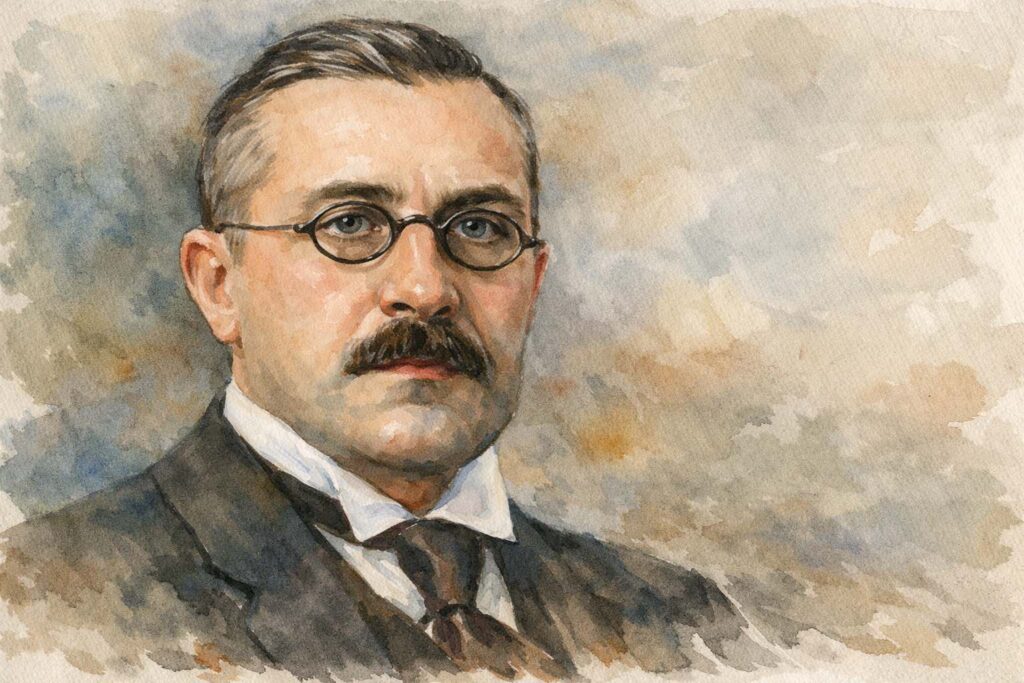
Ester Mägi stands as one of the most important figures in Estonia’s musical history, an Estonian composer whose work speaks softly yet carries immense emotional and cultural weight. Born on 10 January 1922 in Tallinn and passing away on 14 May 2021, Ester Mägi lived almost a century that encompassed independence, occupation, repression, and rebirth. Through it all, her music remained deeply rooted in Estonian identity, shaped by restraint, clarity, and an unshakable inner voice.
Often described as the “First Lady of Estonian music,” Mägi did not seek grandeur or ideological statements. Instead, she built a body of work that listens, to landscape, to folk memory, to silence itself, and in doing so became one of the most authentic voices in 20th-century Baltic music.

Early Life and Musical Formation
Ester Mägi grew up in a culturally vibrant Tallinn during the interwar years, a period when Estonia was actively defining its national identity through language, literature, and music. This formative environment left a deep imprint on her artistic sensibility. She began studying piano at the Tallinn Conservatory (now the Estonian Academy of Music and Theatre), where her early musical education was grounded in classical traditions.
Her decisive compositional development came under the guidance of Mart Saar, one of Estonia’s most important early national composers. Saar’s emphasis on folk material, modal harmony, and spiritual depth would profoundly influence Mägi’s musical worldview. Later, she continued her studies in Moscow with Vissarion Shebalin, a respected Soviet composer and pedagogue, gaining a solid command of large-scale forms and orchestration.
The Musical World Around Her: Soviet Estonia and Beyond
Ester Mägi’s creative life unfolded largely under Soviet rule, a reality that imposed ideological expectations and aesthetic limitations on composers. Socialist realism favored grand gestures, optimism, and overt narratives, qualities largely foreign to Mägi’s artistic temperament. Rather than confront the system directly, she chose a subtler path: inward, reflective, and deeply personal.
While much of Europe moved through serialism, avant-garde experimentation, and later postmodernism, Mägi remained committed to clarity of expression and emotional honesty. Her work did not reject modernity, but it refused spectacle. In this way, she stood apart, creating music that felt timeless rather than fashionable.
Ester Mägi and Her Musical Language
Music of Restraint and Inner Strength
Ester Mägi’s importance lies precisely in what she did not do. She avoided excess, virtuosity for its own sake, and ideological dramatization. Her music is often built from modest materials: folk-like motifs, modal scales, carefully balanced textures, and a deep sense of breathing space.
Yet within this restraint lies immense expressive power. Her works feel rooted in the Estonian landscape, forests, coastlines, and long horizons, carrying a quiet resilience shaped by history. Mägi’s voice is unmistakable: intimate, dignified, and profoundly human.
Key Works and Artistic Legacy
Among Ester Mägi’s most significant works are:
- “Bukoolika” (Pastoral) – A chamber piece reflecting her affinity for lyrical simplicity and folk resonance.
- Piano Sonata – A deeply introspective work that balances classical form with emotional subtlety.
- Symphony – A rare large-scale orchestral statement, notable for its structural clarity and restrained drama.
- “Vesper” – One of her most spiritual works, revealing her sensitivity to sacred atmosphere and stillness.
- Choral works – Often drawing on folk poetry and sacred texts, these pieces form a crucial part of her output.
Many of these works have been performed and recorded by the Estonian National Symphony Orchestra, whose long-standing commitment to Estonian repertoire has played a vital role in preserving and promoting Mägi’s music both domestically and internationally.
Influence on Later Generations
Ester Mägi influenced generations of Estonian composers not through stylistic imitation, but through example. Her integrity, patience, and resistance to artistic compromise became a model for younger figures such as Tõnu Kõrvits and others who value atmosphere, lyricism, and cultural rootedness.
In a musical world often driven by novelty and volume, Mägi demonstrated that quiet voices can endure longest.
Conclusion: Why Ester Mägi Still Matters
Ester Mägi’s music is not about grand statements, it is about presence. It invites listening rather than attention, reflection rather than reaction. As an Estonian composer, she helped define a national sound that is introspective, resilient, and deeply connected to place.
In an age of constant acceleration, her work feels more necessary than ever. Through the performances of the Estonian National Symphony Orchestra and continued recordings, Ester Mägi’s voice remains alive, calm, steady, and unmistakably Estonian.
#EsterMägi #EstonianComposer #EstonianMusic #EstonianNationalSymphonyOrchestra #BalticMusic #WomenInClassicalMusic #ContemporaryClassical #EstonianCulture #NordicSound