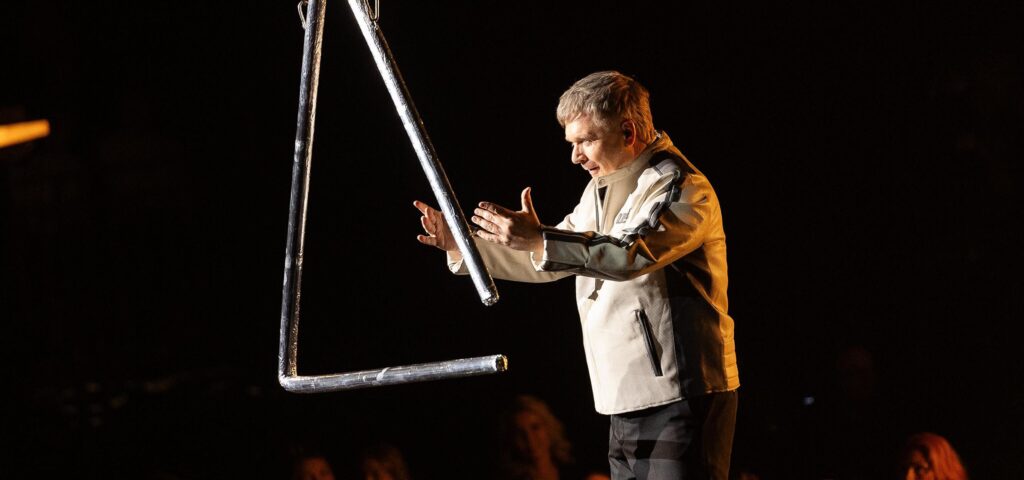
Should Russian composers be banned from our concert halls? It’s a question that has resurfaced repeatedly across Europe since the beginning of Russian invasion, emotional, political, and deeply uncomfortable. Something that goes beyond Russia and composers, is cultural sanction on certain countries a good idea? That question came into my mind several times during the ERSO’s performance of works by Dmitri Shostakovich.
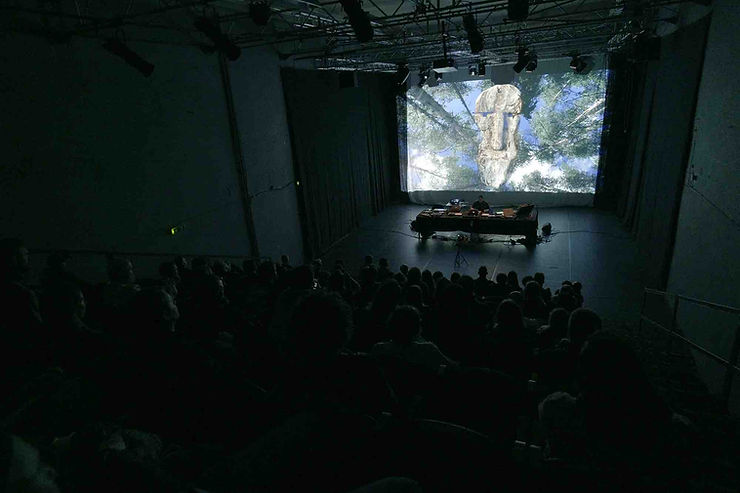
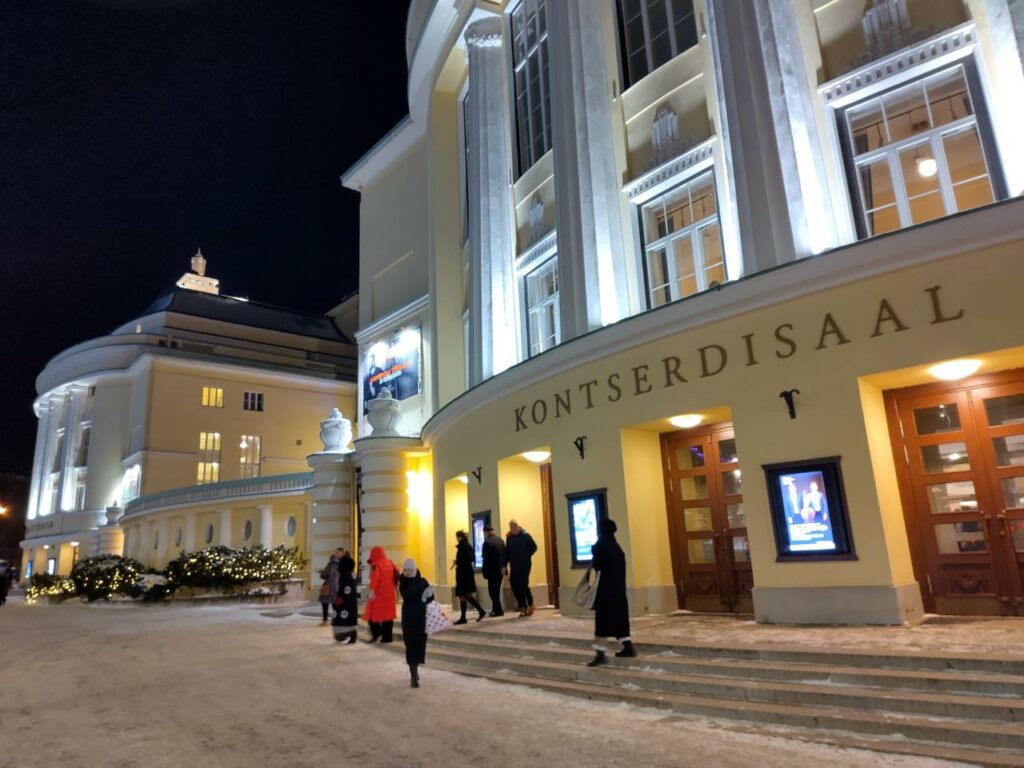
On 20 February 2026, the Estonia Concert Hall became a space of both celebration and quiet provocation. Marking the 120th anniversary of Dmitri Shostakovich’s birth, ERSO presented a programme devoted entirely to the composer, an artistic gesture that felt both historical and urgently contemporary.
Under the assured baton of Olari Elts, the evening unfolded with confidence and clarity. The orchestra handling the programme was the EAMT Symphony Orchestra, largely young university musicians, yet the sound they produced was strikingly close to the level one expects from Estonian National Symphony Orchestra. That alone deserves recognition. With the exception of a few brief and minor imperfections, particularly in the brass, the performance was cohesive, focused, and musically persuasive.
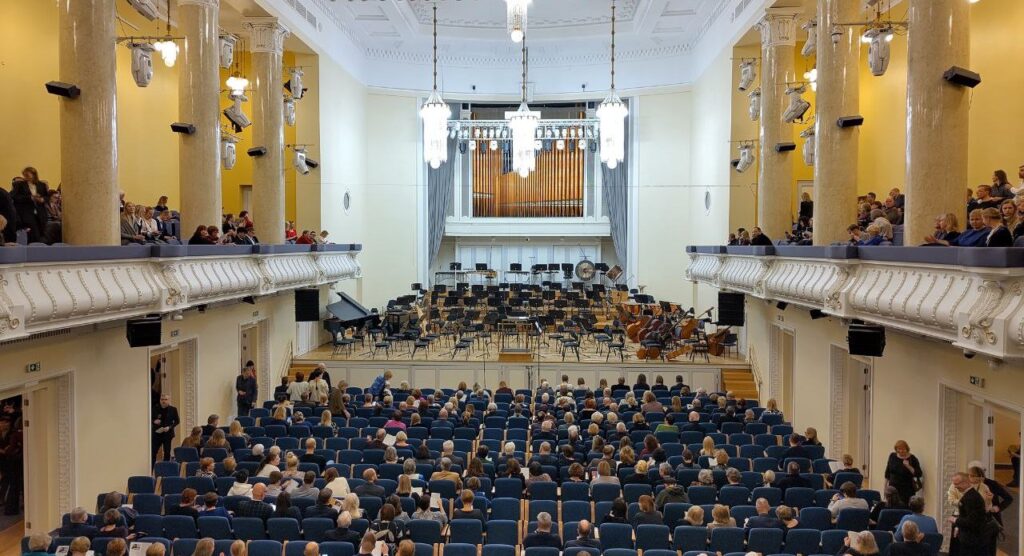
Performance of Shostakovich
The evening opened with Shostakovich’s Symphony No. 6 in B minor, Op. 54. Rather than monumental drama, the work unfolded with inward tension and restraint. The long Largo was shaped with calm control, its atmosphere sustained without exaggeration. The closing movements brought sharper rhythms and flashes of irony, delivered with energy but kept firmly within stylistic clarity.
After the interval came the Piano Concerto No. 1, with Marie-Ange Nguci as soloist. Her performance was precise, vivid, and confidently projected. The contrasts were cleanly articulated, the virtuoso passages handled with ease and without excess. It was focused playing—brilliant where needed, but always musically grounded.
The programme concluded with selections from Shostakovich’s suites for orchestra, drawn from his cycle of eight orchestral suites. These lighter works brought a different colour to the evening—rhythmic, direct, and at times playfully ironic—offering a bright and spirited close to the concert.
Should the Russian composers be banned form the concert halls?
But the concert did more than celebrate an anniversary. It provoked a question that refuses to disappear: should Russian composers be banned from European concert halls?
For many, the answer seems obvious: NO. Shostakovich himself stands as one of the most complex artistic oppositions to totalitarianism in the 20th century. Though used as a propaganda symbol by the Soviet regime, his music has long been understood as layered dissent. To silence him, or composers such as Sergei Prokofiev or even Pyotr Ilyich Tchaikovsky, would mean silencing voices that often resisted the very systems we condemn.
History offers perspective. Even during World War II, the Allies did not ban German composers. Beethoven was not erased; he became a symbol of liberation.
But the harder question lies elsewhere.
What about contemporary Russian composers, the unknown ones, the emerging artists, the independent voices? Cultural sanctions may appear principled, yet they risk crushing those who already live under oppressive conditions. It is naïve to believe that every Russian artist supports the Kremlin. Many do not. Many cannot speak freely. Many are trapped.
Estonia has taken strong political positions, such as barring Russian athletes and losing the right to host the 2026 European Fencing Championships as a consequence. The logic is understandable. But we must ask: are all those athletes political agents? Or are some simply individuals caught in machinery beyond their control?
Sanctions are rarely clean instruments. I come from Iran, a country under heavy sanctions for decades. Have those measures weakened the ruling system? Not really. The pressure falls on ordinary citizens, artists, students, musicians. Ask yourself: how many Iranian composers can you name? It is not that they do not exist, they do, but the world gradually have stopped listening to them.
How long has left till people wonder if there’s any music in Russia as well?
Leaving sanctioned countries is not simple. Talent, culture, being a descent human, are not a visa categories. Money is. And who possesses money in authoritarian systems? Often those closest to power. My way out of Iran and into Estonia was not though my compositions or writings, no one asked me about my beliefs or philosophy of life. My way out was through my Startup, it eventually failed, but at the time of applying for visa, I had enough money and enough potential for earning more money that I got the permission to live in Europe. Many artists, musicians, writers and etc, don’t get the chance to do so.
Cultural isolation does not weaken regimes as efficiently as we might imagine. It can, however, suffocate the next Shostakovich before the world ever hears their first symphony.
Being producer and curator, in recent years, I have personally received numerous messages from Russian musicians asking for help, whether with sharing their work, releasing their compositions, or simply making their music visible. Many platforms have limited cooperation with artists based in Russia, regardless of their political stance. What strikes me in these exchanges is not ideology, but urgency. These are composers and performers trying to survive artistically in isolation, aware that their passports often speak louder than their music. Whatever position one takes on cultural sanctions, it is difficult to ignore the reality that the first to lose their audience, and their normal life, are those struggling to build an honest artistic voice and not those in power.
A deep sadness knifes into my heart when I see good people, good composers with peace and freedom in their ideological horizons, being banned, boycotted, or ignored in one way or another. Their only “sin” is their birthplace, whether Russia, Belarus, Iran, Palestine, Israel, or anywhere else.
This is not a final verdict. There are no easy answers when confronting totalitarian states. But perhaps evenings like this, when ERSO performs Shostakovich with conviction, remind me and all of us that art itself is rarely obedient. It resists simplification. It survives systems. It speaks in ambiguity.
And perhaps that is precisely why banning it feels too easy.
#Shostakovich120 #ERSO #OlariElts #MarieAngeNguci #EstoniaConcertHall #ClassicalMusic #CulturalSanctions #MusicAndPolitics #SupportArtists #FreedomOfArt