Music is a universal companion to humanity, but the way we capture, store and play it has evolved at a breathtaking pace. Below is a timeline‑driven overview of the key milestones in the history of the music that turned the quiet sounds of a flute or a choir into the instant on‑the‑go experience we enjoy today.
1. The Earliest Attempts, Writing the Sound (4th – 14th centuries)
| Year | Milestone | Notes |
|---|---|---|
| c. 200 BC – 600 AD | Early musical notation | The Greeks and Romans used crude rhythmic symbols, but the system was not standardized. No surviving audio records. |
| c. 100–1000 AD | Global efforts for notation | Before the renaissance, different notation styles were in use by Chinese, Indians, Persians, and Arabs. Each culture based on its background created a different notation style. Eventually all of the world adapted the (customised) western notation system by the 20th century, but some of these notations are still being used in academia and research institutes around the world. |
| c. 800 AD | Gregorian chantnotation | Developed by the Christian church; the first widely‑used staff system appeared in the 8th‑9th centuries. |
| c. 1200–1400 | Guido of Arezzo’s Solmization | Introduced the “do‑re‑mi” syllables and the modern five‑line staff, allowing melodies to be written and reproduced by others. |
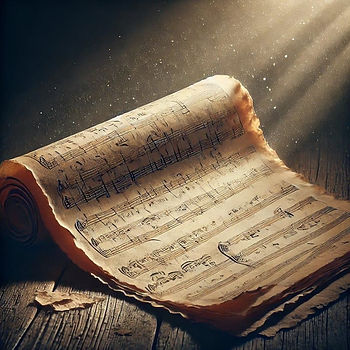
These notations laid the groundwork for reproducible music, but they were still limited to the trained musicians of the day. The idea of “capturing” the actual sound was still far off.
2. The Mechanical Birth of Sound Capture (18th – 19th centuries)
| Year | Invention | Inventor | Significance |
|---|---|---|---|
| 1795 | Music box | Hermann Mayer(German) | First device that could mechanically reproduce a tune by a rotating cylinder striking tuned pins. Limited to short, single‑instrument pieces. |
| 1861 | Phonautograph | Édouard‑Léon Scott de Martinville | First device to record sound on a soot‑stained glass plate. Playback impossible then; the record was discovered a century later and played back with modern equipment. |
| 1877 | Phonograph | Thomas Edison | First device that could both record and play back sound on a wax cylinder. Early sound quality was low, but it proved the concept. |
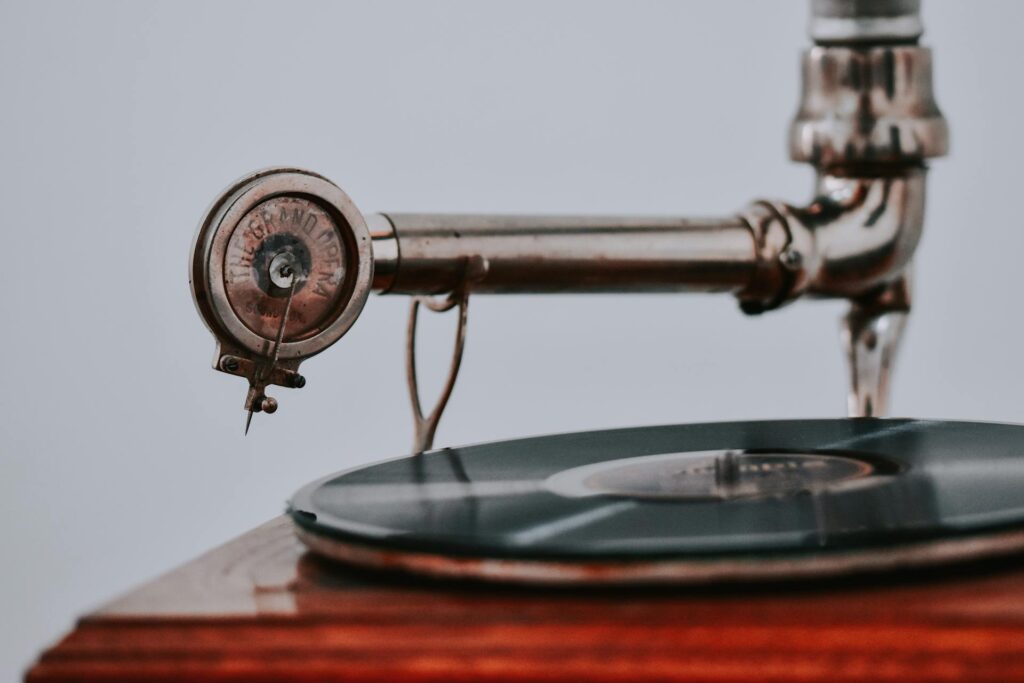
| 1888 | Gramophone | Emile Berliner | Introduced flat discs (later called records) which allowed for easier mass production and better sound quality than cylinders. |
Impact – The gramophone set the stage for the first wave of recorded music, though the listening experience was still confined to a niche, expensive audience.
3. The Age of Mass‑Distribute and Broadcast (20th century)
| Year | Milestone | Details |
|---|---|---|
| 1901 | Electric radio | Wireless broadcast began. Music became part of public life, free of charge. |
| 1920s | Microgroove records | Improved fidelity; records became more durable and could hold 3–4 minutes of music. The 5‑minute “standard” track length began to crystallize. |
| 1930s | Magnetic tape | Developed in Germany; later adopted worldwide. Allowed recording on a continuous medium, vastly improving sound quality and editing flexibility. |
| 1948 | 78 rpm shellac record | Still widespread, but soon to be supplanted by vinyl. |
| 1950s | LP (Long‑Play) vinyl | 33 rpm 12″ record could hold 20 minutes per side. Allowed longer compositions, reshaping popular music structure. Some of the music vocabulary we still use today is due to the characterisation of vinyls, including: Track, EP and etc. |
| 1960s | Cassette tape | Portability; users could record radio, create mixtapes, and carry their music on the go. Copying was easy, sparking the first wave of piracy. |
| 1979 | Compact Disc (CD) | Digital audio, 74 minutes of high‑fidelity playback on a small disc. Overthrew vinyl as the dominant format. |
| 1982 | DVD audio | Higher capacity and quality, though it never displaced the CD for most consumers. |
| 1992 | Internet boom (MP3 codec) | Allowed audio files to be compressed 10:1–12:1 with little audible loss. Triggered the digital revolution. As a result of easy piracy, the global music industry lost almost half of it’s revenue in less than 3 years and for a time it seemed like, music will not survive into the modern world. |
| 1997 | iTunes (Apple) | Digital storefront for buying individual tracks, eliminating the need for physical media. This was the start of a revival in music industry. |
| 2000s | MP3 players & smartphones | Portable, instant access to millions of songs. The “digital music” era accelerated. |
Cultural shift – Each new medium reshaped what music could look like: 5‑minute singles for vinyl, longer tracks for LPs, and now the instantaneous streaming model.
4. The Streaming Era (2000s – present)
| Year | Milestone | Key Players |
|---|---|---|
| 2008 | Spotify launched | Free, ad‑supported model with a huge catalog. |
| 2015 | Apple Music | Subscription service offering the same library as iTunes, but in streaming form. |
| 2015 | Tidal | High‑fidelity streaming (lossless CD quality). |
| 2022 | AI music | Several AI platforms now provide an opportunity for every individual to feel like a music creator. Using their own voice and their favorite genre, people can generate full songs with lyrics within minutes on their devices. The threat music industry faces today is even greater than the early 2000s, we can only hope that this time, music survives as well. |
Today’s landscape – Music is no longer purchased; it’s accessed. The average listener can stream a song in milliseconds, regardless of location.
5. Looking Ahead – The Next Frontier
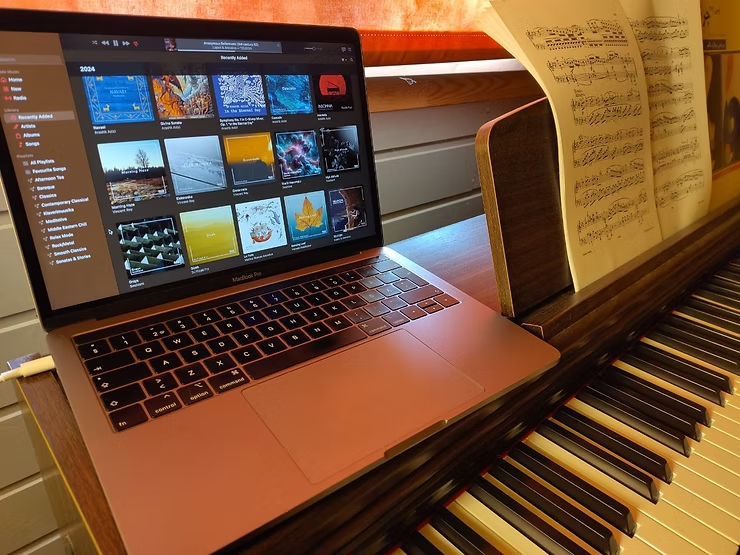
While the smartphone and laptop have become primary playback devices, newer hardware is poised to become the next standard:
| Device | Anticipated Impact |
|---|---|
| Smartwatches (Apple Watch, Garmin, etc.) | Micro‑speakers and haptic audio; on‑the‑go listening during workouts. |
| AR/VR headsets (Meta Quest, Apple Vision Pro) | Immersive spatial audio experiences that may change how we compose and consume. |
| AI‑generated music | Real‑time personalized soundscapes, potentially integrated into all devices. What we see of AI music today, potentially is just the tip of the iceberg. |
Conclusion
From hand‑written manuscripts to on‑screen playlists, the technology that underpins music recording and playback has accelerated through centuries. Each leap, whether a new material, a digital codec, or an Internet protocol, has altered how composers write, how producers record, and how listeners consume. As we stand on the cusp of even more integrated, AI‑driven listening experiences, the one constant remains: the human desire to capture, share, and revel in sound.
From Vinyl to Spotify: How Music Consumption Has Evolved Over Time
#MusicHistory #RecordingTechnology #MusicEvolution #AudioInnovation #Phonograph #Gramophone #Vinyl #Cassette #CD #DigitalAudio #MP3 #Streaming #Spotify #AppleMusic #MusicIndustry #MusicCulture #TechTimeline #AudioEngineering #FutureOfMusic #AIinMusic #SmartwatchMusic #ARVRMusic #AudioTech #SoundRevolution #HistoricSound #MusicTech #Innovation #MusicProduction #MusicLegacy