Creative pursuits can give people who want to reduce stress a practical way to slow down, redirect attention, and make space for something enjoyable. You do not need to consider yourself artistic, own expensive supplies, or produce anything impressive. The point is the activity itself.
Stress often keeps attention fixed on unfinished work, future problems, or thoughts that repeat without resolution. A creative activity introduces a different task: listen, draw, photograph, shape, write, or make. Even a short creative break can provide a useful change of pace when the day feels mentally crowded.
A Few Things Worth Knowing First
Creative stress management works best when the activity feels approachable rather than like another obligation. Music is particularly well studied: a meta-analysis covering 104 randomized controlled trials and 9,617 participants found that music interventions had beneficial effects on both physiological and psychological stress-related outcomes.
The practical takeaway is simple: choose something you enjoy, lower the stakes, and give yourself permission to create without judging the result. Drawing, photography, music, writing, crafts, and other hands-on activities can all become ways to interrupt a stressful routine.
Why Music Deserves a Place in Your Stress-Relief Routine
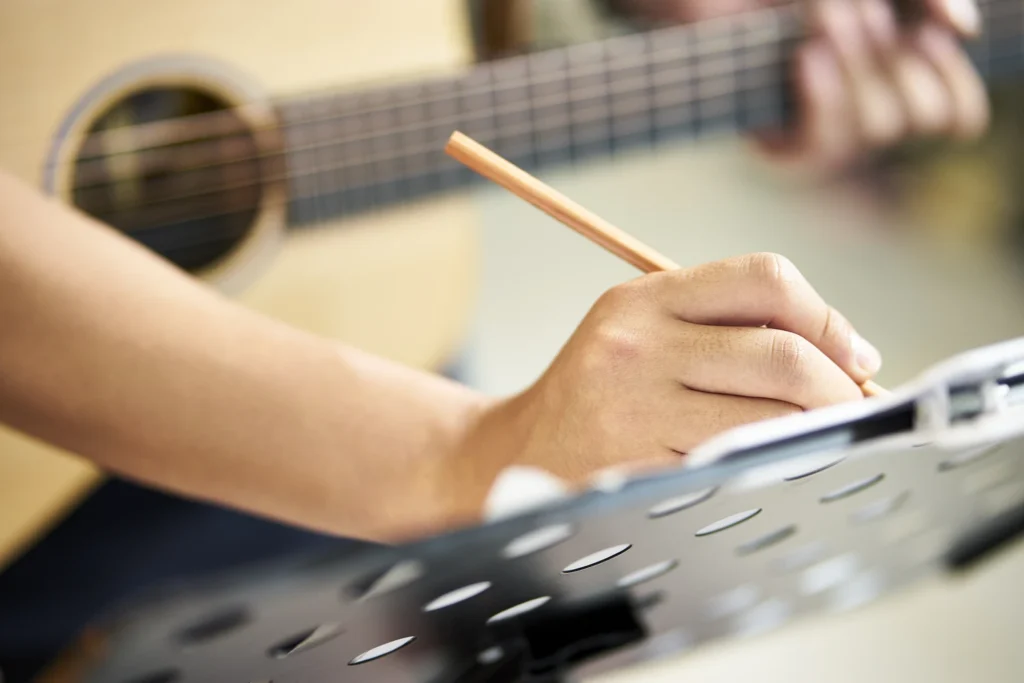
Music can be one of the easiest creative pursuits to incorporate into everyday life because it works at different levels of participation. You might listen closely to a favorite album, sing, play an instrument, make a playlist, improvise a melody, or experiment with rhythm.
Music also requires very little setup. Ten quiet minutes with headphones may be more realistic on a busy day than beginning a complicated project. For someone who plays an instrument, practicing familiar material can shift attention toward rhythm, sound, movement, and repetition instead of whatever has been occupying the mind.
Match the Creative Outlet to the Moment
Different activities ask different things from you. That makes it useful to choose according to how you feel rather than forcing yourself into one permanent hobby.
| If you feel… | Try… | What it gives you to focus on |
| Mentally overloaded | Drawing or doodling | Lines, shapes, patterns, and movement |
| Restless | Playing music or crafting | Rhythm, repetition, and physical action |
| Stuck in repetitive thoughts | Journaling or creative writing | Putting thoughts into words |
| Disconnected from your surroundings | Photography | Light, color, composition, and details |
| Tired but unable to switch off | Listening closely to music | Sound, tempo, melody, and breathing |
None of these activities needs to become a serious hobby. A small creative ritual can be enough.
Photography Turns Attention Outward
Photography can be calming because it gives you a reason to notice what is happening in front of you. Looking for an interesting shadow, the shape of a tree, changing evening light, or an ordinary detail worth remembering encourages attention to the present moment.
That process can continue after the photograph is taken. If you want to enlarge a favorite nature image, travel shot, or everyday scene, an AI image upscaler can increase its resolution and improve clarity so the photo can be displayed at a larger size while retaining useful visual detail. The Adobe Firefly image enlarger, for example, provides 2x and 4x upscaling options and is designed to increase resolution and sharpen details.
Five Creative Activities to Keep Within Reach
You do not need to tackle all of these. Pick the one with the lowest barrier to starting.
- Doodle or sketch: Draw what you see or simply fill a page with patterns.
- Make music: Play an instrument, sing, tap out rhythms, or build a personal playlist.
- Write freely: Spend a few minutes writing without worrying about grammar or polish.
- Take photographs: Walk slowly and look for colors, textures, reflections, plants, or changing light.
- Work with your hands: Try knitting, collage, clay, woodworking, coloring, or another tactile craft.
A 15-Minute Creative Reset
Use this simple checklist when stress is building and you need an activity that does not require much planning.
- Choose one activity. Avoid spending the first five minutes deciding between six options.
- Remove the performance goal. You are not trying to create something worthy of sharing.
- Set aside 10–15 minutes. A defined window makes starting easier.
- Focus on sensory details. Notice sound, texture, color, movement, or physical sensations involved in the activity.
- Check how you feel afterward. If the activity helped, remember it as an option for the next stressful day.
The pattern is straightforward: stress narrows attention → creative activity redirects attention → the person gets a temporary opportunity to disengage from the stressor.
A Reliable Place to Learn More
For evidence-based information about stress and complementary approaches, the National Center for Complementary and Integrative Health (NCCIH) provides a useful overview of stress management methods. Its resources discuss approaches including relaxation techniques, mindfulness, yoga, and music-based interventions, while also explaining what research does and does not establish.
Frequently Asked Questions
Do I need artistic ability to use creativity for stress management?
No. The stress-management value of a creative activity does not depend on producing professional-quality work. Choosing an accessible activity and engaging with the process can be the goal.
How long should I spend on a creative activity?
There is no universal ideal duration. Start with a manageable period such as 10 or 15 minutes and notice whether it helps you disengage from the immediate source of stress.
Is listening to music enough, or do I need to make music?
Both are options. Research on music-based interventions includes different forms of musical engagement, and evidence indicates that music interventions can have beneficial effects on stress-related outcomes.
Make Creativity Easy to Return To
Creative pursuits will not remove every source of stress, but they can offer a constructive way to change your focus and create moments of relief. When stress becomes persistent, severe, or difficult to manage, creative activities can complement rather than replace appropriate professional support.