When I listen to Never Enough by Anton Donovan, classical cinema comes to my mind, it sounds like a soundtrack of a black and white movie, cigarette smoke drifting under dim lights, a piano murmuring in the corner, and characters stepping in and out of moral disasters with impeccable timing.
Musically, the record lives comfortably in a luxurious lounge atmosphere. Jazz harmonies glide beneath theatrical arrangements, blues elements flicker through the orchestration, and the overall palette feels both nostalgic and modern. Despite the brightness of the harmonic progression and the relatively lively tempos, a deeper emotional current runs through the album. Beneath the wit and theatrical flair lies a persistent melancholy, a sentiment that quietly knives into the heart. At least that’s how I feel listening toNever Enough.
The emotional architecture of Never Enough is carried largely by its orchestration. Strings often sit between Donovan’s vocals and the rhythmic section like a misty cinematic filter, giving the music depth and dimension. At times the arrangements feel almost symphonic (or better to say a big jazz orchestra, but I’m a classical musician so symphonic comes to mind first) which opens and closes like velvet stage curtains around the narratives inside each song.
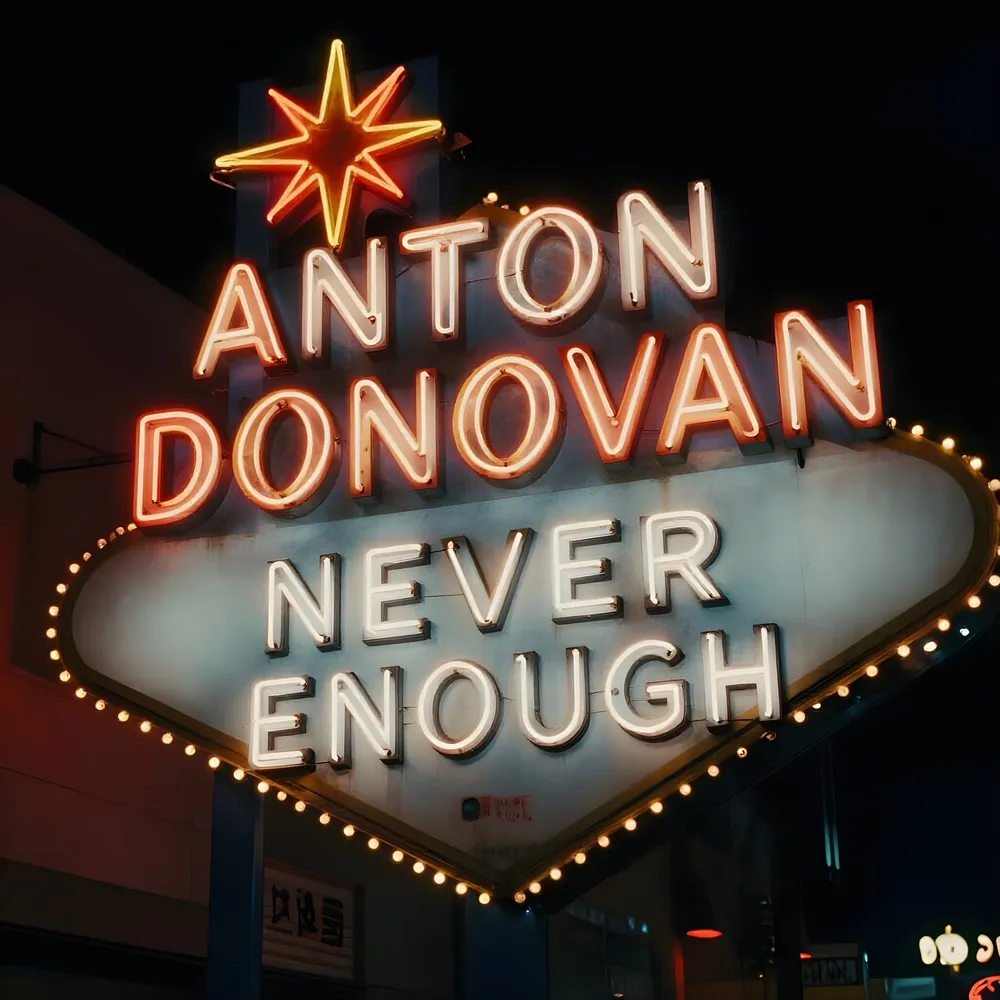
Spanning 13 tracks and nearly an hour, the album manages a rare feat: none of the songs feel redundant, yet the project maintains a strong sense of unity. Each piece introduces a new perspective or character while remaining anchored in Donovan’s distinctive theatrical-pop language.
The Opening Scene: Philosophy Wrapped in Cabaret
The album begins with “Consciously, You Wander,” a piece that immediately introduces Donovan’s blend of humor and existential reflection. Over the playful piano and trumpet, and the emotional strings, the lyrics examine the uneasy relationship between rational thought and subconscious instinct.
“So consciously you wander through the fog of what is true / while unconsciously the heavy lifting’s handled just for you.”
The track plays like a philosophical monologue disguised as a jazz song. Its wit and rhythm establish the intellectual tone that runs throughout the album.
Stories, Characters, and Modern Parables
One of Donovan’s greatest strengths is narrative songwriting. Many tracks feel less like pop compositions and more like miniature short stories.
“How to Get Lucky at the Luxor” offers a scrutenizing on fate and self-sabotage, asking listeners:
“If you stop feeding the things that hurt you / would luck show up and never again desert you?”
The song floats on warm brass and lively piano lines reminiscent of classic Vegas lounge orchestras. Despite the energetic opening with steccato piano chords, the piece is deeply emotional with legato strings and the warm vocal melody line.
Meanwhile, “Waiting for Something to Happen” captures a slow-burning anxiety familiar to modern life. The lyrics unfold in a claustrophobic atmosphere:
“Hour follows hour / the walls leaning in, the air gets thicker.”
The track feels almost cinematic in its pacing, allowing tension to accumulate in quiet spaces.
Dark Satire and Philosophical Mischief
Several songs push Donovan’s writing into darker and more provocative territory.
“The Meat Obeys” stands out as one of the album’s most unsettling pieces. The protagonist begins making life decisions based on dice rolls, surrendering agency to probability. The refrain:
“The cube decides / the meat obeys”
is repeated like a mantra, raising disturbing questions about free will, identity, and responsibility.
Similarly sharp is “The Itch That Thinks It’s Justice,” a biting satire of outrage culture. Darker in sound and closer to rock in musical style, the piece feels like a sense from a Film Noire. Here Donovan confesses with brutal honesty:
“It’s an itch that thinks it’s justice / I scratch until it’s sacred.”
The song escalates into a portrait of ideological addiction, exposing how moral certainty can morph into performance.
Love, Fear, and Human Vulnerability
The album’s emotional centerpiece arrives with “Make It Unforgivable.” What begins with a shimmering solo violin and as a declaration of devotion gradually reveals itself as something more desperate and frightening.
“Burn the only road that leads you home / and stand here in the ashes with me.”
The song explores love as a form of absolute commitment, one that demands sacrifice and certainty at any cost.
Elsewhere, “Boring Little Curse” offers dark comedy through a catalogue of antidepressants, turning pharmaceutical culture into a strangely poignant refrain:
“Can’t say I’m feeling better… I’ve more or less accepted living with this boring little curse.”
Closing Reflections: A Fragile Humanity
The album eventually softens its intellectual armor. By the time listeners reach “Captain of the Brave,” the narrator drops much of his irony and admits vulnerability:
“Life is short and I am not the captain of the brave.”
It’s a small confession, but one that reframes the entire record. Behind the satire and philosophical games lies a deeply human voice searching for connection. Likewise the music changes into a more subtle and lounge style piece, perfect soundtrack to end te night.
A Brief Look Back: You’re a Good Person by Anton Donovan
Donovan’s previous release, You’re a Good Person, already hinted at the theatrical ambition heard on Never Enough. That EP blended jazz orchestration, classical sensibilities, and sharp satire, creating what felt like a hybrid of cabaret performance and chamber music drama. Songs such as the title track and Your Thesis Made Flesh showcased Donovan’s ability to turn confession into spectacle, part diary, part stage monologue. Never Enough builds on that foundation, expanding the storytelling scope and pushing the philosophical themes even further.
Final Thoughts on Never Enough by Anton Donovan
Never Enough by Anton Donovan feels almost defiantly literar. Anton Donovan writes like a novelist trapped inside a songwriter’s body, constructing songs that function as scenes, arguments, and psychological portraits.
The result is something rare: an album that entertains while also interrogating the strange theater of modern life. It’s cabaret reborn for the contemporary world, part Broadway spectacle, part philosophical essay, all wrapped in velvet orchestration.
AntonDonovan #NeverEnoughAlbum #AlbumReview #MusicReview #CabaretPop #TheatricalPop #JazzInfluence #OrchestralPop #NarrativeSongwriting #ConceptAlbum #ContemporaryCabaret #ArtPop #IndieMusicReview #NewMusicReview #StorytellingInMusic #LyricDrivenMusic #MusicCriticism #OnlineMusicMagazine #MusicJournalism #Tunitemusic