The winners of Eesti Muusikaauhinnad 2026 have been announced at a gala ceremony in Tallinn, once again positioning the event as the most visible annual snapshot of Estonia’s music industry. Yet beyond the celebration, this year’s awards also raise important questions about values, representation, and the direction in which musical culture is being steered.
Classical Music at the Margins — Again
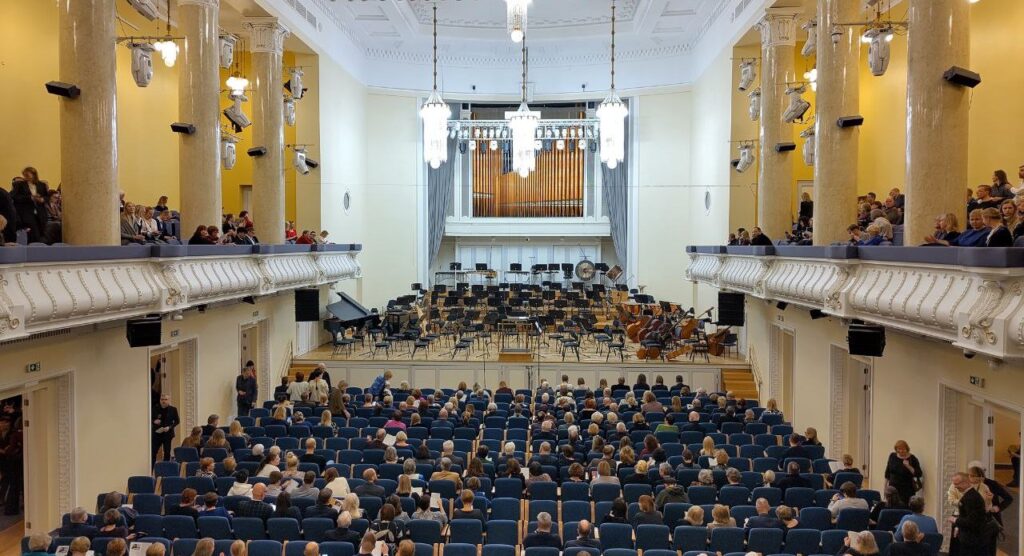
One of the most artistically substantial recognitions of the night came from the Classical Album of the Year, awarded to Erkki-Sven Tüür’s Aeris, performed by German Hornsound together with the Estonian National Symphony Orchestra (ERSO) under the direction of Olari Elts.
This project stands as a reminder of Estonia’s internationally respected contemporary classical tradition, a tradition that remains foundational to the country’s musical identity, yet often appears sidelined in the broader narrative of such ceremonies.
ERSO’s involvement alone represents decades of artistic continuity, international presence, and cultural responsibility. That this achievement receives comparatively limited public attention says more about the priorities of the current cultural spotlight than about the work itself.
Dominant Wins and Familiar Narratives
Among the most awarded acts of the evening was SADU, who received Album of the Year, Band of the Year, and Debut Album of the Year for PROBLEEMID PARADIISIS. Their success reflects the jury’s preference for contemporary alternative formats and signals where institutional recognition is currently concentrated.
Other genre awards included Night Tapes (Alternative/Indie Album of the Year), and Joel Remmel Trio & Jukka Eskola, whose Peegeldused won Jazz Album of the Year, highlighting the continued presence, if limited, of jazz within Estonia’s award landscape.
Tommy Cash and the Question of Meaning
Tommy Cash received Male Artist of the Year, Pop Artist of the Year, and Song of the Year for “Espresso Macchiato,” a track that has gained attention primarily through spectacle and viral visibility.
This outcome inevitably invites reflection, and doubt, about the ceremony itself. A song with no discernible musical roots, no compositional depth, and little connection to Estonian musical heritage being crowned Pop Artist of the Year does not so much define excellence as expose the level against which other works are being measured. In this sense, the award speaks less about the artist and more about the framework that enables such outcomes.
Yes, yes, we are all used to seeing strange things framed as “artistic,” or excused under the banner of provocation. Especially today, as AI-generated music floods the market, artists are left with fewer and fewer ways to capture attention. In this environment, even shock and sexualisation often feel insufficient, and vulgarity or deliberately disturbing ideas become tools for visibility. But visibility serves a purpose: attracting attention, generating revenue, and securing a place on stages like Eurovision, even when that stage is shared with states accused of genocide. Is this what cultural awards are meant to recognise? Perhaps it is. That, in itself, is the more troubling answer.
Contribution Awards and Institutional Memory
The Contribution to Estonian Music award was presented to Vennaskond, acknowledging their long-standing influence on Estonia’s punk and alternative scenes. Such recognitions remain among the ceremony’s more meaningful gestures, preserving a sense of historical memory within an otherwise trend-driven format.
Diversity Without Presence
While Eesti Muusikaauhinnad 2026 showcased multiple genres, the diversity of voices was strikingly limited. Estonia’s music scene today includes composers, performers, producers, and ensembles from across the world, artists who actively contribute to the country’s cultural life, concert stages, recordings, and education. The absence of even a single non-Estonian name among the winners or highlighted narratives is difficult to ignore.
While one German ensemble appeared in collaboration with Estonian artists, this solitary instance does little to challenge the broader lack of international representation.
At a time when cultural ecosystems thrive on exchange rather than isolation, this lack of representation raises questions about who is seen, who is heard, and who remains invisible.
Looking Forward
Eesti Muusikaauhinnad remains an influential platform. Precisely for that reason, it deserves scrutiny. Celebrating music is not only about applause, but about responsibility: to depth, to diversity, and to artistic values that extend beyond immediacy and market logic.
For Estonia’s music culture to remain truly vital, it must find room not only for popularity, but for substance, and for all those who actively shape its soundscape, whether or not they fit neatly into predefined categories.
#EestiMuusikaauhinnad2026 #EstonianMusic #MusicCriticism #CulturalPolicy #ClassicalMusic #ERSO #ContemporaryClassical #MusicAwards #CulturalDiversity #ArtAndResponsibility #EuropeanMusic #Tunitemusic